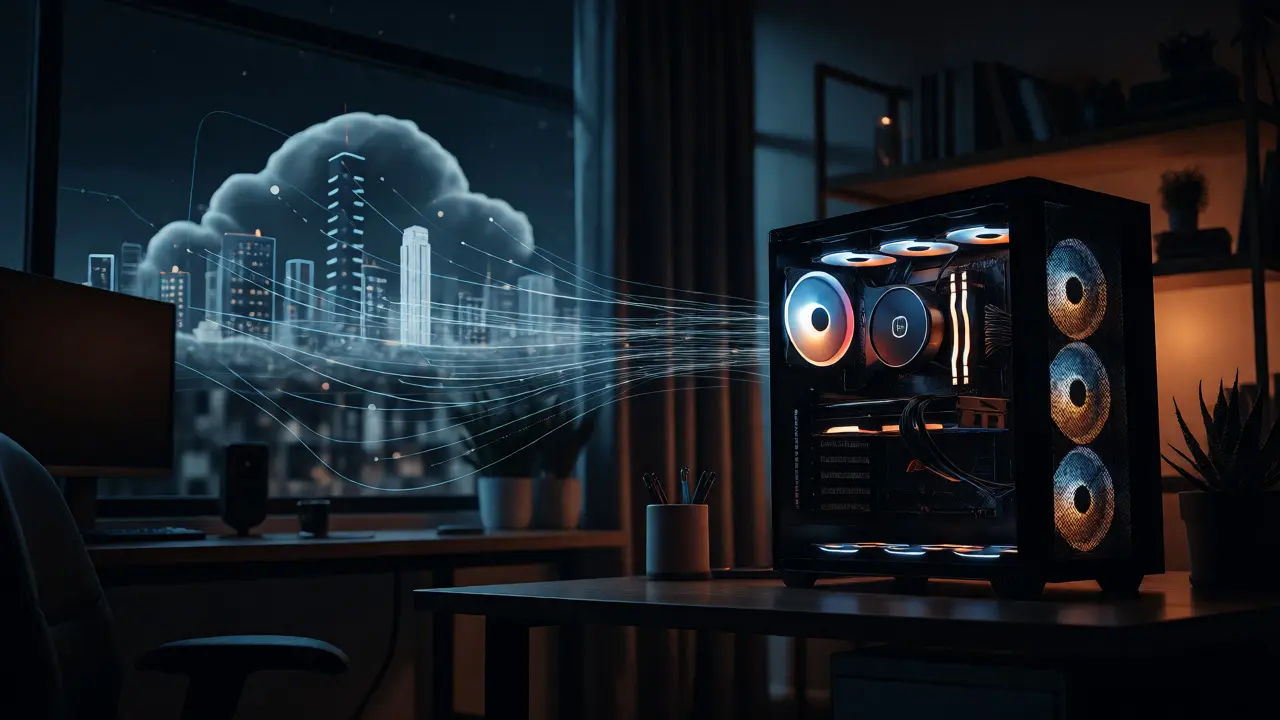
You have a powerful gaming PC sitting idle while you sleep. A data center in Virginia runs at half capacity. Meanwhile, an AI developer in London needs massive processing power but can't afford AWS rates. This mismatch is the core problem NuNet aims to fix. It’s not just another meme coin or payment layer; it’s infrastructure for a global, decentralized computing economy. If you’ve ever wondered how blockchain can actually do something useful beyond speculation, this is one of the few projects genuinely trying to monetize spare hardware.
The Core Concept: Monetizing Idle Hardware
Think of NuNet as Airbnb for computers. Instead of renting out your spare bedroom, you rent out your unused CPU cycles, GPU power, and storage space. The project launched in late 2021 as a spin-off from SingularityNET, a well-known ecosystem focused on artificial intelligence and blockchain integration. The team behind it saw that while cloud giants like Amazon and Microsoft dominate the market, they often leave edge resources underutilized. By creating a peer-to-peer marketplace, NuNet connects those with excess computing power directly to those who need it, cutting out the middleman markup.
This isn’t theoretical. The platform uses a unique "API of APIs" architecture. In plain English? It aggregates various existing computing markets into one unified interface. You don’t need to know if a specific server is running on Ethereum or Cardano to use it. The system handles the complexity, letting developers buy compute power seamlessly. For providers, it means turning dormant hardware into passive income streams without needing to be a tech wizard.
How the NTX Token Works
At the heart of this ecosystem sits the NTX token. Unlike many cryptocurrencies that rely on proof-of-work mining-which burns energy-NTX operates as a utility token within a multi-chain environment. It has a fixed total supply of 1 billion tokens, split between two blockchains: Ethereum and Cardano. This dual-chain approach was a strategic move to leverage Ethereum’s liquidity and smart contract capabilities alongside Cardano’s efficiency and lower transaction fees.
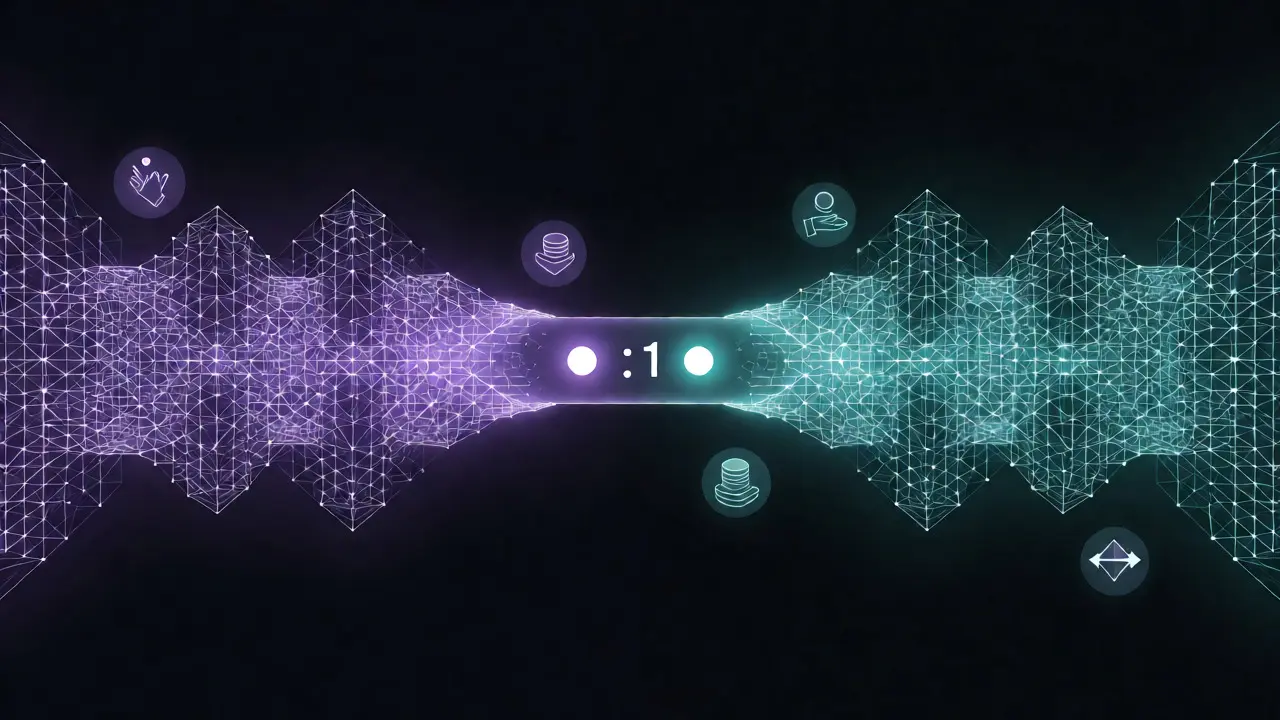
The conversion between NTX-ETH and NTX-ADA is strictly 1:1, ensuring the total supply remains constant regardless of which chain you hold it on. Why does this matter? Because it reduces friction. If gas fees spike on Ethereum, users can shift their activity to Cardano without losing value. The token serves three main jobs:
- Transaction Medium: Users pay for computing resources using NTX.
- Incentive Mechanism: Providers earn NTX for contributing their hardware.
- Governance: Holders vote on protocol upgrades and changes.
Initially priced at $0.02 during its community rounds, NTX has seen significant volatility. As of late 2023, it traded around $0.007, reflecting broader market trends and the challenges of early-stage infrastructure adoption. However, price alone doesn’t tell the whole story. The utility drives the demand, not just speculative trading.

Technical Architecture and Multi-Chain Strategy
Most decentralized computing projects struggle with interoperability. They lock users into a single network, limiting reach. NuNet tackles this by building bridges. Its architecture allows for micropayments across different chains, enabling real-time settlement for small computing tasks. Imagine paying fractions of a cent for a second of GPU time. Traditional banking systems choke on such micro-transactions due to overhead costs. Blockchain solves this, and NuNet optimizes it further through specialized agents that manage resource matching.
The system uses AI algorithms to match consumers with the best available resources. If you need high-performance graphics rendering, the algorithm directs you to nodes with powerful GPUs rather than wasting time searching manually. This automation is critical for scalability. Without it, the network would become cluttered and inefficient. The "API of APIs" concept ensures that even if new decentralized networks emerge, NuNet can integrate them, acting as a meta-marketplace that grows with the industry.
NuNet vs. Competitors: Where Does It Fit?
The decentralized computing space is crowded. You have established players like Golem and Render Network, plus newer entrants like Akash. So, why look at NuNet? The key difference lies in its focus on AI-specific workflows and its heritage from SingularityNET. While Render focuses heavily on graphics rendering and Golem on general-purpose computation, NuNet positions itself as a comprehensive solution for the broader AI economy.
| Feature | NuNet (NTX) | Golem (GLM) | Render (RNDR) |
|---|---|---|---|
| Primary Focus | AI & General Compute | General Purpose | Graphics Rendering |
| Blockchain Support | Ethereum & Cardano | Ethereum | Solana & Ethereum |
| Total Supply | 1 Billion | ~1 Billion | ~530 Million |
| Key Differentiator | Meta-Marketplace API | Mature Ecosystem | GPU-Specific Optimization |
NuNet’s advantage is its potential to serve as a gateway. By integrating multiple markets, it avoids the silo effect. However, it faces a steep climb in brand recognition. With a market cap significantly lower than its competitors, it lacks the immediate liquidity and visibility that larger projects enjoy. But for investors betting on the convergence of AI and blockchain, this smaller footprint might represent higher upside potential if execution goes right.
How to Participate: Buying, Staking, and Providing
If you want to get involved, you have three paths. First, you can simply buy NTX on major exchanges like MEXC or Gate.io. Since it exists on both Ethereum and Cardano, ensure your wallet supports the specific version you’re buying. MetaMask works for NTX-ETH, while Daedalus or Yoroi are standard for Cardano-based assets.
Second, you can provide resources. Install the NuNet client on your computer. It runs in the background, offering your spare cycles to the network. Rewards are automatically distributed in NTX based on uptime and contribution quality. This is ideal for gamers or creators with high-end rigs that sit idle part of the day. Third, governance. Holding NTX gives you a voice. You can vote on proposals regarding fee structures, technical upgrades, or partnership integrations. This democratic element ensures the platform evolves according to user needs, not just corporate whims.
One pitfall to avoid: confusing NTX with other "Nu" branded tokens. Always verify the contract address. Given the dual-chain nature, sending ETH-version tokens to a Cardano address (or vice versa) requires careful bridging procedures. Check the official documentation before transferring large amounts.
Risks and Future Outlook
No investment is without risk. NuNet is still in its growth phase. Adoption of decentralized computing is slow compared to traditional cloud services. Enterprises prefer guaranteed service level agreements (SLAs), which public blockchains struggle to offer consistently. Latency issues can also arise when routing tasks to distant nodes. NuNet mitigates this with geographic proximity algorithms, but physics still applies.
Furthermore, the token’s value is tied to the actual usage of the network. If developers don’t migrate to decentralized platforms, demand for NTX stays low. Currently, trading volume is modest, indicating that the market hasn’t fully priced in the long-term utility yet. However, as AI models grow larger and more expensive to train, the cost-saving appeal of decentralized compute becomes undeniable. NuNet’s connection to SingularityNET provides a ready-made audience of AI developers, giving it a head start over isolated competitors.
Is NuNet (NTX) a good investment?
It depends on your risk tolerance. NTX offers exposure to the growing decentralized AI sector. While it has lower market capitalization and volatility risks compared to established coins, its utility-driven model provides fundamental value. Success relies on widespread adoption of decentralized computing.
Can I mine NTX like Bitcoin?
Not exactly. You don't "mine" in the traditional sense of solving cryptographic puzzles. Instead, you contribute computing resources (CPU/GPU) to the network. In return, you receive NTX rewards proportional to the resources you provide and the duration of your contribution.
Why is NTX on both Ethereum and Cardano?
This dual-chain strategy leverages Ethereum's high liquidity and security alongside Cardano's low transaction fees and energy efficiency. It allows users to choose the most cost-effective chain for their needs, with 1:1 convertibility between the two versions.
What makes NuNet different from Golem?
While both are decentralized computing networks, NuNet focuses specifically on creating a "meta-marketplace" that integrates various computing resources via an "API of APIs." It also has strong ties to the SingularityNET AI ecosystem, targeting AI-specific workloads more directly than Golem's general-purpose approach.
How do I store my NTX tokens?
For NTX-ETH, use any ERC-20 compatible wallet like MetaMask or Trust Wallet. For NTX-ADA, use a Cardano wallet such as Daedalus, Yoroi, or Lace. Always double-check the contract address to ensure you are holding the correct version of the token.