Imagine holding a stock where the company permanently destroys shares every quarter. The total number of shares shrinks, but the demand stays the same or grows. What happens to the price? It goes up. That is the core logic behind token burning, one of the most powerful tools in modern cryptocurrency economics. It is not just hype; it is a deliberate mechanism designed to create scarcity, control inflation, and reward long-term holders.
In the early days of crypto, many projects issued massive amounts of tokens that flooded the market, causing prices to crash due to oversupply. Today, developers use burning to fix this problem. By sending tokens to an inaccessible wallet address-often called a "burn address" or "dead wallet"-they ensure those tokens are gone forever. This simple act triggers a chain reaction of economic benefits that can significantly impact a project’s value and stability.
The Math Behind Artificial Scarcity
To understand why burning works, you have to look at basic supply and demand. If the supply of something decreases while demand remains constant, the value of each remaining unit increases. Let’s break this down with a concrete example.
Suppose a cryptocurrency has a market capitalization of $1 billion and 1 million coins in circulation. Each coin is worth $1,000. Now, imagine the project burns 100,000 coins (10% of the supply). The circulating supply drops to 900,000 coins. If the market cap stays at $1 billion, the new theoretical price per coin becomes approximately $1,111. That is an 11.1% increase in value purely from reducing the supply, without any change in actual demand or utility.
This mathematical principle is the foundation of deflationary tokenomics. However, real-world markets are more complex. The price impact depends on investor sentiment, broader market trends, and the underlying strength of the project. But when executed correctly, burning creates a floor for value by ensuring the asset cannot be infinitely inflated.
| Metric | Before Burn | After 10% Burn | Impact |
|---|---|---|---|
| Circulating Supply | 1,000,000 tokens | 900,000 tokens | -10% |
| Market Cap (Hypothetical) | $1,000,000,000 | $1,000,000,000 | No Change |
| Price Per Token | $1,000 | $1,111 | +11.1% |
Real-World Success Stories
Theory is one thing, but execution is everything. Several major projects have proven that systematic burning can drive significant market growth and community trust.
Binance Coin (BNB) is perhaps the most famous example of successful tokenomics through burning. Binance implements a quarterly auto-burn mechanism known as Auto-Burn. The goal is to reduce the total supply of BNB from 200 million to 100 million over time. These burns are transparent and predictable, giving investors confidence that the supply will continue to shrink. This strategy has been a key factor in BNB’s rise to become one of the top cryptocurrencies by market capitalization.
Another dramatic example is Stellar (XLM). In 2019, the Stellar Development Foundation burned 55 billion XLM tokens, which was roughly half of the total supply at the time. This massive reduction was intended to improve scarcity and align the network’s economics with its mission. While short-term price movements varied, the move signaled a strong commitment to responsible supply management.
Then there was the Terra ecosystem. In November 2021, Terra burned 88.7 million LUNA tokens, valued at approximately $4.5 billion at the time. This was approved via community governance voting. The burn was so large that it temporarily set record high prices for LUNA, demonstrating the immediate psychological and market impact of removing billions of dollars worth of supply from circulation.
Controlling Inflation and Stabilizing Economics
Most cryptocurrencies are inflationary by design. New tokens are minted and distributed to validators, miners, or team members to secure the network and incentivize participation. Without a counterbalance, this constant influx of new supply dilutes the value of existing holdings.
Token burning acts as a brake on this inflation. Projects implement various mechanisms to achieve this balance:
- Transaction Burns: A small percentage of every transaction fee is burned. As network usage increases, more tokens are removed from circulation. This ties the deflationary pressure directly to the utility of the network.
- Scheduled Burns: Projects commit to burning a fixed amount or percentage of tokens at regular intervals, regardless of market conditions. This provides predictability for investors.
- Buyback and Burn: Projects use their treasury reserves to buy back tokens from the open market and then burn them. This supports the price during purchases and permanently removes the supply.
This approach is crucial for algorithmic stablecoins as well. These protocols automatically mint new tokens when demand exceeds supply and burn tokens when supply exceeds demand, maintaining a peg to a fiat currency like the US Dollar. Here, burning is not just about value appreciation; it is about economic stability.
Boosting Staking Rewards and Validator Incentives
If you stake your crypto to help secure a proof-of-stake network, you earn rewards in the form of new tokens. But if the total supply is exploding, the dollar value of those rewards might stay flat or even drop.
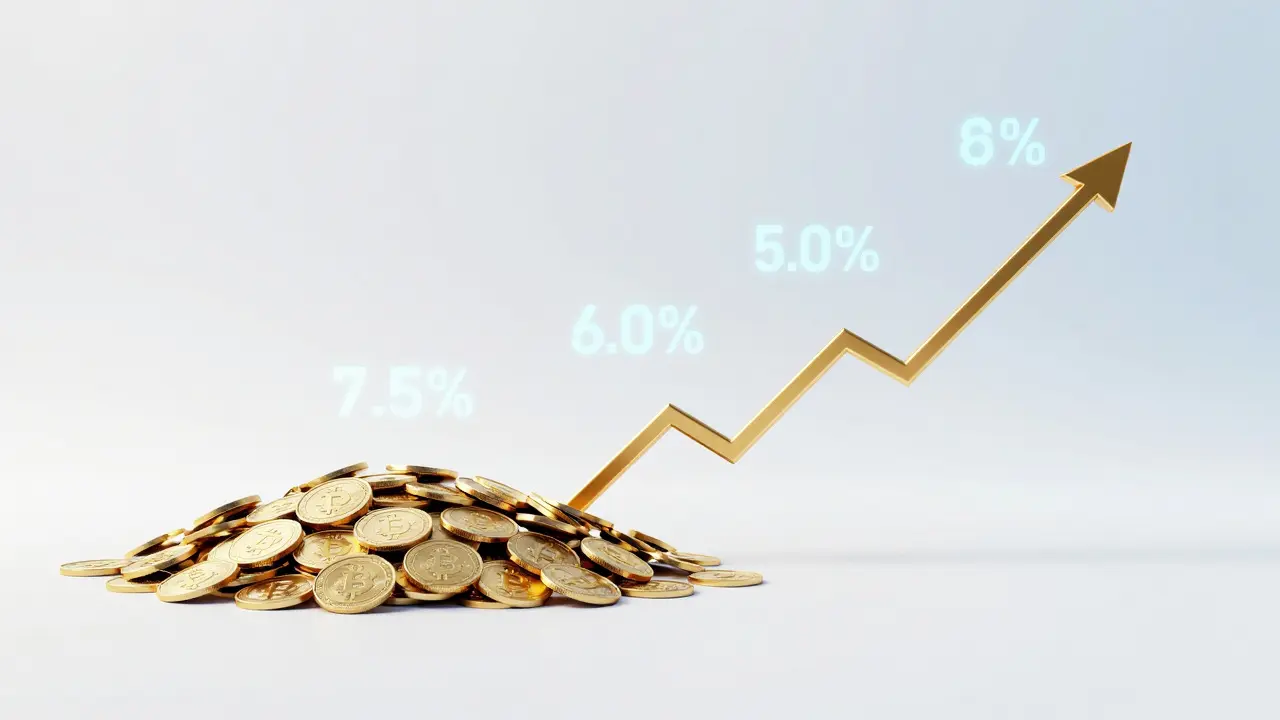
When a project burns tokens, it reduces the denominator in the staking equation. With fewer tokens in circulation, each individual token potentially holds more value. This means that even if the percentage yield of staking remains the same, the U.S. dollar value of your rewards increases. This creates a compound benefit: you hold appreciating assets, and your passive income grows in real terms.
This dynamic attracts more validators to the network. Higher validator participation improves security and decentralization, which in turn makes the network more robust and attractive to users. It is a positive feedback loop driven by deflationary mechanics.
Building Trust Through Transparency
In traditional finance, companies can announce share buybacks and then quietly reverse them or manipulate the process. In blockchain, nothing is hidden. When tokens are sent to a burn address-a wallet with no private key-they are irretrievably lost. Anyone can verify this on the blockchain explorer.
This transparency builds immense trust. Investors know that the project team cannot suddenly dump millions of tokens onto the market because those tokens no longer exist. It demonstrates a commitment to long-term holder value rather than short-term liquidity extraction. In a space often plagued by rug pulls and insider selling, verifiable burning is a powerful signal of integrity.
Community Governance and Democratic Control
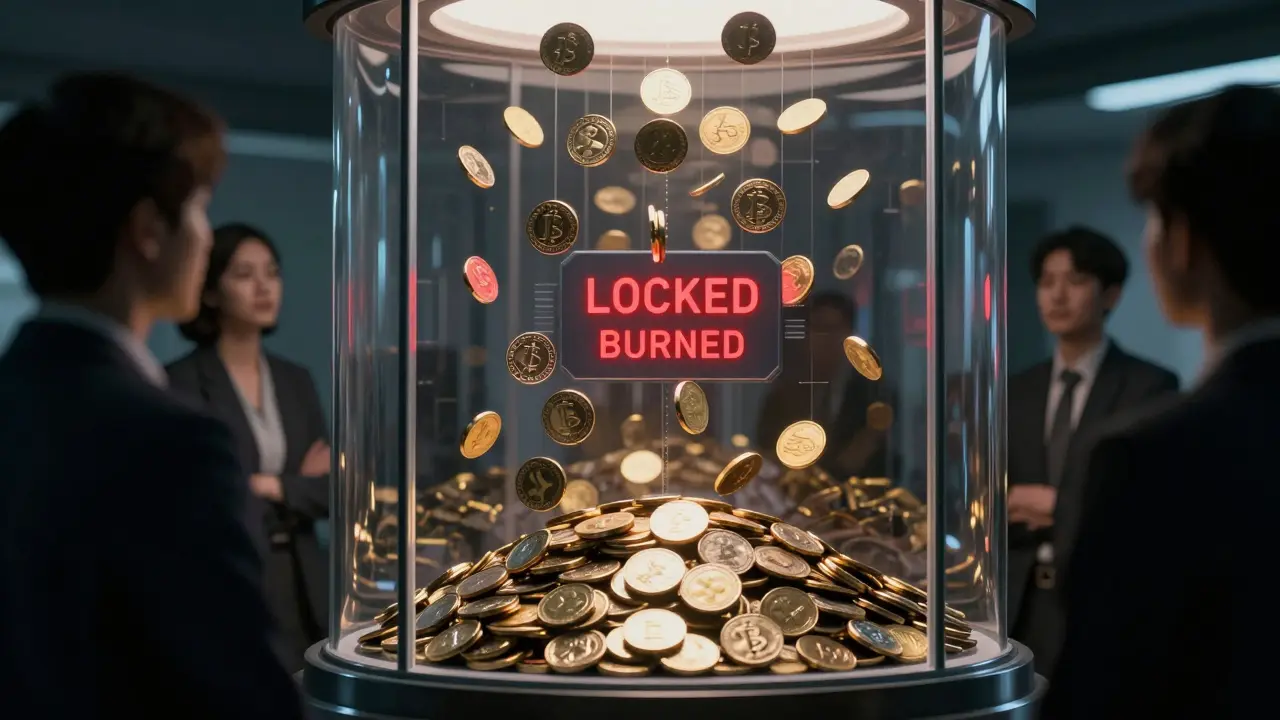
Modern token burns are rarely unilateral decisions made by founders. They are often governed by the community. Token holders vote on proposals to burn specific amounts or adjust burning parameters. This democratic approach ensures that supply management reflects the interests of the entire ecosystem, not just the insiders.
The Terra LUNA burn mentioned earlier is a prime example. The community voted to approve the destruction of nearly $4.5 billion worth of tokens. This action effectively transferred value from the project’s treasury to all existing holders by increasing the scarcity of the remaining supply. It turned a corporate decision into a collective wealth distribution event.
Strategic Positioning in a Crowded Market
With thousands of new tokens launching every day, standing out is difficult. Implementing a clear, code-enforced burning mechanism gives a project a competitive edge. It addresses a primary fear among investors: infinite dilution.
Projects with deflationary models position themselves as digital stores of value, similar to gold or limited-edition collectibles. Investors seeking assets that maintain purchasing power over time are naturally drawn to these tokens. The predictability of scheduled burns also allows sophisticated traders to model future supply reductions, creating sustained buying pressure leading up to burn events.
What exactly is a burn address?
A burn address is a special wallet address on the blockchain that has no known private key. Because you need the private key to send funds out of a wallet, tokens sent to a burn address are trapped there forever. They are effectively destroyed, removing them from the circulating supply permanently.
Does token burning always increase the price?
Not necessarily. While burning reduces supply, which is theoretically bullish, price is also driven by demand. If demand for the token is dropping faster than the supply is shrinking, the price may still fall. Burning is one factor among many, including market sentiment, regulatory news, and project utility.
Can burned tokens ever be recovered?
No. Once tokens are sent to a valid burn address, they are mathematically impossible to retrieve. The blockchain protocol prevents any transaction from originating from that address. This permanence is what gives burning its credibility and economic impact.
How do I know if a project burns its tokens?
You can check the project’s official documentation or whitepaper for details on their tokenomics. Additionally, you can monitor blockchain explorers like Etherscan or BscScan. Look for transactions labeled "Burn" or transfers to known burn addresses associated with that specific token contract.
Is token burning legal?
Yes, token burning is generally considered a legitimate economic mechanism within cryptocurrency ecosystems. It is viewed similarly to corporate share buybacks in traditional finance. However, regulations vary by country, so investors should always stay informed about local securities laws regarding digital assets.