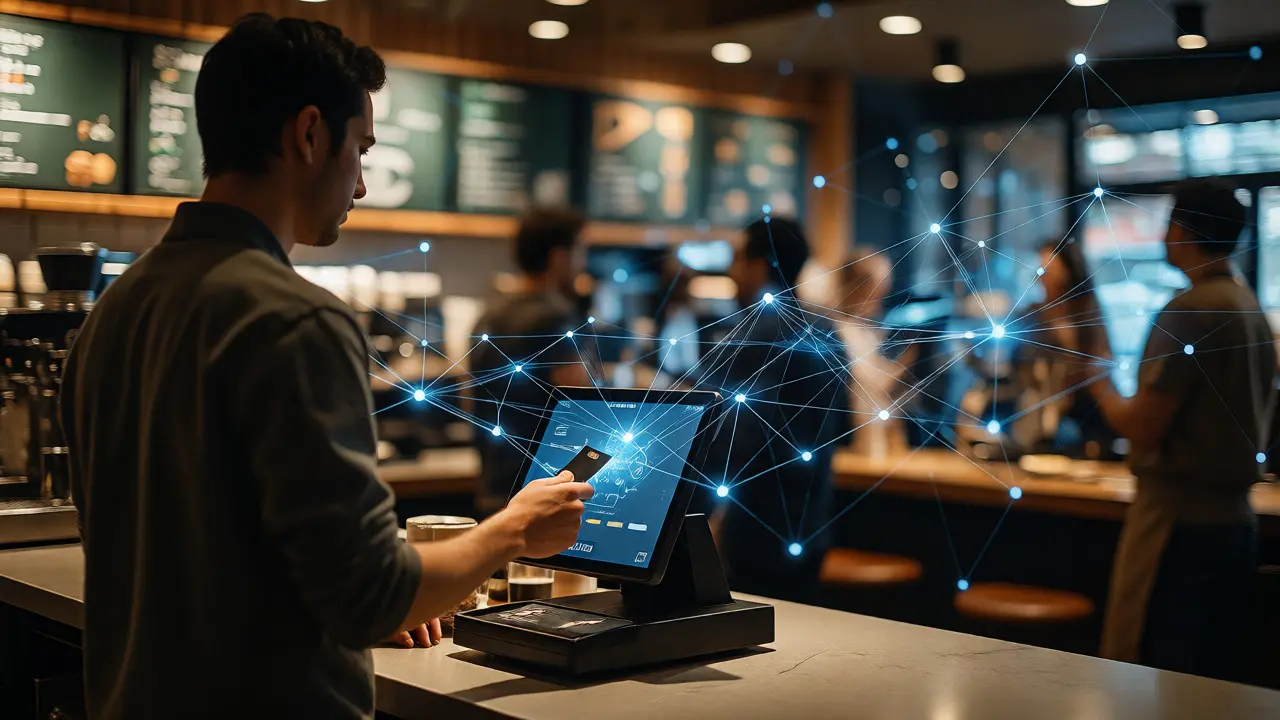
You probably heard the hype years ago: blockchain would kill banks, replace credit cards, and make middlemen obsolete. Fast forward to late 2026, and here is the messy truth. Your local coffee shop still prefers Visa over Bitcoin, but behind the scenes, Blockchain Technology has quietly become the backbone for moving trillions of dollars across borders. It hasn’t replaced traditional finance; it’s upgraded it. If you are wondering whether this tech is a passing fad or the new standard for how we pay, send money, and verify value, the answer lies in looking past the crypto speculation and focusing on infrastructure. We aren't just talking about buying JPEGs anymore. We are talking about settlement layers that process payments in minutes instead of days, with costs dropping to fractions of a cent.
The Shift from Speculation to Infrastructure
For a long time, blockchain was synonymous with volatile cryptocurrencies like Bitcoin and Ethereum. That association caused many businesses to shy away. But by 2025 and into 2026, the narrative shifted dramatically. The World Economic Forum reported that 78% of surveyed enterprises were running active blockchain deployments by Q3 2025. This isn't just tech companies experimenting; it's banks, logistics firms, and healthcare providers integrating distributed ledgers to solve real operational headaches.
Why the sudden adoption? Traditional financial rails are slow and expensive. When you send money internationally via SWIFT, it can take three to five business days, involves multiple intermediaries, and incurs hidden fees. Blockchain cuts out the middlemen. According to BVNK’s 2025 guide, blockchain settlements often complete in under three minutes, available 24/7. This speed isn't just convenient; it frees up capital. Businesses no longer have cash tied up in transit. For a company managing global supply chains, that liquidity is worth more than the transaction fee savings alone.
Stablecoins Are Doing the Heavy Lifting
If you ask most people what they use blockchain for, they might say "Bitcoin." But if you look at actual transaction volume, the story is different. Stablecoins, digital currencies pegged to assets like the US dollar, have exploded in popularity. Their supply grew from $5 billion to $305 billion by September 2025. Why does this matter? Because volatility kills utility. No business wants to invoice a client in a currency that drops 10% in value while waiting for payment.
Stablecoins bridge the gap between crypto tech and traditional finance needs. In 2024, total stablecoin transaction volumes exceeded $32 trillion. On networks like Ethereum and Tron, stablecoins accounted for 64% of all transaction volume in late 2025. These aren't speculative trades; these are payroll runs, supplier payments, and B2B settlements. The technology provides finality-once a transaction is confirmed, it cannot be reversed or charged back. This eliminates the fraud risk and administrative burden associated with chargebacks in credit card processing.
| Feature | Traditional (SWIFT/Cards) | Blockchain (L2/Stablecoins) |
|---|---|---|
| Average Settlement Time | 3-5 Business Days | < 3 Minutes |
| Availability | Banking Hours Only | 24/7/365 |
| Average Cost (Cross-Border) | $20 - $50 + FX Spread | < $0.01 - $0.50 |
| Chargeback Risk | High | None (Final Settlement) |
| Transparency | Limited (Black Box) | Full Ledger Visibility |
Layer 2 Solutions Made It Affordable
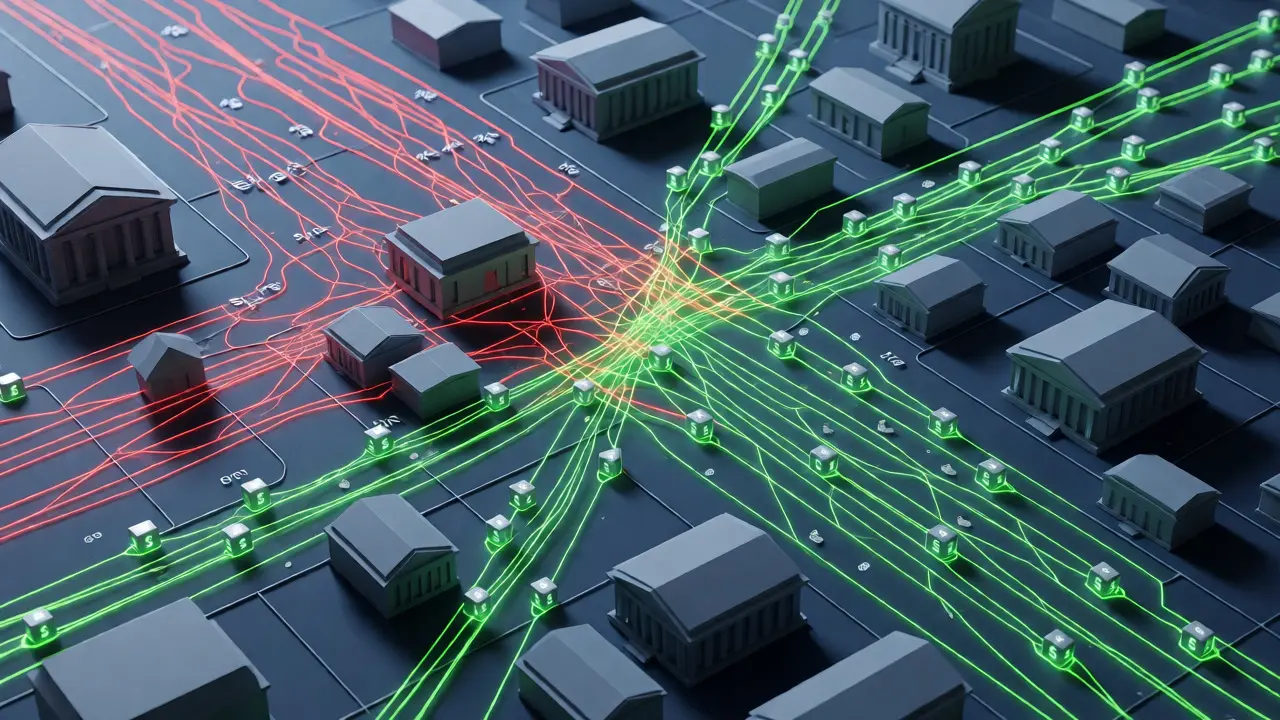
A few years ago, using blockchain for small transactions was impractical because gas fees (network transaction costs) could hit $20 or more per transfer. That barrier collapsed thanks to Layer 2 scaling solutions. Networks like Arbitrum, Base, and Optimism bundle thousands of transactions together before settling them on the main Ethereum chain. As of 2025, 87% of Ethereum’s economic activity migrated to these Layer 2 networks.
This technical evolution changed the economics entirely. Transaction costs plummeted from roughly $24 in 2021 to less than one cent today. Suddenly, micropayments became viable. You can now stream payments for content, settle gig economy wages instantly, or track individual package movements in a supply chain without eating your profit margins in fees. Interoperability also improved significantly. Bridges like LayerZero allow assets to move seamlessly between different blockchains, reducing fragmentation. Hyperliquid’s canonical bridge alone processed $74 billion in volume year-to-date in 2025, proving that high-throughput cross-chain movement is no longer a theoretical concept.
Real-World Adoption: Who Is Actually Using It?
It’s easy to get lost in tech specs, so let’s look at who is deploying this. Financial services lead the pack, contributing 40% to global blockchain market revenue. Mastercard’s Multi-Token Network project, tested with Standard Chartered Bank, shows major card networks aren't fighting blockchain-they’re building on top of it. Similarly, J.P. Morgan’s Kinexys platform uses permissioned blockchains for institutional settlement.
Beyond finance, healthcare is seeing rapid growth. With strict data privacy laws like GDPR, hospitals need secure ways to share patient records without exposing sensitive data to central servers prone to hacks. Blockchain offers an immutable audit trail. Deloitte projects that 65% of healthcare data exchanges will use blockchain by 2030. Supply chain is another big winner. Walmart and Maersk have used similar tech to trace food safety and shipping containers. UNICEF even used blockchain to track $12.7 million in humanitarian aid across 17 countries, ensuring funds reached their destination with 100% transparency.
However, consumer adoption lags. Only 28% of global merchants accept cryptocurrency directly. Most users interact with blockchain indirectly through apps that hide the complexity. You might buy a product online, pay with a card, and the merchant settles in stablecoins behind the scenes. You never see the wallet address, but the blockchain did the work.

The Hurdles Remaining in 2026
Despite the progress, claiming blockchain has "won" is premature. Several significant barriers remain. First is regulation. While the U.S. passed the Clarity for Payment Stablecoins Act in 2025 and the EU finalized MiCA regulations, the global landscape remains fragmented. Only 32 of 195 countries have comprehensive crypto regulatory frameworks. This inconsistency makes it hard for multinational corporations to standardize their operations. Compliance mapping remains a top challenge, cited by 63% of enterprises as a major implementation hurdle.
Second, user experience is still tricky for non-tech-savvy individuals. Managing private keys, understanding network selection, and avoiding scams require a learning curve. Trustpilot reviews for blockchain payment processors show that 34% of negative feedback cites complex onboarding processes. Until wallets become as simple as Venmo or PayPal, mass consumer adoption will stall.
Finally, there is the threat of quantum computing. Current cryptographic standards securing blockchains may not withstand powerful quantum computers in the coming decades. While this is a long-term risk, experts like Nouriel Roubini argue that scalability and regulatory hurdles are still insurmountable for mainstream retail use. He suggests many applications are "solutions looking for problems." Yet, Gartner predicts that by 2027, blockchain will underpin 30% of cross-border payment infrastructure, suggesting the institutional bet is firmly placed.
Verdict: Is It the Future?
So, is blockchain the future of digital transactions? Yes, but not in the way early evangelists predicted. It won't likely replace your Visa debit card for buying groceries tomorrow. Instead, it is becoming the invisible plumbing of the global financial system. It handles the heavy lifting of cross-border settlements, asset tokenization, and trust verification where traditional systems fail due to cost or speed.
For businesses, ignoring blockchain means missing out on faster cash flow and lower operational costs. For consumers, the change will be subtle: payments will become instant, transparent, and cheaper, often without knowing which ledger recorded the transaction. The technology has moved from speculative hype to essential infrastructure. The question isn't whether blockchain will play a role in your financial life-it already does. The question is how quickly you adapt to leverage its efficiency before your competitors do.
Is blockchain safer than traditional banking?
Blockchain offers superior security against tampering because its ledger is decentralized and immutable. Once data is recorded, it cannot be altered without consensus from the network. However, security risks shift from bank fraud to user error, such as losing private keys or falling for phishing scams targeting wallet addresses.
Do I need to understand coding to use blockchain for payments?
No. Modern interfaces abstract away the technical complexity. Users interact with simple apps similar to digital wallets. Developers handle the smart contract logic and network interactions, allowing everyday users to send and receive value without writing code.
What are the biggest disadvantages of blockchain transactions?
The main drawbacks include regulatory uncertainty across different jurisdictions, potential volatility when using non-stablecoin assets, and irreversible transactions. Unlike credit cards, there are no chargebacks, meaning if you send money to the wrong address, it is generally gone forever unless the recipient agrees to return it.
How does blockchain reduce transaction costs?
Blockchain reduces costs by eliminating intermediaries like correspondent banks and clearinghouses. Layer 2 scaling solutions further drive down fees by batching transactions, bringing costs down to less than a cent per transaction compared to the $20-$50 fees often associated with international wire transfers.
Will blockchain replace fiat currency?
Unlikely in the near term. Instead, blockchain technology is being integrated with fiat currencies through stablecoins and Central Bank Digital Currencies (CBDCs). These digital forms of government-issued money run on blockchain rails, combining the stability of fiat with the efficiency of distributed ledger technology.