
Since January 1, 2025, Russia has enforced a strict and detailed tax regime for cryptocurrency, turning what was once a legal gray area into a tightly regulated system. The new framework, established by Federal Law No. 418-FZ a comprehensive tax law signed on November 29, 2024, that formally classifies cryptocurrency as property and sets mandatory reporting and tax obligations for individuals and businesses, has reshaped how Russians interact with digital assets. This isn’t just about collecting taxes-it’s about control. The law introduces high compliance burdens, regional mining bans, and no exemptions based on how long you hold your coins. If you’re trading, mining, or even just holding crypto in Russia, you need to understand exactly what this law demands.
How Crypto Income Is Taxed for Individuals
For Russian residents, cryptocurrency profits are treated as personal income and taxed under the same rules as stocks or dividends. The tax rate isn’t flat-it’s progressive. If your total annual income from crypto (including sales, staking rewards, and airdrops) is under 2.4 million rubles (about $32,653 at the 2025 exchange rate), you pay 13%. Once you cross that threshold, the rate jumps to 15%. This income is now combined with any other securities income, meaning you can’t hide crypto gains by keeping them separate from stock trades.
Non-residents face a harsher deal: a flat 30% tax on all crypto income earned in Russia. There’s no deduction for losses, no exemption for long-term holdings, and no grace period. If you’re a foreigner trading crypto while living in Russia-even temporarily-you’re subject to this rate.
One of the biggest surprises? The three-year ownership exemption a rule that lets Russians sell assets like cars or jewelry after three years without paying tax does NOT apply to cryptocurrency. Even if you bought Bitcoin in 2020 and sold it in 2025, you still owe tax on the gain. There’s no “long-term hold” benefit here. The government treats crypto like cash-taxable the moment you convert it to rubles or spend it on goods.
Corporate Tax and Mining Rules
Businesses that mine or trade crypto must operate under the General Taxation System (OSNO). This means they can’t use simpler regimes like the Unified Agricultural Tax or the Simplified System of Taxation. The corporate profit tax rate is fixed at 25%, which is 20% higher than the standard rate for most Russian companies. This has already pushed some mining operations out of the formal economy.
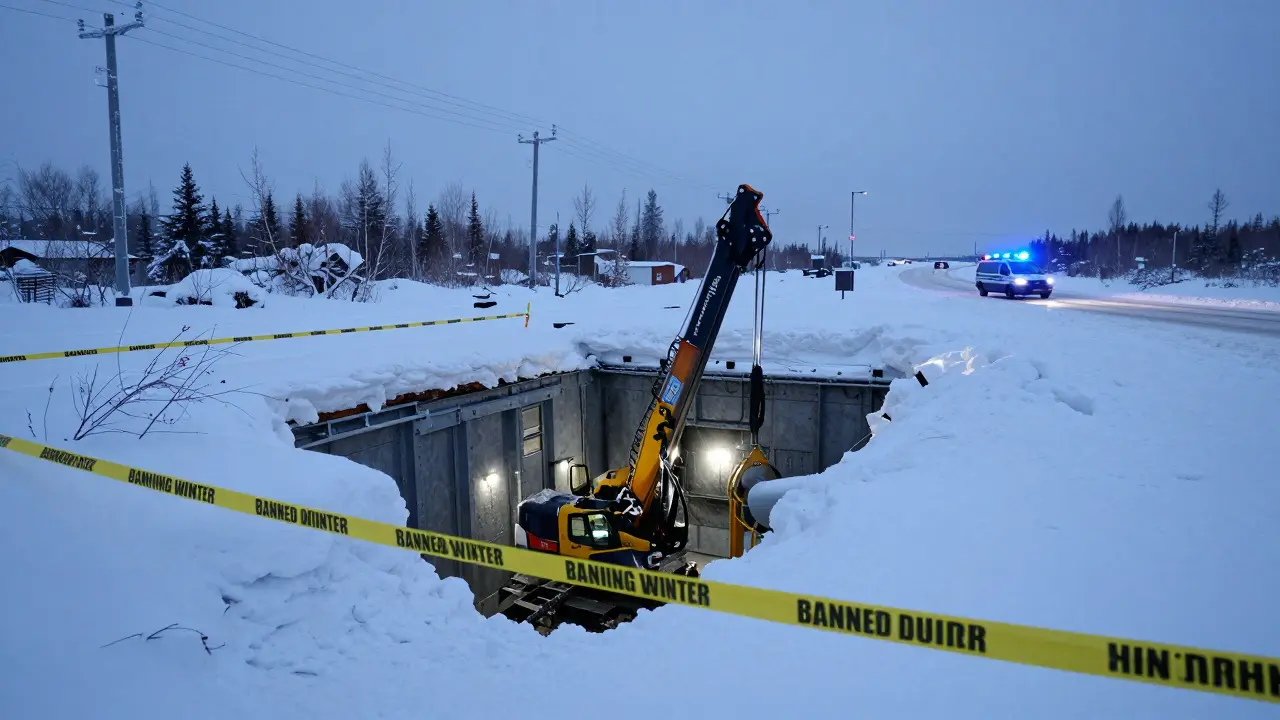
Miners face another layer of restriction: geographic bans complete prohibition of mining in Dagestan, Chechnya, and the self-proclaimed Donetsk and Luhansk People's Republics until 2031. In Siberian regions like Irkutsk Oblast, Buryatia, and Zabaykalsky Krai, mining is banned during winter months when energy demand spikes. These aren’t suggestions-they’re enforceable laws. Local authorities can shut down mining rigs on the spot.
Even if you’re a small business, you’re still required to use market prices from approved foreign exchanges to calculate your tax base. The law specifies that only exchanges with a daily trading volume over 100 billion rubles ($1.36 billion) and at least three years of public price history qualify. That eliminates most small or regional platforms. If you bought Bitcoin on an exchange that doesn’t meet these criteria, you can’t use its price-your tax calculation becomes a legal gamble.
Reporting Requirements and Penalties
Every quarter, individuals and businesses must report their crypto activity to the Federal Tax Service (FTS). This includes every transaction: buys, sells, swaps, staking rewards, and even transfers between wallets. You need to keep records of:
- Wallet addresses involved
- Transaction IDs
- Date and time of each transaction
- Exchange rate used to convert to rubles
- Source of the exchange data (which exchange you used)
Failure to report can cost you up to 40,000 rubles ($545) per violation. If you underpay taxes, penalties range from 15% to 40% of the unpaid amount, plus daily interest. The FTS has built automated systems to cross-check data from foreign exchanges and Russian banks, making it harder than ever to go unnoticed.
There’s also a reporting threshold: if your total annual crypto transactions exceed 600,000 rubles ($8,163), you’re automatically flagged for deeper scrutiny. But here’s the catch-this threshold applies to the sum of all transactions, not just profits. So if you bought $10,000 worth of Ethereum, sold $2,000 of it, and sent $3,000 to a friend, you’ve already hit the limit-even if you lost money overall. This rule was designed to catch money laundering, but it’s hitting ordinary users the hardest.
Why the Law Is Controversial
While the government claims the law brings transparency and revenue, many experts and users see it differently. The Higher School of Economics says the 25% corporate tax rate is too high and will drive mining underground. A survey of 127 Russian accounting firms found that 89% needed weeks of training just to handle crypto tax calculations. Many still struggle to verify exchange data from overseas platforms that don’t comply with Russian reporting standards.
Users on Russian forums like RuTracker report spending over 30 hours just calculating taxes for one month. One miner wrote: “I spent more time on paperwork than I did on mining.”
Another major complaint? No deductions for expenses. Miners can’t deduct electricity, hardware depreciation, or cooling costs. Retailers can’t deduct transaction fees or exchange fees. This is unlike most countries, where business expenses reduce taxable income. In Russia, you pay tax on gross revenue-even if you broke even after paying bills.
On the flip side, the VAT exemption for crypto transactions was welcomed by industry groups. Before 2025, some exchanges were forced to charge 20% VAT on trading fees, making transactions 15-20% more expensive. Now that’s gone. The Russian Union of Industrialists and Entrepreneurs says this alone could boost market growth.

Market Impact Since January 2025
The law has already changed behavior. The Central Bank reported an 8% spike in exchange traffic in late 2024 as people rushed to trade before the law took effect. But by January 2025, domestic mining dropped by 22% in key regions. The Association of Cryptocurrency and Blockchain Enterprises estimates that 400,000 active users left the formal market, shifting to peer-to-peer (P2P) platforms or offshore exchanges to avoid reporting.
At the same time, institutional interest is rising. By February 2025, 47 traditional banks and financial firms had registered as crypto service providers. They’re not trading for themselves-they’re offering custody, reporting, and compliance tools. This suggests the law is creating a new class of professional crypto service providers, not just taxing individuals.
The government expects to collect 12 billion rubles ($163 million) in crypto taxes in 2025. But independent analysts warn this number may be off by 30-40%. Why? Because if users keep leaving the system, the tax base shrinks. The real revenue may come from large players-mining farms, exchanges, and institutional traders-not everyday users.
What’s Next in 2025 and Beyond
The State Duma plans to review amendments to Federal Law No. 418-FZ on July 17, 2025. One key issue is the 600,000 ruble reporting threshold. Many users with dozens of small transactions are being caught in the net, even if they’re not profiting. The government may raise the limit or allow aggregation rules to make it fairer.
Also in the works: the Central Bank’s digital ruble pilot for welfare payments, starting in October 2025. This could eventually link crypto holdings to state-issued digital currency, creating a new layer of oversight. If your crypto wallet is linked to your government benefits, the FTS will have even more visibility into your financial life.
For now, the message is clear: if you’re involved with cryptocurrency in Russia, you’re under the microscope. The law doesn’t ban crypto-it just makes it expensive, complicated, and risky to use. The government isn’t trying to stop it. It’s trying to own it.
Do I have to pay tax if I only trade crypto for other crypto?
Yes. In Russia, any trade between cryptocurrencies-like swapping Bitcoin for Ethereum-is treated as a taxable event. The tax is calculated based on the ruble value of the crypto you sold at the time of the trade. Even if you didn’t convert to rubles, you still owe tax on the gain.
Can I avoid tax by using offshore exchanges?
No. Russian tax law applies to all residents regardless of where they trade. The Federal Tax Service can request transaction data from foreign exchanges that meet the law’s volume and history criteria. If you’re a Russian resident, your global crypto activity is taxable.
What happens if I don’t report my crypto income?
You risk fines of up to 40,000 rubles for failing to file a report, plus penalties of 15-40% of the unpaid tax amount. Interest accrues daily. In serious cases, the FTS can freeze bank accounts or initiate criminal proceedings for tax evasion, especially if amounts exceed 1 million rubles.
Are staking rewards and airdrops taxable?
Yes. Both staking rewards and airdrops are considered income when you receive them. You must record the ruble value of the tokens at the time they hit your wallet and include that in your annual tax declaration.
Can I deduct mining costs like electricity and hardware?
No. Unlike in many other countries, Russian tax law does not allow deductions for mining expenses. You pay tax on the full value of rewards received, regardless of how much you spent to earn them.
Is there a way to legally reduce my crypto tax bill?
Only one: time your sales. If you’re close to the 2.4 million ruble threshold, consider spreading sales across multiple years. You can’t offset losses, but you can avoid the higher 15% rate by staying under the limit. Also, if you’re a business, keep all records perfectly-errors can trigger audits.