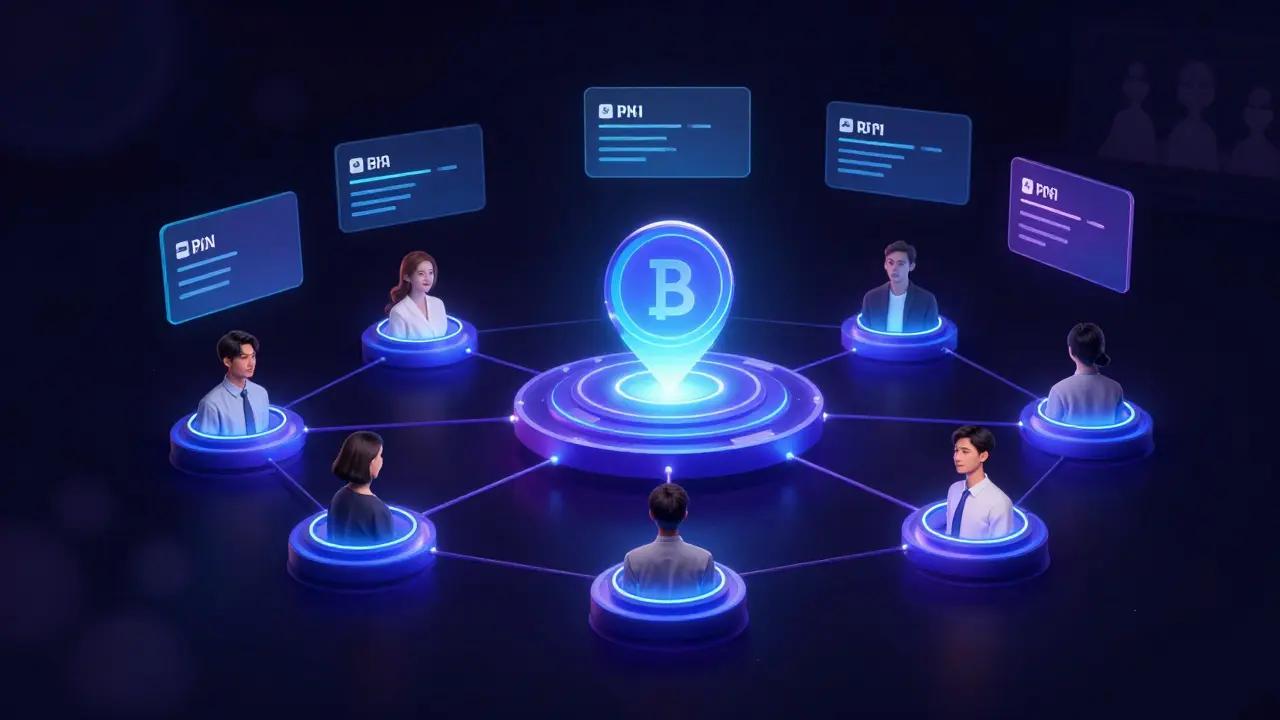
Panther AI (PAI) is a cryptocurrency built for decentralized finance (DeFi), designed to make trading digital assets simpler and more secure. Unlike many crypto projects that focus only on price speculation, PAI is tied to a real platform-a decentralized exchange (DEX)-that lets users trade, earn, and govern without relying on traditional banks or centralized apps. Launched in 2024, it runs on the BNB Smart Chain, meaning it’s compatible with tools like PancakeSwap and uses the BEP20 token standard. This makes it easy to store, send, and swap PAI using popular wallets like MetaMask or Trust Wallet.
How Panther AI (PAI) Works
At its core, Panther AI isn’t just a coin. It’s part of an ecosystem. The PAI token powers a DEX that’s built to reduce friction for new users entering DeFi. Most decentralized exchanges are clunky for beginners-high gas fees, confusing interfaces, complex approval steps. Panther AI’s platform fixes that. It streamlines trades, lowers slippage, and automatically optimizes liquidity pools so users get better rates without needing to understand the math behind it.
One of its standout features is community governance. Holders of PAI tokens can vote on changes to the platform-things like fee structures, new trading pairs, or even how development funds are spent. This isn’t just a marketing claim. The project has a live on-chain voting system where proposals are submitted, debated, and executed based on token-weighted votes. It’s like having a say in how your favorite app evolves, but without a company CEO making the final call.
Supply and Tokenomics
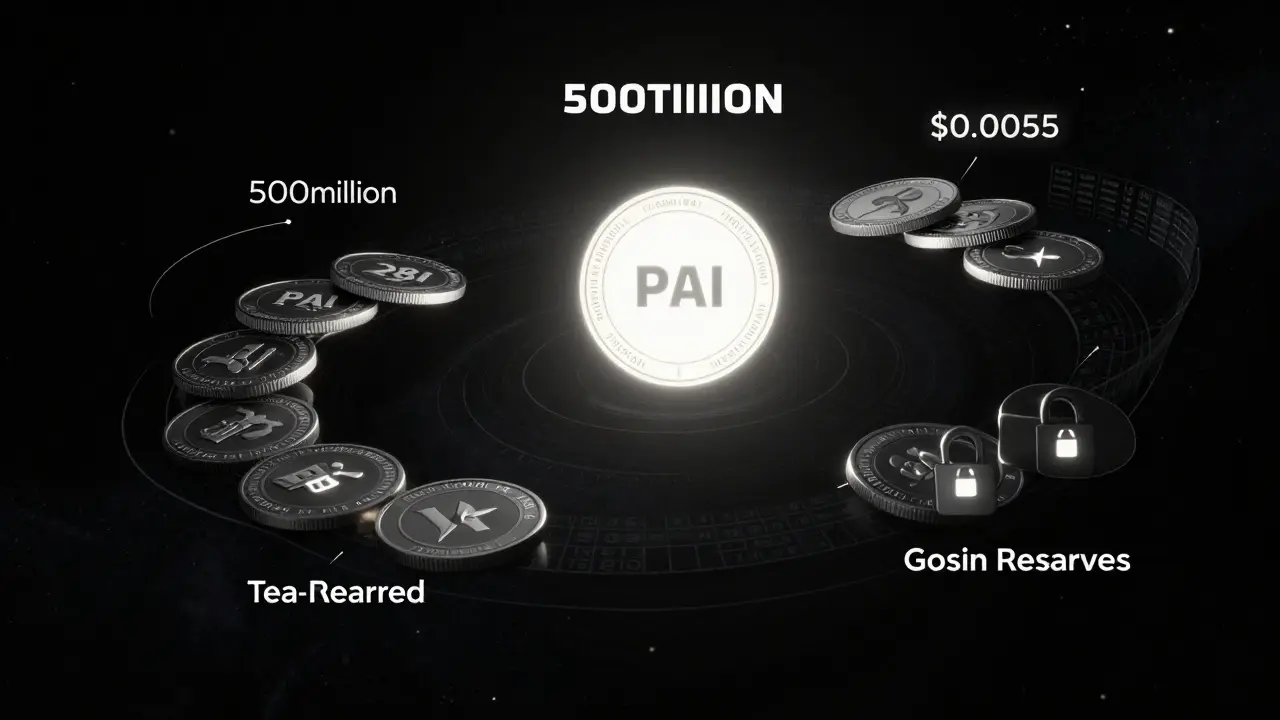
The total supply of PAI is capped at 500 million tokens. As of now, 475 million have been created, with 280 million actively circulating in the market. That means about 195 million tokens are still locked up-either in reserve, staking pools, or future team allocations. This controlled release helps prevent sudden price crashes from too many tokens flooding the market at once.
The fully diluted valuation (FDV), which assumes all 500 million tokens are in circulation, sits at around $2.7 million (based on BTC68.9684). That’s a useful number to watch. If the price rises but the circulating supply stays low, the FDV can look inflated. Right now, the real market cap is closer to $1.5 million, based on the 280 million circulating tokens.
Where You Can Trade PAI
PAI isn’t listed on Coinbase or Binance’s main exchange, but it’s available on several decentralized and smaller centralized platforms. The most active trading pair is PAI/USDT on BingX, where over $600,000 traded in the last 24 hours. That’s the primary liquidity hub.
For users who prefer decentralized trading, PancakeSwap (v2) is the go-to. Here, PAI trades against BNB. The price on PancakeSwap is around $0.0055, with a daily volume of about $2,100. Other exchanges like Bilaxy also list PAI, but liquidity there is thin. If you’re trying to buy or sell a large amount, you’ll want to use BingX for better rates and less slippage.
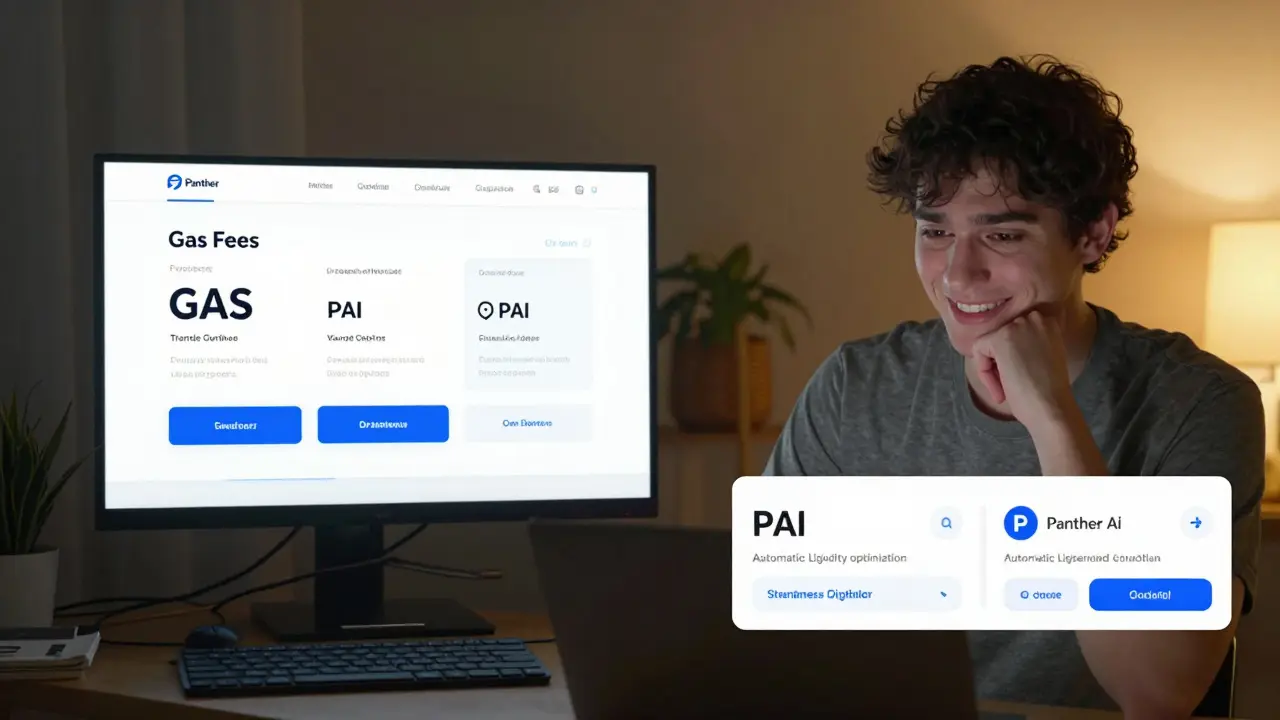
Price Performance and Market Sentiment
PAI’s price has been volatile since launch. In late 2024, it briefly hit $0.012, but since then, it’s settled into a range between $0.005 and $0.009. As of March 2026, most exchanges show it trading around $0.0055. That’s down over 50% from its peak.
Technical indicators suggest a cautious market. The Relative Strength Index (RSI) is at 46-right in the neutral zone. No strong buy or sell signal. The Fear & Greed Index for PAI is at 30, which means investors are feeling cautious. The 21-day Exponential Moving Average (EMA) is at $0.0145, and since the current price is well below that, it’s signaling a bearish trend.
Trading volume has also dropped. In the last 24 hours, total volume was just under $1 million-down 22% from the day before. That’s a sign fewer people are actively trading it. Low volume + falling price usually means weak demand. It doesn’t mean the project is dead, but it does mean momentum has stalled.
What’s Next for Panther AI?
The team’s roadmap focuses on three things: liquidity, education, and user growth. Right now, the DEX doesn’t have enough users to sustain high trading volume. To fix that, they’re launching educational content-videos, guides, live Q&As-to help newcomers understand how to use DeFi safely. They’re also planning to integrate with more wallets and add staking rewards for PAI holders.
One major hurdle? Competition. Uniswap and PancakeSwap already dominate the DEX space. Panther AI has to offer something better-not just a prettier interface, but real advantages like lower fees, faster trades, or unique governance perks. So far, it’s still early. The project hasn’t proven it can outperform the giants.
Is PAI a Good Investment?
If you’re looking for a quick pump, PAI isn’t it. The price predictions from CoinCodex suggest it could drop further-possibly to $0.0045 by late March 2026. That’s not a forecast you can bank on, but it does reflect current market sentiment.
But if you’re interested in long-term DeFi innovation, PAI might be worth watching. The team is building something tangible-a DEX with real utility, not just a token sale. If they can grow their user base and prove their governance model works, PAI could gain traction. But that’s a big "if." Right now, it’s a high-risk, low-liquidity asset with unproven adoption.
Only invest what you can afford to lose. And if you do, use a non-custodial wallet. Never keep large amounts on exchanges.
Key Takeaways
- Panther AI (PAI) is a DeFi token tied to a decentralized exchange built on BNB Smart Chain.
- Total supply: 500 million; circulating supply: 280 million as of March 2026.
- Trading volume is low-under $1 million daily-with most activity on BingX and PancakeSwap.
- Price is around $0.0055, down significantly from its peak, with bearish technical signals.
- Community governance is real: token holders vote on platform changes.
- Not a top-tier crypto. High risk. Only suitable for those who understand DeFi risks.
Is Panther AI (PAI) available on major exchanges like Binance or Coinbase?
No, PAI is not listed on Binance, Coinbase, or other major centralized exchanges. It’s only available on smaller platforms like BingX, PancakeSwap, and Bilaxy. This limits liquidity and makes it harder to buy or sell large amounts without affecting the price.
Can I stake PAI tokens to earn rewards?
As of now, staking is not live on the Panther AI platform. The team has mentioned plans to introduce staking in future updates, but no official launch date has been announced. Always check the official website or their verified Telegram/Discord channels before investing time or funds into any staking program.
Is Panther AI a scam?
There’s no public evidence that Panther AI is a scam. The team has published a whitepaper, a functional DEX, and open-source code on BscScan. The contract has been audited by a third party. However, it’s still a small, low-liquidity project with minimal media coverage. That makes it vulnerable to manipulation. Treat it as high-risk, not as a guaranteed investment.
How does PAI compare to other DeFi tokens like UNI or CAKE?
UNI (Uniswap) and CAKE (PancakeSwap) are established leaders with millions of users, billions in trading volume, and years of proven track records. PAI is tiny in comparison-its daily volume is less than 0.1% of PancakeSwap’s. It doesn’t have the same liquidity, user base, or brand recognition. PAI’s advantage is its focus on simplicity and education for new users, but it hasn’t yet proven it can compete on scale.
What’s the best wallet to store PAI?
Use a non-custodial wallet that supports BNB Smart Chain, like MetaMask, Trust Wallet, or Coinbase Wallet. Never store PAI on an exchange unless you’re actively trading. Always double-check the token contract address before sending funds-there are fake PAI tokens on the network.