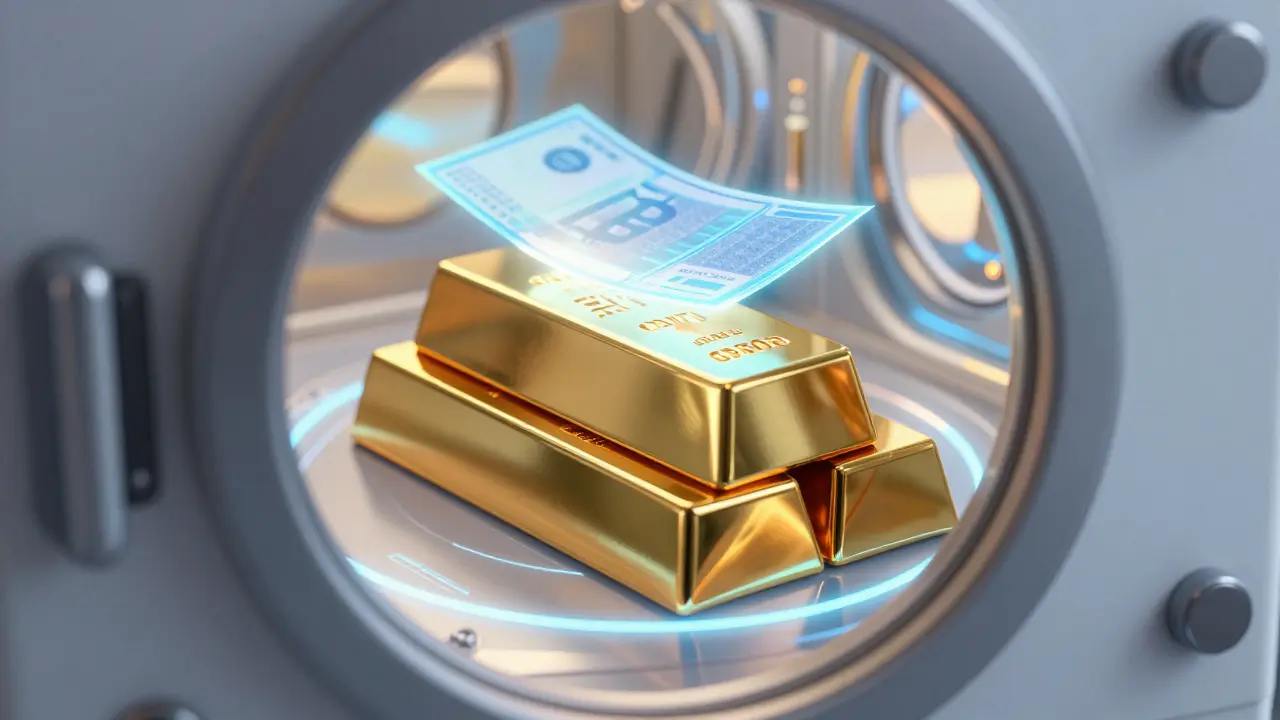
Imagine you have a gold bar, but the local store only accepts digital gold vouchers. You can't just hand over the heavy bar at the register, so you give your gold to a secure vault. In exchange, the vault gives you a digital receipt that represents exactly one gold bar. You can now spend that receipt anywhere the store accepts it, and if you ever want your actual gold back, you just hand the receipt back to the vault. That is exactly how wrapping cryptocurrency works.
In the blockchain world, different networks like Bitcoin and Ethereum are like separate islands. They don't naturally talk to each other. If you hold Bitcoin but want to use a lending app on Ethereum, you can't just "send" BTC to an Ethereum address-it would simply vanish. To fix this, developers created wrapped tokens. These are essentially digital receipts that live on one blockchain but are backed 1:1 by an asset on another. This process unlocks the value of your coins, allowing them to move across different ecosystems without you having to sell your original assets.
What Exactly are Wrapped Tokens?
Wrapped Tokens is a tokenized version of a cryptocurrency asset that operates on a different blockchain than its underlying asset. They are designed to solve the problem of interoperability, enabling assets from one chain to function within the smart contracts of another. For instance, Wrapped Bitcoin (WBTC) allows you to take the value of Bitcoin and use it in the Decentralized Finance (DeFi) world of Ethereum.
The key is the 1:1 peg. One wrapped token always equals one unit of the original asset. If you wrap 1 BTC, you get 1 WBTC. If the price of Bitcoin jumps to $100,000, your WBTC is also worth $100,000. This allows investors to maintain their exposure to a long-term asset like Bitcoin while still earning interest or providing liquidity on other networks.
How the Wrapping Process Works Step-by-Step
Wrapping isn't magic; it's a coordinated sequence of events involving a user, a merchant, and a custodian. Whether you are using a centralized exchange or a DeFi protocol, the logic remains the same:
- Selection: You choose the asset you want to wrap and the target blockchain where you want to use it.
- Transfer: You send your original assets to a merchant (like an exchange) or directly to a smart contract.
- Custody: The assets are moved to a Custodian, which could be a company like BitGo or a decentralized autonomous organization (DAO).
- Locking: The custodian locks the original asset in a secure vault. This ensures the token cannot be spent while the "receipt" exists.
- Minting: The custodian mints an equivalent amount of wrapped tokens on the destination chain (e.g., creating WBTC on Ethereum using the ERC-20 Token Standard).
- Delivery: The wrapped tokens are sent back to the merchant and then delivered to your digital wallet.
Typically, this process takes between 15 to 30 minutes. However, you'll need to pay "gas fees" to the network. For Ethereum-based wraps, these fees can fluctuate wildly, though they often range from $1.25 to $3.50 depending on how crowded the network is.
The Unwrapping Process: Getting Your Original Coins Back
Unwrapping is simply the wrapping process in reverse. It's called "burning" because the wrapped token is destroyed to release the original asset. Here is how it happens:
- Redemption Request: You send your wrapped tokens back to the custodian through a merchant.
- Verification: The custodian verifies that the tokens are legitimate and not fake.
- Burning: The custodian destroys (burns) the wrapped tokens so they no longer exist on the destination blockchain.
- Unlocking: The custodian unlocks the original asset from the vault.
- Return: The original asset is sent back to your wallet.
Be aware that unwrapping often takes longer than wrapping-sometimes 25 to 45 minutes-because custodians perform extra security checks to prevent fraud before releasing the original coins.
Comparing Popular Wrapped Assets
Not all wrapped tokens are created equal. Some rely on a few powerful people (centralized), while others rely on code (decentralized). The most common example is the difference between WBTC and wETH.
| Feature | Wrapped Bitcoin (WBTC) | Wrapped Ether (wETH) | renBTC |
|---|---|---|---|
| Custodian Model | Centralized (BitGo/Consortium) | Decentralized (Smart Contract) | Semi-Decentralized (Darknodes) |
| Risk Factor | Counterparty/Custodial Risk | Smart Contract Bug Risk | Node Network Stability |
| Primary Use | Using BTC in Ethereum DeFi | Trading ETH on DEXs | Trust-minimized BTC usage |
| Market Share | High (Dominant) | Very High (Native to ETH) | Low (Niche) |
Wait, why do we need wETH if Ether is already on Ethereum? It's a quirk of the system. Native Ether (ETH) is used to pay for gas, but it isn't an ERC-20 token. Most decentralized apps (dApps) require the ERC-20 standard to function. Wrapping ETH into wETH makes it compatible with these apps, essentially turning your "gas money" into a tradable asset.
The Risks: What Could Go Wrong?
While wrapping is incredibly useful, it introduces a danger called counterparty risk. In a normal Bitcoin transaction, you only trust the Bitcoin network. With wrapped tokens, you are trusting that the custodian actually has the Bitcoin they claim to have. If a custodian loses the keys to the vault or gets hacked, your wrapped tokens could become worthless because they are no longer backed by anything.
We've seen this happen. For example, the Multichain bridge hack resulted in a $32 million loss, proving that the bridge between chains is often the weakest link. Furthermore, there is the risk of scams. Many users lose money by interacting with "fake" wrapped token contracts. Always verify the contract address on a tool like Etherscan before you send any funds.
There is also a tax implication you should keep in mind. In some regions, like Australia, the tax office views wrapping as an exchange of one asset for another. This means wrapping 1 BTC into 1 WBTC could potentially trigger a capital gains tax event if the market value changed between the time you bought the original asset and the time you wrapped it.
Pro Tips for a Smooth Experience
If you're new to this, the easiest way to start is through a reputable exchange like Coinbase or Binance. They handle the technical heavy lifting, and most users can complete their first wrap in under 15 minutes. However, if you're using a wallet like MetaMask, keep these rules of thumb in mind:
- Check the Gas: Use a gas tracker to avoid paying $20 for a transaction that usually costs $3.
- Verify Contracts: Only use wrapped tokens from the official merchant list to avoid fake contracts.
- Start Small: If you're wrapping a large amount, send a small "test" amount first to ensure the address is correct.
- Patience is Key: Don't panic if your unwrapping takes 40 minutes. Custodian verification is a slow but necessary security step.
Is wrapping cryptocurrency safe?
It depends on the implementation. Decentralized wraps (like wETH) are generally safer because they rely on code, not people. Custodial wraps (like WBTC) carry counterparty risk-you are trusting the custodian to hold your assets securely. Always check if a project has a "proof of reserves" that you can verify on-chain.
What happens if the custodian goes bankrupt?
If a custodian fails and cannot provide the original assets, the wrapped token may lose its 1:1 peg and crash in value. This is why many experts suggest using trust-minimized solutions or diversifying across different wrapped assets.
Can I wrap any coin?
Almost any major coin can be wrapped if a service exists for it. While BTC and ETH are the most common, many other assets are wrapped to move between Solana, Binance Smart Chain, and Ethereum.
How long does the wrapping process take?
Wrapping usually takes 15-30 minutes. Unwrapping typically takes longer, between 25-45 minutes, due to the additional verification steps required to release the original asset from custody.
Do I have to pay fees to wrap my crypto?
Yes. You will pay network (gas) fees to the blockchain and potentially a service fee to the merchant or custodian facilitating the wrap.