
Most people think of cryptocurrency as a linear chain of blocks, secured by energy-hungry miners. But what if you could ditch the blocks and the miners entirely? That is exactly what Obyte is a decentralized platform based on Directed Acyclic Graph (DAG) technology rather than traditional blockchain architecture. Launched on Christmas Day in 2016 by Tony Churyumoff, Obyte offers a different way to handle digital transactions. It promises instant finality, no mining fees, and a safer environment for building apps. If you have ever been frustrated by slow confirmation times or high gas fees on Ethereum, understanding how Obyte works might change your perspective on what crypto can do.
The Core Problem with Traditional Blockchains
To appreciate why Obyte exists, you first need to look at where standard blockchains struggle. Bitcoin and Ethereum rely on miners or validators to bundle transactions into blocks. This process creates bottlenecks. During busy periods, networks get congested, transaction speeds drop, and fees skyrocket. Worse, the waiting game between submitting a transaction and having it confirmed opens the door for "front-running," where bots see your pending trade and jump ahead of it to profit.
Obyte solves this by removing the concept of blocks altogether. Instead of a single line of history, it uses a graph structure. Every new transaction confirms two previous ones. This means there is no central queue. Transactions happen in parallel, not one after another. The result is a system that scales naturally as more users join, without needing expensive hardware upgrades or complex sharding solutions.
How DAG Technology Powers Obyte
Directed Acyclic Graph (DAG) is a data structure where nodes connect in a specific direction without cycles, allowing for parallel processing of transactions sounds like computer science jargon, but the logic is simple. Imagine a family tree where each child validates their parents. In Obyte, every new transaction points back to two existing transactions. By confirming them, the new transaction proves they are valid. As more people use the network, more confirmations happen simultaneously.
This structure eliminates the need for miners. There is no race to solve a math puzzle. Consequently, there are no mining rewards to pay out, which removes a significant cost from the ecosystem. For the user, this translates to lower fees and faster speeds. You do not wait ten minutes for a block to be mined; you wait only until enough other users have indirectly confirmed your transaction. In practice, this often takes seconds.
The GBYTE Token: Supply and Economics
The native currency of the network is GBYTE a fixed-supply cryptocurrency token with a total cap of 1,000,000 units. Unlike inflationary coins that mint new tokens endlessly, Obyte has a hard cap. As of late 2025, the circulating supply hovers around 900,000 GBYTE, meaning most of the tokens are already in circulation. This scarcity model appeals to investors who dislike the dilution seen in many other projects.
The distribution method was unique. When Obyte launched, it did not hold an Initial Coin Offering (ICO). Instead, it distributed 99% of the tokens for free. About 64.5% went directly to holders of Bitcoin at the time of the snapshot. This "airdrop" approach aimed to create a fair start, avoiding the hype-driven price spikes common in ICOs. Today, trading volume remains modest, with daily volumes often under $5,000 across exchanges like Biconomy.com and PancakeSwap. While this low liquidity can make large trades difficult, it also means the market is less susceptible to sudden manipulation by whales compared to highly liquid but volatile altcoins.

Building Apps with Oscript
One of Obyte’s biggest selling points is its focus on developer safety. Most smart contract platforms, including Ethereum, use languages like Solidity. These languages are powerful but risky. A small coding error can lead to millions of dollars in losses, as seen in various hack incidents. Obyte addresses this with Oscript a proprietary programming language designed specifically for secure decentralized application development.
Oscript is intentionally limited. It does not allow for arbitrary code execution, which reduces the attack surface. Developers write conditions that must be met for a payment to release. Think of it as a very strict set of rules rather than a general-purpose computer. This makes it harder to build complex, sprawling applications, but much easier to build reliable financial tools. Projects like Discount Stablecoins have already utilized this framework to create stable value transfers without relying on centralized banks.
Key Features That Set Obyte Apart
Beyond the underlying tech, Obyte includes several features that feel futuristic compared to standard wallets:
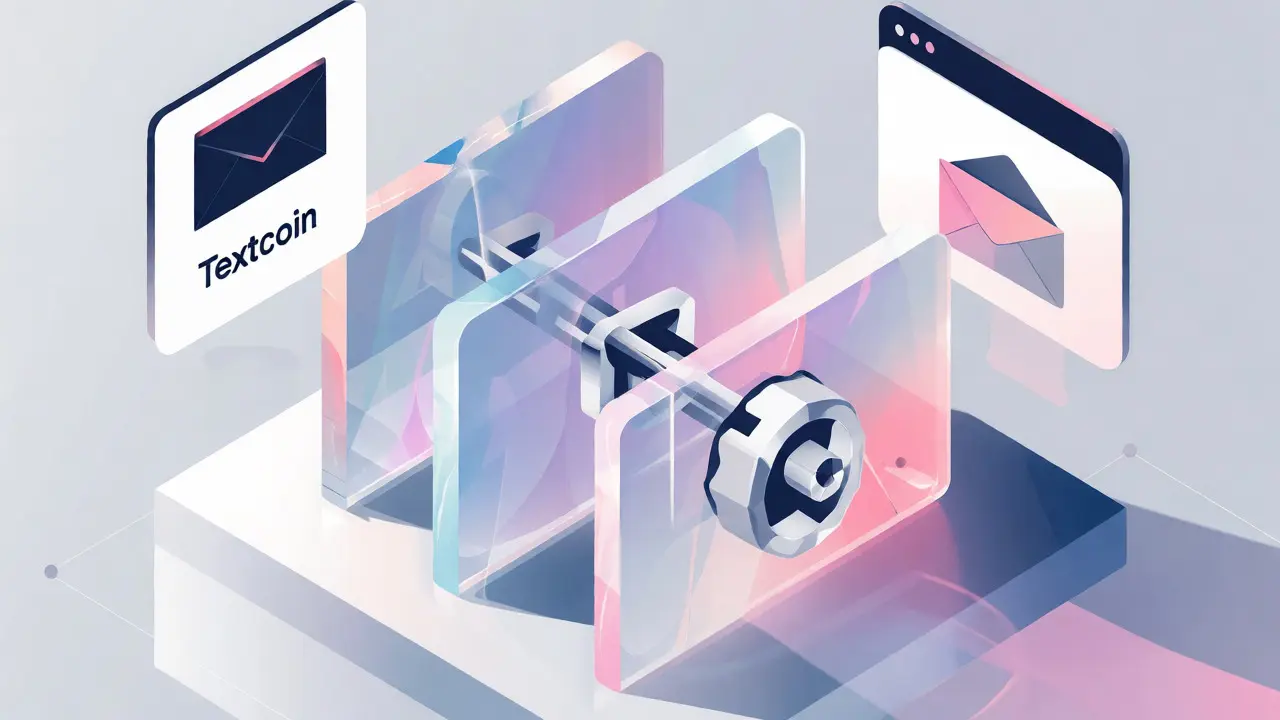
- Textcoins: You can send cryptocurrency to an email address. The recipient receives a link and a secret phrase. They claim the funds whenever they want, even if they don’t have a wallet yet. This bridges the gap between traditional email communication and crypto payments.
- Conditional Payments: You can lock funds until specific conditions are met. For example, you could agree to pay a freelancer only after a third-party oracle confirms the work is done. This enables trustless escrow services without lawyers or middlemen.
- Private Currencies: The platform supports untraceable currencies, offering a level of privacy that Bitcoin lacks. This is useful for everyday transactions where you do not want your entire financial history visible on a public ledger.
- IoT Compatibility: Because the libraries required to run an Obyte node are tiny, the technology fits well on Internet of Things devices. Your smart fridge could potentially negotiate a better price for milk in real-time using Obyte’s lightweight protocol.
Obyte vs. Ethereum: A Practical Comparison
If you are deciding whether to explore Obyte or stick with established giants, here is how they stack up on key metrics. Note that while Ethereum has massive network effects, Obyte prioritizes efficiency and security.
| Feature | Obyte (GBYTE) | Ethereum (ETH) |
|---|---|---|
| Architecture | DAG (Directed Acyclic Graph) | Blockchain |
| Consensus Mechanism | Witnesses / No Miners | Proof-of-Stake (Validators) |
| Transaction Speed | Instant Finality | Seconds to Minutes (depending on congestion) |
| Transaction Fees | Very Low / Free | Variable (Gas Fees) |
| Programming Language | Oscript (Restricted/Safe) | Solidity (General Purpose) |
| Total Supply | 1,000,000 GBYTE | No Hard Cap (Inflationary/Deflationary mix) |
| Ecosystem Size | Niche (Small community) | Massive (Thousands of dApps) |
Challenges and Market Reality
It would be dishonest to paint Obyte as a guaranteed winner. The platform faces significant hurdles. The primary challenge is adoption. With fewer than 700 active holder addresses recorded in some datasets, the community is tiny compared to the millions using Ethereum or Solana. Cryptocurrency values are driven by network effects-the more people use a network, the more valuable it becomes. Obyte currently sits outside these major feedback loops.
Liquidity is another concern. Trading volumes are low, meaning you might find it hard to buy or sell large amounts of GBYTE without moving the price significantly. Furthermore, because the ecosystem is smaller, there are fewer tutorials, fewer exchange listings, and less developer tooling available. If you are a beginner, the learning curve might feel steeper simply because there is less hand-holding material out there.
Who Should Use Obyte?
Obyte is not for everyone. If you want to trade meme coins with high volatility and deep liquidity, look elsewhere. However, Obyte shines for specific use cases:
- Privacy-Conscious Users: Those who value untraceable transactions will appreciate the private currency features.
- Developers Prioritizing Security: If you are building a DeFi app and cannot afford a smart contract bug costing millions, Oscript’s restrictive nature is a feature, not a bug.
- Micro-Payment Enthusiasts: The near-zero fees make it ideal for sending small amounts of value, such as paying for content per article or tipping creators.
- Bitcoin Holders: Since many early adopters received GBYTE through the Bitcoin snapshot, there is a philosophical alignment with the original cypherpunk ideals of decentralization and anti-gatekeeping.
Getting Started with GBYTE
If you decide to try Obyte, the process is straightforward but requires attention to detail. First, download the official Obyte wallet from obyte.org. Unlike MetaMask, which connects to multiple chains, the Obyte wallet is purpose-built. You will generate a backup phrase-keep this safe, as losing it means losing your funds forever.
To acquire GBYTE, you may need to navigate smaller exchanges. Platforms like Biconomy.com or Nonkyc.io often list GBYTE pairs against USDT or BTC. Be aware that withdrawal limits and KYC requirements vary by exchange. Once you have GBYTE, you can interact with decentralized apps (dApps) directly within the wallet interface. Try sending a textcoin to a friend’s email to test the unique functionality. Remember, because the network is small, always double-check addresses. There is no customer support hotline to reverse a mistaken transaction.
Is Obyte a blockchain?
No, Obyte is not a blockchain. It uses a Directed Acyclic Graph (DAG) structure. This means transactions are linked individually rather than grouped into blocks, allowing for parallel processing and eliminating the need for miners.
Can I mine GBYTE?
No, you cannot mine GBYTE in the traditional sense. The total supply is capped at 1,000,000 tokens, and most were distributed via airdrops to Bitcoin holders. New transactions are validated by witnesses and users, not by computational mining.
What makes Obyte safer than Ethereum?
Obyte uses Oscript, a restricted programming language that prevents many common vulnerabilities found in general-purpose smart contracts. It avoids unsafe patterns and limits what code can execute, reducing the risk of hacks due to coding errors.
Where can I buy GBYTE?
GBYTE is traded on smaller exchanges such as Biconomy.com, Nonkyc.io, PancakeSwap v2, and Uniswap V3. Due to lower liquidity, check current availability and trading pairs before attempting a purchase.
What is a Textcoin?
A Textcoin allows you to send cryptocurrency to an email address. The recipient gets a link and a secret phrase to claim the funds. This is useful for sending money to someone who does not yet have a crypto wallet.