
When you think about cryptocurrency, you probably imagine a global, borderless system-people trading Bitcoin from Tokyo to Toronto, mining Ethereum in Iceland, or holding Solana in a digital wallet no matter where they live. But that’s not the whole story. In countries where crypto is illegal, simply owning or trading digital assets can land you in serious legal trouble. No fines. No warnings. Jail time. That’s the reality for over 1.4 billion people worldwide.
Where Is Crypto Completely Banned?
As of 2025, ten countries have outright bans on cryptocurrency. These aren’t just restrictions-they’re full prohibitions. You can’t buy, sell, mine, hold, or even accept crypto as payment. The rules are absolute, and enforcement is getting tighter.- China - The strictest ban in the world. Since 2021, all cryptocurrency trading and mining are illegal. Banks can’t process crypto transactions. Exchanges are shut down. Even mining farms were physically shut off. Yet, China runs its own digital currency, the e-CNY, proving the ban isn’t about digital money-it’s about control.
- Egypt - The Central Bank of Egypt declared crypto transactions “contrary to Islamic law” and illegal under financial regulations. Violators face asset seizure and criminal charges.
- Nepal - Nepal’s central bank banned crypto in 2021, calling it a threat to the national currency. In 2022, authorities raided homes and confiscated mining rigs.
- Morocco - The Banque Centrale du Maroc prohibits all crypto-related activity. Using Bitcoin to pay for goods? Illegal. Holding it in a wallet? Also illegal.
- Afghanistan - After the Taliban took over, they banned crypto entirely, citing religious and economic concerns. Mining and trading are now criminal offenses.
- Algeria - The government banned crypto in 2018, calling it a “financial scam.” Authorities have shut down online forums and blocked crypto-related websites.
- Bangladesh - The Bangladesh Bank says crypto is “not a legal tender.” Anyone caught trading faces up to 7 years in prison under anti-money laundering laws.
- Bolivia - Bolivia’s central bank declared all cryptocurrencies illegal in 2014. They’re not just unregulated-they’re outright forbidden.
- Tunisia - Tunisia banned crypto in 2018, citing risks to financial stability. Despite this, underground trading persists, especially among young tech users.
- Iraq - In 2024, Iraq’s Central Bank issued a formal ban, warning citizens that crypto use could lead to prosecution under banking and anti-fraud laws.
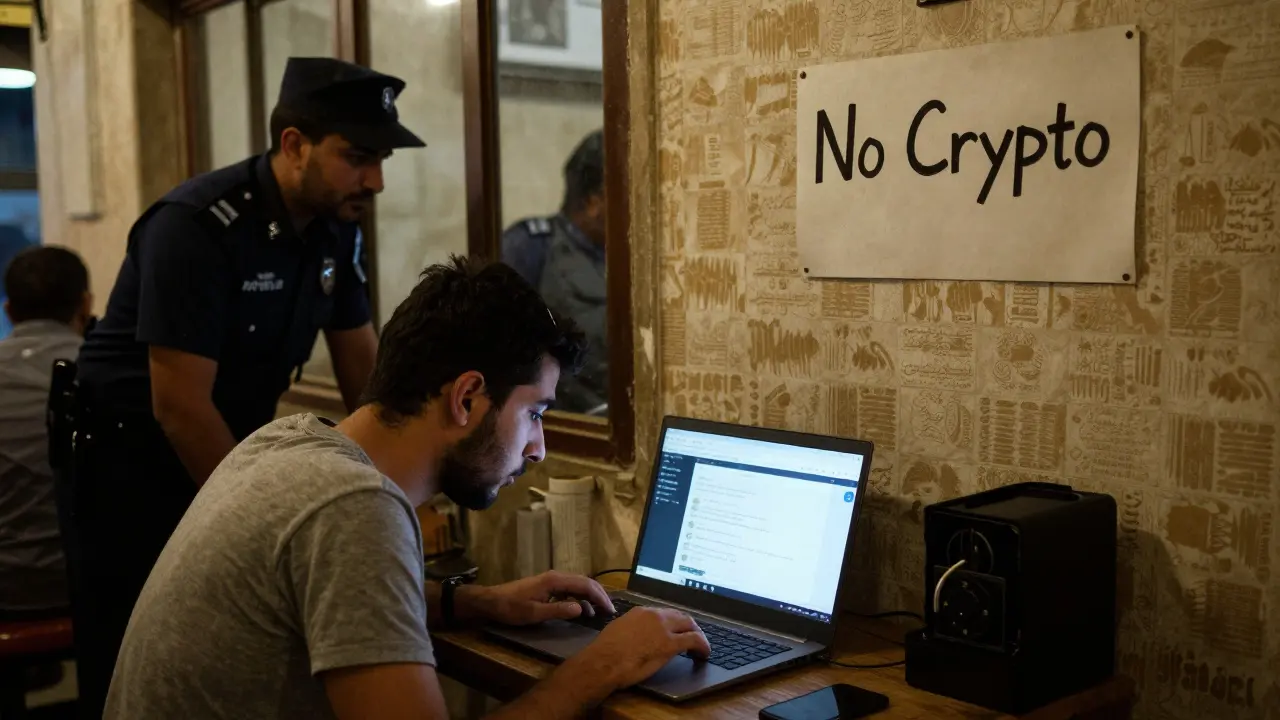
These countries don’t just say “no.” They actively monitor, block, and prosecute. In Bangladesh, police have arrested people for using Binance. In China, miners have been fined millions for running rigs in warehouses. In Nepal, the government even shut down internet cafes that allowed crypto trading.
Why Do These Countries Ban Crypto?
It’s not random. Each ban has a clear motive-usually tied to control.- Loss of monetary control - Governments want to manage the money supply. Crypto undermines that. When people use Bitcoin to avoid inflation, like in Tunisia or Iraq, it weakens the central bank’s power.
- Money laundering fears - Crypto’s pseudonymity makes it attractive for criminals. Countries like Algeria and Egypt claim bans are about stopping drug cartels and terror financing.
- Financial instability - In places like Bangladesh and Bolivia, the local currency is already weak. When citizens turn to crypto to save money, it drains demand for the national currency, causing more inflation.
- Religious objections - Egypt and Afghanistan cite Islamic finance rules, arguing that crypto is gambling (gharar) and unbacked by real assets.
- Energy concerns - China’s ban on mining wasn’t just about control-it was about power. Crypto mining in Xinjiang used more electricity than entire cities. The government shut it down to save energy.
But here’s the twist: most of these countries are still investing in their own digital currencies. China has the digital yuan. Egypt is testing a digital pound. Tunisia is exploring a digital dinar. So the issue isn’t digital money-it’s decentralization. If you can’t control it, you ban it.
What About Countries That Partially Ban Crypto?
Some nations don’t ban crypto outright-they just make it useless.- Turkey - Since 2021, banks can’t process crypto payments. You can’t use Bitcoin to buy a phone or pay rent. But you can still hold it. The goal? Stop citizens from fleeing the collapsing lira.
- India - No ban on owning crypto. But you can’t use it to pay for goods. All trading is taxed at 30%. The government wants to control it, not eliminate it.
- Indonesia - Crypto is legal as an investment asset, but not as payment. You can’t use Dogecoin to buy coffee. The central bank wants to keep crypto out of daily life.
- Vietnam - You can’t use crypto to pay for services. But you can trade it. Fines for using crypto as payment? Up to $8,790. The government is quietly preparing to regulate exchanges.
These aren’t bans-they’re workarounds. The governments want to keep crypto out of the real economy while letting people gamble on price swings. It’s like saying, “You can own a lottery ticket, but you can’t cash it in.”
What Happens If You Get Caught?
The penalties vary wildly.- In Bangladesh, you could go to prison for up to 7 years.
- In China, miners have been fined millions of dollars and had their equipment destroyed.
- In Egypt, authorities have seized bank accounts linked to crypto wallets.
- In Nepal, police have raided homes and confiscated laptops.
- In Algeria, websites that host crypto forums are blocked, and users face internet restrictions.
Even if you’re not mining or trading, just holding crypto in a wallet can be risky. In some countries, simply having a crypto app on your phone is enough to trigger an investigation. Police in Bangladesh have used blockchain analysis tools to trace wallet addresses-even if the user used a VPN.
How Do People Still Use Crypto in Banned Countries?
Despite the risks, crypto doesn’t disappear. It goes underground.- Peer-to-peer (P2P) trading - People use WhatsApp, Telegram, and local Facebook groups to trade crypto with cash. No exchange. No KYC. Just trust.
- VPN use - Over 70% of crypto users in banned countries use VPNs to access exchanges like Binance or Kraken. It’s not legal, but it’s common.
- Family networks - People send crypto to relatives abroad, who cash it out and send back local currency via hawala systems.
- Darknet markets - Some use crypto to buy goods on hidden websites, avoiding local banking scrutiny.
It’s risky. But for people in countries with hyperinflation-like Iraq or Tunisia-crypto isn’t a luxury. It’s survival. A man in Baghdad told a journalist: “I don’t trust the dinar. My son’s school fees doubled in six months. Bitcoin is the only thing that kept us from starving.”
What’s the Future?
The list of banned countries hasn’t changed much since 2023. But pressure is building.- Younger populations - In countries like Tunisia and Iraq, over 60% of people under 30 use crypto. They’re not going to stop.
- Global competition - Countries like the UAE and Switzerland are attracting crypto firms. Nations that ban it risk losing tech jobs, investment, and innovation.
- Regulatory evolution - Vietnam is moving toward regulation, not ban. Indonesia is building a national crypto exchange. Even China’s digital yuan is a sign that digital money isn’t the enemy-control is.
Some experts believe the next 5 years will see more bans lift-not because governments change their minds, but because they can’t stop the tide. People want access. Technology doesn’t care about borders. And when a country’s youth starts using crypto to escape poverty, the government has to decide: fight the people, or join them.
What Does This Mean for You?
If you live in one of these countries: know the risks. Don’t assume you’re safe just because you use a VPN. Authorities are getting better at tracking transactions.If you’re outside these countries: understand that crypto isn’t a global free-for-all. What you can do in the U.S. or Germany is illegal for billions of others. That’s not just a legal difference-it’s an economic divide.
And if you’re thinking about investing: remember that bans don’t kill crypto. They just push it underground. The real winners? The countries that regulate, not ban.
Is it illegal to own Bitcoin in China?
Yes. While owning Bitcoin isn’t explicitly criminalized, all trading, mining, and financial transactions involving Bitcoin are banned. Financial institutions can’t handle crypto, and exchanges are shut down. Holding Bitcoin in a personal wallet isn’t prosecuted directly-but if you trade it, mine it, or use it to pay for goods, you face fines, asset seizures, or criminal charges.
Can you be arrested for using crypto in Bangladesh?
Yes. Under Bangladesh’s Anti-Money Laundering Act, using, trading, or mining cryptocurrency is a criminal offense. Authorities have arrested individuals for using Binance, and courts have imposed prison sentences of up to 7 years. Even receiving crypto as payment can lead to prosecution.
Why does China ban crypto but use its own digital currency?
China doesn’t oppose digital money-it opposes decentralization. The e-CNY is fully controlled by the state, allowing the government to track every transaction, set spending limits, and cut off access instantly. Private crypto removes that control. So China bans Bitcoin but builds its own version of it-just one it owns.
Is crypto banned in all Muslim countries?
No. Only some Muslim-majority countries have banned crypto, like Egypt, Afghanistan, and Algeria. Others, like the UAE, Malaysia, and Bahrain, have clear regulations and allow crypto trading. The bans are often based on political or economic concerns, not religious doctrine alone.
Can I use crypto in a banned country with a VPN?
Technically, yes-but it’s risky. A VPN hides your IP address, but it doesn’t hide your wallet transactions. Authorities can still trace crypto movements on the blockchain. If you’re caught trading or sending crypto, even with a VPN, you can still face legal consequences. It’s not a shield-it’s a temporary workaround.
Are there any countries that might lift their crypto ban soon?
Vietnam and Indonesia are moving toward regulation, not ban. Vietnam has signaled it will allow licensed crypto exchanges by 2026. Indonesia is building a national crypto exchange to control trading. Countries that ban crypto often do so out of fear-but as younger populations demand access, and global tech investment flows elsewhere, those bans are starting to look outdated.