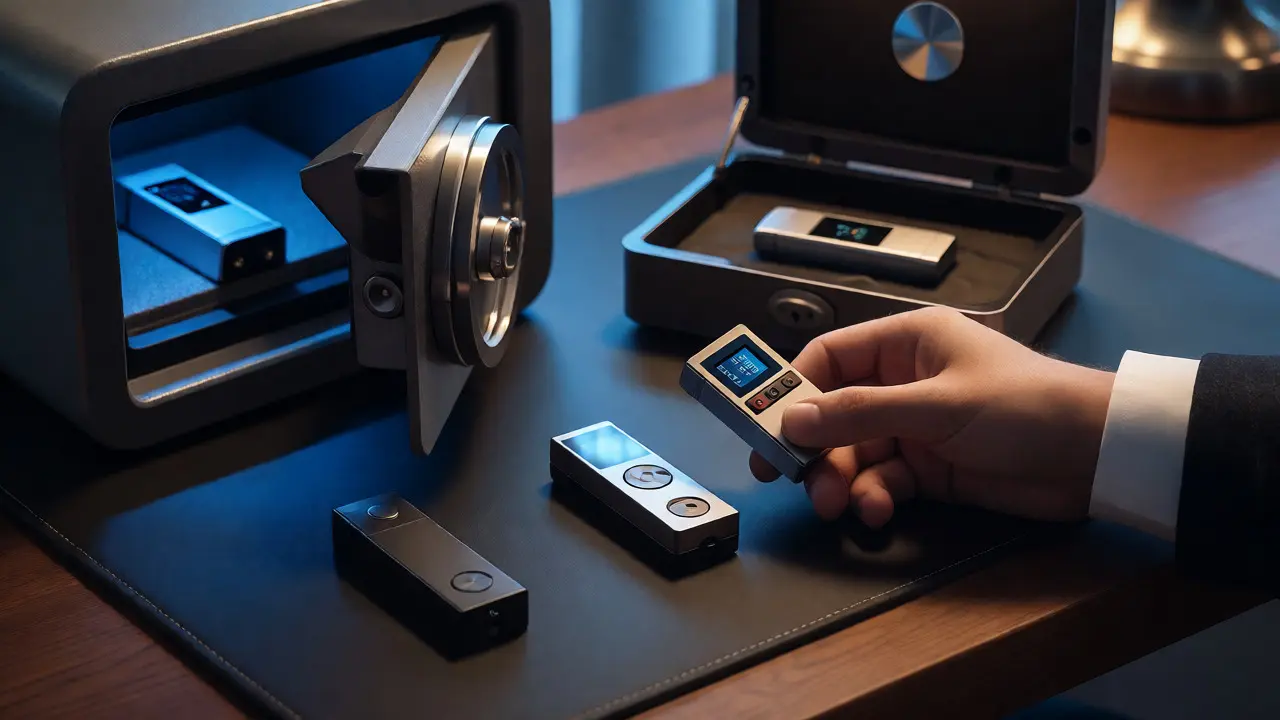
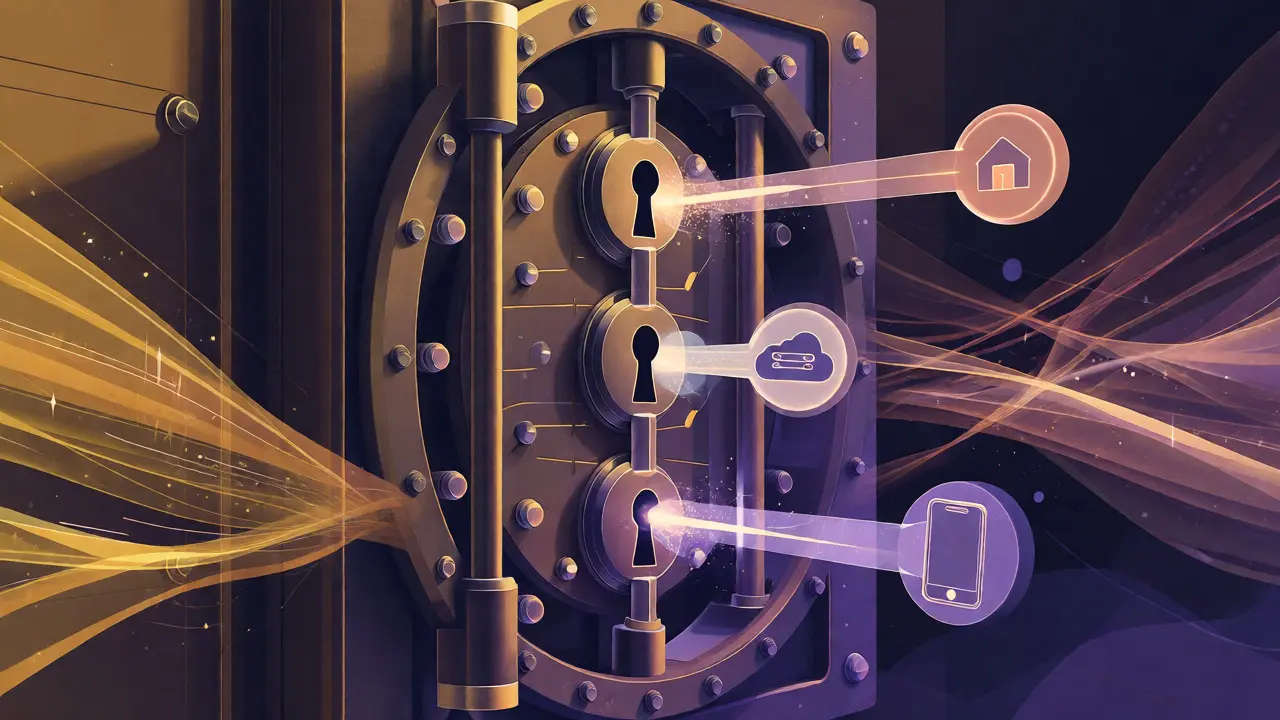
You’ve probably heard the horror stories: a hacker steals a private key, and millions of dollars vanish overnight. Or worse, an employee with sole access to a company treasury makes a mistake-or runs off with the money. This is where multi-signature crypto wallets, or multisig, change the game. Unlike standard wallets that rely on one key to unlock everything, multisig requires multiple approvals before any transaction goes through. It’s like a bank vault that needs three different keys from three different people to open.
If you’re managing significant assets, running a DAO, or just want extra peace of mind, understanding how these wallets work is non-negotiable. Let’s break down exactly what they are, why institutions love them, and whether the added complexity is worth it for you.
The Core Concept: M-of-N Security
At its heart, a multi-signature wallet operates on a simple rule set known as "M-of-N." Here, N represents the total number of authorized keys (signatories), and M is the minimum number of signatures required to authorize a transaction. The most common configuration is 2-of-3. This means you have three distinct private keys, but only two need to sign off to move funds.
This structure eliminates the single point of failure. In a traditional single-key wallet, if your one private key is compromised, your assets are gone. In a 2-of-3 multisig setup, a hacker would need to steal at least two separate keys from different locations or devices to drain the account. If you lose one key, you can still access your funds using the remaining two. This redundancy is crucial for long-term storage and institutional custody.
Other configurations exist depending on the risk tolerance and operational needs. A 3-of-5 setup offers higher security but requires more coordination, while a 1-of-2 setup might be used for joint accounts where either party can approve transactions, though this is less secure against theft.
Why Institutions and DAOs Rely on Multisig
Data doesn’t lie: Coinbase reported in 2023 that 78% of cryptocurrency businesses managing over $100,000 use multi-sig wallets. Why such high adoption? It comes down to checks and balances. For companies, it prevents internal fraud. No single employee can empty the treasury. For decentralized autonomous organizations (DAOs), it ensures democratic control. Funds aren’t moved by a dictator; they require consensus among elected guardians.
Consider the case of a typical crypto hedge fund. They might use a 3-of-5 setup where three senior partners hold keys. If one partner is unavailable due to travel or illness, the other two can still approve urgent trades. But if one partner turns rogue, they cannot unilaterally siphon funds. This balance between accessibility and security is why BitGo, a leading institutional custodian, identifies 2-of-3 as the industry standard for enterprise use.
Furthermore, regulatory bodies are catching on. In 2022, the U.S. Office of the Comptroller of the Currency issued an interpretive letter confirming that properly implemented multisig satisfies "dual control" requirements for banking activities. This legal recognition has accelerated adoption among traditional finance players entering the crypto space.
How the Transaction Process Works
Executing a transaction in a multisig wallet feels slightly different from sending Bitcoin or Ethereum from a standard app. Here is the step-by-step flow:
- Initiation: One signatory creates a transaction proposal. This could be sending ETH to a vendor or swapping tokens.
- Pending Status: The transaction enters a "pending" state on the blockchain or within the smart contract interface. It is not yet final.
- Signing: Other authorized signatories receive a notification. They review the details-amount, destination address, gas fees-and sign the transaction with their respective private keys.
- Broadcasting: Once the threshold (e.g., 2 out of 3) is met, the smart contract validates the signatures and broadcasts the finalized transaction to the network.
This process adds latency. While a single-signature transaction might confirm in seconds or minutes, a multisig transaction depends on human response times. According to CoinDesk, average execution time for a 2-of-3 setup is around 3.2 minutes, compared to 1.1 minutes for single-key wallets. For most users, this delay is a small price to pay for enhanced security.

Hardware Integration and Key Management
Security isn’t just about software logic; it’s about where the keys live. Most serious multisig implementations combine software-based signing rules with physical hardware. Ledger reports that 89% of institutional multisig setups use hardware security modules (HSMs). These are dedicated devices that store private keys offline, immune to online hacks.
Best practices dictate geographic distribution. You shouldn’t keep all three hardware wallets in the same safe. Ideally, one key is in your home safe, another in a bank deposit box, and a third with a trusted family member or attorney. If a fire burns down your house, you don’t lose access to your funds because the other keys are elsewhere.
However, this introduces complexity. Managing multiple devices, keeping firmware updated, and ensuring you know which device holds which key requires discipline. Poorly configured multisig-where all keys are stored together-provides false security. As cryptography researcher Dr. Sarah Jamie Lewis noted, distributed keys are the gold standard; co-located keys are just expensive complications.
Comparing Multisig vs. Single-Sig Wallets
Is multisig always better? Not necessarily. It depends on your user profile. Retail investors moving small amounts daily often find the friction frustrating. In fact, Trezor data shows 68% of casual users abandon multisig setups due to perceived complexity. However, for those holding significant wealth, the trade-off is clear.
| Feature | Single-Signature Wallet | Multi-Signature Wallet |
|---|---|---|
| Key Requirement | 1 Private Key | M of N Keys (e.g., 2 of 3) |
| Security Risk | High (Single point of failure) | Low (Distributed trust) |
| Transaction Speed | Fast (Automated) | Slower (Human coordination) |
| Recovery Options | Seed phrase only | Multiple keys + social recovery options |
| Best For | Daily trading, small holdings | Institutions, DAOs, large HODLers |
The table highlights the core trade-offs. If you value speed and simplicity above all else, stick to single-sig. If you prioritize asset protection and shared governance, multisig is the superior architecture.
Common Pitfalls and How to Avoid Them
Even with robust technology, human error remains the biggest threat. Coinbase documented 14 major multisig implementation failures in 2022, mostly due to inadequate key distribution. Here are three pitfalls to avoid:
- Co-location: Storing all hardware wallets in one location defeats the purpose. If that location is compromised, all keys are lost.
- Lost Keys: Losing one key in a 2-of-3 setup is manageable. Losing two keys locks you out forever. Regular backups and periodic testing are essential.
- Coordination Failures: During market volatility, you might need to sell quickly. If your co-signatories are asleep or unreachable, you miss the window. Define emergency protocols beforehand.
Newer solutions like Safe (formerly Gnosis Safe) have introduced "social guardians," allowing trusted contacts to initiate recovery without full signing authority. This helps mitigate the risk of permanent lockout while maintaining security standards.
Frequently Asked Questions
Are multi-signature wallets safer than cold storage?
Not exactly. Multisig is a method of controlling access, while cold storage refers to keeping keys offline. The safest approach combines both: a multisig wallet where each signature is generated on a separate hardware device (cold storage). This provides defense against both digital theft and physical loss.
What happens if I lose one of my private keys?
In a standard 2-of-3 setup, losing one key does not mean losing your funds. You can still authorize transactions using the remaining two keys. However, you should replace the lost key promptly to restore your redundancy level. If you lose two keys in a 2-of-3 setup, your funds are permanently inaccessible unless you have a backup mechanism.
Can I use a mobile phone as a signer?
Yes, many multisig services offer mobile apps that act as one of the signatories. However, mobile phones are generally considered less secure than hardware wallets because they connect to the internet frequently. For high-value holdings, it is recommended to use at least one hardware device among the signatories, reserving mobile signing for convenience or lower-risk scenarios.
Is multisig supported on all blockchains?
Native support varies. Bitcoin has had multisig capabilities since its inception via script functionality. Ethereum uses smart contracts (like Safe) to emulate multisig behavior. Some newer chains may have limited native support, requiring users to rely on specific wallet providers or layer-2 solutions to achieve similar security models.
Why is multisig setup so complex for beginners?
Multisig requires generating multiple independent keys, distributing them securely, and configuring the smart contract or script correctly. Beginners often struggle with understanding the relationship between public addresses and private keys across different devices. Tools like Ledger Live or Safe Web App have simplified this, but the learning curve remains steeper than setting up a simple MetaMask wallet.