What Changed in Syria and Cuba’s Sanctions in 2025?
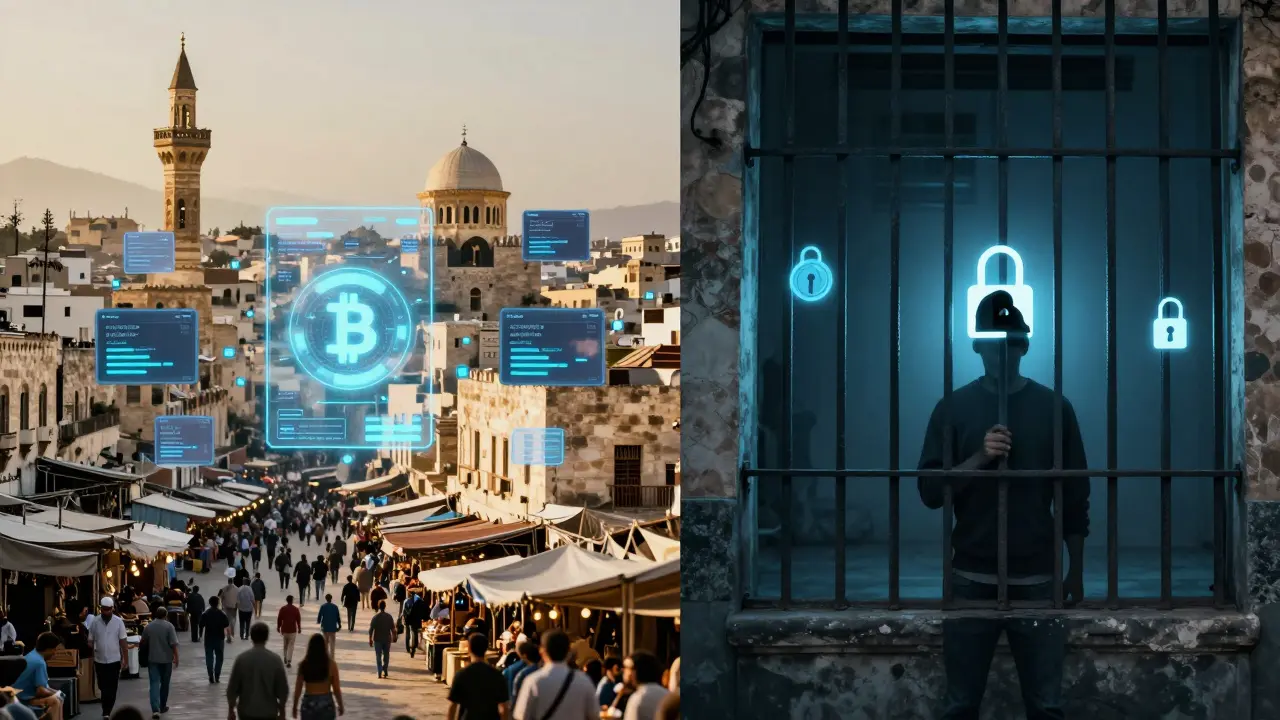
By July 2025, the U.S. government made two opposite moves that shocked the global financial world. On one hand, it lifted nearly all economic sanctions on Syria. On the other, it tightened the screws on Cuba. These weren’t minor tweaks-they were sweeping policy reversals that changed how businesses, banks, and crypto platforms operate in both countries.
In Syria, the Trump administration revoked six executive orders that had locked the country out of the global financial system since 2004. That meant the U.S. no longer banned American companies from sending money, offering banking services, or investing in Syria. The Central Bank of Syria was removed from the Specially Designated Nationals (SDN) List. Overnight, U.S. banks could open accounts with Syrian institutions. For the first time in over two decades, international payments to Syria became legally possible without special permission.
But here’s the catch: the relief wasn’t universal. The Assad family, former regime officials, and anyone tied to the captagon drug trade or human rights abuses are still on the sanctions list. If you’re sending money to Syria, you can’t send it to those individuals or entities. The rules didn’t disappear-they just got sharper.
In Cuba, the opposite happened. President Trump reversed Biden’s earlier easing of restrictions with National Security Presidential Memorandum 5. The Cuba Assets Control Regime (CACR) was locked down again. U.S. companies can’t do business with Cuban entities. Even non-U.S. subsidiaries of American firms can’t ship goods to Cuba without risking penalties. In July 2025, a Delaware-based logistics company, Key Holding, LLC, paid over $600,000 in fines for moving freight from Colombia to Cuba. That case sent a clear message: the U.S. is watching-even if the violation was accidental.
How Crypto Works in Syria Now
Syria has no official crypto law. No ban. No license system. No government oversight. That’s not freedom-it’s a legal vacuum. Before July 2025, most international crypto exchanges avoided Syria entirely. Even if someone in Damascus wanted to buy Bitcoin, platforms like Binance or Kraken would block their account to avoid U.S. compliance risk.
After the sanctions were lifted, that changed. Binance, Bybit, and other major exchanges stopped blocking Syrian users. People in Aleppo, Homs, and Damascus can now buy, sell, and hold crypto without being flagged by U.S. financial systems. But here’s the problem: no one knows if those transactions are legal under Syrian law.
There’s no central bank guidance. No tax rules for crypto income. No anti-money laundering (AML) framework tailored to digital assets. So while you can access crypto, you’re operating in the dark. If you’re a business in Syria accepting Bitcoin for exports, you’re relying on Syria’s general AML/CFT rules-which were never built for blockchain. Banks abroad might still reject payments from Syrian crypto wallets because they can’t verify the source. It’s not illegal, but it’s risky.
Some fintech firms are stepping in to fill the gap. Lightspark, for example, offers a system called Grid Switch that lets institutions send money to Syria using the Lightning Network-without ever touching crypto on their balance sheets. It’s a workaround: fiat moves through local payment rails, and crypto settles behind the scenes. That’s the kind of innovation you need when the rules are unclear.
Crypto in Cuba: Still Locked Down
Cuba’s crypto scene didn’t get a lift in 2025. It got tighter. The U.S. still prohibits any transaction involving Cuban entities-even if they’re outside Cuba. That means if you’re a U.S. citizen and you send Bitcoin to a Cuban friend, you’re violating sanctions. If you’re a crypto exchange and you let a Cuban user trade, you’re exposing yourself to fines.
Even third-party services are at risk. In 2025, a crypto payment processor based in Costa Rica was flagged by OFAC for facilitating transfers to Cuban users. The processor didn’t know the users were in Cuba-they used VPNs and fake IDs. But the U.S. doesn’t care about intent. If your system enables a sanctioned transaction, you’re liable.
Most Cuban users rely on informal networks. Friends abroad send crypto to relatives. They use peer-to-peer platforms like Paxful or LocalBitcoins. Some trade through Telegram groups. But these aren’t safe. There’s no recourse if a scam happens. No customer support. No chargebacks. And if the U.S. finds out, the sender could be fined.
There’s no legal crypto exchange in Cuba. No licensed wallet provider. No government-backed digital currency. The Cuban peso isn’t digitized. The state hasn’t embraced blockchain. And the U.S. isn’t going to let it.
Why the Difference Between Syria and Cuba?
Why lift sanctions on Syria but clamp down harder on Cuba? The answer isn’t about economics-it’s about politics.
In Syria, the U.S. recognized a shift in power. After years of civil war, the Assad regime was replaced by a transitional government under Ahmed al-Sharaa. The new leadership cracked down on the captagon trade, which had funded terrorist groups. The U.S. saw an opportunity: lift sanctions, encourage investment, and stabilize the region. They even revoked the terrorist designation for Hay’at Tahrir al-Sham (HTS), which had been a major player in the conflict. This wasn’t forgiveness-it was a strategic bargain.
Cuba, on the other hand, hasn’t changed. The government is still run by the same Communist Party that’s been in power since 1959. No political reforms. No economic opening. No movement toward democracy. The U.S. sees Cuba as a geopolitical threat-especially with its military ties to Russia and Venezuela. Lifting sanctions would be seen as rewarding a regime that hasn’t budged.
So the U.S. is using sanctions as leverage. Syria got relief because it met certain conditions. Cuba got tighter restrictions because it didn’t.
What Businesses Need to Do Now
If you’re a company trying to work with Syria or Cuba in 2026, here’s what you need to know.
For Syria: You can legally send money, offer services, and invest. But you must screen every counterparty against the updated SDN list. Just because the broad sanctions are gone doesn’t mean the targeted ones are. Use automated compliance tools. Check names, addresses, and bank details. Don’t assume a Syrian company is clean just because it’s not on the old list. The SDN list still has over 1,200 Syrian individuals and entities on it.
For Cuba: Don’t even try. Even indirect involvement can get you fined. If your software is used by a Cuban user, even accidentally, you’re at risk. If your supplier ships goods to a Cuban port-even through a third country-you’re violating sanctions. Most U.S. companies now have a Cuba blacklist built into their ERP systems. It’s easier than getting sued.
For crypto traders: Syria is open, but risky. Cuba is closed, and dangerous. If you’re trading crypto in Syria, keep records. Don’t use mixers or privacy coins-those raise red flags. If you’re sending crypto to Cuba, don’t. Period.
What’s Next? The Bigger Picture
The U.S. isn’t done with sanctions. Iran is still under maximum pressure. Russia’s sanctions are expanding. Venezuela and North Korea remain locked out. But Syria and Cuba are now the clearest examples of how sanctions work in 2026: they’re not just punishments-they’re tools of foreign policy.
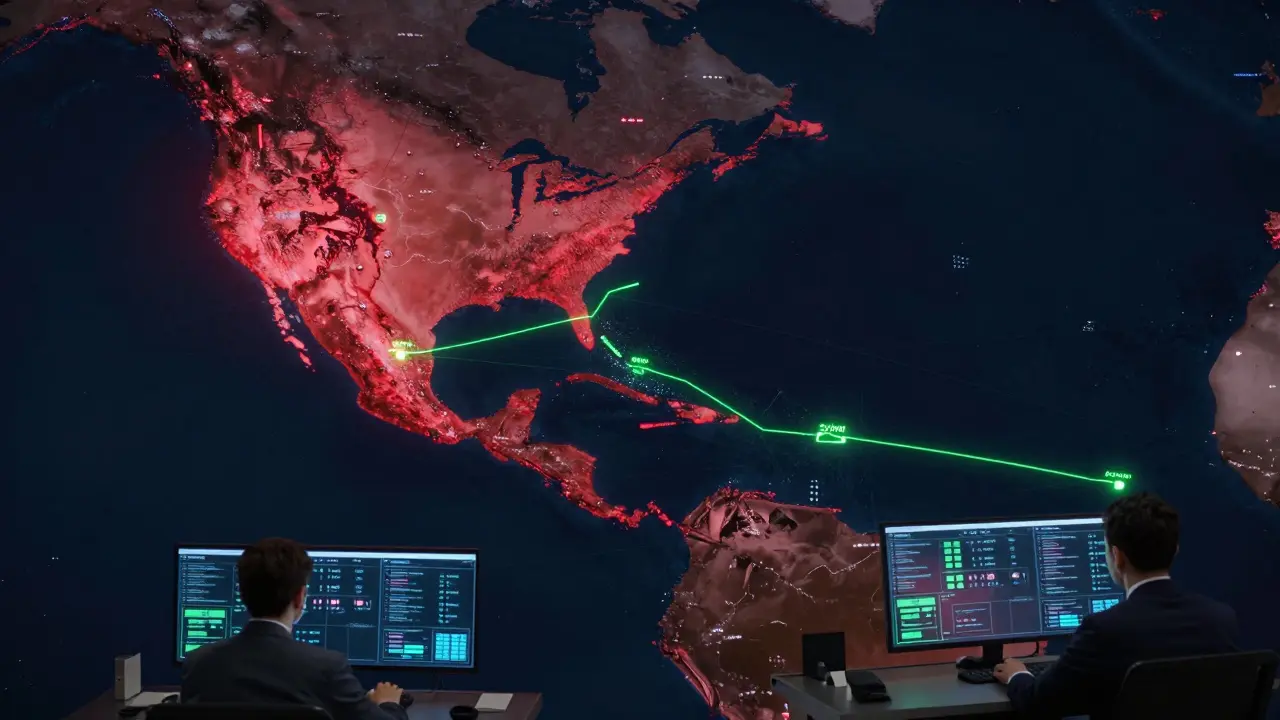
Crypto is changing how sanctions are enforced. In the past, you could freeze a bank account. Now, you have to block a wallet address. But wallets can be created in seconds. That’s why compliance is getting more complex. Firms are building AI tools that track on-chain behavior, not just names. If a wallet sends funds to a known Syrian entity, it gets flagged-even if the user is in Turkey.
For Syria, this could mean a financial rebirth. Foreign investment is already starting to flow in. Telecoms, agriculture, and logistics are the first sectors to reopen. Crypto could become a lifeline for small businesses that can’t access traditional banking.
For Cuba, the isolation continues. Without access to global finance, the economy stays stagnant. People rely on remittances. And those remittances? They’re still mostly cash, carried by travelers or sent through informal channels. Crypto could help-but the U.S. won’t let it.
Key Takeaways
- Syria’s broad U.S. sanctions were lifted on July 1, 2025, allowing financial and crypto transactions-but targeted sanctions remain.
- Cuba’s sanctions were strengthened in 2025, with no relief for crypto or traditional finance.
- Syria has no crypto laws, making transactions legally ambiguous despite U.S. permission.
- Cuba remains off-limits to U.S. persons and entities, even via crypto.
- Compliance tools are essential: screen all parties against the SDN list, even if you think the sanctions are gone.