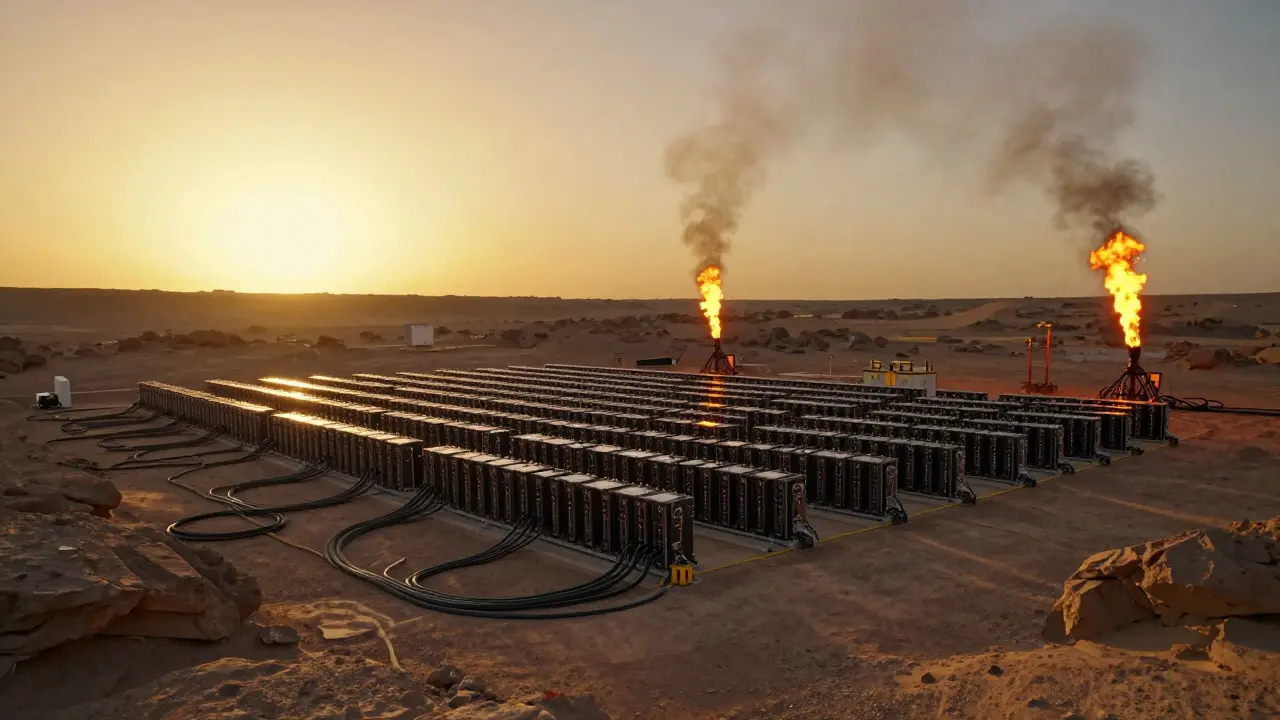
Imagine a country locked out of the global banking system, yet still managing to move billions of dollars across borders without touching a single dollar-denominated wire transfer. That is exactly what Iran has been doing for nearly a decade. By turning its abundant natural gas into electricity and then into Bitcoin, the Islamic Republic built one of the world's most effective state-level sanctions circumvention strategies. It is not just about mining coins; it is about creating a parallel financial ecosystem that bypasses Western-controlled intermediaries entirely.
As of mid-2025, roughly 4.5% of all global Bitcoin mining operations occur within Iran. This share generates hundreds of millions of dollars annually, allowing the state to monetize its energy resources on global markets. The strategy has evolved from opportunistic experiments to what analysts now describe as "all but an official policy." A think tank attached to the Iranian president’s office even publishes reports highlighting cryptocurrency's role in avoiding restrictions. For anyone interested in how geopolitical power plays out in the digital age, this is the definitive case study.
The Core Mechanics: Turning Gas into Gold
To understand why this works, you have to look at the inputs. Iran sits on massive natural gas reserves. Historically, much of this gas was flared or underutilized. Now, it powers specialized facilities that generate electricity at costs significantly below global market rates. While US miners pay between $0.03 and $0.08 per kWh, Iranian state-affiliated miners often access subsidized rates that are effectively near zero through political connections.
This energy advantage is the engine of the entire operation. The electricity consumed by these miners requires the equivalent of approximately 10 million barrels of crude oil annually to generate. In 2020, this represented roughly 4% of Iran's total oil exports. Instead of shipping physical oil through sanctioned channels, the state converts it into digital assets. These assets can be moved instantly, globally, and without needing permission from the Federal Reserve or the European Central Bank.
- Energy Source: Natural gas and surplus grid power.
- Conversion Method: Industrial-scale ASIC mining farms.
- Output: Bitcoin and other cryptocurrencies.
- Final Use: Foreign currency reserves and import payments.
From Ban to Blueprint: The Regulatory Shift
The path to this strategy wasn't linear. Initially, Iran mimicked China’s early approach: legalizing the asset but banning its use as payment. But around 2020, the playbook changed dramatically. The government realized that if they couldn't sell oil easily, they could sell the energy used to mine coins. They began legalizing crypto payments for imports and developed comprehensive mining licensing systems.
By 2022, the regime issued licenses for more than 10,000 mining farms. They also permitted approximately 90 cryptocurrency exchanges to operate domestically. This created a robust internal infrastructure. The result? By 2024, $4.18 billion worth of cryptocurrencies had flowed out of Iran, marking a 70% increase from the previous year. This isn't just hobbyist activity; it is a structured industrial output designed to leak value out of the economy in a form that is hard to track.

The Role of the IRGC and State Infrastructure
You cannot discuss this strategy without mentioning the Islamic Revolutionary Guard Corps (IRGC). The IRGC's entry into cryptocurrency mining accelerated dramatically between 2019 and 2020, reportedly under direct orders from Supreme Leader Ali Khamenei. He viewed Bitcoin generation as compensation for Iran's lost access to US dollar transactions.
The infrastructure is massive. A prominent example is a 175-megawatt Bitcoin farm in Rafsanjan, Kerman province. This facility operates as a joint venture between IRGC-linked enterprises and Chinese investors. These sites are often located on military bases or within facilities controlled by powerful religious foundations like Astan Quds Razavi. This setup provides two critical benefits: security and protection from local regulatory scrutiny. Many of these operations ignore electricity bills entirely or receive free energy through political favors, creating a "crypto cartel" that systematically exploits national resources.
| Country | Primary Strategy | Key Asset | Effectiveness Status |
|---|---|---|---|
| Iran | State-sponsored mining & trade | Bitcoin / Stablecoins | High - Active & Expanding |
| Venezuela | State-backed token issuance | Petro Token | Low - Limited Adoption |
| North Korea | Hacking & Theft | Stolen Funds | Moderate - High Risk |
| Russia | Corporate adoption & CBDC | Digital Ruble / BTC | Moderate - Growing |
How the Money Actually Moves
Mining Bitcoin is only half the battle. The real challenge is using it. Iranian miners receive payments directly in Bitcoin. From there, the assets are converted. Investigations revealed that Iranian firms, including entities affiliated with the IRGC, processed $8 billion worth of transactions through the Binance exchange since 2018. However, relying solely on major global exchanges carries risk. So, the strategy expanded.
Beijing's "teapot" refineries, UAE/Hong Kong free-zone shell companies, and TRON-based stablecoin systems now account for the majority of Iran-linked cryptocurrency flows. This multi-layered approach obscures the origin of funds. A key milestone occurred when Iran completed its first official import order using cryptocurrency, totaling $10 million. This proved that the mechanism works for tangible goods, not just speculative assets. Today, over 320 tankers in Iran's "dark fleet" work alongside these crypto operations to move billions in oil, cash, and digital assets, creating a hybrid logistics network that is extremely difficult to dismantle.
Challenges and Risks of the Model
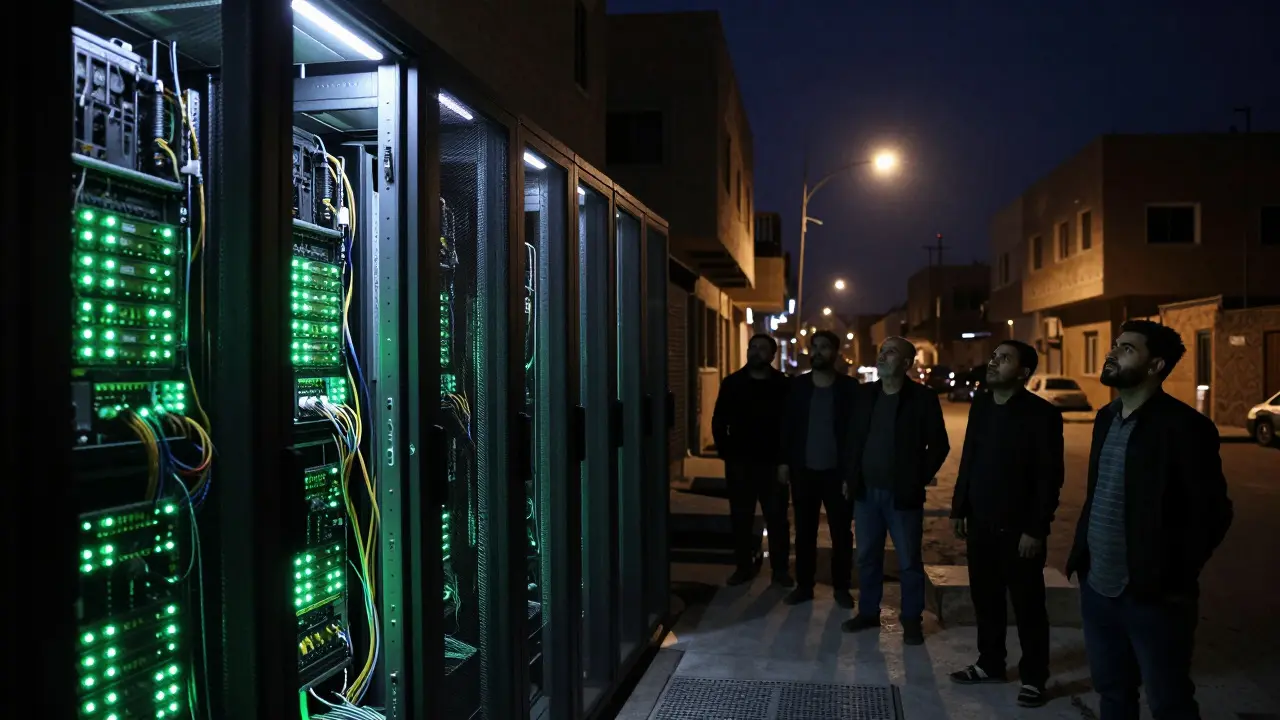
Despite its success, the strategy is not without flaws. The biggest internal issue is the strain on the power grid. Mining facilities consume electricity that could otherwise serve civilian users. Energy sector analysts warn that this exacerbates nationwide blackouts and infrastructure strain. Ordinary Iranians often face power cuts while state-run mines run 24/7, leading to public criticism on domestic platforms.
Externally, enforcement risks are rising. International authorities have increased monitoring of cryptocurrency flows. FinCEN's June 2025 advisory highlighted how shell companies and specific blockchain networks facilitate these transfers. There is also the issue of hardware access. Due to sanctions, getting cutting-edge ASIC miners is difficult and expensive, often requiring smuggling. This limits the efficiency gains compared to jurisdictions like the United States or Kazakhstan, which have easier access to the latest technology.
Future Trajectory and Global Implications
Where does this go from here? Recent updates include new mining facilities in Bushehr and Khuzestan provinces throughout 2025, leveraging surplus electricity from renewable and gas plants. Government officials have announced plans to increase cryptocurrency mining capacity by 50% over the next two years. They are also developing domestic exchange infrastructure to reduce reliance on international platforms that might freeze accounts.
This model serves as a blueprint for other sanctioned nations. If Iran can turn its energy deficit into a digital asset surplus, others will follow. The broader cryptocurrency market, now valued at over $2 trillion, provides sufficient liquidity for Iran to convert proceeds despite restrictions. As long as sanctions remain in place, expect this strategy to expand beyond simple mining into decentralized finance applications and central bank digital currencies. The era of traditional financial isolation is ending, replaced by a complex web of digital evasion that challenges the very concept of sovereign monetary control.
Is Bitcoin mining legal in Iran?
Yes, it is legal and heavily regulated. The government issues licenses for mining farms and has legalized crypto payments for imports. However, operating without a license or using unapproved exchanges can lead to penalties. The state actively supports large-scale operations to boost foreign currency reserves.
How does Iran hide its mining activities from sanctions enforcement?
They use a combination of methods: routing funds through shell companies in third countries (like UAE or China), using privacy-focused stablecoins on networks like TRON, and mixing mined Bitcoin with global pools. Additionally, the sheer volume of global transactions makes it difficult to isolate specifically Iranian-originated coins without advanced blockchain analytics.
What is the impact of Iranian mining on the local electricity grid?
The impact is significant. Large mining farms consume vast amounts of power, often prioritized over civilian needs due to state backing. This contributes to periodic blackouts and infrastructure strain, particularly during peak demand seasons. Critics argue that the benefits accrue mostly to state entities rather than ordinary citizens.
Can regular people buy Iranian-mined Bitcoin?
Technically yes, but it is complicated. Bitcoin is fungible, meaning one coin is identical to another regardless of origin. However, buying directly from Iranian entities may carry sanctions compliance risks for international buyers. Most individuals acquire Bitcoin through global exchanges where the supply is mixed, making it unlikely to knowingly hold "Iranian" coins unless purchasing directly from local sources.
Will sanctions eventually stop this strategy?
It is unlikely to stop completely. While enforcement efforts are increasing, the decentralized nature of Bitcoin and the adaptability of Iranian operators make total elimination difficult. History shows that as long as the incentive (access to global markets) exists, the method will evolve. New tools like better blockchain analytics may slow it down, but a complete halt would require either lifting sanctions or a fundamental change in Bitcoin's protocol.