
Imagine trying to buy a cup of coffee with Bitcoin in Taipei. You can do it, but you probably can't use your local bank card to load up your crypto wallet first. That might sound contradictory, but it is exactly how things work in Taiwan. The island nation has carved out a unique niche in the global crypto landscape by allowing citizens to own and trade digital assets while strictly prohibiting traditional banks from facilitating those transactions. This selective approach creates a fascinating ecosystem where innovation thrives, but only within specific regulatory boundaries.
If you are looking to understand why you cannot simply wire money from your CTBC Bank account directly to a crypto exchange like you might in other countries, you need to look at the rules set by the Financial Supervisory Commission (FSC). Since their initial stance in 2013, which classified Bitcoin as a speculative virtual commodity rather than currency, the FSC has maintained a firm separation between traditional finance and digital assets. This isn't just bureaucratic red tape; it is a deliberate strategy to manage financial stability risks while still permitting market growth.
The Core of the Banking Ban
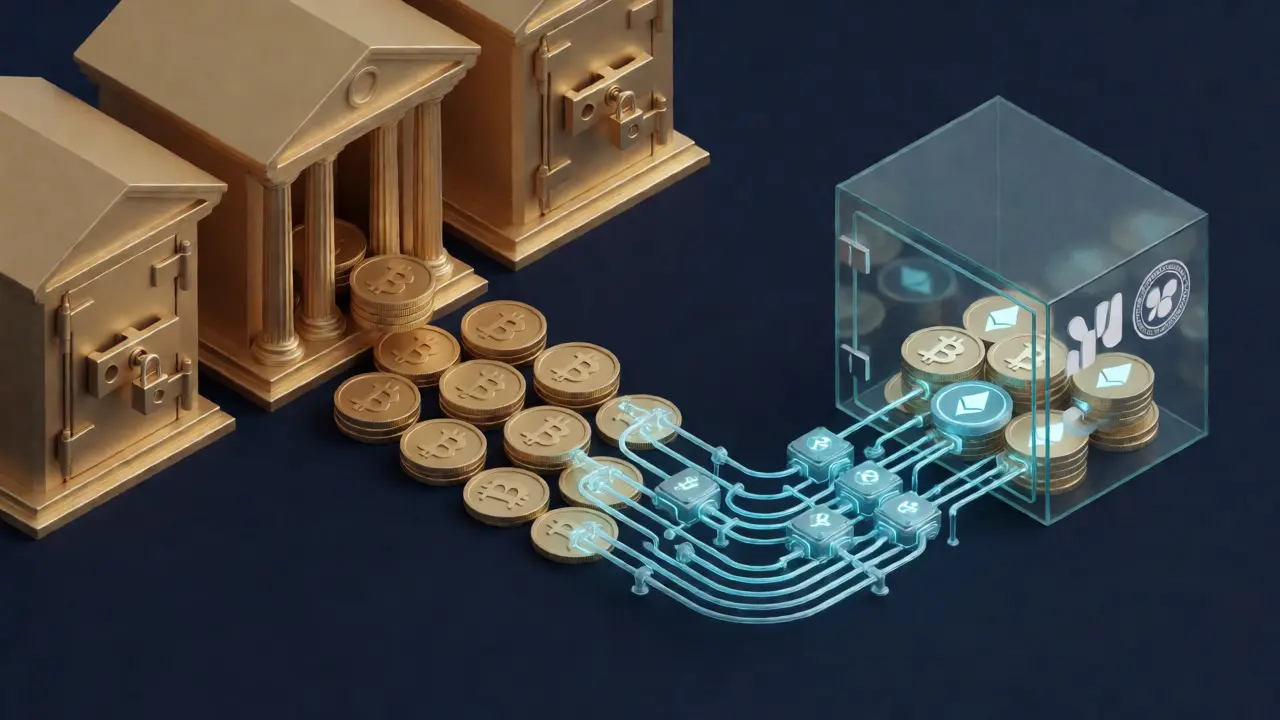
Let's get straight to the point: local banks in Taiwan are forbidden from handling cryptocurrency services. This prohibition dates back to a directive issued in 2014, which explicitly barred banks from accepting Bitcoin or offering any services related to it, including fiat-to-crypto exchange services. For years, this meant that if you wanted to enter the crypto market, you had to find alternative routes for your capital.
The situation tightened further on July 4, 2022, when the FSC instructed the local bankers' association to prohibit credit card acquirers from processing crypto-asset purchases. This move treated crypto transactions similarly to online gambling or high-risk derivatives, effectively blocking one of the most convenient entry points for retail investors. Why does this matter? Because it forces users to rely on bank transfers via third-party processors or peer-to-peer methods, adding friction to the buying process.
This restriction stems from a desire to prevent systemic risk. The Central Bank of the Republic of China (CBC) worries that if banks heavily integrated with volatile crypto markets, a crash could spill over into the broader economy. By keeping banks out of the direct trading loop, regulators create a firewall. However, this also means that legitimate businesses operating in the space often struggle to secure standard banking partnerships for payroll or vendor payments, creating operational headaches for startups.
VASP Registration: The New Reality
While banks stay out, exchanges must step up. Starting January 1, 2025, mandatory registration for Virtual Asset Service Providers (VASPs) took full effect, replacing earlier voluntary measures. If an entity wants to operate legally in Taiwan's digital asset space, it must register with the government. Failure to comply results in fines up to NT$5 million ($155,900) and potential imprisonment for up to two years.
As of late 2024, 23 VASPs had completed registration for Anti-Money Laundering (AML) compliance. Among them, MaiCoin stands out as the largest local exchange, handling approximately $70 million in daily trading volume. MaiCoin has even announced plans to become the first Taiwanese crypto firm to go public on the local stock exchange, signaling confidence in the regulated environment despite the banking hurdles.
For new entrants, the barrier to entry is significant. Navigating the VASP registration requirements typically takes 3 to 6 months, with setup costs for compliance infrastructure ranging from NT$2 million to NT$5 million. This ensures that only serious players remain in the market, reducing the number of shady operators but also slowing down rapid innovation.
| Requirement | Description | Impact on Users |
|---|---|---|
| Mandatory Registration | All VASPs must register with the FSC by Jan 1, 2025. | Higher trust levels; fewer unregulated platforms. |
| Banking Separation | Banks cannot provide direct crypto services. | Users must use third-party payment processors. |
| Asset Segregation | Exchanges must keep customer assets separate from company funds. | Reduced risk of loss if an exchange fails. |
| Stablecoin Rules | New regulations for TWD-stablecoins coming June 2025. | Future option for regulated stable assets. |
How Users Actually Trade
So, how do 2.3 million Taiwanese citizens-roughly 10% of the population-actually buy crypto if their banks won't help? They adapt. Data shows that daily trading volume across registered platforms hits about $200 million, with Bitcoin and Ethereum making up 65% of activity. Despite the friction, user numbers on local platforms have grown by 15% year-over-year.
Most users rely on registered local exchanges like MaiCoin or international platforms that have secured VASP status. Since direct bank transfers are restricted, many use third-party payment processors that bridge the gap between traditional bank accounts and crypto wallets. Cash transactions and peer-to-peer (P2P) trades remain common workarounds, though they come with higher risks regarding speed and security.
User sentiment reflects this mixed reality. Local exchanges like MaiCoin receive average ratings of 3.8/5 on review sites, largely due to complaints about limited banking integration and slower withdrawal times. In contrast, international platforms operating under the VASP framework often score higher, around 4.2/5, because they offer more robust features, even if they face the same regulatory constraints.

Stablecoins and the Future Outlook
Change is coming, but slowly. The FSC plans to introduce a new regulatory framework for stablecoins pegged to the New Taiwan Dollar (TWD) starting June 2025. This draft legislation aims to allow regulated financial institutions to issue government-backed stablecoins. These would serve as legal alternatives to unregulated options like USDC and USDT, potentially softening some banking restrictions for these specific digital assets.
Additionally, the Central Bank completed a feasibility study for a Central Bank Digital Currency (CBDC) in December 2023. Prototype testing is underway, leveraging existing digital voucher infrastructure. If successful, a CBDC could eventually lead to a gradual relaxation of banking restrictions for government-supervised digital assets, while maintaining strict separation for speculative cryptocurrencies.
Industry observers predict that Taiwan's selective restrictions will persist. The goal isn't to ban crypto but to channel it through regulated pipes. As long as the FSC prioritizes consumer protection and AML compliance, the wall between traditional banks and speculative crypto will likely remain intact, albeit with doors opening for regulated stablecoins and digital currencies.
Can I use my credit card to buy crypto in Taiwan?
Generally, no. In July 2022, the Financial Supervisory Commission prohibited credit card acquirers from providing services for crypto-asset purchases. This means most local credit cards cannot be used directly to buy Bitcoin or other cryptocurrencies on local exchanges. Users typically rely on bank transfers via third-party processors or cash deposits instead.
Is cryptocurrency legal in Taiwan?
Yes, owning and trading cryptocurrency is legal. However, it is classified as a "virtual commodity" rather than legal tender. You can buy, sell, and hold digital assets, but you cannot use them to pay for everyday goods and services in the same way you use the New Taiwan Dollar. Exchanges must be registered as Virtual Asset Service Providers (VASPs).
Which banks can I use for crypto transactions?
Local banks like CTBC, E.Sun, and First Commercial Bank do not provide direct crypto services. You can still use your bank account to transfer funds to a registered VASP's designated bank account, but the bank itself does not facilitate the conversion to crypto. Many users utilize third-party payment gateways that integrate with local banks to streamline this process.
What happens if an exchange isn't registered?
Since January 1, 2025, all Virtual Asset Service Providers must be registered. Unregistered entities face fines up to NT$5 million and potential criminal charges. Using an unregistered exchange increases the risk of losing your funds, as these platforms may not adhere to the required asset segregation and Anti-Money Laundering standards enforced by the FSC.
Are there taxes on crypto profits in Taiwan?
Tax laws are evolving. Currently, gains from cryptocurrency trading are generally considered taxable income. However, specific reporting requirements and tax rates can vary based on individual circumstances and recent legislative updates. It is advisable to consult with a local tax professional who understands the nuances of virtual asset taxation in Taiwan.