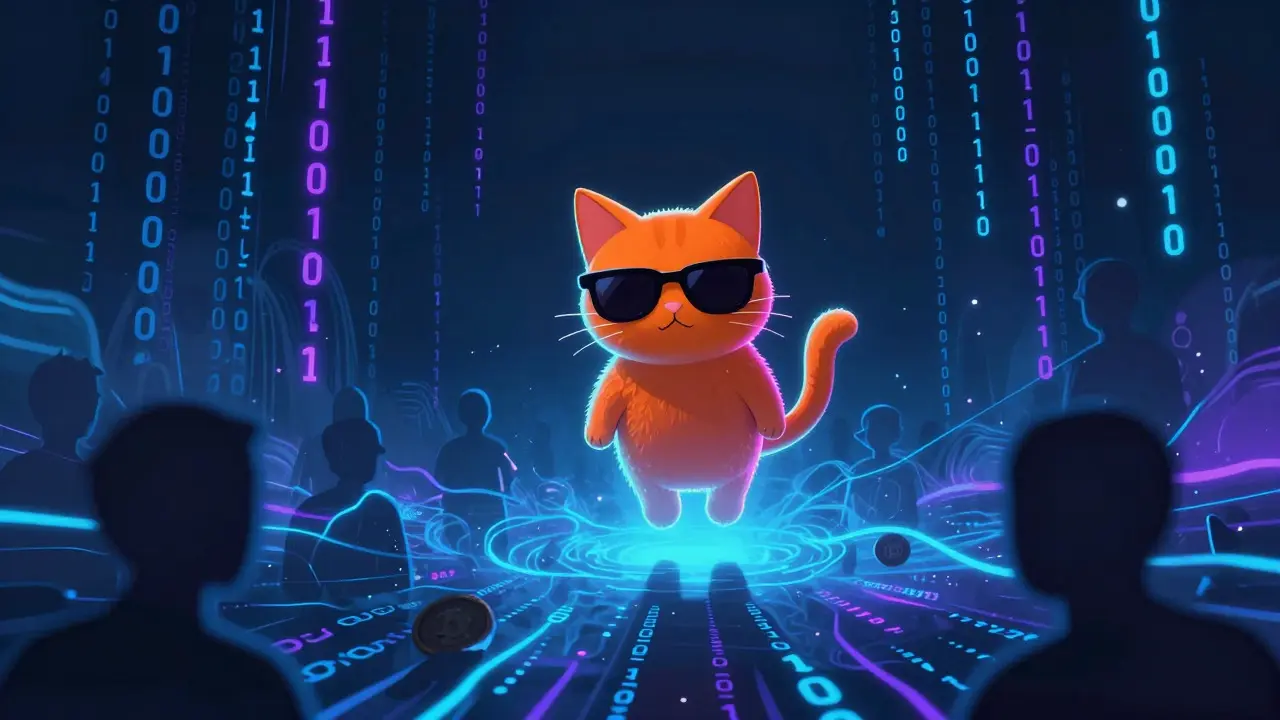
Imagine a token that promises to be your "last catfish" while trading for less than a penny. That is the reality of Catfish, a micro-cap meme cryptocurrency built on the Solana blockchain. Launched in early 2024, this project leans heavily on internet humor and a catchy tagline rather than complex technology or real-world utility. For many investors, it represents the wild, speculative edge of the crypto market. You might wonder why anyone would buy a coin with such a tiny market cap. The answer usually involves high-risk gambling, community hype, or the hope of catching a viral moment before it fades.
The core appeal of CATFISH is its branding. It flips the negative connotation of online catfishing-where someone pretends to be someone else-into a narrative of honesty. Promoters describe it as a "beacon of truth" in the chaotic sea of meme coins. However, behind the playful marketing of a sunglasses-wearing orange cat, the numbers tell a different story. With a market capitalization often hovering in the tens of thousands of dollars, it sits far below major cryptocurrencies. This article breaks down what CATFISH actually is, how it works technically, and what you need to know before considering it for your portfolio.
Origin and Launch Details
Catfish first appeared on public radars in February 2024. Unlike established projects like Bitcoin or Ethereum, there is no named founding team, corporate entity, or detailed whitepaper available for download. This anonymity is common in the world of small-scale meme tokens, where the focus is on community momentum rather than institutional backing. The earliest significant coverage came from a YouTube review published on February 9, 2024, which introduced the token to a wider audience just as it was preparing for listings on smaller exchanges.
The launch strategy focused on accessibility through decentralized platforms. By early 2024, the token was already tradable on 2bit, a smaller centralized exchange, with plans to list on P2B shortly after. This rapid movement from decentralized liquidity pools to centralized exchanges aimed to capture early adopters who wanted to trade before the broader market noticed. The lack of transparent leadership means that all information about the project’s future comes from promotional materials and exchange descriptions, requiring users to do their own due diligence carefully.
Technical Architecture and Tokenomics
Technically, CATFISH is a standard fungible token operating within the Solana ecosystem. This means it benefits from Solana’s high transaction speeds and low fees, making it easy to swap for other assets like SOL or USDC. The token design includes specific features intended to build trust among skeptical crypto traders. These include:
- No Transaction Taxes: Transfers are free of additional fees beyond standard network costs.
- Burned Liquidity Pool Tokens: LP tokens have been burned, reducing the chance of developers pulling out liquidity suddenly.
- Revoked Minting Rights: The ability to create new tokens has been removed, capping the total supply permanently.
The total supply is set at one billion tokens. As of mid-2026, data from various trackers shows the circulating supply to be nearly identical to the total supply, indicating that almost all tokens are in circulation. There is no staking mechanism, governance rights, or DeFi integration documented. It functions purely as a speculative asset. Because it relies on Solana’s infrastructure, performance metrics like throughput are determined by the underlying chain rather than any unique engineering by the CATFISH team.
Market Performance and Price History
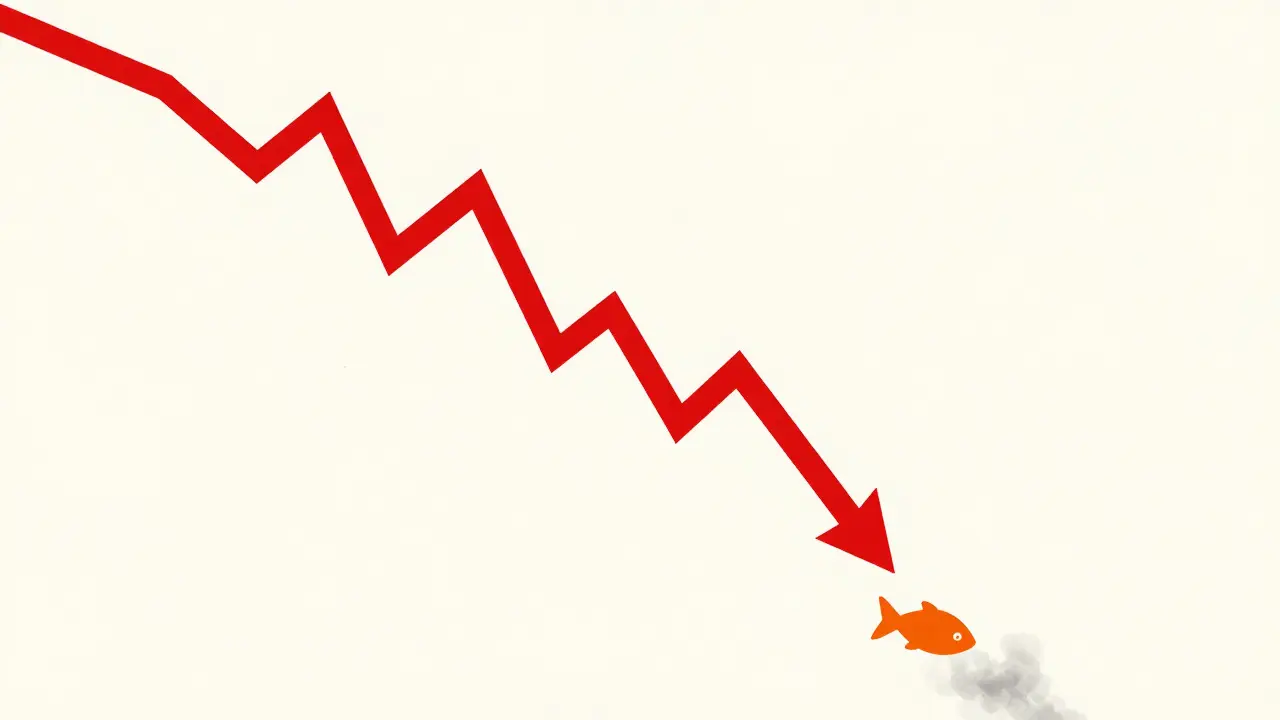
Price action for CATFISH has been dramatic, reflecting the typical volatility of micro-cap assets. The token hit an all-time high of $0.002085 on February 13, 2024, just days after its initial buzz. Since then, it has experienced a severe drawdown. By June 2026, the price had fallen to approximately $0.00001455, representing a drop of roughly 99.3% from its peak. This decline suggests that much of the initial hype faded quickly, leaving early buyers with significantly reduced value.
| Metric | Value (Approximate) | Date Context |
|---|---|---|
| All-Time High | $0.002085 | February 13, 2024 |
| All-Time Low | $0.00001434 | June 23, 2026 |
| Total Supply | 1,000,000,000 | Fixed |
| Market Cap Range | $14,500 - $44,000 | Varies by platform/snapshot |
| Daily Trading Volume | ~$20 - $100 | Extremely Low |
Note that data inconsistencies exist between platforms. Some sites report zero volume, while others show slight activity. This discrepancy highlights the illiquid nature of the token. A single large order can move the price significantly, making technical analysis difficult and unreliable for most traders.
Availability and How to Buy
Accessing CATFISH requires familiarity with basic crypto tools. You cannot buy it directly with a credit card on major exchanges like Coinbase or Binance. Instead, you need to use decentralized exchanges (DEXs) or minor centralized venues. The primary trading pair is CATFISH/SOL on Raydium, a popular DEX on the Solana network. To purchase, you typically need:
- A Solana-compatible wallet, such as Solflare or Phantom.
- SOL tokens in your wallet to pay for transaction fees and trading.
- Access to a DEX aggregator like Matcha or direct access to Raydium.
Some users also trade via Bitget’s Web3 interface or smaller exchanges like 2bit. If using a centralized exchange, you may need to deposit USDT and wait for the specific pair to become active. Due to low liquidity, slippage (the difference between expected and actual execution price) can be high. Always check the order book depth before executing large trades to avoid paying inflated prices.
Risk Profile and Community Sentiment
Investing in CATFISH carries extreme risk. The absence of a visible team, audited smart contracts, or fundamental utility places it in the highest risk category of cryptocurrencies. The daily trading volume is often in the tens of dollars, meaning the market is thin. This creates an environment where insiders can manipulate prices easily, and retail investors may face difficulty selling their holdings if they decide to exit.
Community sentiment appears minimal compared to larger meme coins. There are few active discussions on Reddit or Twitter/X specifically dedicated to CATFISH. The name itself adds a layer of complexity, as "catfishing" is widely associated with online scams and fraud. While the token itself may not be fraudulent, the branding overlaps with terms used in "pig butchering" scams, where victims are lured into fake investments. Investors must distinguish between the playful meme narrative and the serious financial risks involved. The 99% drop from its peak indicates that long-term holders have suffered significant losses, leading to lower engagement and potential abandonment of the project.
Comparative Position in the Meme Coin Sector
To understand CATFISH, it helps to compare it with more established meme coins. While Dogecoin and Shiba Inu have billions in market cap and global recognition, CATFISH operates in a niche with a market cap under $50,000. Here is how it stacks up against typical characteristics of successful meme assets:
- Utility: Major meme coins often develop NFT collections or payment integrations. CATFISH currently has none.
- Liquidity: Large caps have deep order books; CATFISH has negligible volume.
- Transparency: Leading projects have known teams or strong community governance. CATFISH remains anonymous.
- Longevity: Top meme coins have survived multiple market cycles. CATFISH is still in its early, volatile phase.
This comparison highlights that CATFISH is not a "safe" meme coin alternative. It is a pure speculation play. Its value depends entirely on whether it can generate enough viral attention to attract new buyers. Without a roadmap for development or clear milestones, its long-term viability is uncertain.
Frequently Asked Questions
Is Catfish (CATFISH) a good investment?
It is considered a high-risk, speculative asset. With a tiny market cap and low liquidity, prices can swing wildly. It lacks fundamental utility, so value is driven purely by hype. Only invest money you are willing to lose entirely.
Where can I buy CATFISH?
You can buy it on decentralized exchanges like Raydium or through aggregators like Matcha. Some minor centralized exchanges like 2bit or Bitget Web3 also support it. You will need a Solana wallet and SOL for fees.
Who created the Catfish token?
The founding team is anonymous. No specific individuals or companies are publicly named as developers. This is common for micro-cap meme coins but reduces transparency for investors.
What is the total supply of CATFISH?
The total supply is fixed at 1,000,000,000 tokens. Minting rights have been revoked, so no new tokens can be created, and liquidity pool tokens have been burned to secure the supply.
Why is the price of CATFISH so low?
The low price reflects its micro-cap status and high volatility. After peaking in early 2024, the price dropped over 99%. Low trading volume and limited demand contribute to keeping the per-token price in fractions of a cent.