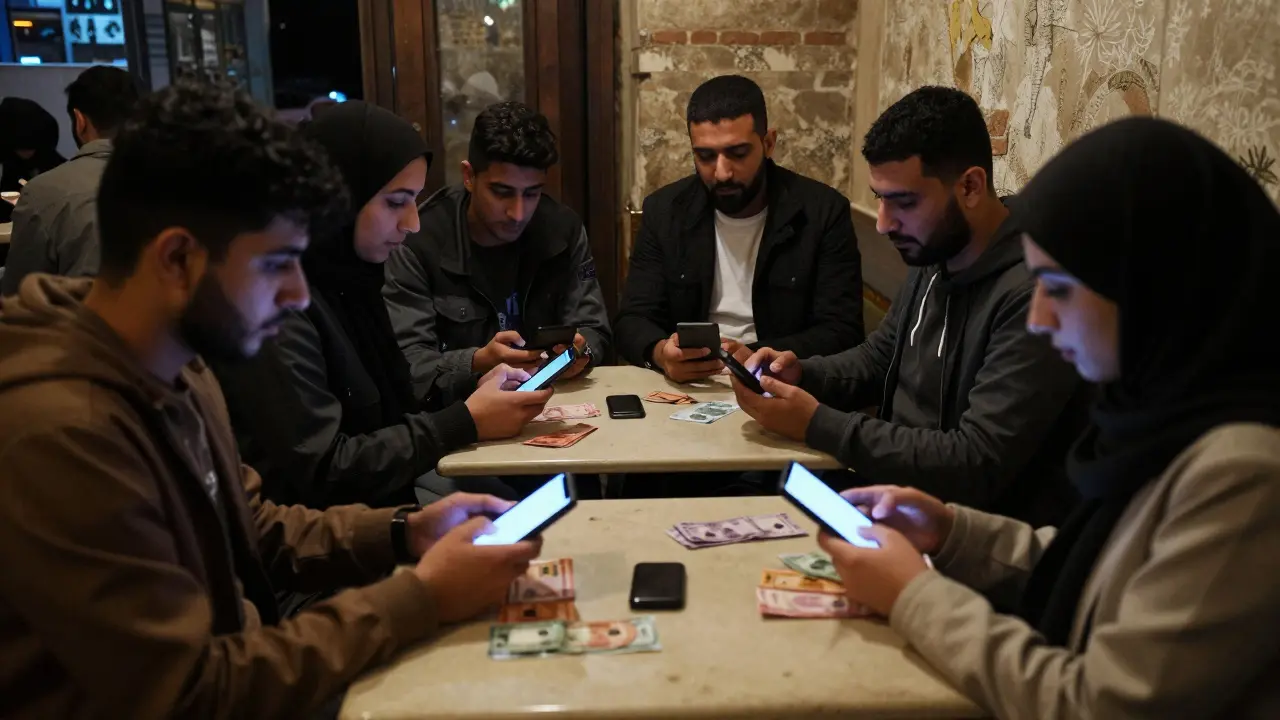
It sounds impossible: 3 million crypto holders in a country where owning or trading Bitcoin is a crime. Yet, despite Egypt’s total ban on cryptocurrencies, millions continue to use them. Not because they’re reckless, but because they have no other choice.
How Egypt Banned Crypto-And Why
In 2020, Egypt passed Law No. 194, which made it illegal for anyone-individuals, banks, or businesses-to deal with cryptocurrencies. The Central Bank of Egypt (CBE) didn’t just discourage crypto. It outlawed it completely. Trading, holding, promoting, or even operating a crypto exchange became a criminal offense. The law was clear: no exceptions.
The reasons? Fear. The CBE warned that Bitcoin’s wild price swings could wipe out savings. They feared crypto could be used to launder money or fund terrorism. And most of all, they couldn’t control it. Unlike Egyptian pounds or dollars, crypto doesn’t answer to the government. No central authority. No audit trail. No oversight. To Egypt’s regulators, that was unacceptable.
The penalties are brutal. Violators face prison time and fines between EGP 1 million and EGP 10 million-that’s $32,000 to $320,000 USD. Banks are required to freeze accounts linked to crypto activity. Phone numbers tied to crypto wallet apps are shut down. Even social media pages promoting crypto get taken offline.
So How Are 3 Million People Still Holding Crypto?
The number 3 million isn’t from an official report. There isn’t one. The CBE doesn’t track crypto holders. No government agency collects that data. But if you talk to people on the ground-in Cairo, Alexandria, or Aswan-you hear the same story over and over.
Young Egyptians use crypto because they can’t access traditional financial tools. Banks refuse to open accounts for freelancers. Remittance services charge 15% to send money to family abroad. Inflation hit 35% in 2024. The Egyptian pound lost half its value in two years. People saw crypto not as a gamble, but as survival.
They don’t use exchanges. They don’t post about it online. They use peer-to-peer (P2P) apps like Paxful or LocalBitcoins. They meet in cafes with cash. They send Bitcoin through Telegram bots. They store wallets on old phones hidden in drawers. Some use crypto to pay for web design gigs from clients in the U.S. or Germany. Others buy USDT to preserve their savings, then convert it back to pounds when they need to pay rent.
It’s not a trend. It’s a workaround. And it’s widespread.
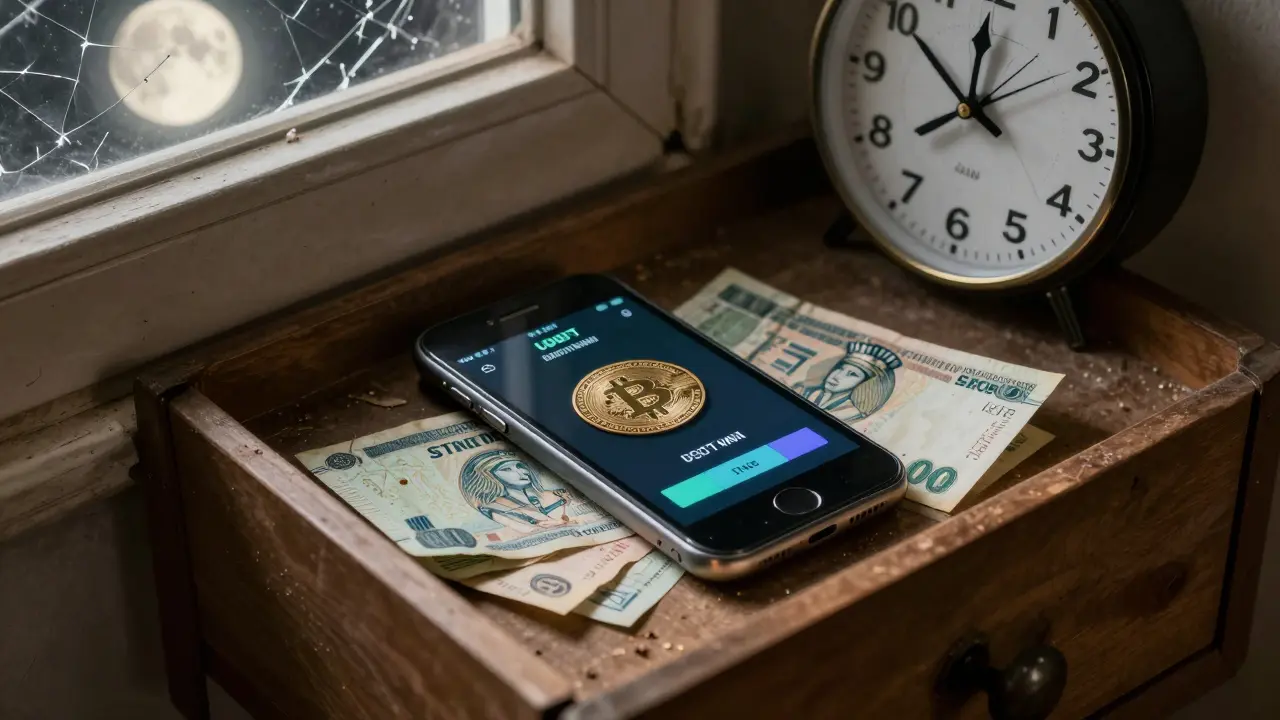
The Underground Network
There’s no public ledger of crypto users in Egypt. But there’s a quiet network. A network built on trust, not technology.
One student in Giza told me he bought his first Bitcoin in 2021 using cash from his part-time job. He didn’t know how wallets worked. He just knew he needed to keep his money safe. He found a guy on Instagram who said he’d hold Bitcoin for him. They met in a parking lot. The guy handed over a USB drive. The student never saw him again.
Another woman in Luxor uses crypto to send money to her sister in Canada. She can’t use Western Union. Her bank blocked her account after a single transfer. Now, she buys USDT from a local vendor for EGP 48 per dollar-far below the official rate-and sends it via a crypto wallet. Her sister converts it to CAD on a Canadian exchange. It takes three days. But it works.
These aren’t tech experts. They’re teachers, mechanics, nurses, shopkeepers. They don’t talk about crypto in public. They whisper. They use burner phones. They delete apps after each transaction.
Why the Ban Isn’t Working
Governments can shut down websites. They can arrest traders. They can fine banks. But they can’t stop people from wanting financial freedom.
Compare Egypt to Nigeria. Nigeria also cracked down on crypto in 2021. But by 2023, it lifted restrictions and created a licensing system. Nigeria now has over 20 million crypto users. Egypt didn’t adapt. It doubled down.
Here’s the problem: the ban created a black market. And black markets thrive. People still need to send money. Still need to save. Still need to earn. Crypto fills the gap.
Enforcement is patchy. Police in rural areas don’t have the tools to track blockchain transactions. Even in Cairo, tracing a wallet to a real person is nearly impossible without cooperation from foreign exchanges-which Egypt has no legal power to compel.
And then there’s the youth. Over 60% of Egypt’s population is under 30. They grew up with smartphones. They don’t trust banks. They don’t believe in government promises. Crypto is the only system that works for them.

What’s Next? A Crackdown-or a Change?
There are signs the government is reconsidering. In late 2025, reports surfaced that Egypt’s finance ministry was drafting a new law that would allow licensed crypto firms to operate under strict supervision. No full legalization. But a regulated path. Think of it like a drug policy: still illegal, but now with a medical exception.
If this happens, Egypt could become the first country to go from total ban to controlled access. It would mean banks could finally offer crypto custody services. Exchanges could register legally. Taxes could be collected. And millions of hidden users could come out of the shadows.
But until then? The ban remains. And so do the users.
Real Numbers? No. Real Behavior? Yes.
No one knows exactly how many people hold crypto in Egypt. The 3 million figure? It’s likely an estimate based on app usage, P2P transaction volumes, and informal surveys. But whether it’s 2 million or 4 million-it doesn’t matter. What matters is this: people are doing it anyway.
The Egyptian government can ban crypto. But it can’t ban need. It can’t ban hunger for stability. It can’t ban the desire to protect your savings from inflation. And it can’t stop a generation that refuses to play by rules that don’t work for them.
For now, crypto in Egypt lives in the dark. But it’s alive. And it’s growing.
Is it illegal to hold Bitcoin in Egypt?
Yes. Under Law No. 194 of 2020, holding, trading, or promoting cryptocurrency is illegal in Egypt. The Central Bank of Egypt prohibits all crypto-related activities for individuals and institutions. Violations can lead to imprisonment and fines between EGP 1 million and EGP 10 million ($32,000-$320,000 USD).
How do people in Egypt buy and sell crypto if it’s banned?
People use peer-to-peer (P2P) platforms like Paxful and LocalBitcoins, often meeting in person to exchange cash for crypto. Others use Telegram bots or encrypted apps to transfer USDT or Bitcoin. Wallets are stored on old phones or USB drives. Transactions are done offline to avoid detection.
Why hasn’t the government shut down all crypto activity?
Crypto transactions are decentralized and pseudonymous. Tracking them requires cooperation from foreign exchanges, which Egypt has no legal authority over. Enforcement is inconsistent, especially outside major cities. Many local police lack the tools to trace blockchain activity. The sheer number of users also makes mass arrests impractical.
Is Egypt the only country with a crypto ban?
No. Egypt is one of nine countries with a complete ban, including China, Algeria, Bangladesh, and North Macedonia. But unlike some of these nations, Egypt is reportedly moving toward regulated licensing, suggesting a possible shift from total prohibition to controlled access.
Could Egypt legalize crypto in the future?
Yes. In late 2025, reports indicated Egypt’s finance ministry was drafting legislation to allow licensed crypto companies to operate under Central Bank supervision. This would mark a major shift from outright ban to regulated framework-similar to what Nigeria and the UAE have done. No timeline has been confirmed, but the direction is clear.