
When you own cryptocurrency, you don’t actually hold coins in a digital pocket. You hold private keys-secret codes that prove you own your crypto on the blockchain. If you lose those keys, your money is gone forever. That’s why choosing the right crypto wallet isn’t just about convenience-it’s about survival.
Hot Wallets: Fast, But Risky
Hot wallets are connected to the internet. That makes them quick and easy to use, but also the most vulnerable. If you trade crypto daily, use DeFi apps, or buy NFTs, you’ll likely rely on a hot wallet. Popular examples include MetaMask, Trust Wallet, and Coinbase Wallet. MetaMask, for instance, works as a browser extension and handles over 2.1 million daily transactions on Ethereum-based apps like Uniswap and Aave. It supports more than 1,200 tokens across Ethereum, Polygon, and Binance Smart Chain. Trust Wallet, owned by Binance, supports over 10 million token contracts on 70+ blockchains. These wallets are great for active users-but they’re also the #1 target for hackers. According to CipherTrace’s 2024 report, $2.7 billion was stolen from hot wallets last year. Most of those thefts came from phishing scams, fake browser extensions, or malware that steals your seed phrase. Dr. Sarah Khatry from Kaspersky says 68% of wallet breaches happen because of browser extension vulnerabilities. If you’re using a hot wallet, you’re accepting that risk every time you sign a transaction.Cold Wallets: The Offline Safety Net
Cold wallets stay offline. No internet connection means no remote hacking. That’s why they’re the go-to choice for storing large amounts of crypto long-term. Cold wallets come in two forms: paper wallets (rare today) and hardware wallets (the modern standard). Hardware wallets like Ledger Nano X and Trezor Model One store your private keys inside a secure chip. When you send crypto, the transaction is signed inside the device-not on your phone or computer. Even if your laptop gets infected with malware, your keys stay safe. Ledger’s 2024 report shows cold wallets secure 63% of all crypto value held globally, despite making up only a fraction of daily transactions. The Ledger Nano X costs $149 and supports over 5,500 cryptocurrencies. It has Bluetooth, a small E Ink screen, and a built-in battery. The Trezor Model One is cheaper at $49 but supports around 1,000 coins and lacks a screen or Bluetooth. Both use open-source firmware, meaning security experts can audit the code. But even these devices aren’t foolproof. Security researcher Dan Guido found firmware update flaws in three major brands in 2025, including a critical vulnerability labeled CVE-2025-1234.Custodial vs. Non-Custodial: Who Controls Your Keys?
There’s another critical split: custodial and non-custodial wallets. Custodial wallets-like those on Coinbase or Binance-hold your private keys for you. You log in with a password, and the exchange handles everything. It’s simple. But if Coinbase gets hacked, or freezes your account, you lose access. The phrase “not your keys, not your coins” isn’t just a slogan-it’s a warning. Non-custodial wallets (MetaMask, Exodus, Ledger) put you in full control. You’re the only one with access to your seed phrase. That’s powerful. But it’s also terrifying. If you lose your 12- or 24-word recovery phrase, your crypto is gone. No customer service can help you. Blockchain.com’s 2025 report says 43% of all wallet support tickets come from users who lost their seed phrases.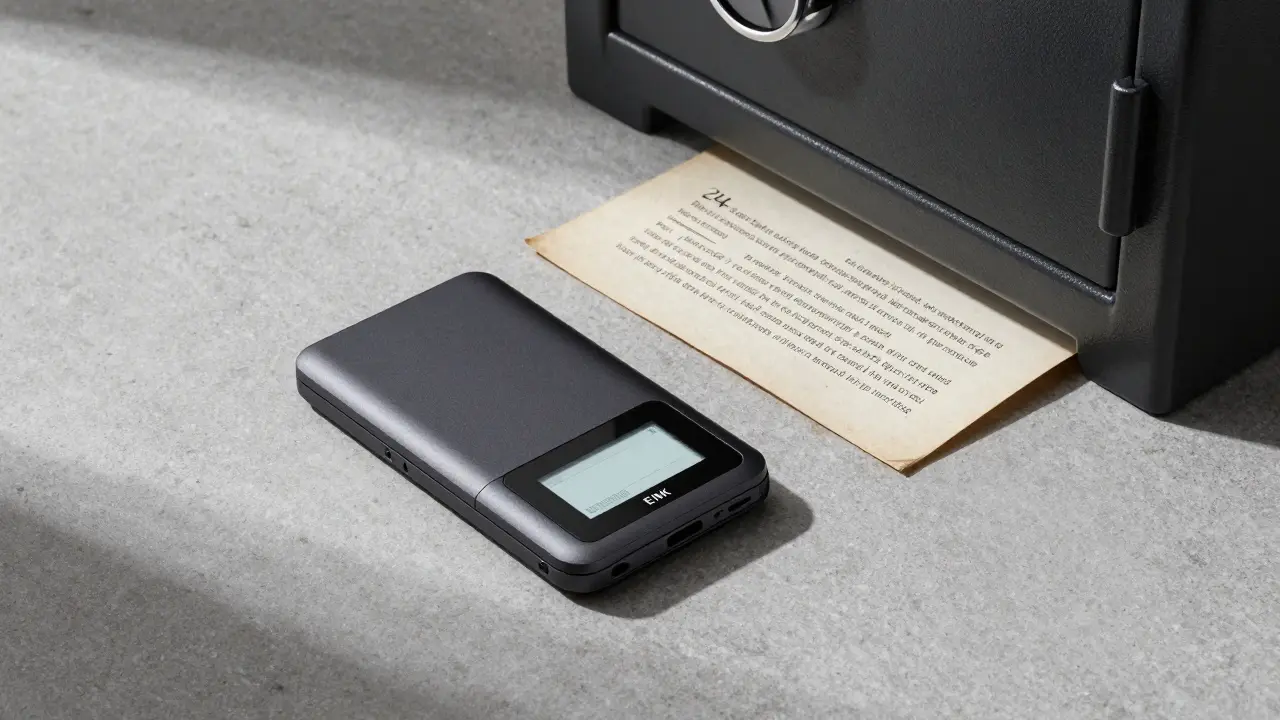
Hardware Wallets: Best for Long-Term Holds
If you’re holding more than $1,000 in crypto for more than a few months, a hardware wallet is the smart move. They’re not perfect, but they’re the most secure option for non-custodial storage. The Ledger Nano X and Trezor Model One are the two most trusted. The Nano X offers Bluetooth and a touchscreen, making it easier to confirm transactions. The Trezor Model One is simpler, cheaper, and has been around longer-its firmware has been tested by thousands of security researchers. Both require you to write down your seed phrase and store it somewhere safe. No photos. No cloud backups. No email. But here’s the catch: setup is a pain. Users report spending 25 to 45 minutes just to get started. One Amazon reviewer spent 45 minutes verifying a 24-word phrase on their first try. And if you connect your hardware wallet to a compromised computer, you can still get phished. That’s why experts recommend using a clean, dedicated device for setup.Which Wallet Should You Use?
There’s no one-size-fits-all answer. But here’s a simple rule:- Use a hot wallet for daily trading, DeFi, and NFTs-keep only what you need for the next week.
- Use a hardware wallet for everything else-your long-term savings, large holdings, and anything you don’t plan to touch for months or years.
- Never store your seed phrase digitally. Write it on paper. Store it in a fireproof safe.
- Use a non-custodial wallet if you want real ownership. Avoid exchange wallets for long-term storage.
What’s Changing in 2026?
Wallet tech is evolving fast. MetaMask launched passwordless login in August 2025 using Ethereum’s ERC-6492 standard. Ledger released the Nano Flex in September 2025 with Bluetooth 5.2 and a customizable touchscreen. Zengo’s biometric keyless system is now being copied by other wallets. But challenges remain. The SEC’s 2025 crackdown on two wallet providers for unregistered securities has created legal gray areas. Quantum computing could break current encryption in the next decade. And with over 420 million crypto users worldwide, wallet fragmentation is growing-some wallets don’t support newer blockchains, and interoperability is still messy. Still, the core truth hasn’t changed: your security is your responsibility. No company will save you if you lose your keys. No bank will reimburse you if you get hacked. That’s why understanding your wallet type isn’t optional-it’s the most important financial decision you’ll make in crypto.Real User Experiences
Sarah J., a first-time crypto user, told Trustpilot: “I loved how Exodus showed me my portfolio in one view. I didn’t need to learn blockchain jargon to start.” Reddit user u/CryptoGuru4297 wrote: “MetaMask connects to Uniswap in seconds. No other wallet comes close for Ethereum users.” But not everyone had a smooth ride. John D. on Amazon said: “The 24-word recovery process took me 45 minutes. I thought I’d messed it up three times.” And 22% of Coinbase Wallet users on Reddit reported sync issues with DeFi apps. Hardware wallets aren’t magic-they’re tools. And like any tool, they work best when you know how to use them.What’s the difference between a hot wallet and a cold wallet?
A hot wallet is connected to the internet, making it fast for trading but vulnerable to hacking. A cold wallet is offline, so it’s much more secure but less convenient for daily use. Hardware wallets are a type of cold wallet.
Are hardware wallets really safer than software wallets?
Yes, for long-term storage. Hardware wallets keep your private keys inside a secure chip that never connects to the internet. Even if your computer is infected, your crypto stays protected. In 2024, only $147 million was stolen from hardware wallets compared to $2.7 billion from hot wallets.
Can I use one wallet for everything?
You can, but it’s not smart. Use a hot wallet for daily transactions and a hardware wallet for your main savings. Mixing them increases risk. If your hot wallet gets hacked, you could lose everything you’re actively using.
What happens if I lose my seed phrase?
You lose access to your crypto forever. There is no reset button, no customer service, no recovery option. That’s why writing it down on paper and storing it securely is non-negotiable. Never take a photo of it or store it in the cloud.
Is MetaMask safe to use?
MetaMask is one of the most popular wallets and is technically secure. But because it’s a browser extension, it’s a prime target for phishing scams. Always double-check URLs before connecting to any site. Never enter your seed phrase on any website-even if it looks real.
Should I use a custodial wallet like Coinbase Wallet?
Only if you’re a beginner and want simplicity. But remember: if Coinbase freezes your account or gets hacked, you lose your funds. For long-term holding, use a non-custodial wallet where you control your keys.