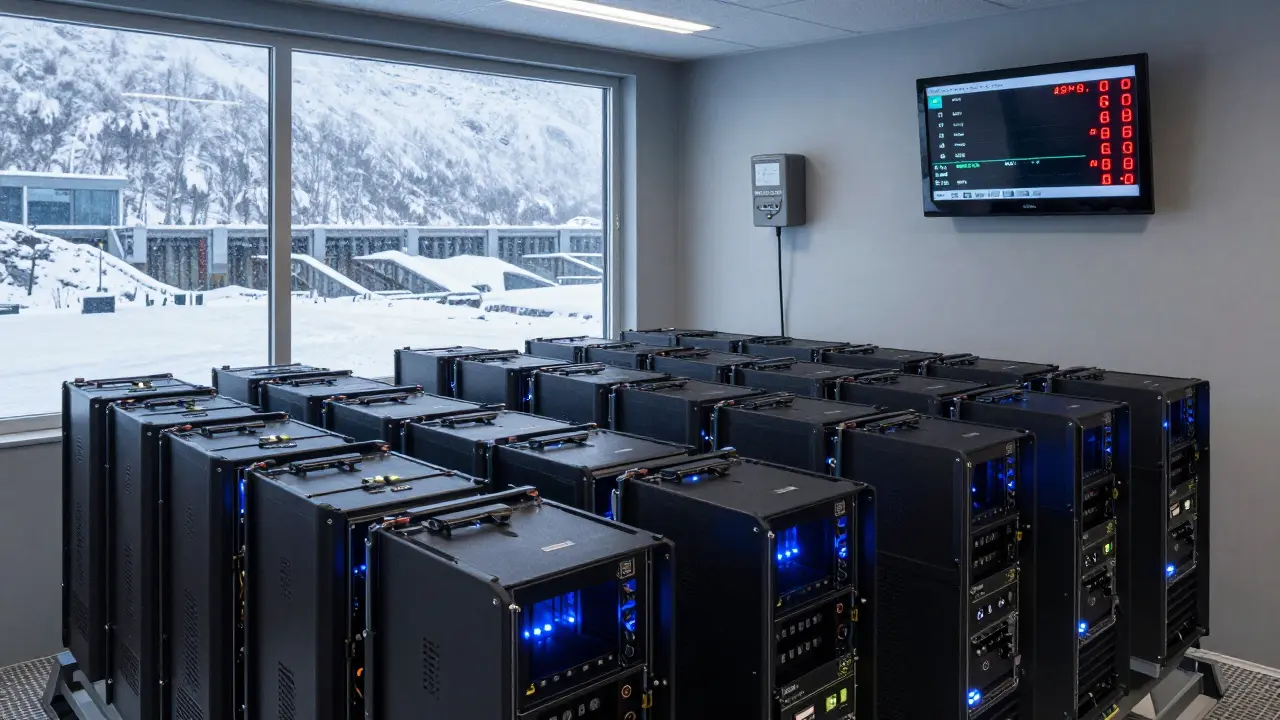
For years, Norway was one of the most attractive places in the world to mine cryptocurrency. Cheap, clean hydropower, cool temperatures, and a stable government made it a magnet for mining operations. But as of 2025, that era is over. The Norwegian government quietly ended the tax advantages that made mining profitable for many. It wasn’t a dramatic ban or a sudden crackdown. It was a quiet adjustment to the rules - and it’s already reshaping the industry.
What Changed?
There was no official announcement titled "Tax Incentives Removed." That’s because there never were formal tax incentives to begin with. What many miners thought was a benefit - the ability to deduct equipment and electricity costs - was always just standard business expense treatment under Norwegian tax law. But in 2024, the Norwegian Tax Administration (Skatteetaten) clarified its stance: those deductions are now capped and strictly audited. The real change? The 30% annual depreciation rate on mining rigs is no longer automatically applied. Miners must now prove each piece of equipment was used exclusively for mining and that it’s still operational.Before, you could buy a batch of ASIC miners, claim 30% depreciation per year for five years, and reduce your taxable income significantly. Now, if your equipment sits idle for more than 90 days in a year, or if you upgrade before the depreciation period ends, the deduction is slashed or revoked. The tax office now cross-checks mining rig serial numbers with electricity bills and blockchain transaction timestamps. If your power usage doesn’t match your claimed mining output, you’re flagged.
How Mining Income Is Taxed Now
Crypto mining income in Norway is treated as regular employment income - not capital gains. Every time you mine a Bitcoin, Ethereum, or any other coin, you owe tax on its value in Norwegian kroner (NOK) the moment it hits your wallet. The tax rate? A flat 22%. That hasn’t changed. But now, you can’t offset it as easily.Let’s say you mined 0.5 BTC in January 2025 when it was worth 320,000 NOK. You owe 70,400 NOK in income tax on that single payout. Previously, you might have deducted 150,000 NOK in equipment depreciation and 40,000 NOK in electricity, bringing your taxable income close to zero. Now, those deductions are limited. You can still deduct electricity, but only if you can prove it was used 100% for mining - no shared circuits, no home use. Equipment depreciation is now capped at 15% per year, and only for gear less than three years old.
Why Norway Made the Move
Norway doesn’t hate crypto. It still has one of the highest per-capita crypto holdings in Europe. But the government saw something it didn’t like: mining was becoming a loophole for tax avoidance. Large-scale operations, often funded by foreign investors, were using Norway’s low electricity prices and favorable tax rules to generate massive profits while paying little in taxes. In 2023, mining accounted for 1% of Norway’s total electricity use - roughly the same as all electric cars combined. And while that sounds small, it’s growing fast.The Norwegian Tax Administration found that over 60% of mining income reported in 2023 came from just 12 companies, many registered offshore. These entities used Norwegian addresses to claim deductions but operated out of data centers in Iceland or Sweden. The government cracked down not by banning mining, but by closing the accounting gaps. Now, you can’t claim deductions unless your business is legally registered in Norway, with local bank accounts and physical equipment on-site.
Who Got Hit the Hardest?
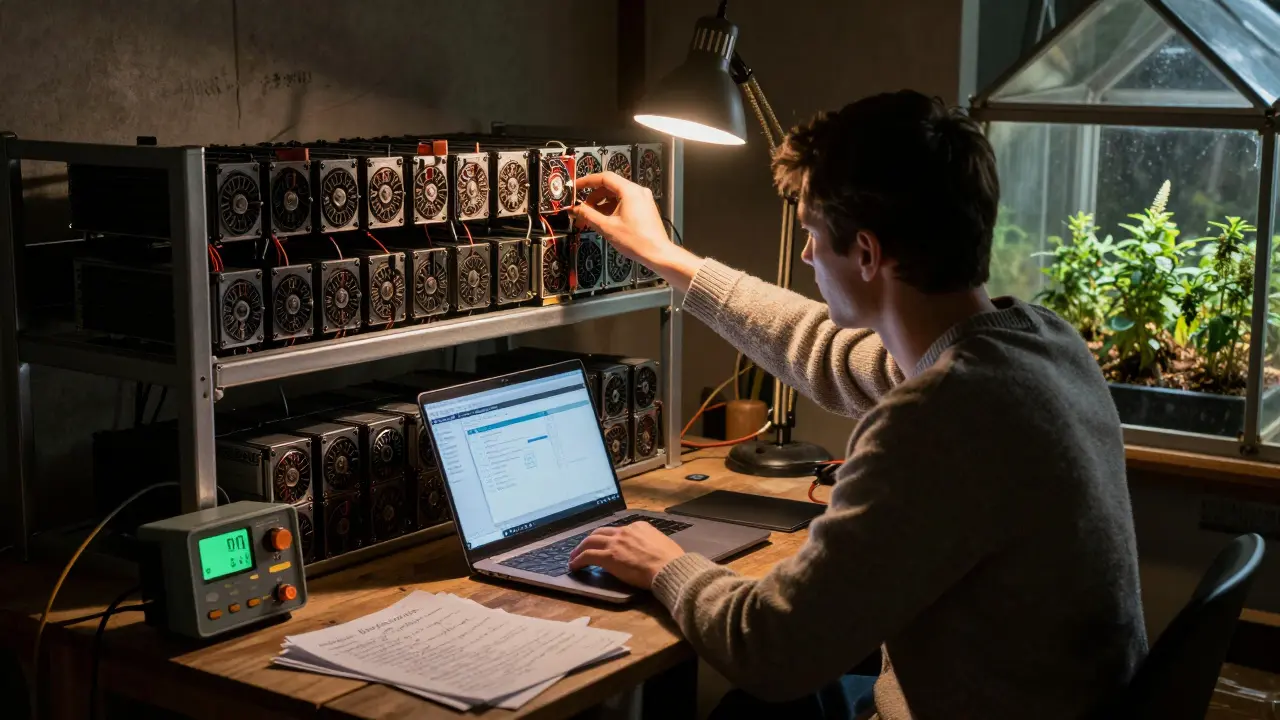
Small-scale miners who ran rigs in their garages or basements are mostly unaffected. They rarely made enough to file complex tax returns anyway. The real impact is on professional mining farms. Companies that bought $2 million worth of ASICs in 2022 and expected to depreciate them over five years are now scrambling. Their projected ROI models are broken. Some have shut down. Others moved operations to Kazakhstan or Georgia, where depreciation rules are still loose.One mining operator in Tromsø, who ran a 1.2 MW facility, told local media he cut his rig count by 40% after the new rules took effect. "We used to break even after two years," he said. "Now, it’s going to take five - if we’re lucky. And if electricity prices rise, we’re done."
What About Staking and Other Crypto Income?
Staking rewards, yield farming, and airdrops are taxed the same way as mining: as income at the time of receipt. But here’s the twist - they’re not eligible for equipment depreciation. If you stake ETH and earn 0.2 ETH, you pay 22% on its NOK value. No deductions. No loopholes. This has pushed many miners to shift away from Proof of Work entirely. Some have switched to staking services or moved into crypto lending platforms, where tax treatment is still less clear - but under scrutiny.
Reporting Requirements Got Tighter
Every Norwegian crypto holder must report their total holdings as of December 31 each year. For miners, this means listing every coin they mined - not just what they sold. The tax office now requires detailed logs: date, time, coin type, amount, and market value in NOK. You can’t just say "I mined some Bitcoin." You need a digital trail that matches your wallet addresses to your mining pool payouts and electricity usage.Software tools like CoinTracking and Koinly now offer Norway-specific tax templates, but they’re only as good as your data. If you didn’t keep daily records, you’re at risk of an audit. The tax authority has hired blockchain analysts to trace wallet flows. One miner in Bergen got a notice last year because his wallet received 12 BTC in a single month - but his registered electricity contract only allowed for 3.5 BTC worth of mining at current efficiency rates. He had to prove he had a second rig elsewhere. He couldn’t. He paid 380,000 NOK in back taxes and penalties.
Is Crypto Mining Still Worth It in Norway?
It’s not impossible - but it’s no longer easy. The days of buying a few miners and making passive income are over. To survive, you need:- A registered Norwegian business entity
- Physical equipment located in Norway
- Detailed, timestamped logs of every mining reward
- Separate electricity meters for mining rigs
- And a willingness to accept lower margins
Miners who still operate here now focus on efficiency, not scale. They use second-hand rigs, run them only during off-peak hours, and partner with local renewable energy cooperatives to lock in fixed electricity rates. Some even sell their excess heat to greenhouses - turning a cost into a revenue stream.
What’s Next?
Norway isn’t banning crypto. It’s just making sure it pays its fair share. The government has signaled it’s watching other jurisdictions. If the EU moves to tax mining more aggressively, Norway may follow. There’s talk of a carbon tax on crypto mining operations using more than 1 MW of power. And the Financial Supervisory Authority is considering requiring all mining businesses to register as financial service providers.For now, Norway’s message is clear: you can mine here. But you can’t hide. You can’t game the system. And you can’t expect handouts anymore. The era of cheap, untaxed crypto mining is over.
Were there ever real tax incentives for crypto mining in Norway?
No, Norway never offered direct tax breaks or subsidies for crypto mining. What miners benefited from was standard business expense deductions - like depreciating equipment and writing off electricity costs. In 2024, the tax office tightened those deductions, making them harder to claim. It wasn’t a removal of incentives; it was the end of loose interpretation.
Is crypto mining still legal in Norway?
Yes, crypto mining is still legal in Norway. There’s no ban. But the tax rules have changed. You must register your business, keep detailed records, and prove that your expenses are legitimate. The government isn’t stopping you - it’s just making sure you pay your share.
How much tax do I pay on crypto mining income in Norway?
You pay a flat 22% income tax on the Norwegian kroner value of the cryptocurrency you mine, at the exact moment you receive it. You can deduct electricity and equipment costs, but only under strict conditions. Depreciation on mining rigs is now capped at 15% per year, and you must prove the equipment is actively used.
Can I deduct electricity costs for mining?
Only if you have a separate electricity meter for your mining equipment and can prove all power used was for mining. Shared circuits or home use disqualify you. The tax office now requires utility bills matched to mining pool payouts and timestamps. If you can’t prove it, you can’t deduct it.
What happens if I don’t report my mining income?
The Norwegian Tax Administration now uses blockchain analytics to trace crypto inflows. If your wallet receives coins and your electricity usage doesn’t match, you’ll get an audit notice. Penalties range from 20% to 40% of unpaid taxes, plus interest. In severe cases, fines can reach hundreds of thousands of kroner. There’s no hiding anymore.
Should I move my mining operation out of Norway?
If you’re a large-scale operator with high equipment costs, yes - many already have. Countries like Kazakhstan, Georgia, and Canada still offer more favorable depreciation rules. But if you’re small-scale and can adapt to strict recordkeeping, staying in Norway may still make sense due to reliable power and political stability. Just don’t expect the old margins.