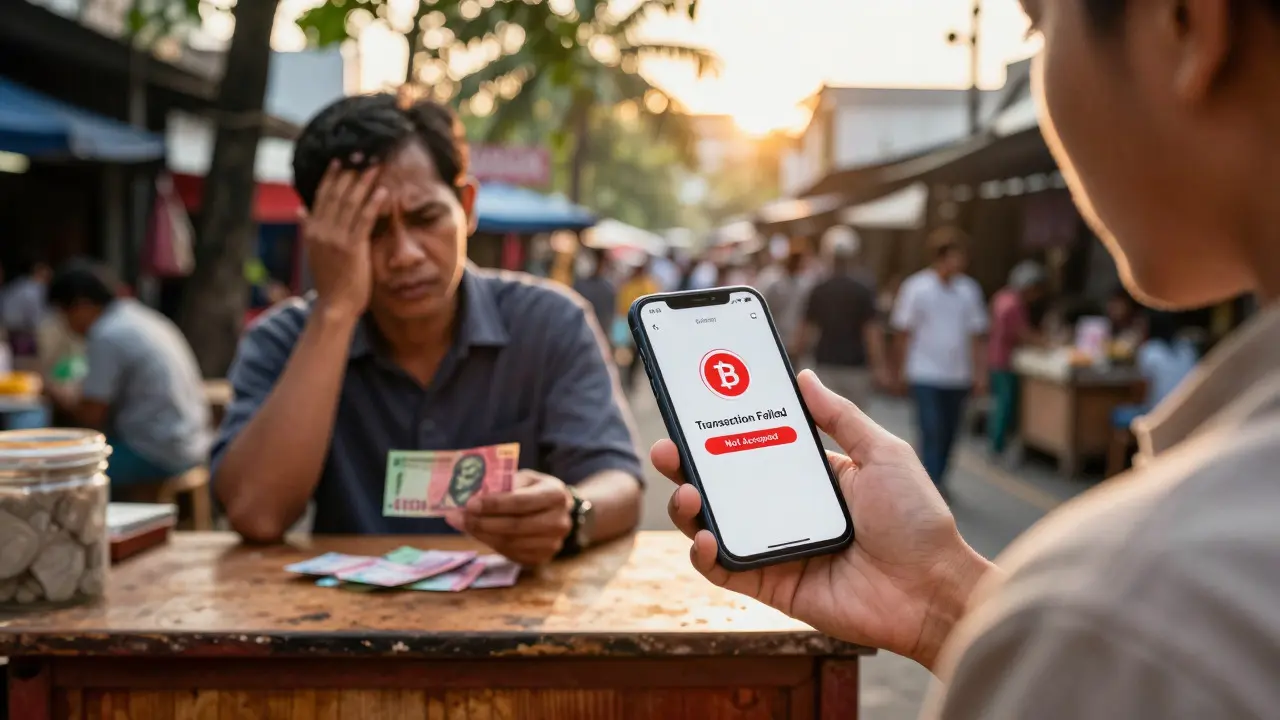
Imagine trying to buy coffee with Bitcoin in Jakarta. You scan the QR code, hit send, and then... nothing happens. The transaction isn't blocked by technology; it's blocked by law. This is the reality for anyone trying to use cryptocurrency as a daily payment method in Indonesia. While you can trade digital assets freely on licensed exchanges, actually spending them at a store is strictly prohibited.
If you are a merchant, an investor, or just someone curious about why your Indonesian friends can't pay you directly in USDT, this guide breaks down exactly what is happening. We will look at the specific laws banning crypto payments, the recent shift in regulatory power, and how new tax rules are changing the game for traders in 2026.
The Core Rule: Trading Yes, Spending No
To understand the current landscape, we first need to separate two concepts that many people confuse: cryptocurrency trading and cryptocurrency payments. In Indonesia, these two activities live under completely different roofs.
Bank Indonesia (BI), the country's central bank, maintains a hard line on payments. Under Regulation Number 18/40/PBI/2016 and subsequent updates, virtual currency is explicitly banned as a means of payment. This means no shop, service provider, or individual can legally accept Bitcoin, Ethereum, or stablecoins like USDT as direct payment for goods or services. The legal tender in Indonesia is solely the rupiah.
Why such a strict rule? BI argues that allowing crypto payments threatens financial system stability. They worry about money laundering, capital flight, and the loss of monetary policy control. In November 2025, Executive Director Agusman reiterated this stance, stating clearly that "virtual currency including bitcoin is not recognized as a valid payment instrument." For the average consumer, this means if you try to use a crypto wallet to settle a bill, you are technically operating outside the law.
However, the story changes when you move from the checkout counter to the trading screen. Here, the Financial Services Authority (OJK) takes over. Unlike BI, which hates crypto as money, OJK regulates it as an investment asset. This creates a unique "split personality" in Indonesia's financial system: one agency bans it as cash, while another encourages it as a commodity-turned-financial-asset.
The Big Shift: From Bappebti to OJK
For years, cryptocurrency in Indonesia was treated like gold or oil-a commodity. This oversight fell to Bappebti, the Commodity Futures Trading Regulatory Agency. But this changed dramatically on January 10, 2025.
On that date, regulatory authority formally transferred from Bappebti to the OJK. This wasn't just a bureaucratic shuffle; it fundamentally reclassified crypto assets. Under OJK Regulation No. 27 of 2024, crypto is now defined as a "digital financial asset." This aligns Indonesia more closely with frameworks like the European Union's MiCA, treating crypto closer to stocks than to corn futures.
This shift brought stricter but clearer rules. Licensed crypto service providers-exchanges, custodians, and token issuers-now face higher barriers to entry. For example:
- Digital asset exchanges must hold minimum capital of IDR 50 billion (approx. USD 3.2 million).
- Custodians require IDR 25 billion (USD 1.6 million).
- Token issuers need IDR 10 billion (USD 640,000).
These requirements force smaller, less secure platforms out of the market, theoretically protecting investors. However, the transition caused headaches. A survey by the Indonesian Blockchain Association (ABI) found that 42% of exchanges needed 3-6 months to reconfigure their systems to meet OJK's compliance standards. Smaller platforms with budgets under IDR 500 million struggled significantly with the mandatory API integrations required for real-time monitoring.

Tax Changes: Good News for Traders
While the payment ban remains rigid, the tax landscape softened considerably in mid-2025. If you have been trading crypto in Indonesia, you likely noticed a change in your fee structure around August 2025.
Effective August 1, 2025, Minister of Finance Regulation No. 50 of 2025 (PMK 50) eliminated the previous 1% Value Added Tax (VAT) on crypto transactions. Instead, it introduced a final income tax rate of 0.21% on transaction values. This is a significant reduction for active traders.
Previously, crypto was classified as "taxable goods," similar to buying electronics. Now, it is treated like securities. This reclassification simplifies reporting and lowers the cost of doing business. The Ministry of Finance even created a dedicated Crypto Asset Taxation Unit with 147 specialized auditors to handle this new flow, integrating directly with OJK's monitoring system.
Additionally, the OJK announced a complete suspension of regulatory fees for licensed crypto service providers for the entire 2025 calendar year. This waiver saved operators millions of dollars in annual licensing costs, signaling a government desire to grow the sector despite the payment ban.
Real-World Impact: The Merchant's Dilemma
The disconnect between OJK's pro-trading stance and Bank Indonesia's anti-payment stance creates what industry experts call "operational schizophrenia." Let's look at how this plays out on the ground.
| Country | Payment Status | Regulatory Body | Key Restriction |
|---|---|---|---|
| Indonesia | Banned | OJK / Bank Indonesia | No direct crypto-to-fiat settlement for goods |
| Thailand | Limited Allowance | SEC Thailand | Allowed for certain merchants under conditions |
| Singapore | Allowed | Monetary Authority | Licensed payment service providers only |
| Vietnam | Banned | State Bank of Vietnam | Trading regulated, payments illegal |
Consider the case of a small e-commerce seller in Jakarta. According to user discussions on Reddit's r/IndonesiaCrypto community, a merchant named u/JakartaToko lost a $12,000 international order because the buyer could only pay via USDT. Because local banks wouldn't process the crypto conversion for a commercial invoice efficiently, the deal fell through. This isn't an isolated incident.
A study by Professor Budi Suharjo at Universitas Gadjah Mada found that 68% of surveyed merchants still accept crypto payments through informal channels. How? They use workarounds. Many sellers convert incoming crypto into gift cards or prepaid credits instantly, effectively bypassing the direct payment prohibition. Another common method is peer-to-peer (P2P) transfers where the buyer sends crypto, and the seller manually transfers rupiah from their personal bank account. These methods are risky, lack consumer protection, and exist in a legal gray area.
For businesses, this inefficiency has a price tag. An analysis by Alvarez & Marsal in July 2025 revealed that Indonesian businesses face 37% higher transaction costs and experience delays of 3.2 business days for international settlements compared to countries that allow crypto-based payments. They are forced to rely on traditional banking channels that are slower and more expensive, despite having access to fast blockchain networks.
Market Growth Despite Restrictions
You might think these restrictions would kill the market. Surprisingly, they haven't. Indonesia remains a powerhouse in the Asian crypto scene.
In 2024, crypto trading volume reached IDR 127.5 trillion (USD 8.1 billion), a 28% increase from the previous year. There are now 14.3 million active users, making up about 5.2% of the population. This places Indonesia as the third-largest crypto market in Southeast Asia, behind Vietnam and Thailand.
The shift to OJK oversight has actually boosted institutional confidence. By Q2 2025, 87% of Indonesia's top 100 publicly listed companies reported holding crypto assets, up from 52% in late 2024. Major players like Indodax dominate the market with 58% share, followed by Tokocrypto and Pintu. International giants like Binance hold a tiny fraction (0.3%) due to the strict local licensing requirements.
However, there is a warning sign. Robby, Chairman of the Indonesian Blockchain Association, testified before the House of Representatives in August 2025 that the rigid fiscal approach is causing a "brain drain." He noted that 27 crypto professionals had already relocated to Singapore or Dubai in the first half of 2025 alone. The talent is leaving because the innovation potential is capped by the payment ban.
What Comes Next?
Is the ban going away anytime soon? Probably not immediately. Bank Indonesia Governor Perry Warjiyo stated in October 2025 that any relaxation of the payment prohibition would require a comprehensive assessment of monetary policy transmission mechanisms. In plain English: they are scared to let go of control.
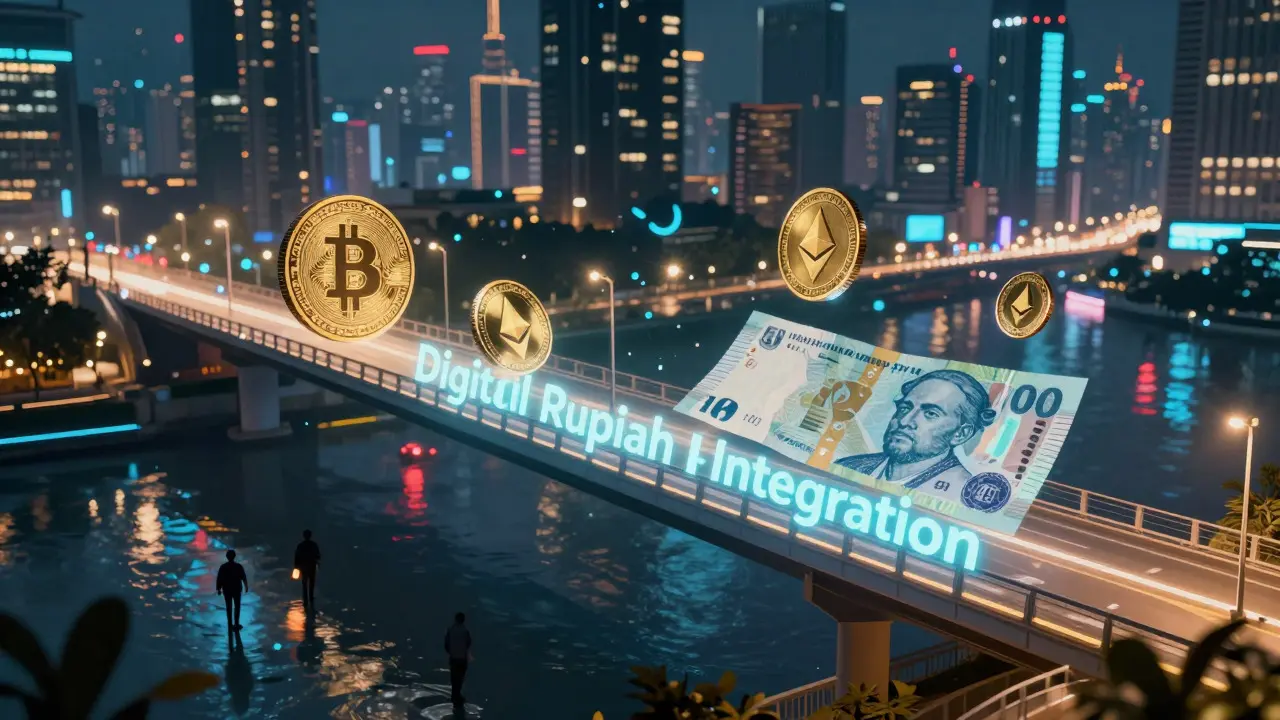
However, there is a glimmer of hope in the form of Draft Law No. 12/2025 on Digital Rupiah Integration. This draft explores the possibility of using Central Bank Digital Currency (CBDC) bridges to facilitate limited crypto usage. If passed, this could create a controlled environment where crypto interacts with the rupiah without threatening the central bank's authority. But until then, the status quo remains: trade freely, spend cautiously, and always keep your rupiah ready.
Can I use Bitcoin to buy things in Indonesia?
Technically, no. Bank Indonesia prohibits the use of cryptocurrency as a means of payment. While some merchants may accept it informally through P2P transfers or instant conversions to gift cards, it is not legally recognized as a valid payment instrument. The rupiah is the sole legal tender.
Who regulates cryptocurrency in Indonesia now?
As of January 10, 2025, the Financial Services Authority (OJK) regulates cryptocurrency as a "digital financial asset." Previously, it was regulated by Bappebti as a commodity. Bank Indonesia still retains authority over the prohibition of crypto as a payment method.
What is the current tax rate for crypto transactions?
Under Minister of Finance Regulation No. 50 of 2025 (effective August 1, 2025), the 1% VAT on crypto transactions was replaced by a final income tax rate of 0.21% on transaction values. This applies to trades conducted on licensed exchanges.
Are there penalties for accepting crypto as payment?
Yes. Bank Indonesia regulations prohibit payment system operators from processing virtual currency transactions. While enforcement often targets large-scale operators, merchants engaging in widespread crypto acceptance risk regulatory scrutiny and fines. Non-compliance penalties for licensed entities can reach up to IDR 5 billion per violation.
Is it safe to trade crypto in Indonesia?
Trading on OJK-licensed exchanges is considered safer due to stricter capital requirements (minimum IDR 50 billion for exchanges) and mandatory AML/CFT protocols. However, users should still exercise caution, especially when using informal P2P channels to circumvent payment bans, as these lack consumer protection.