
Imagine waking up to find that holding a Bitcoin wallet is now a crime punishable by prison time. That’s the reality for millions of Algerians since July 24, 2025. The government didn’t just tweak the rules; they slammed the door shut on the entire cryptocurrency ecosystem with Law No. 25-10, a piece of legislation so comprehensive it criminalizes everything from mining and trading to simply talking about digital assets online. This isn’t a gray area where you can still trade peer-to-peer quietly. It’s a hard stop.
If you’re wondering why a country with a growing tech scene would take such a drastic step, you’re not alone. But to understand the enforcement, you have to look at what actually changed. Before this law, Algeria had a vague ban from 2018 that lacked teeth. Now, there are specific fines, jail sentences, and a coordinated effort between security forces and bankers to hunt down violations. Let’s break down exactly what is illegal, who is getting caught, and what this means for anyone touching blockchain in North Africa.
The Scope of Law No. 25-10
Law No. 25-10 is arguably one of the strictest crypto prohibitions globally right now. Unlike jurisdictions that regulate exchanges or tax gains, Algeria has opted for total elimination of legal participation. Article 6 bis of the law explicitly outlaws the issuance, possession, purchase, sale, storage, mining, promotion, and use of all digital assets.
This scope is broader than most people realize. It’s not just about buying Bitcoin. If you hold a token in a non-custodial wallet, you are technically in possession of a prohibited asset. If you run a node, you are mining. If you post a video explaining DeFi on YouTube, you might be promoting. The law closes every loophole:
- Possession: Simply having crypto in your wallet is a violation.
- Mining: Using computational power to validate transactions is banned.
- Services: Crypto wallets and exchange platforms cannot operate legally.
- Promotion: Influencers, advertisers, and educators discussing crypto face liability.
This level of detail signals that the state isn’t trying to manage the market; they are trying to erase it from the formal economy.
Penalties: What Happens If You Get Caught?
Uncertainty often leads to risk-taking, but Algeria removed that variable. The penalties under Law No. 25-10 are specific and severe enough to act as a genuine deterrent for the average citizen.
| Violation Type | Prison Sentence | Fine (Algerian Dinar) | Fine (Approx. USD) |
|---|---|---|---|
| General Violation (Trading/Possession) | 2 months to 1 year | 200,000 - 1,000,000 DZD | $1,540 - $7,700 |
| Aggravated Circumstances* | Up to 3 years | Higher tier fines | Varies |
*Note: Aggravated circumstances typically involve organized networks, significant volume, or links to money laundering investigations.
For context, an average monthly salary in Algeria varies widely but often falls below these fine amounts for many workers. A single mistake-like converting a small amount of savings into USDT via a local P2P app-could result in a fine equivalent to several months’ income. This economic pressure is a key part of the enforcement strategy.
Who Is Enforcing the Ban?
You might think enforcement is just a police matter, but in Algeria, it’s a multi-agency operation. The government has built a web of oversight designed to catch violations at the financial, judicial, and security levels.
The Bank of Algeria acts as the primary gatekeeper. They monitor the banking system to ensure no commercial bank facilitates crypto transactions. If your bank account shows frequent transfers to known crypto payment processors, you could flag their radar.
Beyond the banks, other bodies play critical roles:
- The Banking Commission: Oversees financial institutions to prevent them from offering crypto services like custody or exchange integration.
- Judicial Authorities: Handle the prosecution. Courts are now equipped to process cases specifically related to digital asset violations, moving away from ad-hoc interpretations of older laws.
- Security Authorities: These agencies conduct both digital monitoring and physical raids. Their focus is often on operations linked to organized crime or terrorism financing, aligning with international anti-money laundering (AML) standards.
This coordination means that if you are flagged by a bank, the case can quickly move to judicial review. It’s not just a slap on the wrist; it’s a systemic crackdown.
Why Did Algeria Ban Crypto?
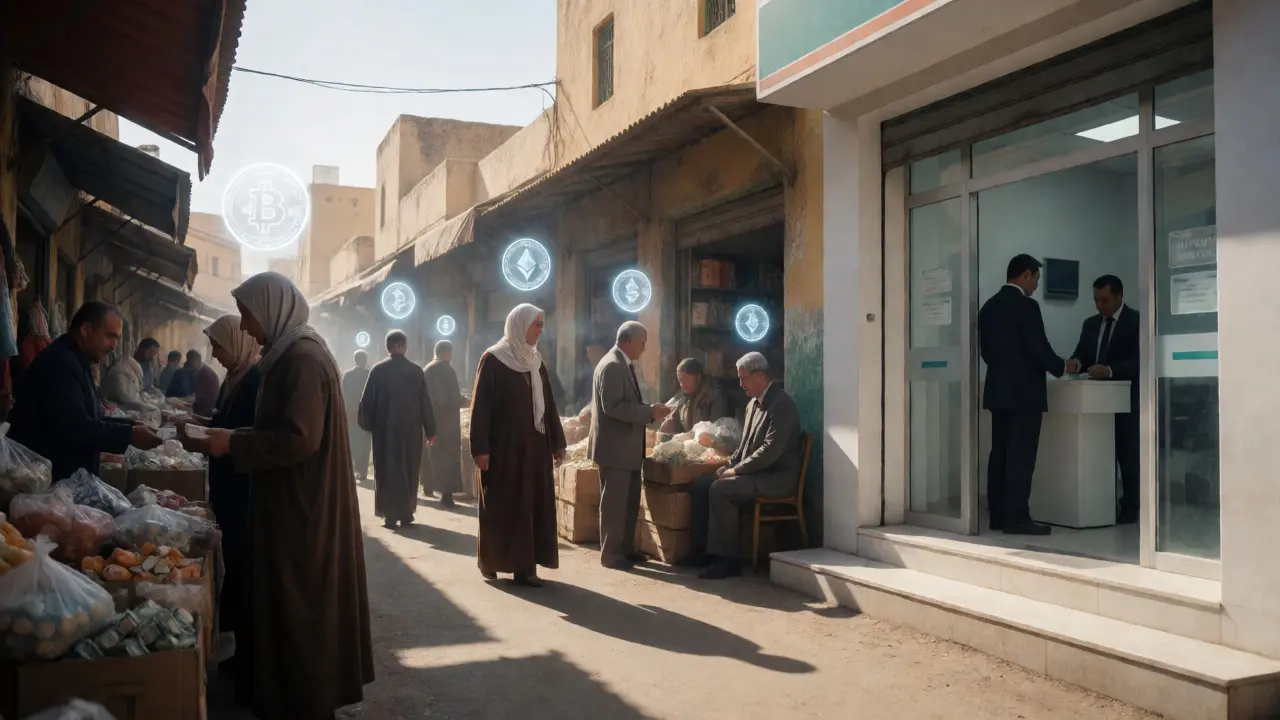
The official narrative centers on sovereignty and security. Algerian officials argue that unregulated digital assets threaten the value of the Algerian Dinar. By allowing citizens to bypass the central bank for transactions, the state loses control over monetary policy.
But there’s also a strong influence from global compliance pressures. The Financial Action Task Force (FATF) has long advised nations on how to combat money laundering and terror financing. Algeria’s move aligns closely with FATF guidance, positioning the ban as a necessary step to keep the country’s financial sector compliant with international standards. Officials cite the need to protect citizens from fraud and "uncontrolled speculation," framing the ban as consumer protection rather than just authoritarian control.
Interestingly, this comes despite evidence of rapid adoption. Just a year before the ban, Chainalysis ranked Algeria among the top five fastest-growing crypto markets in the MENA region. Peer-to-peer volumes were surging. The government essentially chose stability and control over capturing that emerging market growth.
Impact on Users and Businesses
The practical fallout has been immediate and disruptive. For individual users, the fear of prosecution has driven activity underground. Many have moved to informal cash-based trades, which are harder to track but carry higher counterparty risks. If you send money to a stranger for Bitcoin, and they don’t deliver, you can’t easily sue them without admitting to a crime yourself.
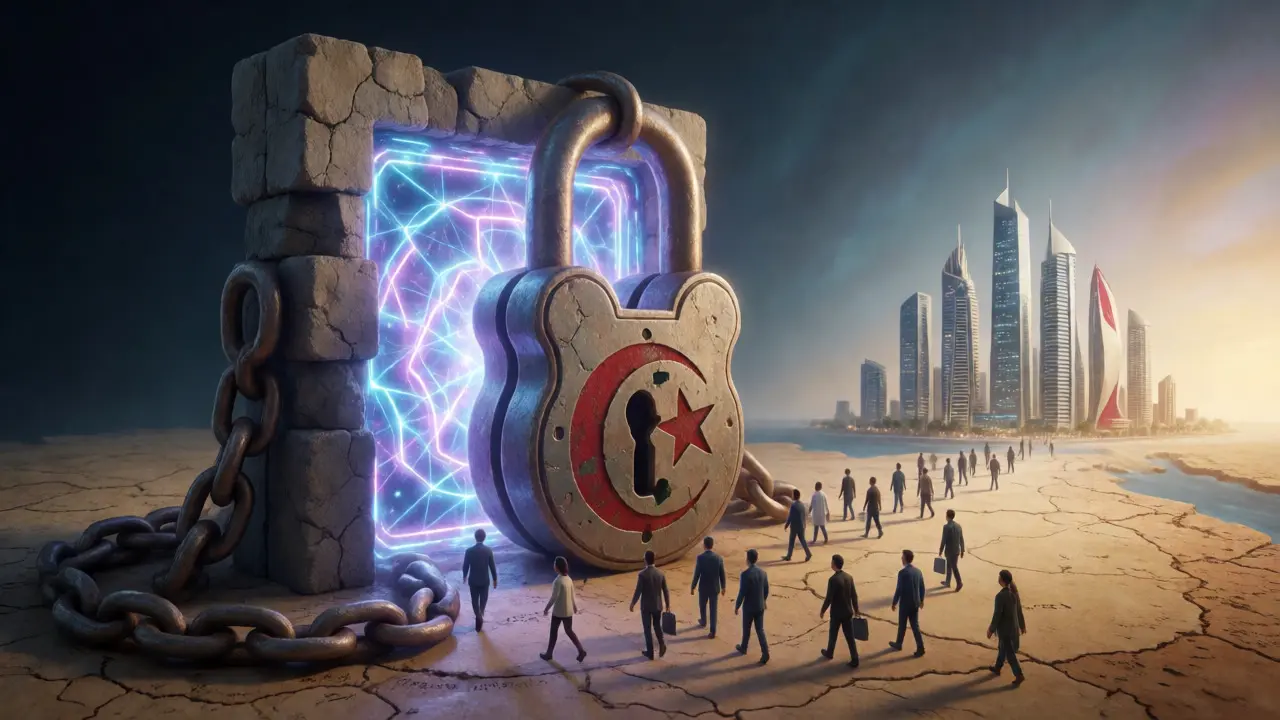
For businesses, the impact is existential. Startups focused on blockchain infrastructure have either shut down or relocated. The ban on service providers means you can’t legally open a crypto exchange or offer wallet services within Algeria. This has triggered a "brain drain," where skilled developers and fintech entrepreneurs leave for hubs like Dubai or Bahrain, which offer regulated frameworks.
Content creators face a unique challenge. Educators who explain blockchain concepts for free may now face liability for "promotion." This chilling effect stifles public education and debate, making it harder for new entrants to understand even the basics of digital finance.
Regional Context: Algeria vs. Its Neighbors
Algeria’s stance puts it at odds with its neighbors. While countries like the UAE and Bahrain are rolling out red carpets for crypto firms with clear regulatory licenses, Algeria is building walls. This divergence creates a stark contrast in the African and Middle Eastern landscape.
Most of the world is moving toward structured frameworks. The European Union implemented MiCA (Markets in Crypto-Assets) to integrate crypto into mainstream finance. The United States is refining its approach through SEC guidelines. Algeria, however, resembles China’s outright ban strategy, albeit with different motivations. While China focuses on energy consumption and social stability, Algeria focuses on monetary sovereignty and AML compliance.
This isolation affects regional competitiveness. As neighboring countries attract blockchain talent and investment, Algeria risks falling behind in the fintech innovation race. The loss of a vibrant, growing market is a high price to pay for regulatory certainty.
What Comes Next?
Will the ban last? Given the detailed nature of Law No. 25-10 and the multi-agency enforcement structure, a quick reversal seems unlikely. The government has invested political capital in this position. However, enforcement intensity may vary. We might see periods of aggressive crackdowns followed by quieter phases, depending on economic conditions and political priorities.
For those living in or doing business with Algeria, the advice is simple: treat crypto as a liability, not an asset. Keep your exposure minimal, avoid using local banking channels for crypto-related transfers, and stay updated on any regulatory shifts. For now, the door is firmly closed.
Is it illegal to hold Bitcoin in Algeria?
Yes. Under Law No. 25-10, the possession of any digital asset is explicitly prohibited. Individuals found holding cryptocurrencies in personal wallets face potential fines ranging from 200,000 to 1,000,000 Algerian dinars and possible imprisonment.
Can I still mine cryptocurrency in Algeria?
No. Mining operations are explicitly banned. The law prohibits the use of computational power to validate transactions or earn cryptocurrency rewards. Operators running mining rigs face criminal charges and shutdown orders.
What are the penalties for violating the crypto ban?
Violators face prison sentences ranging from two months to one year for standard offenses. Fines range from 200,000 to 1,000,000 Algerian dinars (approximately $1,540 to $7,700 USD). More severe cases involving organized networks can lead to longer sentences.
Does the ban apply to foreign tourists?
Technically, yes. The law applies to activities conducted within Algerian territory. While enforcement against tourists is rare, engaging in crypto transactions or displaying ownership during a customs check or legal dispute could theoretically trigger scrutiny under the broad definition of possession.
Why did Algeria implement such a strict ban?
The government cites three main reasons: protecting the monetary sovereignty of the Algerian Dinar, preventing money laundering and terrorist financing in line with FATF recommendations, and shielding citizens from fraud associated with unregulated speculative markets.