Crypto & Blockchain: Real Guides to Tokens, Exchanges, and Regulations
When you hear Crypto, digital assets built on decentralized networks that let people send value without banks. Also known as cryptocurrency, it’s not just Bitcoin anymore—it’s a whole ecosystem of tokens, apps, and rules that change how money moves. Blockchain, the public digital ledger that records every crypto transaction in a way no one can erase. It’s the backbone of everything from DeFi to NFTs, and it’s why you can trade a meme coin one day and vote on a protocol upgrade the next. These aren’t just tech buzzwords—they’re the foundation of how people are moving money, storing value, and building new financial systems outside traditional banks.
DeFi, short for decentralized finance, lets you lend, borrow, or earn interest without needing a bank. Think of it like online banking, but controlled by code instead of people. That’s where tokens like vBNT or AWARE come in—they give you voting power or security alerts, not just speculative value. And then there’s stablecoin regulation, the new wave of laws, like the GENIUS Act, that demand real cash backing for digital dollars. These rules are forcing issuers to clean up or disappear, and they’re changing how safe your holdings really are. Meanwhile, crypto exchanges keep popping up—some with lightning-fast trades and zero KYC, others that vanish overnight with your funds. You’ve got Hermes Protocol for cross-chain swaps, Echobit for high-leverage trading, and Firebird Finance trying to simplify swaps with cashback. But half of them? They’re ghost towns with fake tokens and no support.
What You’ll Find Here
This collection cuts through the noise. You’ll find real breakdowns of tokens that actually do something—like ChainAware.ai’s AI scam detector or Bancor’s governance system—and deep dives into exchanges that still work in 2025. You’ll also see the flip side: meme coins with $34K market caps, stablecoins that don’t stay stable, and airdrops that don’t exist. We don’t just list what’s hot—we tell you what’s hollow, what’s risky, and what’s worth your time. Whether you’re trying to stake BNT, avoid a scam airdrop, or understand why a U.S. law is changing how stablecoins work, you’ll find straight answers here. No hype. No fluff. Just what you need to navigate crypto without getting burned.
COREDAX is a regulated Korean crypto exchange with strong security and local support, but it's nearly unusable outside South Korea due to its lack of USD/EUR deposits, credit card options, and English interface. Ideal for Korean traders, not global users.
0 Comments
by Tamara Nijburg
Cryptocurrency is no longer a fringe experiment - stablecoins, tokenized assets, and institutional adoption are reshaping global finance. Real-world use cases are outpacing speculation, making crypto a permanent part of how money moves.
0 Comments
by Tamara Nijburg
Thailand's SEC now requires all crypto exchanges serving Thai users to be licensed, banning foreign platforms like Bybit and OKX. Only nine exchanges are approved, with strict limits on coins, fees, and services. Learn what's allowed, what's banned, and how it affects traders in 2026.
0 Comments
by Tamara Nijburg
Social token investments look exciting but carry extreme risks: creator dependency, zero liquidity, regulatory crackdowns, and 90% failure rates. Learn why most collapse and how to protect your money.
0 Comments
by Tamara Nijburg
No official Crypto Bank Coin (CKN) airdrop exists as of 2026. With a $0 price and 99.9% of tokens locked, CKN shows no signs of activity. Learn how to spot fake airdrops and avoid scams.
0 Comments
by Tamara Nijburg
There is no verified Crypto Bank Coin (CKN) airdrop as of 2026. The token has a $0 price, zero trading volume, and no official announcements. Beware of scams posing as CKN distribution campaigns.
0 Comments
by Tamara Nijburg
Radio Caca's 90 million RACA token airdrop during BSC GameFi Expo II tied rewards to Metamon NFT ownership and metaverse gameplay, creating one of the most effective token distribution campaigns in GameFi history.
0 Comments
by Tamara Nijburg
Despite Egypt's total ban on cryptocurrency since 2020, millions continue to hold and trade Bitcoin and USDT through underground networks. The ban hasn't stopped adoption-it's driven it underground.
0 Comments
by Tamara Nijburg
The Space Misfits CROWN airdrop promised free tokens for a space game that never launched. Learn why the token crashed 99.1%, how the airdrop worked, and what happened to the project after 2022.
0 Comments
by Tamara Nijburg
The CYT airdrop from Dragonary during BSC GameFi Expo III in 2021 offered up to 500,000 tokens, but most claimers sold immediately, crashing the price. Learn how it worked, why it failed, and what’s left today.
0 Comments
by Tamara Nijburg
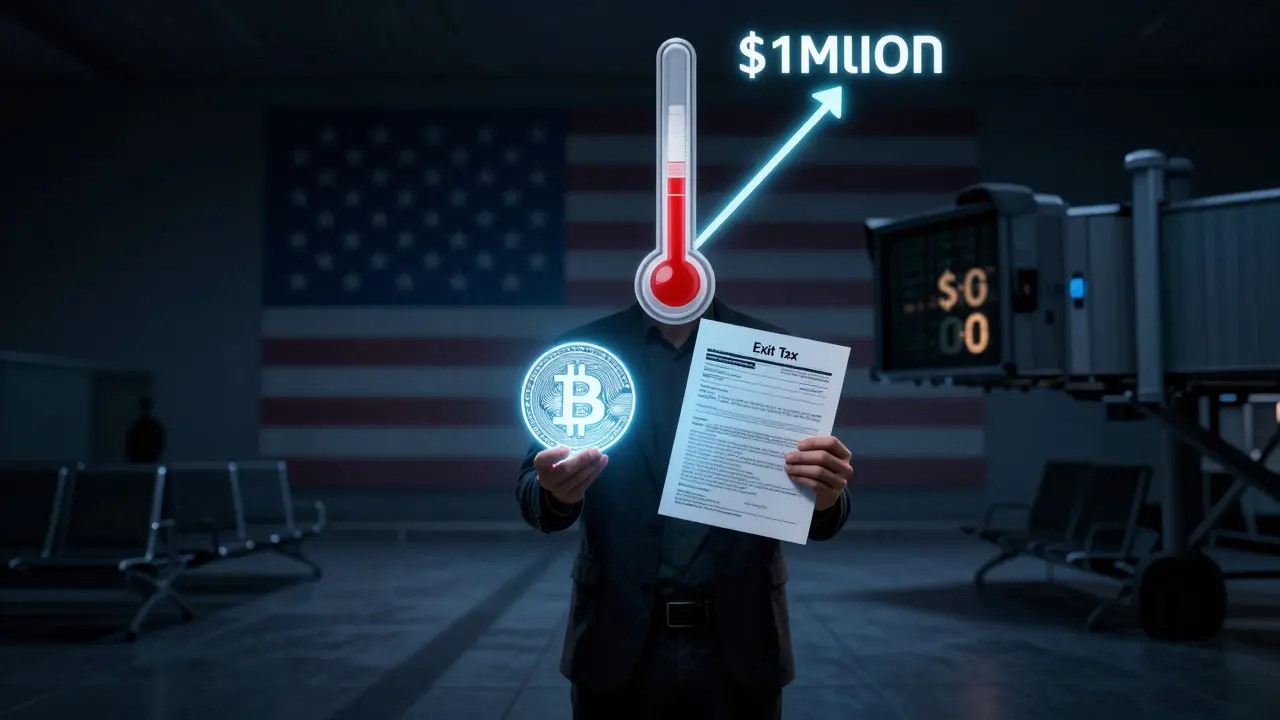
U.S. expatriates who hold cryptocurrency face a complex exit tax that treats crypto as property. Learn how the 2025 rules work, who owes tax, what records you need, and how to avoid a massive bill before leaving.
0 Comments
by Tamara Nijburg
The BIT airdrop in 2022 distributed 2.4 billion tokens to users who staked MX tokens. Today, BIT still works as a utility token on Biconomy Exchange, lowering fees and enabling voting - but has seen no major updates since. Learn how to use it and if it's still worth holding.
0 Comments
by Tamara Nijburg