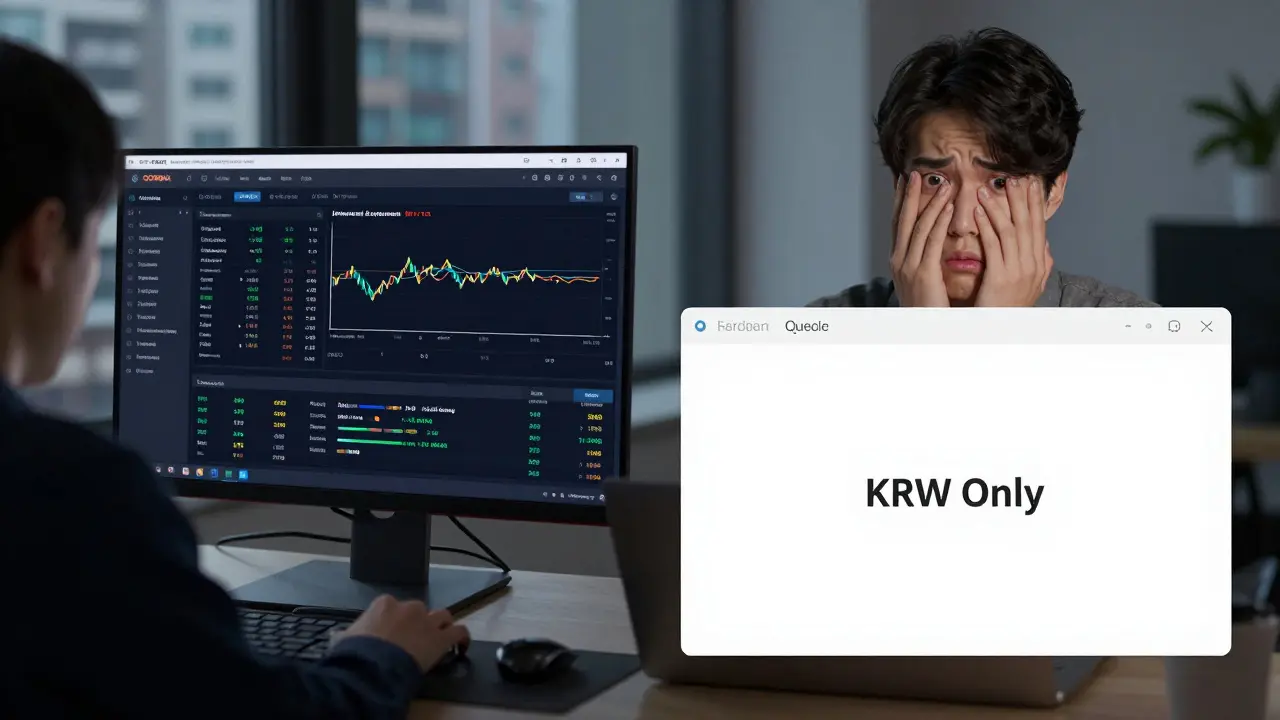
When you're looking for a crypto exchange, you don't just want another platform that says it’s secure. You want to know if it actually works for you. If you’re in South Korea or trading primarily in Korean Won, COREDAX might be worth your time. But if you’re outside Korea or prefer to fund your account with a credit card, you’re going to run into serious roadblocks. This isn’t a review that says “good” or “bad.” It’s a clear look at what COREDAX actually offers - and who it’s really built for.
What is COREDAX?
COREDAX is a cryptocurrency exchange founded in South Korea in 2020. It’s not a global giant like Binance or Coinbase. Instead, it’s built for one market: Korea. It follows the country’s strict rules under the Virtual Asset User Protection Act a South Korean law enacted in July 2023 that requires exchanges to hold proof-of-reserves, conduct regular audits, and keep customer funds separate from company assets. This means COREDAX isn’t some offshore platform with loose rules. It’s regulated, audited, and legally required to protect your money.
That doesn’t mean it’s perfect. COREDAX doesn’t publish its user count, trading volume, or who owns it. That’s unusual for a platform this size. But what we do know is that as of Q3 2025, it holds about 6.2% of South Korea’s daily crypto trading volume - making it the 4th largest exchange in the country, behind Upbit, Bithumb, and Korbit.
Trading on COREDAX: Desktop vs Mobile
COREDAX offers two ways to trade: desktop and mobile. This is smart. According to a 2024 CoinDesk survey, 68% of professional traders prefer desktop platforms for their precision and speed. COREDAX’s desktop interface supports Windows 10+ and macOS 11.0+, with a minimum screen resolution of 1366x768. It’s not flashy, but it’s functional. You can place limit orders, view depth charts, and set price alerts without lag.
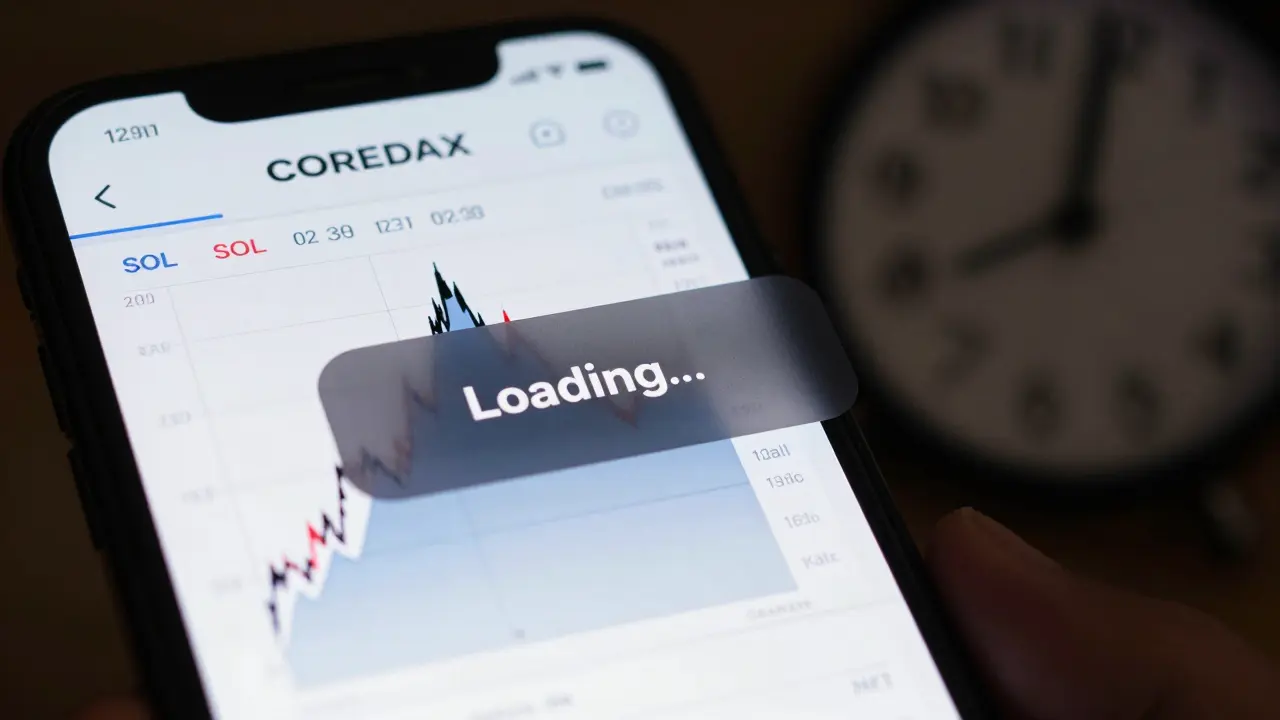
The mobile app, available on iOS 14+ and Android 8+, has a 4.1/5 rating on Google Play from over 1,200 reviews. Users like the clean layout and biometric login. But there’s a catch - during market spikes, the app freezes. One user on Naver Cafe reported being locked out for 12 minutes during a SOL pump. That’s not just annoying - it’s costly. If you’re day trading or reacting to news, delays like that can mean lost profits.
Supported Cryptocurrencies
COREDAX lists 47 cryptocurrencies as of September 2025. That’s far fewer than Binance (600+) or Coinbase (240+). But here’s the thing: it doesn’t need to list 500 coins. It focuses on what Korean traders actually use: Bitcoin, Ethereum, Solana, and a handful of local blockchain projects like Klaytn and Polygon. If you’re into obscure altcoins, you’ll be disappointed. But if you’re trading the big names and a few Korea-specific tokens, you’re covered.
What’s missing? No Dogecoin, no Shiba Inu, no meme coins. That’s intentional. COREDAX avoids high-risk, low-liquidity assets. That’s good for safety - bad if you’re chasing quick flips.
Fees and Deposit Methods
COREDAX’s fee structure is simple but restrictive.
- Withdrawal fee: 0.001 BTC per Bitcoin withdrawal. That’s higher than Upbit (0.0004 BTC) and Binance (0.0005 BTC). For altcoins, fees vary but are generally in line with industry standards.
- Fiat deposits: Only wire transfers in Korean Won (KRW). No credit cards. No PayPal. No Apple Pay. No Google Pay. Minimum deposit is ₩50,000 (~$38 USD).
- Processing time: 1.8 business days on average. Compare that to Upbit, which processes deposits in under half a day. If you need to move money fast, this is a dealbreaker.
Why does this matter? Because if you’re outside Korea, you’re stuck. You can’t use your local bank to deposit. You’d need to find a Korean bank account or use a third-party service - which adds cost and risk. For international users, COREDAX is practically unusable.
Security: Is COREDAX Safe?
COREDAX follows South Korea’s security rules. That means:
- Cold storage for the majority of assets
- Two-factor authentication (2FA) required
- Withdrawal whitelists (you can only send crypto to pre-approved addresses)
- Regular third-party audits
No major hacks have been reported since its launch in 2020. That’s impressive. But here’s the reality: no exchange is 100% safe. In 2024 alone, North Korean hackers stole over $1.3 billion across 47 crypto incidents, according to Chainalysis. COREDAX’s compliance doesn’t make it bulletproof - it just makes it one of the safer options in a risky space.
What’s missing? Public security audits. Unlike Kraken or Coinbase, COREDAX doesn’t publish its penetration test results or bug bounty reports. You’re trusting them because the government says they’re compliant - not because they’ve opened their systems to public scrutiny.
Customer Support and Language
COREDAX is a Korean-first platform. Everything is in Korean. The website, the app, the help center, the live chat. English support exists - but barely.
- Customer service: 24/7 Korean chat with an average response time of 2.3 minutes.
- English support: Limited to email. Average response time: 18.7 minutes.
On Reddit’s r/CryptoKorea, users praise the support team. On Trustpilot? Zero English reviews. That tells you everything. If you don’t speak Korean, you’re on your own. Even basic questions about deposits or withdrawals can take days to resolve.
Registration is another hurdle. Korean users need a resident registration number. International users need a passport + notarized translation. The whole process takes 35-45 minutes. Most exchanges do it in under 10.

Who Is COREDAX For?
COREDAX isn’t for everyone. It’s built for one group: Korean retail investors aged 25-44. That’s 78% of its user base, according to the Korea Internet & Security Agency.
If you fit this profile - you live in Korea, you speak Korean, you use KRW, and you want a regulated, no-nonsense exchange - COREDAX is a solid choice. It’s stable, compliant, and focused.
If you’re outside Korea? You’ll struggle. No card deposits. Poor English support. Limited coin selection. Slow transfers. You’re better off with Binance, Kraken, or Coinbase.
Even within Korea, COREDAX has weaknesses. It doesn’t offer staking, lending, or margin trading. It has no API for developers. No bot integration. No educational resources. It’s a trading platform - nothing more.
Future Outlook
The Korean crypto market is shrinking. In 2021, there were 65 exchanges. By 2025, only 14 remain. The government is forcing out weak players. COREDAX is one of the survivors - but barely.
Industry analysts at Nomura Financial Insights give COREDAX a 68% chance of surviving the next regulatory wave. That’s not bad - but it’s not great. Its biggest risk? Staying local. While global exchanges grow by adding international users, COREDAX hasn’t made a single move to expand beyond Korea. No USD support. No English app. No global marketing.
Without change, COREDAX will stay small. With change - better fees, international deposits, API access - it could become a regional leader. But as of now, it’s stuck in a box.
Final Verdict
COREDAX is not a top-tier global exchange. It’s a reliable, regulated, and very Korean platform. If you’re in Korea and want a safe place to trade Bitcoin and Ethereum without the noise of meme coins or sketchy platforms - it’s one of the best options.
If you’re anywhere else? Skip it. You’ll waste time, money, and patience. There are better exchanges that work with your bank, your language, and your trading style.
Bottom line: COREDAX is niche. And for the right person, that’s a strength. For everyone else? It’s a dead end.
Is COREDAX safe to use?
Yes - but only if you’re in South Korea. COREDAX follows strict government regulations under the Virtual Asset User Protection Act, which requires proof-of-reserves, segregated customer funds, and regular audits. It has no public hacks since 2020. However, it doesn’t publish independent security audits, so you’re relying on regulatory oversight rather than transparency.
Can I deposit USD or EUR on COREDAX?
No. COREDAX only accepts fiat deposits via wire transfer in Korean Won (KRW). You cannot use USD, EUR, GBP, or any other currency. This makes the platform essentially unusable for anyone outside South Korea who doesn’t have access to a Korean bank account.
Does COREDAX support credit card deposits?
No. COREDAX does not accept credit cards, debit cards, PayPal, or any e-wallets. The only way to add fiat is through bank wire transfer in KRW. This is one of its biggest drawbacks compared to global exchanges like Binance or Coinbase.
How many cryptocurrencies does COREDAX support?
As of September 2025, COREDAX supports 47 cryptocurrencies. It focuses on major coins like Bitcoin, Ethereum, and Solana, plus a few Korean blockchain tokens like Klaytn and Polygon. It does not list meme coins or low-liquidity altcoins.
Is COREDAX good for beginners?
Only for Korean-speaking beginners. The interface is simpler than advanced platforms like BitMEX, but the lack of English support, slow deposit times, and limited guidance make it confusing for non-Korean users. If you don’t speak Korean, you’ll struggle to even sign up. For Korean speakers, it’s a solid entry point - but not beginner-friendly by global standards.
Can I trade on COREDAX from outside South Korea?
Technically yes - if you have a Korean bank account and can complete the notarized ID process. But practically, no. The platform is designed for Korean users. Customer support is almost entirely in Korean, deposit processing takes days, and there’s no English app or website. Most international users give up before completing registration.
Does COREDAX have an API for trading bots?
No. COREDAX does not publish any API documentation, and there is no evidence of bot integration support. Unlike exchanges like Kraken or Binance, it doesn’t cater to algorithmic traders or developers. This limits its appeal to serious traders who rely on automation.
What are COREDAX’s withdrawal fees?
COREDAX charges a flat fee of 0.001 BTC for Bitcoin withdrawals. For other cryptocurrencies, fees vary by asset but are generally within industry norms. This is higher than Upbit (0.0004 BTC) and Binance (0.0005 BTC), making it less competitive for frequent traders.