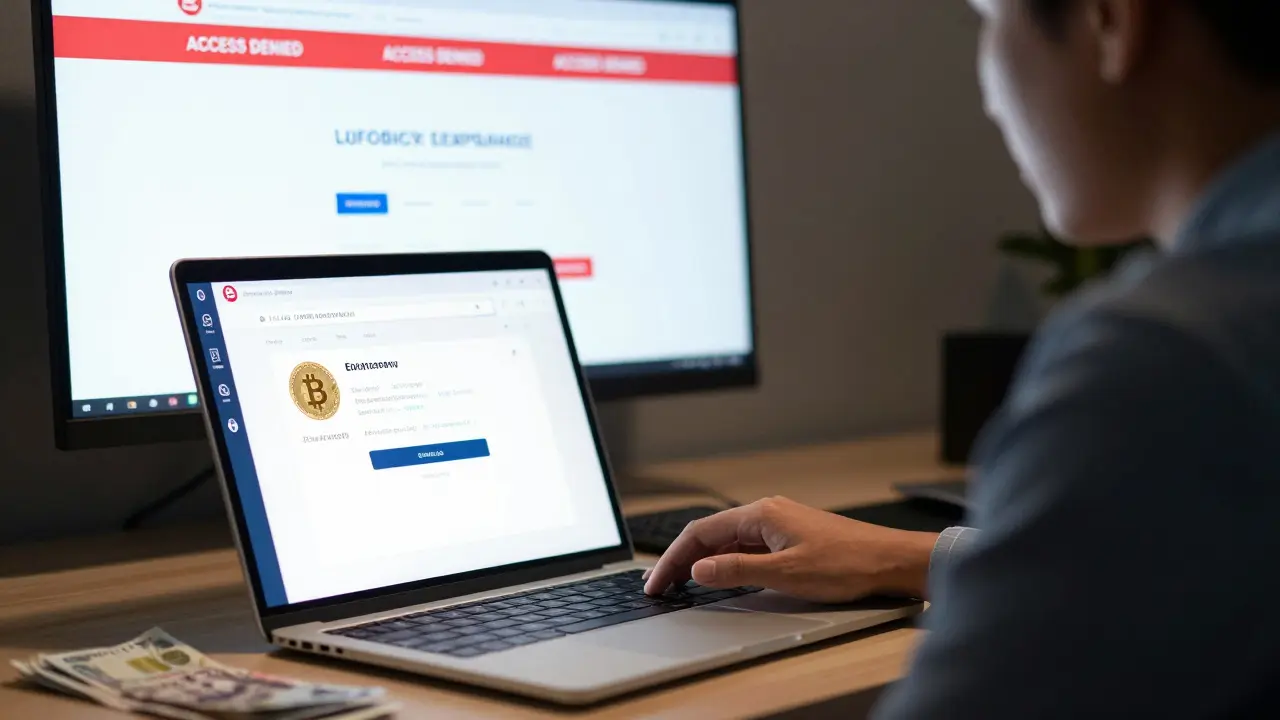
When Thailand tightened its crypto exchange rules in April 2025, it didn’t just change a few forms. It rewrote the entire game for anyone trading digital assets in or from the country. If you’re a Thai investor, a foreign exchange operator, or even just someone who travels there often, you need to understand what’s changed - and what it means for your money.
Who Can Operate in Thailand Now?
Before April 2025, you could sign up for Bybit, OKX, or Binance without thinking twice. Now? Those platforms are blocked if they don’t have a Thai license. The Thailand Securities and Exchange Commission (SEC) made it crystal clear: if you serve Thai users, you must be licensed. It doesn’t matter if your company is based in Singapore, the Cayman Islands, or Hong Kong. If your website is in Thai, accepts Thai baht, or uses a .th domain, you’re under Thai law.
As of February 2025, only nine exchanges got the green light. The biggest is Bitkub, followed by Zipmex, AssetBit, and a few others. Binance launched its licensed Thai hub after the crackdown, but even they had to rebuild their platform from the ground up to meet local rules. Foreign exchanges that didn’t apply - or couldn’t meet the requirements - were shut down overnight. No court order. No warning. The Ministry of Digital Economy and Society just blocked their websites.
What Makes a Platform “Serve Thai Users”?
It’s not just about where you live. The SEC laid out seven specific signs that a foreign exchange is targeting Thai customers:
- Your site is partially or fully in Thai
- You use a .th or .ไทย domain
- You accept payments in Thai baht or through Thai bank/e-wallet accounts
- You say Thai law governs your terms or Thai courts handle disputes
- You pay Google or Meta to target Thai searchers
- You have Thai-speaking staff or local offices
- You do anything else the SEC officially says counts
If even one of these applies, you’re legally required to get licensed. No exceptions. Even if you think you’re just “accessible” to Thais, the SEC considers that serving them. This is one of the strictest extraterritorial rules in Asia - stricter than Singapore’s, and more aggressive than Japan’s.
What Can Licensed Exchanges Do - and Not Do?
Getting a license isn’t just about paying fees. It comes with heavy restrictions.
- You can’t list privacy coins like Monero or Zcash
- You can’t let users use crypto to pay for goods or services
- You can’t offer lending, staking, or deposit products with guaranteed returns
- You can’t run wallet services or let users send crypto to external addresses
- You can’t advertise crypto as an investment
That’s right - no staking rewards. No crypto debit cards. No referral bonuses. Even Binance’s Thai site can’t offer what it does elsewhere. The SEC wants exchanges to be pure trading platforms - nothing more.
And the coin list? Only 35 tokens are approved as of June 2025. Bitcoin and Ethereum? Yes. Dogecoin? No. Solana? No. Meme coins? Banned. NFTs? Banned. Fan tokens? Banned. The SEC isn’t trying to be comprehensive - they’re trying to be safe.
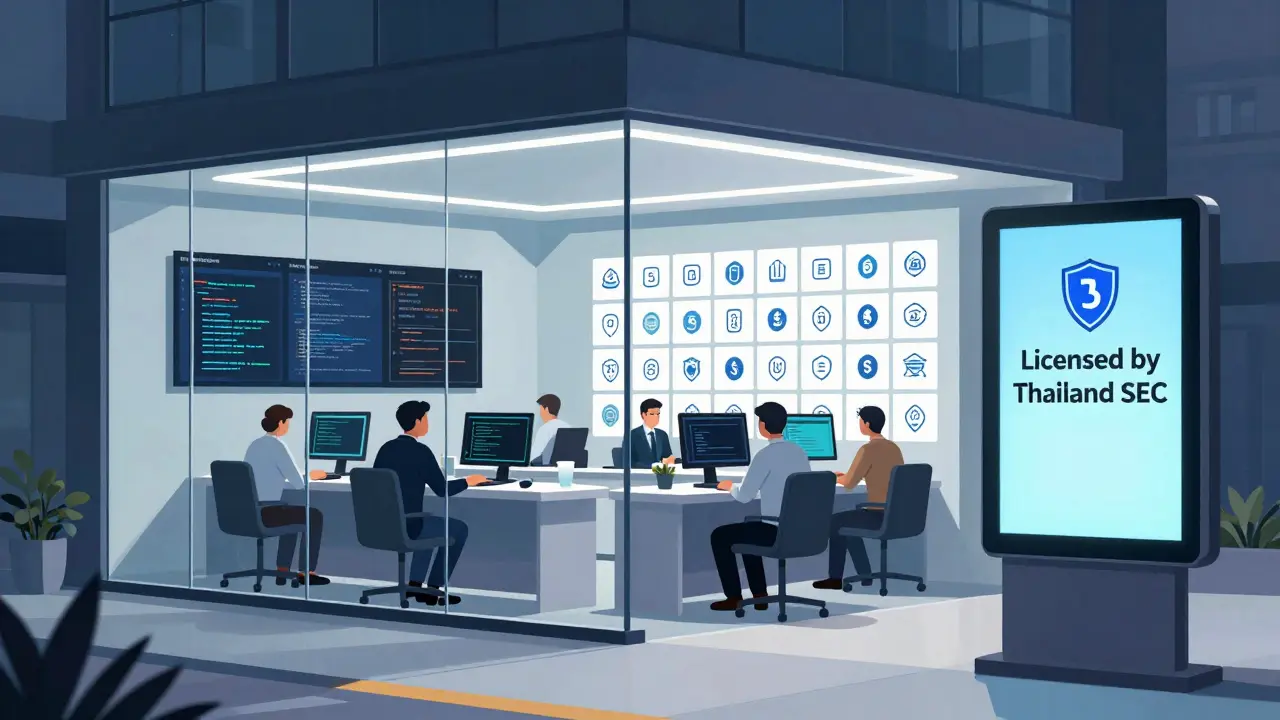
How Much Does It Cost to Get Licensed?
It’s expensive. The application fee is ฿1,000,000 (about $27,400). Then you pay ฿500,000 ($13,700) every year just to keep the license. But that’s not even the worst part.
You need to prove you have at least ฿50 million ($1.37 million) in operational capital. You need a full AML/CFT system that meets FATF standards. You need your source code audited by an SEC-approved firm. And you have 90 to 120 days to get approved after you apply - assuming you don’t mess up the paperwork.
Bitkub spent six months reworking its entire platform. One CEO told Thai Business Magazine, “We had to rebuild our UI, our backend, our compliance team - everything.” That’s not a startup cost. That’s a full corporate overhaul.
What’s the Impact on Users?
Thai crypto users have split opinions. On one hand, scam reports dropped 37% in Q2 2025. People who got burned by fake platforms before say they feel safer now. On Pantip.com, over 140 users praised the new rules for cutting out fraudsters.
But the trade-off is real. Liquidity is down. Spreads are wider. Withdrawal limits? ฿500,000 per day - about $13,700. That’s fine for casual traders. Not fine for someone moving $50,000 in Bitcoin. Transaction fees? 0.25% on local exchanges versus 0.1% on Bybit before it left.
Reddit user u/BangkokCryptoTrader said: “I can’t trade the coins I want. I can’t move my funds freely. I’m stuck with fewer choices and higher costs.”
And here’s the irony: 35% of Thai crypto activity has moved offshore. People are using VPNs to access foreign exchanges. The SEC didn’t stop trading - they just made it harder and more expensive.
How Does Thailand Compare to Other Countries?
Thailand’s rules are harsher than Singapore’s, where foreign exchanges can still operate with minimal local oversight. But they’re not as extreme as China’s total ban. Japan’s system is similar - local licensing, strict controls - but Japan doesn’t block foreign sites outright.
Thailand’s biggest weakness? No passporting. If you’re licensed in Thailand, you can’t use that license to operate in Malaysia or Indonesia. The EU’s MiCA framework lets firms move across borders. Thailand doesn’t. That makes it harder for Thai exchanges to grow beyond the local market.
And unlike MiCA, Thailand has no clear rules for stablecoins. Are they securities? Utilities? Not defined. That’s a huge gap.
What’s Next? The Road Ahead
The SEC isn’t done. By Q4 2025, they plan to amend the law to cover DeFi platforms - meaning decentralized protocols might soon need licenses too. In Q2 2026, a pilot project will link Thailand’s central bank digital currency (CBDC) with licensed exchanges. That’s a big deal - it could make crypto payments possible again, but under government control.
Meanwhile, the government is pouring ฿2.1 billion ($57.6 million) into blockchain projects through 2027. They still want Thailand to be a fintech hub - just one that’s tightly controlled.
By 2026, ETFs for Bitcoin and Ethereum are live. Altcoin ETFs are coming. That could bring in $3 billion in institutional money. But only if the SEC approves the tokens. And they’re not approving many.
Bottom Line: Safe, But Limited
Thailand’s crypto regulations are designed to protect everyday investors - not to foster innovation. If you’re looking for freedom, variety, or low fees, you won’t find it on a Thai exchange. If you want security, fraud prevention, and government-backed oversight? You’re in the right place.
The system works - but only if you’re okay with limits. And if you’re not? You’ll find a way around it. The market is still growing. But now, it’s growing inside a cage.
Are foreign crypto exchanges banned in Thailand?
Yes, if they serve Thai users without a license. Exchanges like Bybit and OKX were blocked in April 2025 because they didn’t apply for Thai licensing. Foreign platforms are not banned outright - but if they use Thai language, accept baht, or target Thai customers, they must get licensed or face immediate shutdown.
Can I still use Binance in Thailand?
Yes, but only through Binance’s licensed Thai subsidiary. The global Binance platform is blocked. The Thai version has a smaller coin list, lower withdrawal limits, and no staking or lending. You must use the .th domain and register with Thai ID.
What cryptocurrencies can I trade on Thai exchanges?
Only 35 tokens are approved as of 2025. Bitcoin and Ethereum are allowed. Most altcoins - including Solana, Cardano, and Polygon - are banned. Meme coins, NFTs, and fan tokens are completely prohibited. The SEC limits listings to high-market-cap, low-risk assets.
Is staking crypto legal in Thailand?
No. Licensed exchanges are prohibited from offering staking, lending, or any service that promises returns on crypto holdings. This includes interest accounts, yield farming, or locked staking pools. The SEC considers these high-risk and unregulated financial products.
Do I need a Thai ID to trade on Thai exchanges?
Yes. All licensed exchanges require Thai citizens to use their national ID. Foreigners living in Thailand may use a valid passport and residence permit, but they still must go through full KYC. No anonymous accounts are allowed.
What happens if I use a VPN to access foreign exchanges?
There’s no legal penalty for using a VPN. The Thai government doesn’t prosecute individual users. But it’s against the terms of service of licensed exchanges, and you lose all consumer protections. If you lose money, there’s no Thai regulator to help you. Also, some banks now flag transactions linked to foreign exchanges.
Will Thailand allow crypto payments soon?
Not under current rules. Licensed exchanges cannot facilitate crypto payments for goods or services. However, a CBDC pilot with licensed exchanges is expected in Q2 2026. This may allow government-backed digital currency to be used for payments - but not Bitcoin or Ethereum.
How many crypto users are there in Thailand?
As of Q1 2025, Thailand had 4.7 million active crypto users - about 23% of the adult population. Market value was $1.2 billion. After the April 2025 crackdown, market share shifted from 85% foreign platforms to 78% licensed Thai platforms.