
You’ve heard the hype about Layer 2 scaling. You want cheap fees and fast swaps on Arbitrum. But when you open your wallet to trade a niche token, you hit a wall. The big exchanges don’t list it. The aggregators give you terrible slippage. That’s where ArbSwap claims to save the day. It pitches itself as the go-to spot for native Arbitrum assets. But is it actually useful, or just another ghost town with a pretty interface? Let’s cut through the marketing noise.
The Core Promise of ArbSwap
ArbSwap isn’t trying to be everything to everyone. Unlike giants like Uniswap that span multiple chains, ArbSwap doubles down exclusively on the Arbitrum ecosystem. The team relaunched in early 2025 after a strategic pause, focusing on three things: security, efficiency, and low fees. They argue that by ignoring other chains, they can offer deeper liquidity for tokens that get ignored elsewhere. Think of it as a boutique shop versus a massive supermarket. If you’re hunting for obscure Liquid Staking Derivatives (LSDs) or specific governance tokens from projects like GMX or Pendle, this is supposed to be your best bet. The platform supports over 147 verified Arbitrum-native assets. For traders who feel left behind by multi-chain aggregators, this specialization sounds appealing. But does specialization equal quality?
Performance and User Experience
Speed matters. Nobody wants to wait ten seconds for a swap while watching the price move against them. Post-relaunch, ArbSwap optimized its automated market maker (AMM) to reduce average swap execution time to 1.2 seconds. That’s a significant drop from the 3.8 seconds users experienced before 2024. Gas fees are also kept tight, staying under $0.02 per swap even during congestion. The new interface integrates real-time TradingView charts, which is a nice touch for technical analysts. However, the user experience has a split personality. On one hand, the UI is sleek and responsive. On the other, many users report friction when dealing with less popular pairs. Reddit users frequently mention failed transactions during volatility spikes. One trader noted getting rekt with nearly 5% slippage on a mid-size trade because the price moved during confirmation. The tool works great if you stick to major pairs like ETH/USDC. Step outside those lanes, and the smoothness vanishes.
Liquidity: The Elephant in the Room
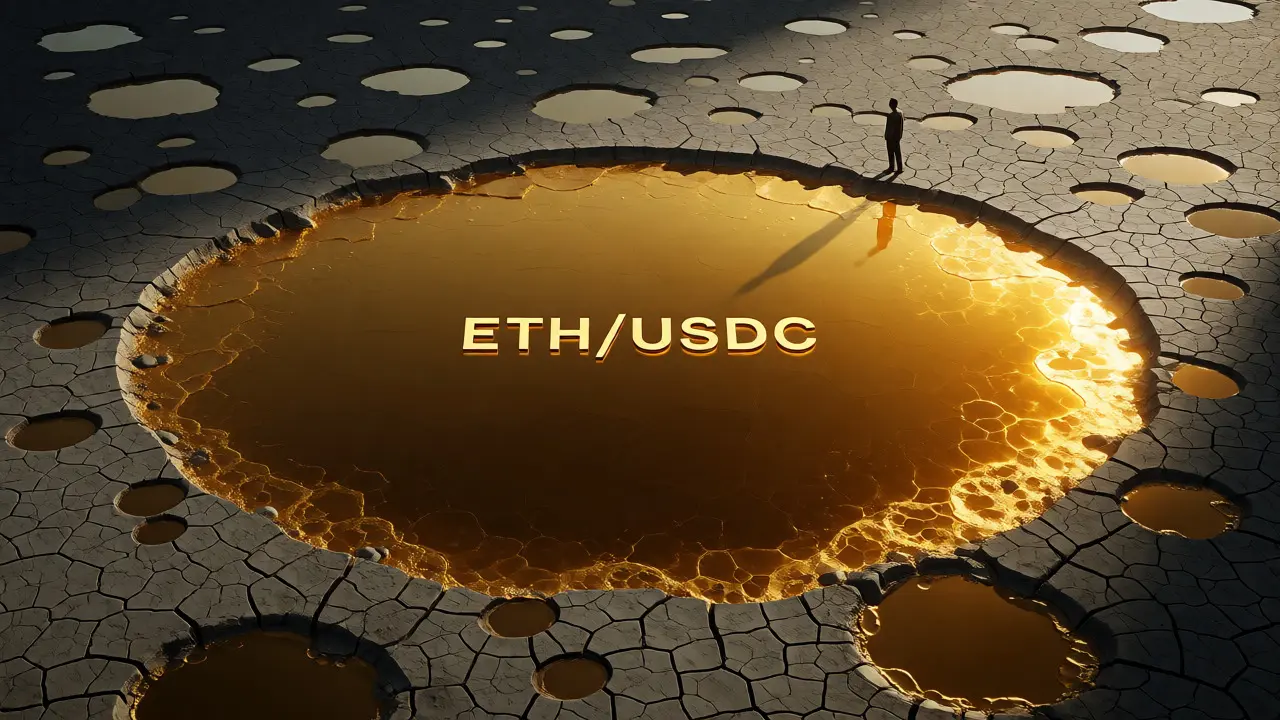
Here is the hard truth. A decentralized exchange lives or dies by its liquidity. ArbSwap holds roughly $47.8 million in Total Value Locked (TVL). Compare that to Uniswap V3’s $1.24 billion on the same network, and the gap is obvious. But TVL alone doesn’t tell the whole story. ArbSwap claims 38% higher liquidity depth for pure Arbitrum-native tokens compared to competitors. Yet, independent analyses paint a different picture. About 97% of ArbSwap’s liquidity is concentrated in just five trading pairs: ETH/USDC, ETH/USDT, WBTC/USDC, ARB/USDC, and GMX/USDC. This concentration creates a dangerous trap. If you try to swap anything else, you face massive slippage. Reports indicate average slippage hits 2.8% for trades over $5,000 on exotic tokens. Without deep order books or robust incentives, the platform struggles to attract capital for anything beyond the top tier. It’s risky business for anyone looking to trade small-cap Arbitrum gems.
| Feature | ArbSwap | Uniswap V3 | Camelot DEX |
|---|---|---|---|
| Total Value Locked (TVL) | $47.8 Million | $1.24 Billion | ~$280 Million |
| Primary Focus | Arbitrum-Native Assets | Multi-Chain Aggregation | Order Book & Launchpad |
| Standard Swap Fee | 0.3% | 0.3% | 0.3% |
| Token Selection | 147 Verified Assets | 1,200+ Assets | ~600 Assets |
| Avg. Slippage (Niche Tokens) | High (~2.8%+) | Moderate | Moderate |
| Governance Token | Planned Q4 2025 | UNI (Active) | CAMEL (Active) |
Fees and Incentives
Costs are always a concern for active traders. ArbSwap implements a tiered fee structure. Standard swaps cost 0.3%. If you hold their upcoming governance token (expected late 2025), that drops to 0.25%. Concentrated liquidity pools offer an even lower rate of 0.15%. For liquidity providers (LPs), the rewards look decent on paper. LPs earn 0.05% of swap fees plus staking incentives. Current APRs range from 4.2% for stablecoin pairs to 18.7% for exotic ones. But beware: high APR often compensates for high risk. If the token you’re providing liquidity for crashes, impermanent loss can wipe out those gains quickly. Plus, without substantial liquidity mining campaigns, attracting new LPs remains a challenge. The platform needs to prove that these yields are sustainable, not just temporary bait.

Community and Support
When things go wrong, who do you call? ArbSwap relies on a Telegram group with around 1,800 members. Compare that to Uniswap’s Discord with nearly 50,000 members, and the difference in support capacity is stark. Average response times for technical questions hover around 11 hours. For a beginner, this lag can be frustrating. Documentation exists on GitHub, but users criticize it for assuming prior knowledge of Arbitrum’s sequencing mechanics. Newcomers often find themselves stuck, unsure why a transaction failed. The community is small but passionate, yet it lacks the critical mass needed to troubleshoot complex issues quickly. If you’re new to DeFi, expect a steeper learning curve here than on more established platforms.
The Verdict: Who Should Use ArbSwap?
So, should you bother with ArbSwap? It depends entirely on what you’re trading. If you’re swapping ETH for USDC or buying major tokens like ARB, the speed and low fees make it a viable option. The interface is clean, and execution is fast. But if you’re looking for obscure altcoins or planning large trades in low-volume pairs, tread carefully. The thin liquidity poses a real risk of significant slippage. Analysts suggest that ArbSwap’s future hinges on executing its 2025 roadmap, including a governance token launch and better incentives. Until then, it remains a specialized tool rather than a primary exchange. Keep your expectations realistic. Use it for specific niches, but keep your main volume on larger platforms until the liquidity grows.
Is ArbSwap safe to use?
ArbSwap uses standard AMM protocols and underwent audits post-relaunch. However, safety in DeFi is relative. While smart contract risks are managed, users must still protect their private keys. Always verify you are on the official domain to avoid phishing sites, which are common in the crypto space.
Why do I experience high slippage on ArbSwap?
High slippage usually occurs because of low liquidity in specific token pairs. ArbSwap concentrates most of its funds in top-tier pairs like ETH/USDC. If you trade smaller, niche tokens, there aren't enough buyers/sellers in the pool to absorb your trade size, causing the price to shift unfavorably during execution.
Does ArbSwap have its own token?
As of early 2025, ArbSwap did not have a live governance token. The roadmap plans for a token launch in Q4 2025. Once released, holding this token may grant reduced swap fees and voting rights on protocol upgrades.
Can I withdraw my funds anytime?
Yes, ArbSwap is permissionless. You retain custody of your assets via your connected wallet. There are no minimum deposit requirements, and you can withdraw liquidity or swap back to your original asset whenever you choose, subject to gas fees.
How does ArbSwap compare to Camelot DEX?
Camelot offers an order book model alongside AMM features and has stronger backing from the Arbitrum ecosystem. ArbSwap focuses purely on AMM for native assets. Camelot generally has higher TVL and better incentives, making it a stronger competitor for general trading, while ArbSwap targets specific niche liquidity gaps.