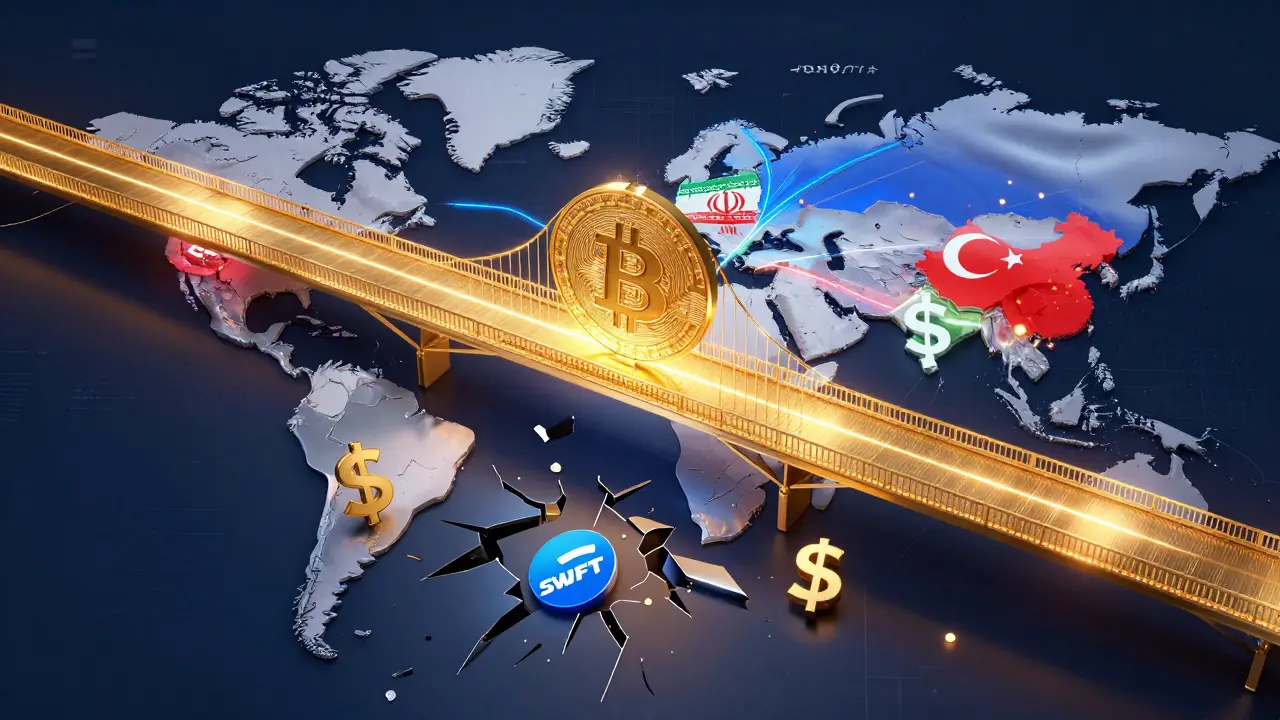
When international sanctions cut Iran off from global banking, the country didn’t just sit still. It built a new financial pipeline - one powered by electricity, silicon chips, and Bitcoin.
How Iran Turned Power Outages Into a Trade Lifeline
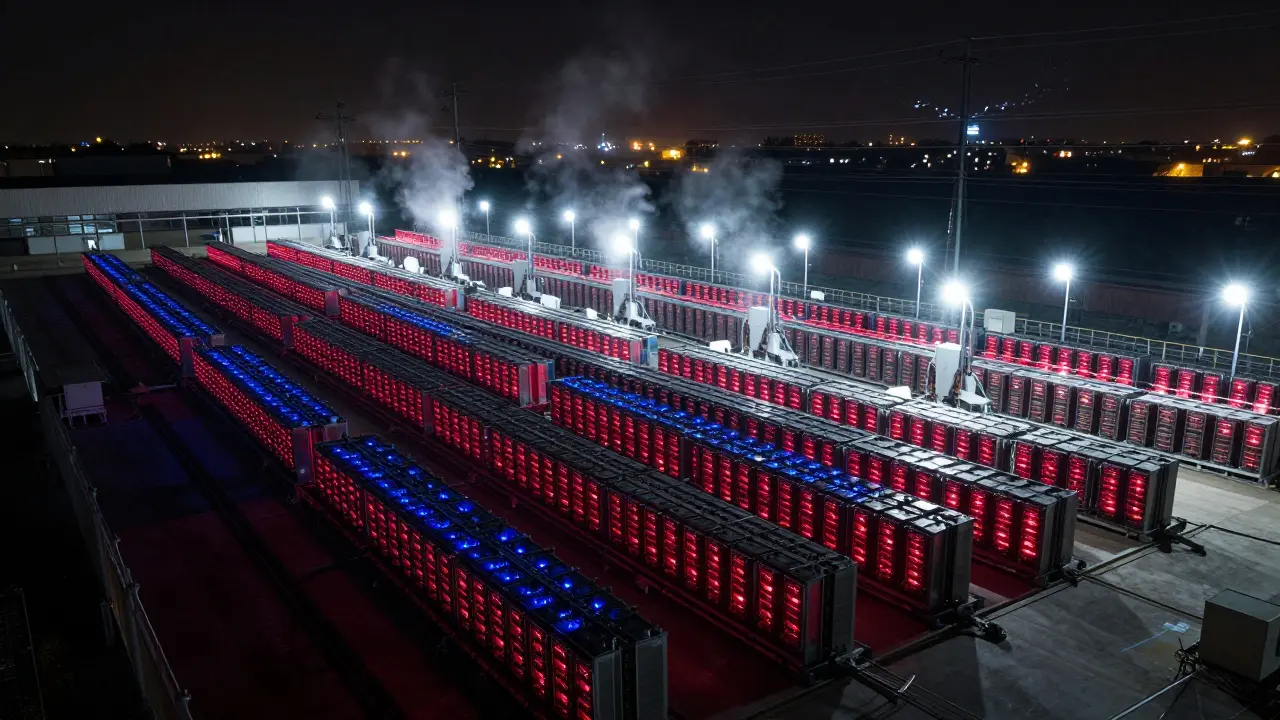
Iran’s electricity grid is falling apart. Cities go dark for hours. Factories shut down. But in the middle of this chaos, massive warehouses hum with the sound of thousands of mining rigs - all running on state-approved power. These aren’t hobbyists. They’re industrial-scale Bitcoin mines, quietly generating digital currency that buys medicine, machinery, and food from abroad. The Central Bank of Iran doesn’t let people pay for groceries with Bitcoin. But it does let licensed miners sell their Bitcoin to the government. And the government uses that Bitcoin to pay for imports. It’s a clever loophole: instead of needing dollars to buy goods, Iran creates its own digital dollars - Bitcoin - by using cheap electricity to mine them. By 2024, over $4 billion in cryptocurrency had left Iran. Most of it wasn’t stolen or smuggled. It was legally exported through state-controlled channels. The Central Bank approves every transaction. Miners must register their farms, report every coin they produce, and only sell to authorized buyers. The system is tightly controlled - not to stop crypto, but to own it.The IRGC’s Hidden Mining Empire
One of the biggest players in Iran’s crypto scene isn’t a tech startup. It’s the Islamic Revolutionary Guard Corps (IRGC). Since 2019, the IRGC has quietly taken control of dozens of mining operations, often built on military land or near religious foundations like Astan Quds Razavi. These aren’t small setups. One mine in Rafsanjan, Kerman province, uses 175 megawatts of power - enough to light up a small city. These operations don’t pay for electricity. They don’t get billed. They get priority. While ordinary Iranians struggle with rolling blackouts, IRGC-linked mines run 24/7. Investigators call it a crypto cartel: state-backed entities using public power to generate private wealth. The money flows out of the country as Bitcoin, bypassing sanctions and funding projects that would otherwise be impossible. Chinese companies helped build many of these farms. They supplied the ASIC miners - the specialized hardware that crushes Bitcoin’s algorithm. In return, they got access to Iran’s dirt-cheap energy. It’s a win-win for both sides: China gets mining capacity, Iran gets hard currency.First $10 Million Import - The Moment Everything Changed
On August 9, 2023, Iran made history. For the first time, it used cryptocurrency to pay for an international import - a $10 million shipment of industrial equipment. No SWIFT. No dollar clearing. No bank intermediaries. Just a digital transfer, verified on the Bitcoin blockchain. That transaction wasn’t an accident. It was the result of years of planning. Iran had been negotiating with Russia since 2018 to create a crypto-based trade system. By 2020, they were testing smart contracts to automate payments. By 2023, they were ready. The goal? To trade with other sanctioned nations - Russia, Syria, North Korea - without touching the U.S. financial system. Since 2018, Iranian companies have moved over $8 billion through Binance, according to blockchain analysis firms. Many of those transactions involved goods like medical devices, auto parts, and raw materials. The buyers? Often state-linked firms. The sellers? Mostly vendors in Turkey, UAE, and India - countries with looser crypto enforcement.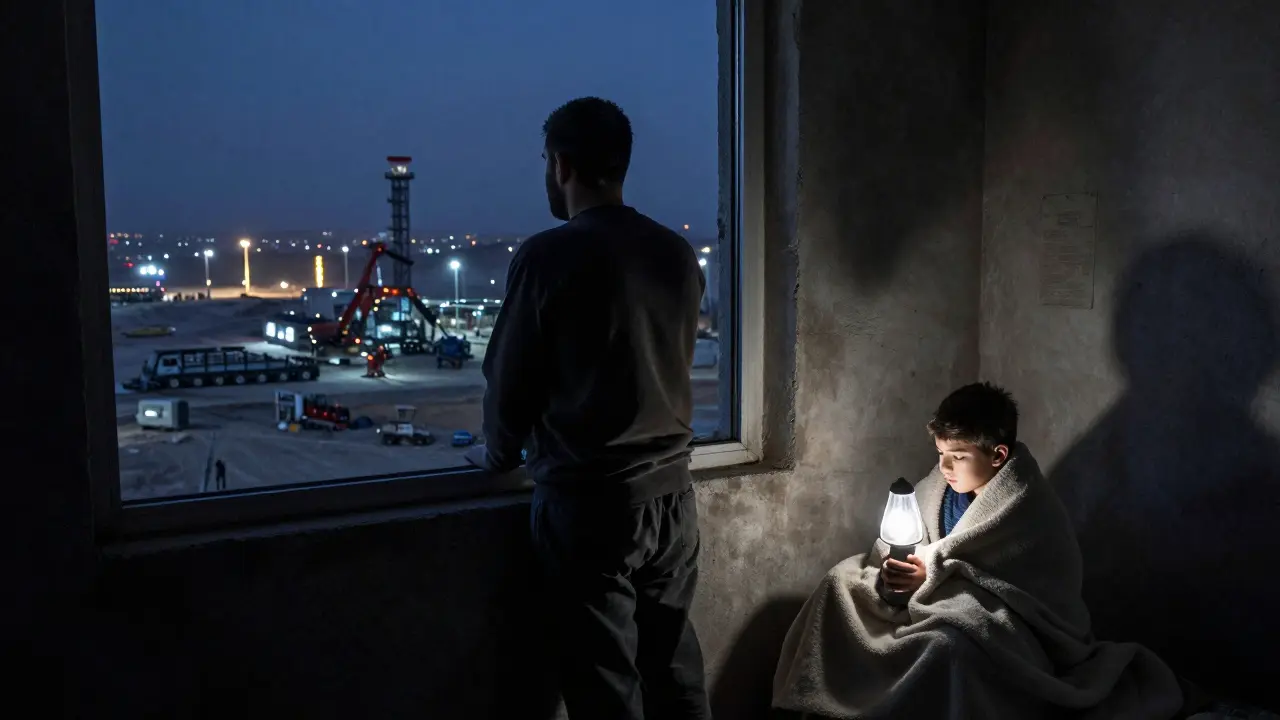
Why Bitcoin? Why Not Ethereum or Tether?
Bitcoin is the only cryptocurrency Iran uses for imports. Not because it’s the fastest. Not because it’s the cheapest. But because it’s the most trusted. Ethereum is too complex. Tether is tied to the dollar. Bitcoin? It’s decentralized. It doesn’t need a bank. It doesn’t answer to Washington. And it’s been around long enough that even the most skeptical traders accept it as real value. Plus, Bitcoin’s blockchain is transparent. Every transaction is recorded. That helps Iran’s regulators track where the coins go - and prove to foreign partners that payments are legitimate. It’s not anonymous. It’s auditable. And that’s exactly what Iran needs when dealing with wary international suppliers.The Energy Crisis No One Talks About
Iran’s crypto trade isn’t free. It’s paid for in blackouts. The country’s power grid was never meant to run thousands of industrial mining rigs. Yet, state-backed miners consume over 5% of Iran’s total electricity - and that’s just what’s reported. Independent analysts believe the real number is closer to 10%. In some provinces, mining accounts for nearly half of local demand. In 2021, the government banned mining during peak hours. In 2022, it shut down hundreds of illegal rigs using subsidized household power. But the big mines? They kept running. Because they’re protected. The result? Winter nights without heat. Hospitals running on generators. Schools closing early. And a population that’s growing angry - not at the sanctions, but at the elite who use their power to mine Bitcoin while everyone else freezes.