LOAFCAT Token Calculator
Results
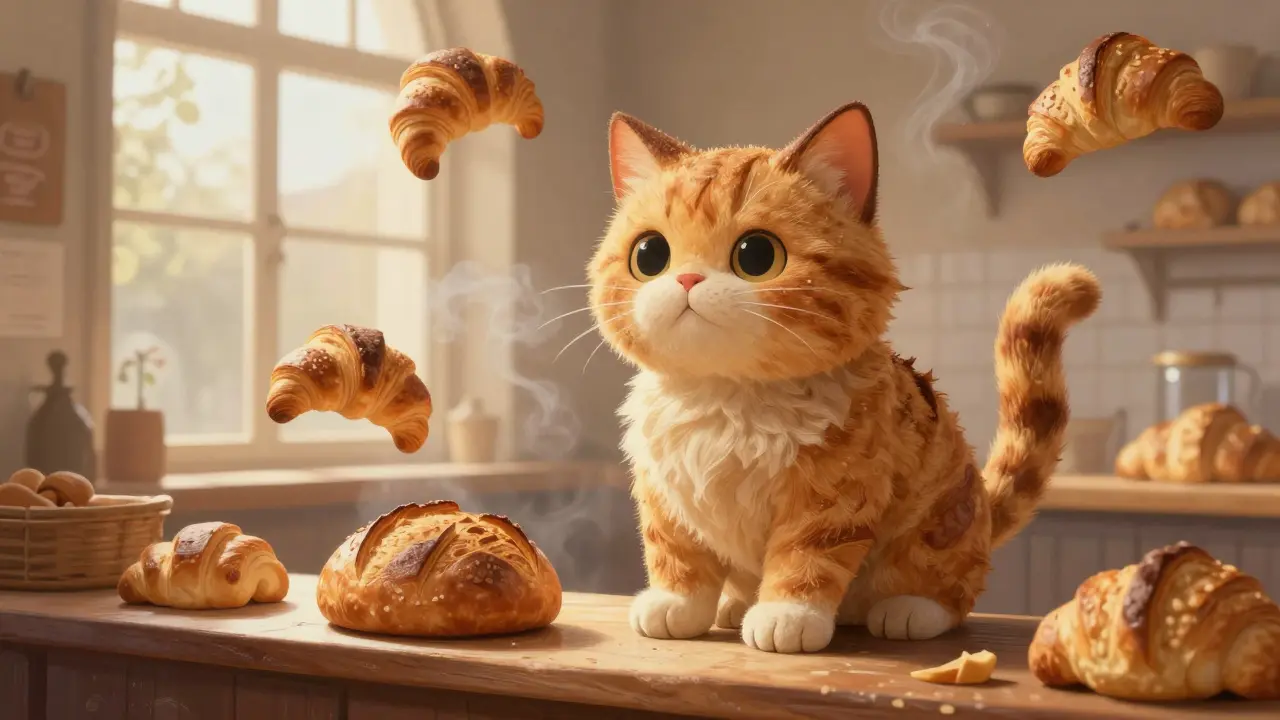
LOAFCAT isn’t a revolutionary blockchain project. It doesn’t solve supply chain issues, streamline payments, or power decentralized finance. What it is, is a memecoin - a digital token born from internet humor, built on Solana, and centered around a very strange idea: a cat made out of bread that took over a bakery. If that sounds ridiculous, you’re not wrong. But in crypto, sometimes ridiculous goes viral.
Where did LOAFCAT come from?
LOAFCAT started as a joke. Its original team launched it, then walked away. The project was dead. No updates. No community support. Just a token floating in the Solana blockchain with no one minding it. Then something unexpected happened: the community stepped in. People who owned the token didn’t give up. They rallied. They talked about it on Twitter, Discord, and Telegram. They kept trading. They kept sharing the absurd image of a bread cat ruling a bakery. And slowly, it came back to life. This isn’t common in crypto. Most abandoned projects die quietly. LOAFCAT didn’t. That’s its real story - not the cat, not the bread, but the fact that a group of strangers decided to keep a joke alive.How does LOAFCAT actually work?
LOAFCAT runs on the Solana blockchain. That means transactions are fast and cheap. You don’t need to pay $50 in gas fees to buy 10 million tokens. On Solana, you can buy LOAFCAT for pennies in fees. The token’s contract address is 3de2yR...wiL3tn, but you won’t need to type it. You’ll use a wallet like Phantom or Solflare and trade it on Raydium, the main decentralized exchange where LOAFCAT is listed. There are exactly 100 billion LOAFCAT tokens in existence. All of them are already circulating. No more will ever be created. That’s different from coins like Dogecoin, which have inflationary supplies. Here, the supply is fixed. But with 100 billion tokens, each one is worth almost nothing. As of December 2025, one LOAFCAT trades for about $0.00000026. That means you need to buy 3.8 million tokens to spend one dollar. It’s not about owning a few. It’s about owning millions - and hoping someone else will pay more for them later.What’s the market like right now?
LOAFCAT’s market cap is around $34,290. That’s tiny. For comparison, Dogecoin is worth nearly $20 billion. Shiba Inu is worth $7 billion. LOAFCAT doesn’t even crack the top 1,000 coins. It’s ranked #7,639 on CoinMarketCap. That’s not a bad thing - it’s just reality. This isn’t a coin you’ll see on Coinbase or Binance. You won’t find it on ATMs or in apps that let you buy crypto with your debit card. You need a Solana wallet and a DEX like Raydium. That limits who can trade it. Price swings are wild. One day, CoinMarketCap shows a 9% gain. The next, Kriptomat shows a 1% drop. Bybit says it’s up 11%. Why? Because liquidity is thin. There’s not enough buying and selling pressure to keep prices steady. A single large trade can spike or crash the price. The all-time high was $0.0002801 in March 2024. Today, it’s down over 99%. That’s typical for memecoins. The hype fades. The early buyers cash out. The rest are left holding.
Who holds LOAFCAT?
There are about 5,010 unique wallet addresses holding LOAFCAT. That’s not a massive number, but it’s enough to keep the token alive. These aren’t institutions. They’re individuals - people who liked the meme, bought in early, or got caught up in the community. Some are holding. Some are trading daily. A few might be trying to pump it again. But there’s no team behind it. No roadmap. No whitepaper. No product. Just a community that still believes in the bread cat. The token has no utility. You can’t use it to buy coffee, pay for cloud storage, or access a service. It’s not part of a DeFi protocol. It doesn’t give you voting rights. It’s purely speculative. You buy it because you think someone else will buy it from you at a higher price. That’s it.Is LOAFCAT safe to invest in?
If you’re looking for safety, the answer is no. LOAFCAT is high-risk, low-reward. It’s the crypto equivalent of buying a lottery ticket with a 1 in 10 million chance of winning. The price is volatile. The liquidity is low. There’s no support team. If the community fades, the price drops to zero. That’s the risk. But if you’re okay with that? If you understand that this is entertainment, not investment? Then it’s no different than buying a meme T-shirt. You’re not betting on technology. You’re betting on humor, community, and luck. Some people have made money on memecoins. Most have lost. LOAFCAT has survived longer than most. That’s its only real advantage.
How do you buy LOAFCAT?
If you still want to try:- Get a Solana wallet like Phantom or Solflare.
- Buy SOL (Solana’s native coin) on an exchange like Kraken or Binance.
- Transfer SOL to your wallet.
- Go to Raydium.io and connect your wallet.
- Swap SOL for LOAFCAT using the token address or search by name.
What’s next for LOAFCAT?
No one knows. There’s no team to release updates. No developer roadmap. No planned partnerships. Its future depends entirely on whether the community keeps talking about it. Will someone post a viral video of a bread cat? Will a crypto influencer mention it? Will a new meme trend revive it? That’s the only chance it has. LOAFCAT isn’t built to last. It was never meant to be a serious asset. But it’s still here. And that’s unusual. In a world where most crypto projects die in months, LOAFCAT has survived over a year after being abandoned. That’s a testament to the power of community - and the strange, unpredictable nature of internet culture.If you’re curious, buy a few million tokens. Play along. See what happens. But don’t put in money you can’t afford to lose. And don’t call it an investment. Call it a meme with a blockchain.
Is LOAFCAT a scam?
LOAFCAT isn’t a scam in the traditional sense - no one is stealing your money or running a fake project. But it’s also not a legitimate investment. It has no team, no utility, and no future plan. It’s a community-driven memecoin that survived abandonment. The risk isn’t fraud - it’s total collapse. If the community loses interest, the price goes to zero. That’s the real danger.
Can I buy LOAFCAT on Coinbase or Binance?
No. LOAFCAT is only available on decentralized exchanges like Raydium. It’s not listed on any major centralized exchange like Coinbase, Binance, or Kraken. To buy it, you need a Solana wallet and SOL tokens. You’ll have to trade directly on a DEX.
Why is the price so low?
LOAFCAT has a fixed supply of 100 billion tokens. With a market cap of around $34,000, that means each token is worth a fraction of a cent. The low price isn’t a bug - it’s by design. Memecoins like this often have huge supplies to make them feel affordable. But buying meaningful amounts requires purchasing millions of tokens, which can be hard for small investors due to low liquidity and slippage.
What’s the difference between LOAFCAT and Dogecoin?
Dogecoin started as a joke too, but it gained real adoption - it’s accepted by some merchants, listed on major exchanges, and has a large, active community. LOAFCAT has none of that. It’s smaller, less liquid, and has no utility. Dogecoin is a cultural phenomenon. LOAFCAT is a niche meme that happened to survive longer than most.
Is LOAFCAT built on Ethereum?
No. LOAFCAT runs exclusively on the Solana blockchain. Solana was chosen because it offers fast, low-cost transactions - essential for memecoins where people trade in massive volumes. Ethereum’s high fees would make trading LOAFCAT impractical.
Can I mine LOAFCAT?
No. LOAFCAT isn’t mined. All 100 billion tokens were created at launch and are already in circulation. There’s no mining, staking, or earning mechanism. You can only buy or sell it on exchanges like Raydium.
What’s the ‘Great Japanese Financial Reset’?
It’s not a real financial event. It appears to be inside community jargon - possibly a humorous reference to a past price crash or a meme from early LOAFCAT discussions. There’s no official record of this term outside of LOAFCAT’s social circles. Don’t take it literally.
Should I buy LOAFCAT as a long-term investment?
No. LOAFCAT has no long-term value drivers. No team, no product, no adoption. It survives on hype and community energy - both of which can vanish overnight. If you’re looking to hold crypto for years, choose projects with real use cases. LOAFCAT is for short-term speculation at best - and even then, only with money you’re prepared to lose.