
On paper, owning Bitcoin in Tunisia is a crime. Not a gray area. Not a warning. A criminal offense that can land you in jail for up to five years. That’s not a rumor-it’s the law, enforced since May 2018 by the Central Bank of Tunisia (BCT). While most countries are trying to regulate cryptocurrency, Tunisia chose to erase it entirely. No exchanges. No mining. No payments. No holding. And yet, people still do it.
What exactly is banned?
The 2018 directive from Tunisia’s Central Bank doesn’t just discourage crypto-it kills it. Every single activity involving digital currencies is outlawed unless the state gives you special permission, and no one has ever received that permission. That means:- Buying or selling Bitcoin, Ethereum, or any other crypto on local or foreign platforms is illegal.
- Operating a crypto exchange, even if it’s just a small P2P service, is a felony.
- Accepting crypto as payment for goods or services? That’s a crime too.
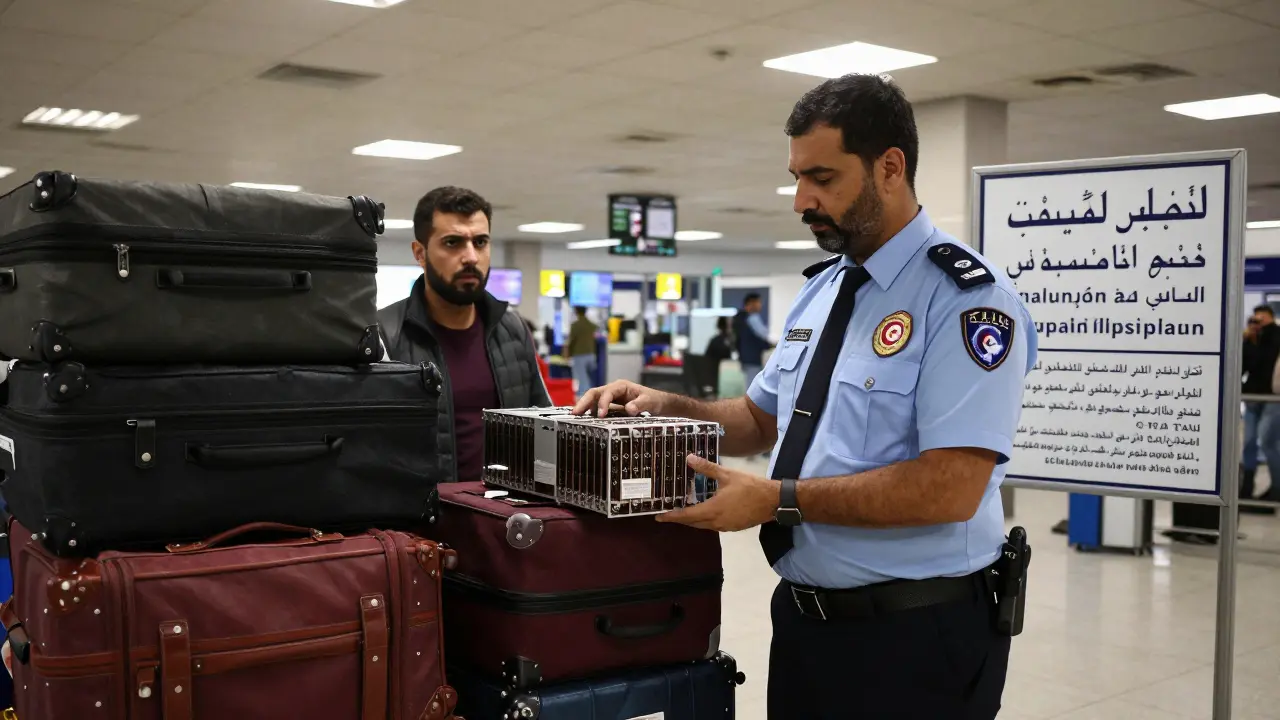
- Mining crypto? You can’t even bring in the hardware. Customs seizes ASIC miners at the border.
- Converting mined coins into Tunisian dinars? That’s money laundering under the law.
- Banks and payment processors must block any transaction tied to crypto. Your debit card won’t work on Binance or Coinbase.
The law doesn’t just target businesses. Ordinary people who hold crypto in wallets are technically breaking the law. The government doesn’t actively hunt down individuals, but if you’re caught-especially if you’re trading large amounts-you could face fines, asset seizure, or prison.
Why did Tunisia ban crypto in the first place?
It wasn’t about fear of technology. It was about fear of money leaving the country.In 2018, Tunisia was struggling. The Tunisian dinar was weakening. Foreign reserves were shrinking. The economy was stuck in a cycle of high inflation and low growth. The Central Bank worried that crypto would let people bypass currency controls and send money out of the country without oversight. That’s called capital flight-and it’s a nightmare for a nation already dependent on imports and foreign aid.
They also feared money laundering. With weak financial oversight in parts of the country, crypto looked like a perfect tool for hiding dirty money. The BCT didn’t want to become a haven for criminals. So they chose the simplest solution: ban everything.
Unlike countries like El Salvador, which adopted Bitcoin as legal tender, or Germany and Singapore, which built clear rules for exchanges and taxes, Tunisia didn’t try to manage crypto. They tried to delete it.
Who enforces the ban?
It’s not just one agency. Three institutions work together to make sure the ban sticks:- Central Bank of Tunisia (BCT): Sets the rules and tells banks what to block.
- Ministry of ICT & Digital Economy: Watches for tech-based violations and runs the regulatory sandbox.
- Financial Market Council (CMF): Handles any future tokenized securities-if the ban ever changes.
Enforcement is mostly reactive. Customs stops mining rigs at airports. Banks flag suspicious transfers. If someone tries to pay for a car with Bitcoin, the seller could be reported. The real power lies in the financial system: banks are required to block any transaction linked to crypto wallets, even if they don’t know exactly what’s happening.
Businesses must follow strict anti-money laundering rules: verify identities (KYC), check business ownership (KYB), keep records for 10 years, and report anything suspicious to the Tunisian Financial Analysis Committee (CTAF) within 10 days. It’s a heavy burden-designed to make crypto impossible to use legally.
Is anyone actually using crypto in Tunisia?
Yes. Quietly.Before the 2018 ban, Bitcoin was already being traded through WhatsApp and Telegram groups. People bought it from each other, paid for services, and even used it to send money abroad. The ban didn’t stop that-it just pushed it underground.
In 2021, a 17-year-old student was arrested for exchanging $100 worth of Bitcoin. The case went viral. People were shocked. Why jail a teenager for a small trade? The story reached parliament. Cabinet ministers debated whether the punishment fit the crime. It didn’t make the ban disappear-but it cracked the silence around it.
Today, crypto use is small-scale and risky. Some people still trade via P2P platforms. Others use VPNs to access foreign exchanges. A few tech-savvy freelancers get paid in crypto and convert it through informal networks. But it’s not mainstream. Banks still block transfers. No stores accept it. No ATMs offer it. And if you’re caught, the consequences are real.
What about blockchain? Isn’t that different?
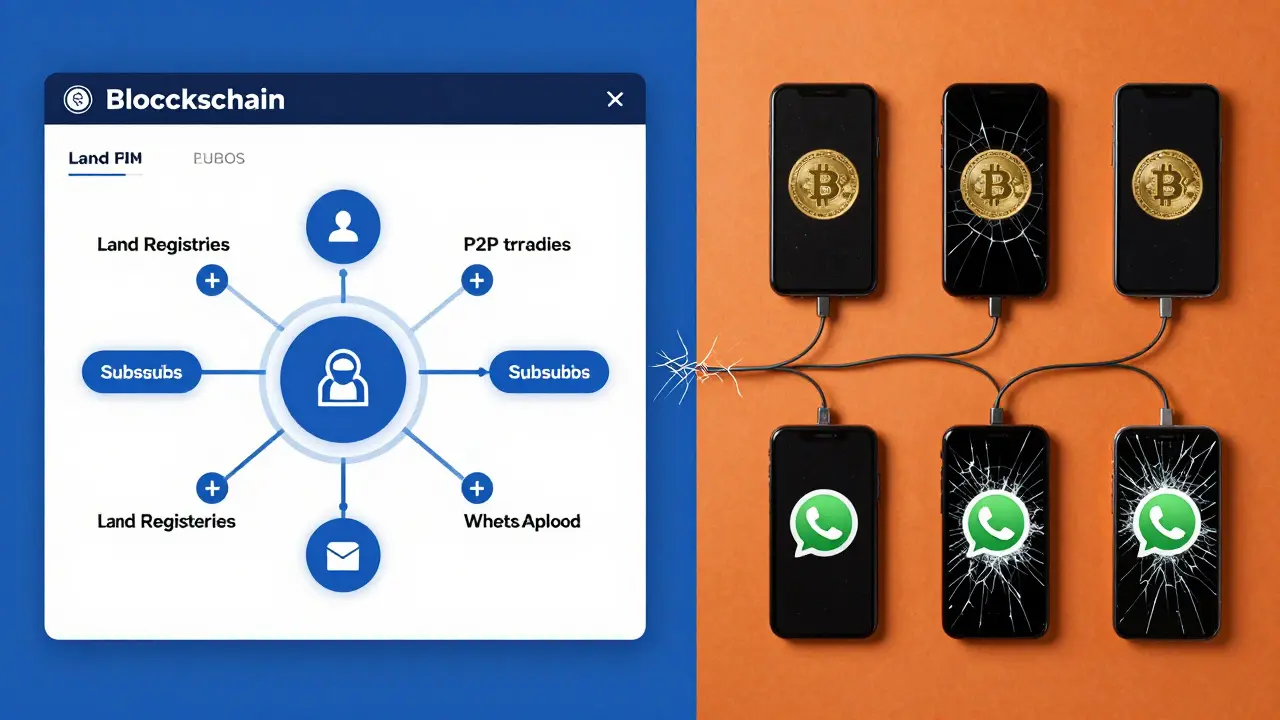
Here’s the twist: Tunisia doesn’t hate blockchain. It just hates crypto.In 2020, the BCT launched a regulatory sandbox-a legal testing zone for blockchain projects. Startups like VFunder (for creative crowdfunding), Hydro E-Blocks (for carbon tracking), and No Phobos (for AI-generated NFTs) were allowed to test their platforms under tight supervision. But here’s the catch: they had to keep their servers outside Tunisia. Their users couldn’t trade crypto. They couldn’t use public blockchains.
The government sees blockchain as a tool. Not a currency. They want to use it for land registries, subsidy distribution, and supply chain tracking-on private, permissioned ledgers they control. That’s not innovation. That’s control.
It’s like saying: “We don’t want you to own a car. But we’ll let you drive our government bus.”
How does Tunisia compare to the rest of the world?
Tunisia is one of only eight countries with a total crypto ban. The others: China, Qatar, Egypt, Algeria, Morocco, Nepal, and Bangladesh. Most of them are in regions with unstable currencies or authoritarian governments.Compare that to places like Germany, where crypto is legal and taxed like property. Or Switzerland, where crypto firms can get official licenses. Or even Vietnam, which bans banks from handling crypto but lets individuals trade freely.
Meanwhile, global giants like PayPal, Tesla, and Microsoft accept crypto payments. The Financial Action Task Force (FATF) has global rules to fight crypto crime without banning it. Tunisia isn’t following any of that. It’s stuck in 2018.
Will the ban ever change?
There are signs it might.In 2025, a draft bill is being discussed in parliament to decriminalize personal crypto ownership and create a licensing system for exchanges. That’s a huge shift. It doesn’t mean crypto becomes legal tomorrow-but it means the government is finally admitting the ban isn’t working.
Why now? Because young Tunisians are using crypto anyway. Because remittances from abroad are growing, and crypto is faster and cheaper than Western Union. Because the economy needs new tools, not more restrictions.
The BCT’s own Digital Tunisia 2025 plan includes blockchain for public records and supply chains. That’s a signal: they’re not against technology. They’re against losing control.
If the bill passes, Tunisia could become the first country to go from total ban to regulated market. But if it fails, the underground crypto economy will keep growing-while the state keeps chasing teenagers with wallets.
What does this mean for you?
If you’re in Tunisia: don’t buy crypto unless you’re ready to risk jail. Don’t mine. Don’t accept it as payment. Don’t assume you’re safe just because no one’s been caught. The law hasn’t changed. The risk is real.If you’re outside Tunisia: don’t assume crypto is banned everywhere. Tunisia is an outlier. Most countries are figuring out how to coexist with it. Tunisia’s story isn’t about technology. It’s about power-who controls money, and who gets to decide what’s allowed.
The world is moving toward crypto. Tunisia is holding on to a 2018 fear. Whether that’s courage or stubbornness? That’s up to you to decide.