Crypto Withdrawal Risk Checker
How to Use This Tool
Enter your transaction details below to check if your withdrawal might trigger Russian bank restrictions under September 2025 regulations. Banks monitor for 12 specific triggers that can freeze your account.
Risk Assessment
When you try to turn cryptocurrency into cash in Russia today, your bank doesn’t just process the transaction - it investigates it. Since September 1, 2025, Russian banks have been operating under strict new rules that treat crypto-to-fiat withdrawals like potential fraud. It’s not about whether you’re breaking the law. It’s about whether your transaction looks like one of the 273,100 scams that drained 6.3 billion rubles from Russian accounts in just the second quarter of 2025.
What Triggers a Bank Freeze?
It’s not enough to just sell your Bitcoin or Ethereum for rubles. Russian banks watch for 12 specific red flags that signal a crypto-related withdrawal. If even one shows up, your daily cash limit drops to 50,000 rubles - about $600 - for 48 hours. Here’s what sets off the alarm:
- Withdrawing cash between 11 PM and 5 AM
- Using an ATM more than 50 kilometers from your registered address
- Withdrawing money within 24 hours of receiving a large transfer (over 200,000 rubles) via Russia’s Faster Payments System
- Using a QR code or virtual card instead of a physical debit card
- Receiving 3 or more unknown SMS messages in the 6 hours before withdrawal
- Withdrawal amounts that aren’t divisible by 1,000 rubles (e.g., 65,000 instead of 64,000 or 66,000)
- Device signs of malware - like unusual app behavior or rooted phones
These aren’t guesses. They’re coded into bank software. By September 2025, 98% of Russia’s 347 licensed banks had installed the monitoring systems required by the Central Bank’s Directive No. 74-P. If your transaction triggers any of these, you’ll get an SMS within 15 minutes. Then your account gets locked down.
Why Are They Doing This?
Russia isn’t trying to stop crypto because it’s illegal - it’s trying to control it. The government knows crypto is here to stay. But it doesn’t want ordinary Russians using it to bypass sanctions or move money out of the country. In October 2025, Finance Minister Anton Siluanov confirmed that crypto now fuels 37.2% of all cross-border payments and import purchases. That’s a huge leak in Russia’s financial control system.
At the same time, the Central Bank has seen a flood of scams tied to crypto conversions. Over 89% of fraud cases in Q2 2025 involved someone cashing out crypto. So the government’s answer isn’t to ban crypto. It’s to make it painful, slow, and risky for regular users.
The result? Peer-to-peer cash exchanges - once the backbone of Russia’s crypto economy - are collapsing. Sixty-three percent of small exchange offices reported 40-60% revenue drops in the first two weeks after the rules took effect. People who used to meet in cafes or markets to trade Bitcoin for cash are now out of business.
What Happens When Your Account Gets Flagged?
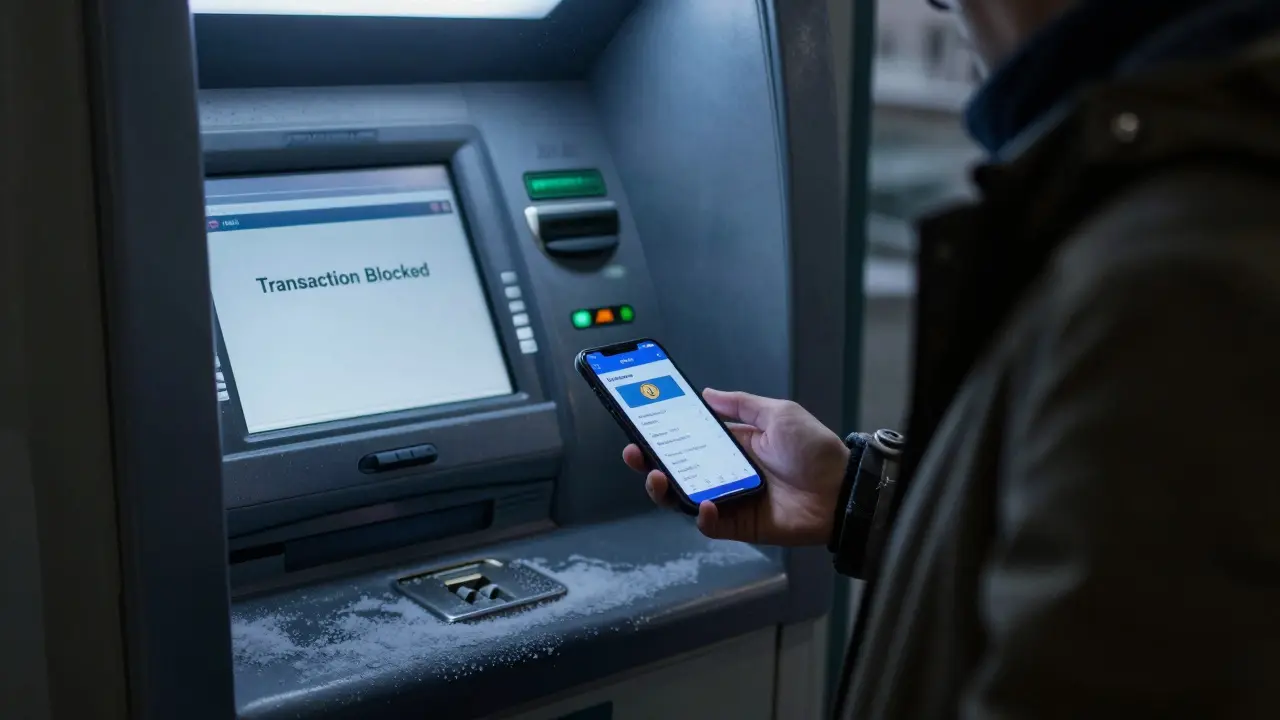
Let’s say you sold 100,000 rubles worth of Ethereum on Paxful and tried to withdraw it as cash from your Sberbank card. You might not even know why your withdrawal failed. Then you get the SMS: “Your account is under review. Daily withdrawal limit: 50,000 rubles for 48 hours.”
You call your bank. They tell you to come in person with proof of where your crypto came from. Not just a screenshot. Not just your exchange history. They want notarized transaction records - something most decentralized platforms like LocalBitcoins or Bisq don’t provide.
On Russian forums like BitBoom, users report being locked out for up to 72 hours. One trader, ‘CryptoTrader89’, had to show notarized proof of his Paxful trade history, a copy of his wallet’s public key, and a signed affidavit stating he didn’t receive the crypto from a criminal source. He spent three days in line at his branch. That’s not banking. That’s bureaucracy as a deterrent.

Who’s Getting Hit the Hardest?
It’s not big traders. It’s not institutions. It’s everyday people trying to turn crypto into rent money.
Trustpilot reviews for Tinkoff Bank dropped from 4.3 stars in August 2025 to 2.1 in September. Seventy-eight percent of negative reviews mentioned crypto withdrawal blocks. Reddit’s r/RussianCrypto community logged 147 cases in October 2025. The average time to resolve a flagged withdrawal? 3.2 business days. Most people had to prove they had a legitimate income source - something crypto traders often can’t easily document.
Even if you’re clean, the system treats you like a suspect. Banks are hiring hundreds of new analysts. Sberbank alone added 217 crypto fraud investigators since July 2025. Transaction processing times jumped from 2.3 hours to 18.7 hours for flagged crypto withdrawals. That’s not a glitch. That’s intentional friction.
How Are People Adapting?
Some people are giving up. Others are getting creative.
Legal expert Alexey Likhunov says the safest move is to use a bank account with a long, quiet history - at least three months of regular spending: groceries, utilities, transit cards. Transactions with known contacts (like friends or family you’ve sent money to before) are 73% less likely to trigger a freeze.
Another tactic? Spread withdrawals across multiple bank accounts. The average active crypto user in Russia now holds 3.7 different accounts. But this is risky. Banks now monitor cross-institutional patterns. If you withdraw from three different banks in one week, you might trigger an even deeper AML probe.
Some traders are switching to digital ruble wallets - Russia’s central bank digital currency - which are exempt from these restrictions. But access is limited, and you still need to prove your identity to the state.

What’s Next? The Government’s Real Plan
Here’s the twist: Russia isn’t trying to kill crypto. It’s trying to own it.
While ordinary users face 50,000 ruble limits, big banks are being allowed to trade crypto - but only under strict control. In September 2025, the Central Bank announced that banks could hold up to 1% of their regulatory capital in cryptocurrency, as long as they keep 150% reserves. That’s not a loophole. It’s a cage.
At the same time, Russia is preparing to allow crypto payments for international trade. Finance Minister Siluanov confirmed in October 2025 that the country will legalize crypto settlements with friendly nations - like China, India, and Turkey - to bypass Western financial systems. The goal? Replace dollars and euros with crypto-backed ruble transactions abroad.
And behind the scenes, the Central Bank is testing blockchain systems for commodity exports. Tokenized oil, grain, and metals could soon be traded on state-approved platforms. This isn’t chaos. It’s a two-track strategy: crush domestic crypto use, but build state-controlled crypto channels for global trade.
Will This Work?
Some experts say yes. Elvira Nabiullina, head of the Central Bank, claims the restrictions are cutting fraud. Others say it’s backfiring. Professor Ivan Zhdanov from Moscow Financial and Industrial University found a 22% spike in underground crypto exchanges after the rules launched. Criminal intermediaries are now charging 7-12% premiums to bypass the limits.
And new legislation is coming. By December 1, 2025, banks will be required to verify the source of any crypto withdrawal over 100,000 rubles. Worse, the Duma is working on a bill that could send repeat offenders to prison for up to 5 years - or 10 years if they’re part of an “organized scheme.”
For now, if you’re in Russia and you want to turn crypto into cash, you’re not just making a bank transaction. You’re navigating a minefield of rules, delays, and suspicion. The system isn’t broken. It’s working exactly as designed.