Imagine trying to trade Bitcoin futures on one of the world’s largest exchanges, only to be blocked because you’re sitting in Portland. That’s the reality for millions of US traders trying to access Bybit. The platform doesn’t just ignore American users; it actively builds a digital wall around them. This strategy, known as geofencing, is Bybit’s way of saying, "We want your volume, but not your regulators." But how tight is this fence? And can a simple VPN really let you slip through the cracks?
If you’ve ever wondered why your login fails or why your account gets flagged despite using a proxy, you’re not alone. This isn’t just about IT glitches; it’s a cat-and-mouse game between regulatory compliance and trader freedom. We’re going to break down exactly how Bybit detects where you are, why they do it, and what happens when you try to hide your location.
The Core Problem: Why Bybit Blocks Certain Countries
Let’s start with the obvious question: Why does Bybit block the United States? It’s not personal. It’s about money and law. In 2023 and 2024, the regulatory landscape for crypto tightened dramatically. After Binance paid a massive $4.3 billion settlement to US authorities, other exchanges panicked. They realized that operating without a specific license in major markets like the US was a ticking time bomb.
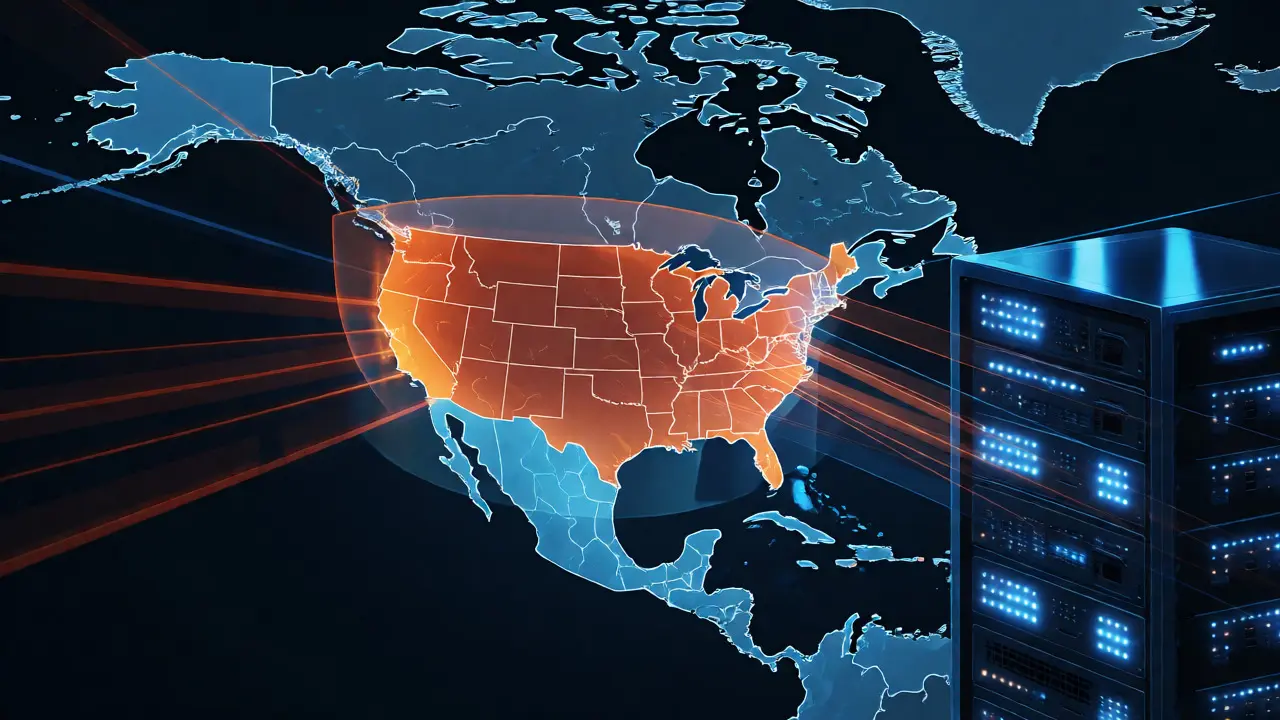
Geofencing is the practice of restricting access to online services based on the user's physical location. For Bybit, this means creating a virtual border. If your IP address says you’re in New York, you’re out. If it says you’re in Singapore, you’re in.
This approach is a compromise. Bybit wants global liquidity, which requires users from everywhere. But they don’t have the resources or licenses to comply with every single country’s complex securities laws. So, they choose the path of least resistance: block the high-risk jurisdictions entirely. This includes the US, parts of Canada, and several other regions with strict financial oversight. It’s a defensive move, designed to keep the main international platform safe from enforcement actions.
How Bybit Detects Your Location
You might think hiding behind a VPN is easy. After all, you click a button, and your traffic looks like it’s coming from London instead of Los Angeles. But Bybit uses more than just a basic look-up table to find you. Their system operates on multiple layers of verification.
The first line of defense is IP Address Geolocation. Every device connected to the internet has an IP address assigned by its Internet Service Provider (ISP). Databases like MaxMind or GeoIP map these numbers to physical locations. When you log in, Bybit checks this database. If your IP resolves to a restricted country, the system blocks access immediately. Simple, right?
But here’s where it gets tricky. Many traders use residential proxies or mobile data, which can sometimes mask their true location better than standard home broadband. However, Bybit also looks at consistency. During the Know Your Customer (KYC) process, you upload a government ID. If your passport says you live in Germany, but your IP address consistently pings from Ohio, the system flags a mismatch. This cross-referencing is crucial. It stops people from simply buying a German passport scan and logging in from Chicago.
Furthermore, the platform monitors behavior patterns. Are you trading during hours typical for your claimed timezone? Do your login times shift abruptly across continents? These subtle signals help build a risk profile. While Bybit’s current detection methods aren’t always perfect-more on that later-they are sophisticated enough to catch casual attempts at evasion.
The VPN Loophole: Can You Really Hide?
Here is the million-dollar question: Does a VPN actually work on Bybit? The short answer is yes, but with big caveats. A recent investigation by CoinDesk showed that American users could successfully bypass restrictions using commercial VPN services. They connected to a server in an approved jurisdiction, passed the initial IP check, and even completed KYC using non-US identification documents.
Why does this happen? Because VPN Detection is technically difficult. Standard IP blocking only sees the exit node of the VPN server. If that server is in a permitted country, the traffic looks legitimate. To truly detect a VPN, an exchange needs to analyze deeper technical fingerprints:
- Browser Fingerprinting: Checking if the browser configuration matches typical devices in the claimed location.
- Connection Timing: Analyzing latency and packet loss, which often differ when routing through distant servers.
- Device Characteristics: Looking for signs of emulated environments or unusual hardware setups.
Currently, Bybit relies heavily on basic IP geolocation rather than advanced fingerprinting. This makes it vulnerable. However, relying on this loophole is risky. If Bybit decides to upgrade its detection algorithms-which many experts predict will happen-the accounts built on shaky foundations could face sudden freezes. Remember, violating Terms of Service gives the exchange the right to close your account and hold funds pending review.
| Exchange | US Strategy | Geofencing Level | VPN Effectiveness | Regulatory Risk |
|---|---|---|---|---|
| Bybit | Blocked via Geofencing | Intermediate | Moderate (Easy to bypass) | Medium |
| Binance | Separate Entity (Binance.US) | High (Strict Separation) | Low (Different Platform) | High (Settled) |
| Coinbase | Fully Licensed | N/A (Open Access) | N/A | Low (Compliant) |
| Kraken | Fully Licensed | N/A (Open Access) | N/A | Low (Compliant) |
| Sky Protocol | Blanket VPN Block | Very High | None | Medium |

Risks of Bypassing Geofencing
So, you’ve got a VPN, you’ve got a foreign ID, and you’re trading on Bybit from your couch in Seattle. What’s the worst that could happen? It’s not just a slap on the wrist. There are real financial risks involved in circumventing these controls.
First, consider Account Freezes. If Bybit’s automated systems flag your activity as suspicious-perhaps due to inconsistent login locations or failed secondary checks-they can freeze your withdrawals. You might see your balance intact, but you can’t touch it. Resolving this often requires submitting additional proof of residence, which defeats the purpose of using a VPN in the first place.
Second, there is the legal gray area. While you aren’t breaking criminal law by using a VPN, you are breaching the contract you signed up for. In a dispute, the exchange holds the cards. They can argue that you misrepresented your location, voiding any protections you thought you had. This happened to users during the 2024 Bybit Hack, where security vulnerabilities complicated recovery efforts for affected users, including those with ambiguous residency statuses.
Finally, tax implications loom large. If you’re a US resident, you owe taxes on your gains regardless of where the exchange is based. Using a VPN doesn’t change your tax liability. In fact, it might make it harder to prove your trading history if your records are scattered across different jurisdictions and obscured by masked IPs.
What Traders Should Do Now
Given the current state of affairs, what’s the smart play? If you are a US-based trader eyeing Bybit’s deep liquidity and low fees, you need to weigh convenience against compliance.
If you decide to stick with Bybit via VPN, treat it as a temporary solution. Keep your documentation clean. Use a reputable VPN provider that offers dedicated static IPs, as shared IPs are more likely to get blacklisted. Avoid switching countries frequently; pick one stable jurisdiction and stick to it. Consistency reduces the chance of triggering fraud alerts.
Alternatively, look at compliant alternatives. Exchanges like Coinbase and Kraken are fully licensed in the US. Yes, their fee structures might differ, and their asset listings may be more conservative, but you sleep better at night knowing your funds aren’t held hostage by a changing regulatory wind. Other platforms like Bitget and OKX have also implemented similar geofencing strategies, so checking their specific terms before signing up is essential.
For professional traders, the trend is clear: regulation is tightening. The era of "wild west" crypto trading is fading. Platforms are investing in machine learning models to better detect spoofed locations. What works today might fail tomorrow. Diversifying your exposure across compliant and offshore venues is a prudent hedge against sudden policy shifts.
Is Bybit banned in the USA?
Bybit is not officially "banned" in the sense of a government prohibition, but it voluntarily restricts access to US users. This is done to avoid the heavy regulatory burden and licensing requirements imposed by US agencies like the SEC and CFTC. Users accessing the site from US IPs are typically blocked or redirected.
Can I use a free VPN to access Bybit?
You can try, but it is risky. Free VPNs often share IP addresses among thousands of users. If one user engages in suspicious activity, the entire IP range might get flagged by Bybit’s security systems. Additionally, free services often lack the stability needed for active trading, leading to disconnections during critical market moves.
What happens if Bybit detects my VPN?
If detected, your access may be revoked immediately. In more severe cases, especially if inconsistencies with KYC documents are found, your account could be frozen. Withdrawals might be paused until you provide proof of actual residence. In rare cases involving suspected fraud, funds could be held indefinitely pending internal review.
Does Bybit require KYC for all users?
Yes, Bybit enforces mandatory Know Your Customer (KYC) verification for all new users. This involves uploading government-issued identification and taking a selfie. This step is crucial for their geofencing strategy, as they cross-reference the country listed on your ID with your IP address to ensure consistency.
Are there other exchanges like Bybit available in the US?
Direct equivalents are rare because most global exchanges avoid the US market. However, Binance.US operates as a separate entity tailored for Americans. Coinbase and Kraken offer robust derivatives products under full US regulation. Some smaller, newer platforms may attempt to serve US clients, but they carry higher operational risks.