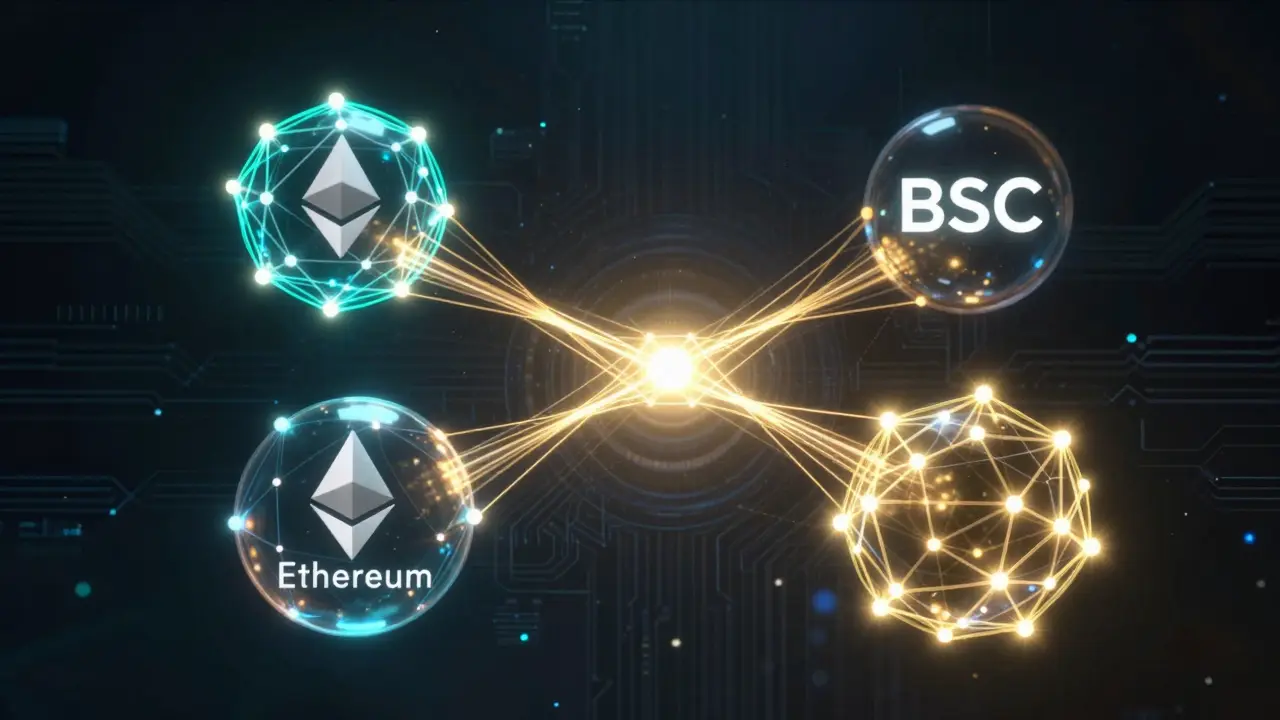
Have you ever tried to swap tokens on a decentralized exchange (DEX) only to realize the price was terrible because of low liquidity? Or maybe you got stuck paying high gas fees just to move assets between chains. That is exactly the problem Arken Finance claims to solve. It positions itself as a multi-chain decentralized exchange (DEX) aggregator that combines liquidity from multiple sources to offer better rates and lower slippage.
But here is the catch: when you search for Arken Finance online, you get conflicting information. Some sources treat it like a standard centralized exchange with bank transfers, while its own materials describe it as a non-custodial tool. With regulatory red flags and a tiny market cap for its native token, you need to know what you are actually getting into before connecting your wallet.
What Exactly Is Arken Finance?
To understand if Arken is right for you, we first need to clear up what kind of platform it is. There is a significant confusion in how different websites categorize it. Monitoring sites like WikiBit list Arken Finance as a traditional crypto exchange that supports fiat currencies and bank withdrawals. However, Arken’s own educational content and YouTube explainers describe it strictly as a DEX aggregator a protocol that routes trades across various decentralized exchanges to find the best price.
A DEX aggregator does not hold your funds. Instead, it acts as a smart router. When you want to swap Token A for Token B, Arken scans multiple liquidity pools across different networks-such as Ethereum, Binance Smart Chain (BSC), and Polygon-to find the most efficient path. It uses an indexing algorithm to check prices instantly and a split-order algorithm to break large trades into smaller chunks, reducing slippage.
The discrepancy matters because if Arken were a centralized exchange, you would trust them with your private keys or personal data. As a DEX aggregator, you remain in control of your assets via your own wallet. The lack of clarity in public listings suggests that Arken may not have clearly defined its identity to broader audiences, which is a yellow flag for new users.
How Does the Trading Experience Work?
If you decide to use Arken Finance, the user experience is designed to be simpler than manually hopping between Uniswap, PancakeSwap, and other platforms. Here is how the process generally flows:
- Connect Your Wallet: You link a self-custodial wallet like MetaMask or Trust Wallet. There is no account creation or email verification required.
- Select Tokens: Choose the asset you want to sell and the one you want to buy. Arken displays real-time quotes from various underlying DEXs.
- Review the Route: The platform shows you the estimated output amount and the network fees. Because it aggregates liquidity, you might see a better rate than trading on a single pool.
- Confirm Swap: You approve the transaction in your wallet. Arken’s backend handles the complex routing steps, presenting it to you as a single action.
This "single flow" approach saves time. For example, if you need to bridge assets from Ethereum to Polygon and then swap them, Arken aims to handle those cross-chain mechanics in the background. However, keep in mind that cross-chain swaps often involve higher risks and longer confirmation times compared to simple same-chain trades.
Regulatory Status and Safety Concerns
This is the most critical part of the review. If you are looking for a safe place to park large amounts of capital, Arken Finance raises several concerns.
According to industry monitoring data, Arken Finance has no valid regulation. It is flagged with a "medium potential risk" level. Some directories even list its registered country as China, though this conflicts with the decentralized nature of the project. In the world of crypto, being unregulated means there is no insurance fund, no legal recourse if something goes wrong, and no oversight body to ensure fair practices.
| Factor | Status | Implication for Users |
|---|---|---|
| Regulation | None / Unverified | No legal protection; operate at your own risk. |
| Custody | Non-Custodial (Claimed) | You control keys, but smart contract bugs could still drain funds. |
| Audits | Not Publicly Cited | Lack of third-party security reviews increases hack risk. |
| Transparency | Low | Conflicting info on whether it is a CEX or DEX. |
Furthermore, there are no widely known third-party security audits published for Arken’s smart contracts. In DeFi, code is law. If there is a bug in the aggregation logic or the cross-chain bridge, hackers can exploit it. Without an audit from a reputable firm like CertiK or OpenZeppelin, you are essentially betting that their internal team wrote flawless code.

The ARKEN Token: Value and Utility
Like many DeFi projects, Arken Finance has a native utility token called ARKEN the governance and utility token of the Arken Finance ecosystem. Let’s look at the hard numbers.
The total supply of ARKEN is 10 billion tokens. At launch, the fully diluted valuation (FDV) was around $40 million, with an initial market cap of roughly $14 million. Today, the picture looks very different. Recent data shows the ARKEN token trading at approximately €0.0001, with a market capitalization under €100,000. This places it outside the top 7,000 cryptocurrencies by market rank.
Why does this matter? A low market cap indicates low liquidity and low investor confidence. If you buy ARKEN, you might struggle to sell it later without crashing the price. Additionally, the tokenomics show that nearly 19% of the supply was sold in private and public rounds early on. Investors who bought in at the initial high valuations are likely underwater, which can create selling pressure.
The primary utility of holding ARKEN is usually to pay for reduced trading fees or to participate in governance. However, given the platform's small scale, the benefits of holding the token may not outweigh the volatility risks.
Fees and Costs
Understanding costs is vital for profitability. Sources vary on Arken’s fee structure due to the confusion over its business model. One monitoring site lists maker fees at 0.05% and taker fees at 0.10%, which are standard for centralized exchanges. However, since Arken operates as a DEX aggregator, these fees likely do not apply directly.
In reality, when using a DEX aggregator, you pay two types of costs:
- Network Gas Fees: Paid to the blockchain (e.g., Ethereum miners/validators). These can be high during peak times.
- Aggregator Protocol Fee: A small percentage taken by Arken for routing the trade. This is typically much lower than CEX fees, often around 0.05% to 0.15%, but it is added on top of the underlying DEX fees.
There are no withdrawal fees in the traditional sense because you never deposit funds into Arken. You interact directly with your wallet. However, cross-chain swaps may incur additional bridge fees.
Who Should Use Arken Finance?
Based on the evidence, Arken Finance is not suitable for everyone. Here is a breakdown of who might benefit and who should stay away.
Good for:
- Experienced DeFi Users: Those who already understand wallets, gas fees, and slippage, and want a convenient interface to compare rates across Ethereum, BSC, and Polygon.
- Small Traders: People making small swaps who want to avoid manual routing across multiple apps.
Bad for:
- Beginners: The lack of customer support, regulatory oversight, and confusing marketing makes it risky for newcomers.
- Large Investors: The low liquidity of the ARKEN token and the unverified security status make it unsafe for significant capital.
- Fiat Users: If you need to deposit USD or EUR via bank transfer, Arken is likely not the right choice, despite some misleading listings.
Final Verdict
Arken Finance offers a useful concept: aggregating liquidity to save you money on swaps. Its multi-chain support for Ethereum, BSC, and Polygon is a solid feature set. However, the execution is marred by poor communication, regulatory ambiguity, and a lack of transparency regarding security audits.
The ARKEN token itself has lost most of its value and sits in a niche market segment with low volume. While the platform may work fine for small, occasional swaps, I cannot recommend it as a primary trading hub. Stick to well-established aggregators like 1inch or Matcha if you want similar functionality with better security track records and deeper liquidity.
If you do choose to use Arken, start with small amounts. Never invest more than you can afford to lose, and always double-check the contract addresses before confirming any transactions.
Is Arken Finance a centralized or decentralized exchange?
Arken Finance describes itself as a decentralized exchange (DEX) aggregator. It does not hold user funds but rather routes trades across existing DEXs. However, some third-party monitoring sites incorrectly list it as a centralized exchange, causing confusion.
Is Arken Finance regulated?
No, Arken Finance currently has no valid regulation listed. Industry monitors flag it as having medium potential risk due to the lack of licensing and unclear corporate registration details.
What blockchains does Arken Finance support?
As of its latest updates, Arken Finance supports cross-chain swaps between Ethereum, Binance Smart Chain (BSC), and Polygon. It aggregates liquidity from DEXs on these networks.
Can I buy ARKEN token on major exchanges like Binance or Coinbase?
No, the ARKEN token is not listed on major tier-1 centralized exchanges like Binance or Coinbase. It has a very low market cap and limited liquidity, meaning you would likely need to buy it via smaller DEXs or specific alternative platforms.
Are there any security audits for Arken Finance?
There are no publicly cited third-party security audits from reputable firms like CertiK or OpenZeppelin for Arken Finance. This lack of transparency increases the risk of smart contract vulnerabilities.