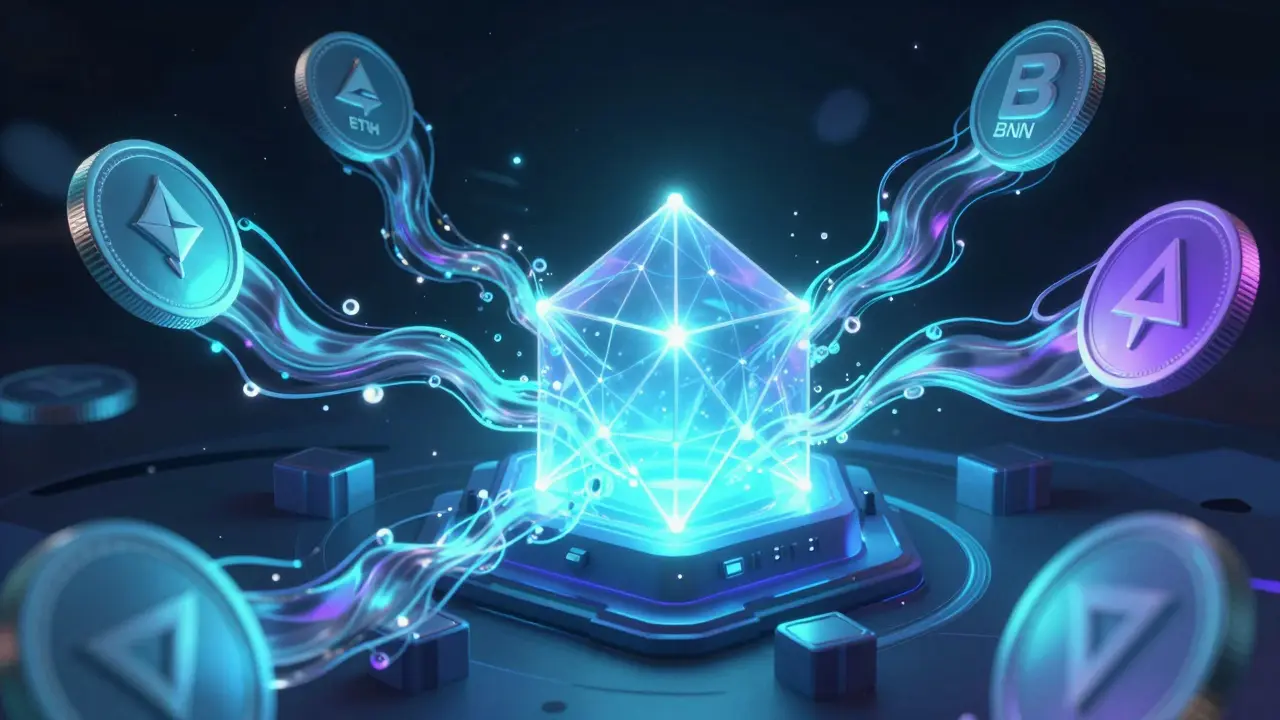
Have you ever wondered what happens to your staked assets when they are locked away in a protocol? You earn rewards, sure, but that capital sits idle. It can’t be used for trading, lending, or other opportunities. This is the problem of illiquidity in decentralized finance (DeFi). TENET is a Layer 1 blockchain ecosystem specifically designed to solve this by turning liquid staking derivatives into active, yield-generating assets. Instead of just sitting there, your staked tokens help secure the network and generate multiple streams of income.
TENET isn't just another generic blockchain trying to catch up with Ethereum or Solana. It was built from the ground up for one specific purpose: to maximize the utility and yield of Liquid Staking Derivatives (LSDs). If you are looking to understand how TENET works, why it matters for your portfolio, and whether it is worth your attention in 2026, this guide breaks down the technology, the tokenomics, and the real-world applications without the fluff.
How TENET Changes the Game with DiPoS
Most blockchains use their native token for security. On Ethereum, you stake ETH. On BNB Chain, you stake BNB. TENET flips this script. It uses a system called Diversified Proof of Stake (DiPoS). This means the network’s security comes from a diverse basket of liquid staking derivatives from other major chains, not just its own coin.
Imagine you hold wrapped staked ETH (wstETH) or Coinbase ETH (cbETH). In the traditional model, these sit in a vault earning staking yields. On TENET, you can stake these assets to secure the Tenet blockchain itself. By doing so, you become part of the consensus mechanism. The network uses a Byzantine Fault-Tolerant (BFT) algorithm, which ensures high speed and scalability comparable to the fastest Layer 1 chains, while maintaining robust security through this diversified collateral.
This approach solves two problems at once. First, it provides security for the TENET chain using established, high-value assets from other ecosystems like Ethereum, BNB Chain, Cosmos, and Cardano. Second, it gives holders of those LSDs a new way to put their assets to work, earning transaction fees and block rewards on top of their existing staking yields.
The TENET Token: Utility Beyond Speculation
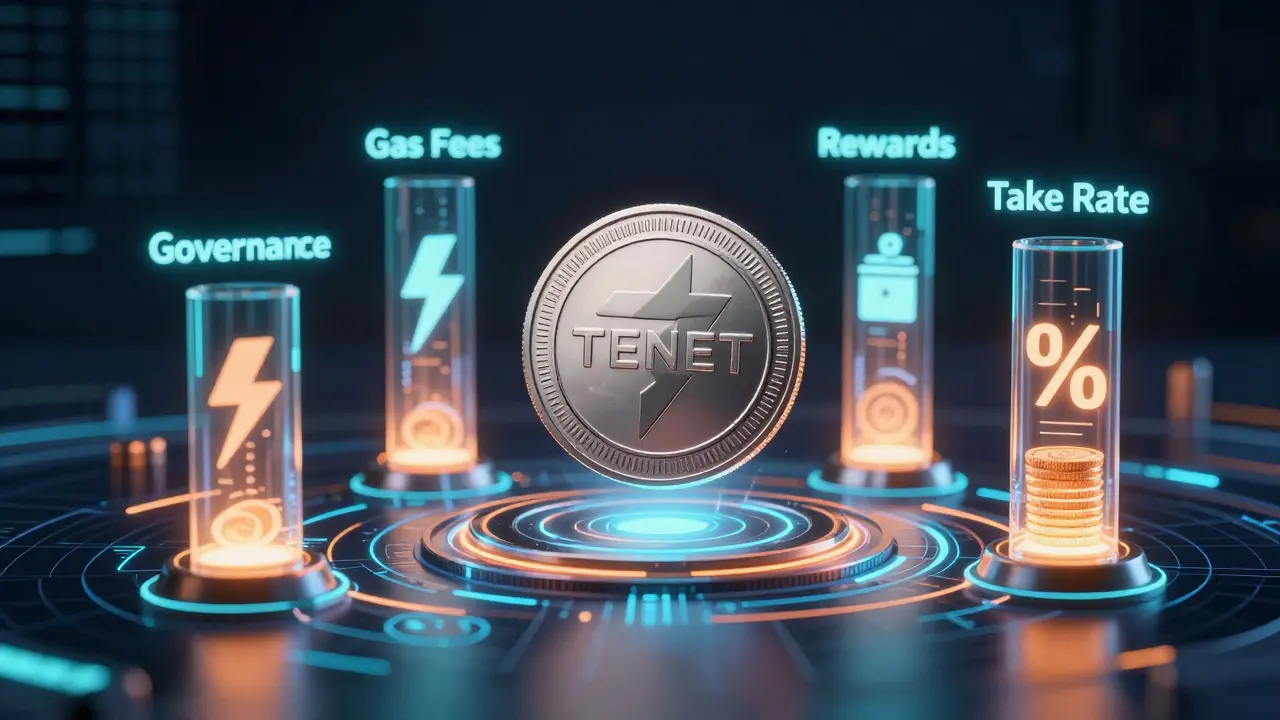
Every blockchain needs a native token, and TENET is no exception. But unlike many projects where the token is primarily a vehicle for speculation, the TENET token has hard-coded utilities that drive demand within the ecosystem.
- Gas Fees: You need TENET to pay for transactions and smart contract operations on the Tenet chain. As activity increases, so does the demand for gas.
- Governance: Holders can lock their tokens to receive vote-escrowed TENET (veTENET). This allows them to vote on critical decisions, such as how block rewards are distributed and which DeFi protocols receive incentives.
- Rewards: Validators and delegators earn TENET as part of their compensation for securing the network.
- Take Rate Distribution: The protocol applies an annualized tax on staked LSDs, known as the take rate. A portion of this is shared among stakers, diversifying their yield sources.
The tokenomics are designed to be community-first. TENET launched without venture capital funding, meaning early investors don't hold disproportionate power over governance. The maximum supply is capped at 1.2 billion units. While the price has seen volatility since its 2023 launch-a common trait in the crypto market-the structural utility remains focused on long-term ecosystem health rather than short-term pumps.
Liquid Staking Dollar Coin (LSDC): Stability Meets Yield
One of TENET's most innovative features is the Liquid Staking Dollar Coin (LSDC). Most stablecoins are backed by fiat currency or simple crypto reserves. LSDC is different. It is a decentralized stablecoin backed by a diversified basket of liquid staking derivatives, including ETH, BNB, ATOM, and ADA.
Here is why this matters: LSDC is overcollateralized. This means the value of the underlying staked assets exceeds the value of the minted stablecoins, providing a buffer against market volatility. When you mint LSDC, you are essentially borrowing against your staked assets. This unlocks liquidity without forcing you to sell your position and lose out on future staking rewards.
You can use LSDC for trading, paying bills, or investing in other DeFi protocols, all while your underlying assets continue to earn yield on the Tenet network. The system includes a Stability Pool to maintain solvency and ensure the peg holds steady, even during turbulent market conditions.
| Feature | Traditional Staking | TENET Protocol |
|---|---|---|
| Asset Liquidity | Locked; cannot be used elsewhere | Unlocked via LSDC borrowing |
| Yield Sources | Staking rewards only | Staking + Block Rewards + Take Rate |
| Security Model | Single asset (e.g., ETH) | Diversified LSDs (DiPoS) |
| Governance | Often VC-heavy | Community DAO (No VC funding) |
Eva Wallet: AI-Powered Access for Retail Users
Blockchain interfaces can be intimidating. Enter the Eva Wallet, a non-custodial Web3 wallet built directly into the TENET ecosystem. Designed with retail investors in mind, Eva simplifies complex DeFi actions into intuitive steps.
Eva integrates DeFiGPT, an AI-powered chatbot that helps users navigate the market. Need to know if it's a good time to stake? Want to optimize your LSD positions? You can ask Eva. The wallet handles everything from staking assets to optimizing yields, all while you retain full control of your private keys. Transactions are paid for in small amounts of TENET, keeping costs low and accessible.

Technical Architecture: Built for Developers
Under the hood, TENET is built using the Cosmos SDK with Ethereum Virtual Machine (EVM) compatibility. This is a strategic choice. It allows developers who are already familiar with Solidity and Ethereum tooling to deploy applications on TENET with minimal friction.
This compatibility opens the door for a wide range of applications beyond just staking. We are seeing the emergence of decentralized exchanges (DEXs), lending markets, and social apps on the network. The high throughput of the BFT consensus means these applications can handle significant user load without the network congestion often seen on older Layer 1 chains.
Is TENET Right for You?
TENET appeals to a specific type of crypto user: the optimizer. If you are content with simply holding Bitcoin or Ethereum, TENET might not add much value. But if you actively manage a portfolio of staked assets and want to squeeze every drop of yield out of them, TENET offers a compelling toolkit.
By converting illiquid staked positions into active participants in a new blockchain's security layer, you unlock a "trifecta" of yields: base staking rewards, block rewards from validating, and potential gains from the take rate distribution. The addition of LSDC provides the liquidity flexibility that traditional staking lacks.
However, always remember that DeFi carries risks. Smart contract vulnerabilities, market volatility, and protocol changes are real factors. TENET’s lack of VC backing is a double-edged sword: it ensures community control, but it also means the project relies heavily on organic growth and developer adoption rather than deep-pocketed investor marketing. Do your own research, start small, and understand the mechanics before committing significant capital.
What is the main purpose of the TENET blockchain?
The main purpose of TENET is to create a Layer 1 ecosystem for Liquid Staking Derivatives (LSDs). It allows users to stake LSDs from other chains (like ETH or BNB) to secure the TENET network, thereby generating additional yields and unlocking liquidity through mechanisms like the LSDC stablecoin.
How does Diversified Proof of Stake (DiPoS) work?
DiPoS secures the TENET blockchain using a diverse basket of liquid staking derivatives from various networks (such as wstETH, cbETH, ATOM, etc.) instead of relying solely on the native TENET token. This enhances security and allows holders of these external assets to earn rewards by participating in TENET's consensus.
What is LSDC and how is it different from USDT or USDC?
LSDC (Liquid Staking Dollar Coin) is a decentralized stablecoin backed by a basket of staked assets like ETH and BNB, rather than fiat currency. It is overcollateralized, meaning the value of the underlying staked assets exceeds the value of the LSDC issued, providing stability while allowing users to borrow against their staked positions.
Can I use my existing Ethereum tools with TENET?
Yes. TENET is EVM-compatible, built on the Cosmos SDK. This means developers can use standard Ethereum tools like MetaMask (with configuration), Hardhat, and Truffle to build and interact with smart contracts on the TENET chain.
Does TENET have venture capital funding?
No. TENET was developed without venture capital funding. This design choice ensures that governance remains controlled by the community through its DAO structure, rather than being influenced by early institutional investors.