You might have heard the name BERNcash floating around in obscure crypto forums or stumbled upon it while digging through dead project archives. It’s one of those digital assets that exists more as a historical artifact than a living currency today. If you’re wondering what BERNcash actually is, why nobody talks about it anymore, and whether it has any real value left, you’re in the right place.
Let’s cut through the noise. BERNcash isn’t some revolutionary new tech waiting to explode. It’s a relic from the 2016-2017 era, a time when anyone with a laptop could launch a coin. Today, it sits quietly at the bottom of market rankings, with trading volume so low it’s practically invisible. But for collectors, miners looking for niche opportunities, or just curious minds, understanding its history and current state is surprisingly interesting.
The Origins of BERNcash
BERNcash is a cryptocurrency that launched around 2016-2017, operating on a proof-of-work consensus mechanism similar to early Bitcoin forks. Also known by its ticker symbol BERN, it emerged during the initial coin offering boom, a period characterized by explosive growth and equally rapid failures. The project was developed by an individual or small team associated with the GitHub repository 'berniecoin/berncash' and the website berncoin.org.
Unlike modern blockchains that focus on smart contracts or scalability, BERNcash stuck to the basics. It was designed to be mined, meaning users needed computational power to validate transactions and create new coins. This approach was standard for the time but lacked the innovative features that would later define successful altcoins like Ethereum or Cardano. The lack of a clear, unique use case beyond simple transactional utility likely contributed to its eventual stagnation.
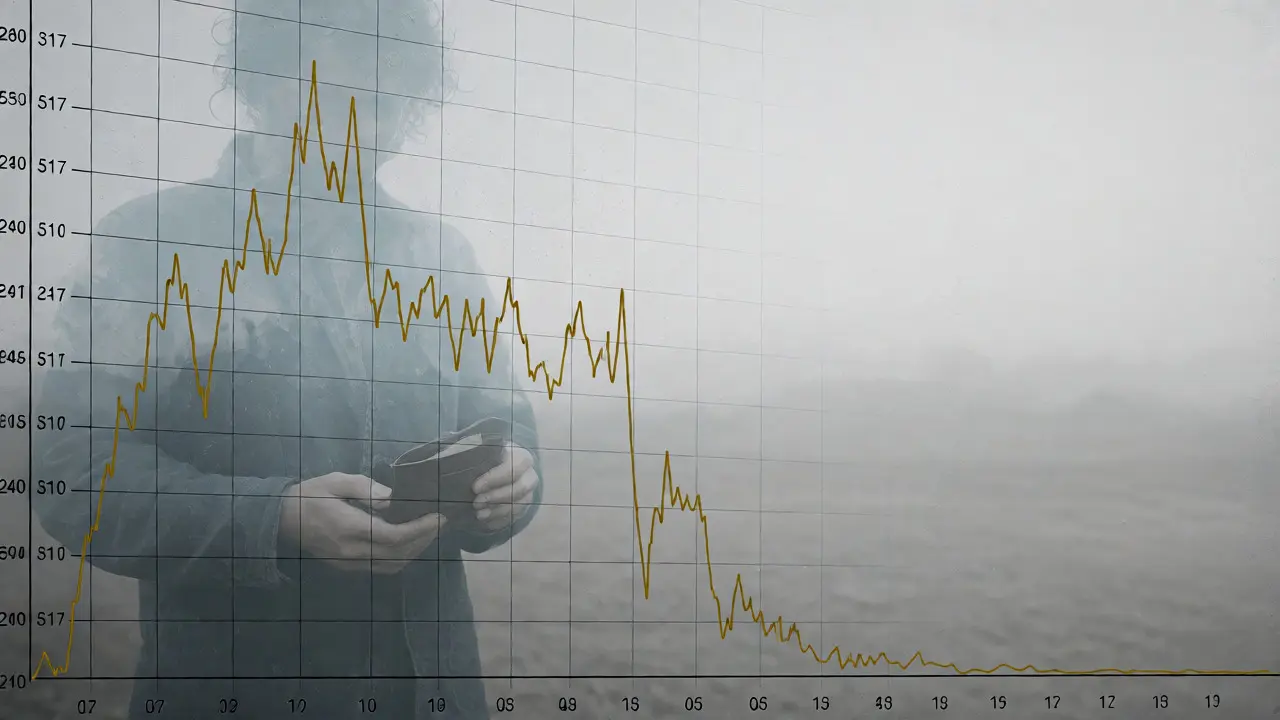
During its brief active phase, BERNcash managed to hit an all-time high price of approximately $0.02401 on June 6, 2017. For context, this was during the massive bull run that saw Bitcoin surge toward $20,000. However, unlike major players that survived the subsequent crash and recovery cycles, BERNcash never regained significant traction. Its development activity slowed, community engagement dwindled, and it gradually faded into obscurity.
Current Market Status and Liquidity
If you try to buy or sell BERNcash today, you’ll face immediate hurdles. The coin is effectively illiquid. According to data from CoinMarketCap, BERNcash trades on only one active market with virtually zero trading volume over the past 24 hours. Major exchanges like Binance and Coinbase do not list it for active trading. Binance explicitly states that the coin is not listed for trade and service, while Coinbase notes it is unavailable for supported trading in most countries.
| Metric | Reported Value | Reality Check |
|---|---|---|
| Price | $0.00056 - $0.00098 | Static; no real buyers or sellers |
| Circulating Supply | ~71.23 Million | Disputed; other platforms report 0 |
| Market Cap | $0 - $70,000 | Negligible fraction of total crypto market |
| All-Time High | $0.02401 (June 2017) | Down ~96% from peak |
| Exchange Support | 1 Active Market | No major exchange listings |
This lack of liquidity creates a paradox. While tracking sites show a price, that price is theoretical. With $0 daily volume, there are no actual transactions happening. You can’t easily cash out if you hold BERNcash because there’s no market depth. The reported circulating supply also varies wildly between sources. CoinMarketCap lists roughly 71.23 million BERN in circulation, while Binance, Coinbase, and Coinranking report 0 circulating supply. This discrepancy highlights the fragmented and outdated nature of the data surrounding this asset.
Technical Specifications and Mining Potential
BERNcash operates on a Proof-of-Work consensus algorithm, requiring miners to solve complex mathematical puzzles to secure the network and generate new coins. This technical foundation places it in the same category as Bitcoin and Litecoin, but without their hardware ecosystem or security guarantees. Because the network is so small, the hash rate is minimal. In fact, it’s likely vulnerable to 51% attacks, where a single entity could control the majority of mining power and manipulate the blockchain.
For hobbyist miners, BERNcash might offer a curiosity factor rather than profit. Since the difficulty is extremely low, even older GPU setups can mine blocks quickly. However, the reward is negligible given the coin’s near-zero value. There’s no active development team pushing updates, meaning the codebase remains static. If bugs exist, they remain unfixed. If new features are needed, they won’t arrive unless a fork occurs, which hasn’t happened recently.
The GitHub repository for berniecoin/berncash shows little to no recent activity. This abandonment signals that the core protocol is frozen in time. Unlike active projects that upgrade their networks to improve speed or privacy, BERNcash relies on legacy technology. Users interacting with the blockchain today often need specialized knowledge or custom wallet configurations, as standard multi-currency wallets may not support it anymore.
Community and Development Activity
A cryptocurrency lives or dies by its community. For BERNcash, the community is essentially extinct. There is a subreddit, r/berncash, but it sees minimal posts and engagement. Social media presence is sparse, with few mentions on Twitter or Telegram groups dedicated to the coin. Without an active user base to drive adoption, create content, or advocate for exchange listings, the project lacks organic growth mechanisms.
Expert analysis on BERNcash is virtually non-existent. Major crypto publications and analysts rarely cover assets with such low market caps and volume. This silence is telling. In the crypto world, attention is currency. When experts stop talking about a project, it usually means it has lost relevance. There are no recent whitepapers, roadmap updates, or partnership announcements to signal a revival. The project appears to be a classic example of a "zombie chain"-alive technically, but dead economically.
User experiences reflect this dormancy. Reviews on Trustpilot or crypto forums are scarce. Most holders likely acquired BERNcash years ago during the ICO boom and have held onto it out of hope or neglect. New investors rarely enter positions in BERNcash because the risk-reward ratio is poor. The potential upside is capped by the lack of liquidity, while the downside includes complete loss of access if the last exchange delists it.
Investment Viability and Risks
Should you invest in BERNcash? For most people, the answer is no. It serves better as a collector’s item or a technical experiment than a financial asset. Here’s why:
- Liquidity Risk: You might buy BERNcash, but selling it requires finding a buyer on the single active exchange. This could take months or years.
- Development Stagnation: No active coding means no innovation. The coin will not adapt to future market needs.
- Data Reliability: Conflicting data on supply and price makes valuation difficult. You’re betting on numbers that don’t agree with each other.
- Opportunity Cost: Capital tied up in BERNcash could grow faster in established assets like Bitcoin or Ethereum.
That said, speculative traders sometimes look for "moonshot" plays in dead coins, hoping for a sudden pump due to low float. However, with no marketing budget or community hype, such pumps are unlikely. The fully diluted market cap is estimated at around $70,000, which is minuscule compared to the trillions in the broader crypto market. Even a 10x increase would result in a tiny absolute gain.
How to Acquire and Store BERNcash
If you still want to get your hands on some BERNcash, here’s the practical path:
- Find an Exchange: Locate the single active market listed on CoinMarketCap. Note that interface quality and withdrawal fees may vary.
- Create a Wallet: Download the official BERNcash wallet from the project’s GitHub or archive site. Ensure you back up your private keys securely.
- Deposit Funds: Send Bitcoin or another accepted currency to the exchange.
- Execute Trade: Buy BERN using the available pair. Be aware of slippage due to low volume.
- Withdraw: Move your coins to your personal wallet for long-term storage.
Storing BERNcash requires caution. Since the network is small, ensure your wallet software is compatible with the latest block height. Regularly check the blockchain explorer to confirm your balance reflects correctly. Given the lack of customer support, troubleshooting issues falls entirely on you.
Is BERNcash a good investment in 2026?
Generally, no. BERNcash has zero trading volume, no active development, and minimal community support. It is considered a dormant asset with high liquidity risk. It may appeal to collectors or hobbyist miners but offers little financial upside for typical investors.
Where can I buy BERNcash?
BERNcash is not listed on major exchanges like Binance or Coinbase. It trades on only one minor exchange identified via aggregators like CoinMarketCap. Availability is limited, and liquidity is extremely low.
Can I mine BERNcash?
Yes, BERNcash uses a Proof-of-Work algorithm, so it can be mined. However, due to low network difficulty and negligible coin value, mining is primarily done by hobbyists rather than professional miners seeking profit.
Why does the circulating supply vary across websites?
Data discrepancies arise because BERNcash is abandoned. Some trackers update automatically based on blockchain data, while others rely on manual inputs or cached figures. CoinMarketCap reports ~71 million, while others report 0, reflecting the lack of standardized maintenance.
What is the all-time high for BERNcash?
The all-time high for BERNcash was approximately $0.02401, recorded on June 6, 2017. Current prices are down nearly 96% from this peak, hovering around $0.00098.