
Imagine uploading a song and getting paid instantly every time someone listens. No waiting months for checks from record labels. No fighting with algorithms that bury your track unless you pay for ads. This isn't a dream scenario; it's the core promise of Audius, a decentralized blockchain-based music streaming platform designed to give artists control over their content and compensation. Launched in 2018, Audius operates as a Web3 alternative to giants like Spotify and Apple Music. But what exactly is the AUDIO token that powers this ecosystem? Is it just another speculative crypto coin, or does it have real utility in the music industry?
The short answer is that AUDIO is more than just a currency. It is the fuel that keeps the entire network running. It rewards node operators who store data, incentivizes artists to create high-quality content, and gives users governance rights over the future of the platform. If you are an artist looking for better royalties, a fan tired of subscription fees, or a crypto investor curious about real-world utility, understanding how AUDIO works is essential.
How Audius Works: A Technical Breakdown
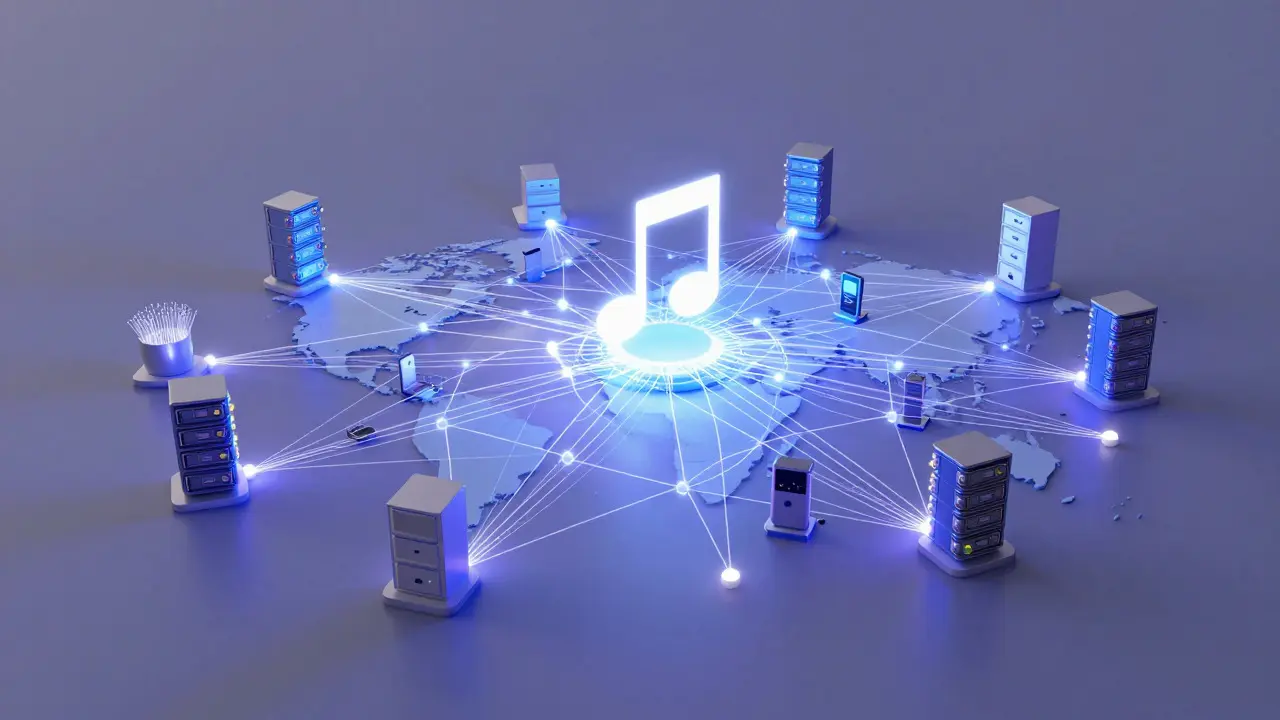
To understand why the AUDIO token matters, you first need to grasp how the platform functions differently from traditional services. Centralized platforms like Spotify store all data on their own servers. They decide which songs get promoted and when artists get paid. Audius flips this model by using a distributed architecture consisting of three main components.
- Content Nodes: These are the storage backbone. They host audio files and images using the Audius Storage Protocol (AudSP), which interfaces with the InterPlanetary File System (IPFS). This ensures that no single company controls your music files.
- Discovery Nodes: Think of these as the search engines of the network. They index content so users can find specific songs or artists. Discovery nodes earn AUDIO tokens by tracking network usage and making content discoverable.
- The Content Ledger: This is the source of truth. Built primarily on Ethereum and POA networks, smart contracts here manage ownership, revenue allocation, and social graphs. It records who owns what and ensures payments are distributed correctly without human intervention.
This structure means that if one server goes down, the music doesn't disappear. The network remains resilient because the data is spread across thousands of independent nodes worldwide. This decentralization is crucial for censorship resistance, allowing artists to publish work without fear of arbitrary removal by corporate executives.
The Utility of the AUDIO Token
The AUDIO token is an ERC-20 token originally built on the Ethereum blockchain. However, as the user base grew, the platform faced scalability issues common to Ethereum. To solve this, Audius migrated its content management system to Solana. This move allowed for faster transaction speeds and lower costs, which is vital for a platform processing millions of streams daily.
So, what can you actually do with AUDIO? Here are the primary use cases within the ecosystem:
- Staking for Node Operators: Running a discovery or content node requires staking AUDIO tokens. This acts as a security deposit to ensure honest behavior. In return, operators earn a share of network fees and additional AUDIO rewards based on their contribution to the network's health.
- Artist Monetization: Artists receive AUDIO tokens directly when their music is streamed. Unlike traditional platforms that hold funds for weeks or months, Audius enables near-instant payments. Artists can also stake AUDIO to boost the visibility of their tracks in trending lists, creating a meritocratic rather than pay-to-play discovery system.
- Governance Rights: Holding AUDIO grants you voting power in the Audius governance protocol. Token holders can propose and vote on changes to the platform's rules, fee structures, and technical upgrades. This makes the community the true owner of the network.
- Gamification and Badges: Users and artists can unlock unique badges and features by holding or staking AUDIO. This adds a layer of engagement and status within the community, encouraging long-term participation.
The token economics are designed to be deflationary in nature. While new tokens are issued to reward node operators and artists, a portion of transaction fees may be burned or redistributed, depending on current governance decisions. This creates a balance between supply and demand, theoretically supporting the token's value as usage grows.
Audius vs. Traditional Streaming Platforms
Why would anyone switch from Spotify or Apple Music to Audius? The answer lies in the economic model. Let's look at the numbers. On centralized platforms, artists typically earn fractions of a cent per stream-often around $0.003 to $0.005. Furthermore, payments are pooled and distributed quarterly, meaning artists wait months to see any money. For independent musicians, this delay can be financially devastating.
| Feature | Audius (Web3) | Spotify/Apple Music (Centralized) |
|---|---|---|
| Artist Payout Speed | Near-instant via blockchain | Quarterly (months delay) |
| Revenue Share Model | Direct peer-to-peer compensation | Pooled royalty system |
| User Cost | Free (no subscription required) | Subscription fees for ad-free experience |
| Content Control | Artist-owned, censorship-resistant | Platform-controlled, subject to takedowns |
| Underlying Tech | Blockchain (Ethereum/Solana) | Centralized servers |
Audius eliminates the middleman. When a fan streams a song, the AUDIO tokens flow directly from the listener (or from a pool funded by node operators and governance) to the artist. There are no subscription fees for listeners, lowering the barrier to entry for fans. For artists, there are no gatekeepers. You don't need a record label to distribute your music globally. This democratization is particularly powerful for emerging genres and independent creators who have historically been underserved by major labels.
Who Should Use Audius?
Audius targets three distinct groups, each benefiting differently from the ecosystem.
Independent Artists: If you are tired of losing control over your masters or waiting for checks, Audius offers a direct line to your audience. You retain full ownership of your content. You can analyze streaming metrics in real-time and build a loyal fanbase without algorithmic suppression. The ability to monetize immediately through AUDIO tokens provides cash flow flexibility that traditional platforms cannot match.
Musical Fans: Listeners benefit from a free, ad-supported (in some models) or community-funded experience. You support artists directly rather than paying a corporation. The discovery features, powered by diverse node operators, often surface niche and underground talent that mainstream algorithms ignore. Plus, engaging with the platform through governance allows you to shape the future of music distribution.
Crypto Enthusiasts and Node Operators: For those interested in decentralized infrastructure, running a node is a way to earn passive income. By providing storage or indexing services, you contribute to the network's resilience and earn AUDIO in return. This appeals to users who believe in the long-term viability of Web3 applications and want to participate in the economy beyond simple speculation.

Challenges and Risks
No technology is perfect, and Audius faces significant hurdles. The biggest challenge is adoption. Convincing millions of casual listeners to switch from familiar apps like Spotify to a blockchain-based interface requires overcoming friction. User experience must be seamless; if managing wallets and tokens feels too complex, mainstream users will bounce back to centralized options.
Volatility is another factor. Since payouts are in AUDIO, the fiat value of an artist's earnings fluctuates with the crypto market. An artist might earn 100 AUDIO today worth $50, but tomorrow it could be worth $30 or $70. While this risk exists, many artists view it as a trade-off for higher overall revenue shares and instant access to funds. Some platforms integrate stablecoin options to mitigate this, but currently, AUDIO remains the primary medium of exchange.
Regulatory uncertainty also looms over all crypto projects. As governments clarify rules for digital assets and copyright, Audius must adapt to ensure compliance while maintaining its decentralized ethos. The migration to Solana was a strategic move to improve performance, but it also introduces dependency on another blockchain's stability and security.
Future Outlook for Audius
The future of Audius hinges on its ability to scale and attract both creators and consumers. The platform continues to evolve its technical infrastructure, focusing on improving search algorithms and social features. Integration with other Web3 tools, such as NFT marketplaces for exclusive content or virtual concerts, could further enhance its value proposition.
If Audius succeeds in proving that decentralized streaming is viable, it could disrupt the multi-billion-dollar music industry. It sets a precedent for other creative fields-video, writing, gaming-to adopt similar models. The success of AUDIO as a token will depend not just on hype, but on sustained daily active users and genuine economic activity within the network.
For now, Audius stands as a compelling experiment in applying blockchain technology to solve real-world inequities. Whether you are an artist seeking fairness or a tech enthusiast exploring Web3, the platform offers a glimpse into a more open and equitable internet.
Is Audius free to use for artists?
Yes, Audius is free for artists to upload and distribute music. There are no upfront fees or subscription costs. Artists earn AUDIO tokens based on streams and engagement, though they may choose to stake AUDIO to boost visibility.
Can I convert my AUDIO earnings to fiat currency?
Indirectly, yes. AUDIO is traded on various cryptocurrency exchanges. Artists can sell their AUDIO tokens for stablecoins or cryptocurrencies like Bitcoin and Ethereum, then convert those to fiat currency through an exchange. Direct fiat payout features may vary by region and regulatory environment.
What is the difference between Audius and Spotify?
Spotify is a centralized service owned by a corporation that controls content distribution and pays artists via a pooled royalty system with long delays. Audius is a decentralized, community-owned platform where artists retain control, receive instant payments in crypto, and benefit from censorship-resistant infrastructure.
Do I need to know blockchain to use Audius?
Not necessarily. The user interface is designed to be intuitive for non-technical users. However, to fully utilize features like staking or withdrawing earnings, basic knowledge of cryptocurrency wallets and transactions is helpful.
Which blockchain does Audius run on?
Audius uses a hybrid approach. Its governance and initial infrastructure were built on Ethereum. However, to handle high traffic and low latency, the content management and streaming layers have migrated to Solana, while still interacting with Ethereum for certain smart contract functions.