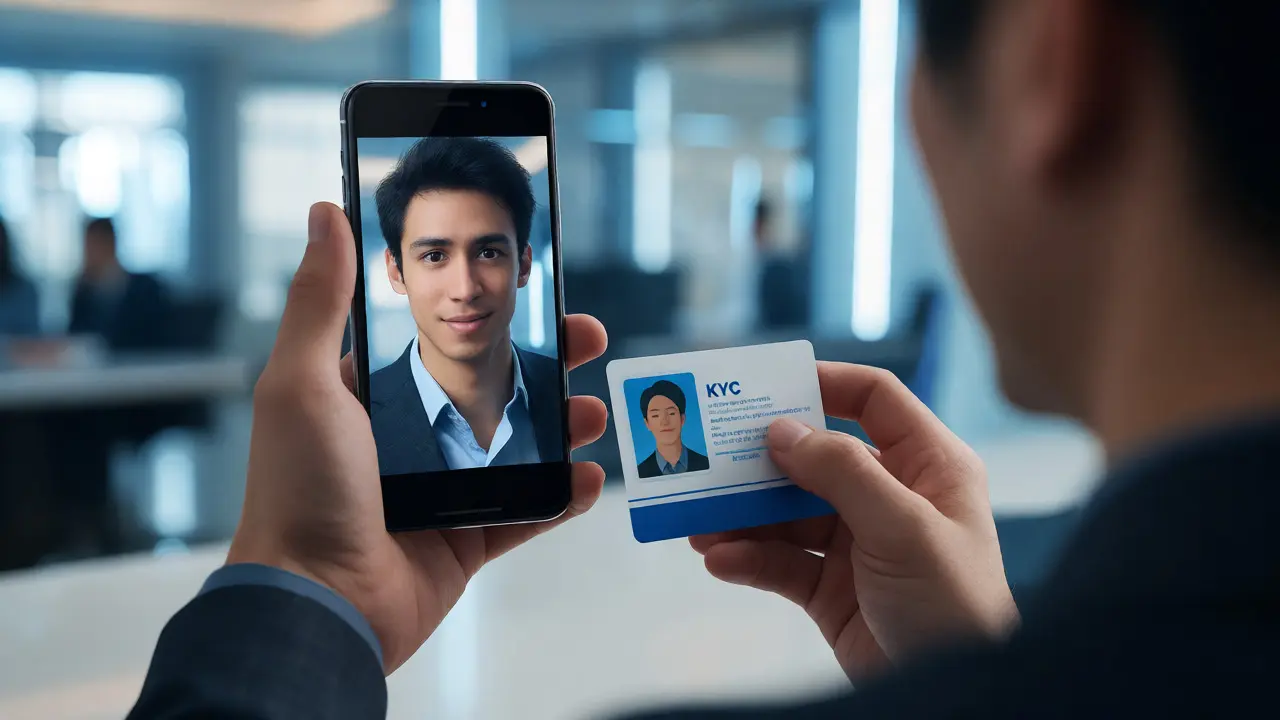
You just bought some Bitcoin on an exchange, and suddenly you're asked to upload a photo of your driver's license. Annoying, right? But that little request is part of something much bigger called Anti-Money Laundering (AML). In the world of digital assets, AML isn't just bureaucratic red tape; it's the set of rules designed to stop criminals from turning dirty money into clean crypto. If you've ever wondered why your exchange asks so many questions before letting you trade, this guide breaks down exactly what AML means for you, how it works, and why it matters more than ever in 2026.
The Core Problem: Why Crypto Needs AML
Think about cash. If someone steals $1 million in cash, they have a problem. They can't just walk into a bank and deposit it without raising eyebrows. That's where Money Laundering comes in. Criminals try to "wash" that cash through legitimate businesses or complex transactions so it looks like normal income. Before crypto, they might buy art, real estate, or shell companies. With Cryptocurrency, things got faster and harder to track. You can move millions across borders in minutes with no middleman.
This speed created a loophole. According to Chainalysis' 2022 Crypto Crime Report, illicit crypto transactions hit $14 billion in value. While that sounds huge, it’s actually only about 0.15% of all crypto transactions. But because the absolute number is so high, regulators panicked. The Financial Action Task Force (FATF), which sets global standards for fighting financial crime, stepped in. They realized that if crypto became the new playground for launderers, traditional banks would lose their grip on financial integrity. So, they adapted old banking laws for the blockchain era.
How Crypto AML Actually Works
In traditional banking, AML relies heavily on knowing who you are because the bank holds your money. In crypto, especially with decentralized wallets, you hold your own keys. So how do regulators keep an eye on things? They focus on the entry and exit points-places where crypto meets fiat currency (like dollars or euros). These places are called Virtual Asset Service Providers (VASPs).
A VASP is any business that exchanges virtual assets for money, transfers them, or provides custodial wallet services. Think Coinbase, Binance, or Kraken. When you sign up for one of these, you trigger a process called Know Your Customer (KYC). This is the first line of defense in AML. You provide your name, address, date of birth, and government ID. The platform verifies this against global watchlists to ensure you aren’t on a sanctions list or known terrorist financier.
But KYC is just step one. Once you’re verified, the system starts watching your behavior. This is Transaction Monitoring. Algorithms scan every transaction you make in real-time. They look for patterns that scream "suspicious." For example, if you send $10,000 to a brand-new wallet address in a country with weak regulations, then immediately split that amount into ten smaller payments to different addresses, the system flags it. This pattern is often used in "layering," a stage of money laundering where criminals obscure the source of funds by moving them through multiple accounts.
| Feature | Traditional Banking AML | Crypto AML |
|---|---|---|
| Identity Verification | Bank branch visit or online form | Digital document upload + biometric selfie check |
| Transaction Tracing | Limited to internal bank records | Public ledger allows full history tracing via tools like Chainalysis |
| Global Reach | Slower cross-border transfers (SWIFT) | Instant global transfers, requiring stricter borderless monitoring |
| Privacy Tech | N/A (Bank secrecy exists but is regulated) | Mixers and privacy coins (Monero) complicate tracking |
| Regulatory Body | Federal Reserve, OCC, FinCEN | FinCEN, SEC, CFTC, plus state-level regulators |
The FATF Travel Rule: The Big Hurdle
If you’ve heard of the Travel Rule, you know it’s the thorn in the side of crypto exchanges. Originally created for wire transfers, the rule requires that when money moves between two institutions, the sender’s information must "travel" with the money. In crypto terms, if you send Bitcoin from Coinbase to Binance, Coinbase needs to share your personal data with Binance.
This sounds simple until you realize there are thousands of small exchanges and wallets worldwide. How does Coinbase securely send your name and address to a tiny exchange in Malta? It’s a technical nightmare. The FATF updated its guidance in June 2023 to clarify that VASPs must implement systems to share this data. As of late 2023, about 78 out of 128 jurisdictions assessed had implemented core requirements for regulating VASPs, up from 52 in 2021. However, implementation varies wildly. Some countries require strict adherence, while others are still figuring out the tech stack.
For you as a user, this means larger transfers might take longer or require extra verification steps. If you’re sending over $3,000 USD equivalent, expect the exchange to ask for more details about the recipient. It’s not just about stopping crime; it’s about creating a paper trail that law enforcement can follow.

Why Decentralized Finance (DeFi) Breaks AML
Here’s where things get tricky. Most AML rules rely on a middleman-an exchange or a bank-that knows who you are. But Decentralized Finance (DeFi) platforms like Uniswap or Aave don’t have middlemen. You connect your wallet directly to a smart contract. There’s no CEO to call, no customer support team to verify your ID.
This creates a gap. If a criminal uses stolen funds to swap tokens on a DEX (Decentralized Exchange), traditional AML tools struggle to catch it because there’s no centralized entity enforcing KYC at the point of trade. According to a March 2024 report by the Blockchain Association, only 43% of DeFi protocols incorporate some form of AML screening at on-ramp points. The rest operate on a "trust the code" basis.
Regulators are trying to close this gap. In May 2023, FinCEN issued guidance suggesting that decentralized applications could be considered "money transmitters" if they exercise sufficient control over the flow of funds. This has sparked debates in the industry. If DeFi protocols become legally responsible for AML, will we see mandatory KYC gates appear even in decentralized apps? Or will users migrate to fully anonymous chains? Right now, it’s a gray area, but the pressure is mounting.
The Cost of Compliance: Who Pays?
Implementing robust AML systems isn’t cheap. For crypto startups, compliance costs can eat up 5-15% of total operational expenses, according to a Sumsub survey of 250 crypto businesses. These costs cover software licenses for transaction monitoring, legal fees for navigating varying jurisdictional rules, and staff time to review flagged transactions.
False positives are a major headache. An algorithm might flag your transaction because you sent money to a new address, even though you were just paying a friend for dinner. Staff members then have to manually review these alerts. A 2023 CipherTrace study found that false positive rates average 15-20%. That’s a lot of wasted human effort. To combat this, exchanges are investing in AI-driven solutions. Companies like Chainalysis and Elliptic use machine learning to improve accuracy, achieving detection rates between 92-96% in recent tests.
Despite the costs, most exchanges agree that AML compliance pays off. It builds trust with institutional investors. Banks are more likely to open accounts for crypto firms that demonstrate strong AML controls. Without those bank relationships, an exchange can’t easily convert crypto to cash, effectively cutting itself off from the broader financial system.

Real-World Risks: What Happens If You Ignore AML?
Ignoring AML doesn’t just hurt the exchange; it hurts you. If your account gets frozen because your funds touched a sanctioned entity, you might wait months to get access back. In severe cases, authorities might seize the assets entirely.
Consider the case of Iran sanctions evasion. In 2022, approximately $150 million in cryptocurrency transactions were linked to Iranian entities trying to bypass restrictions. If you had unknowingly received funds from one of these wallets, your own funds could have been flagged as tainted. Similarly, in South Korea, criminals stole KRW 400 million through phishing and passed the funds through 48 different accounts to disguise their origin. If you had deposited that money, your bank might have closed your account for suspicious activity.
Privacy coins like Monero also pose risks. While Monero accounted for only 0.4% of all crypto transactions in 2022, it represented 81% of illicit transaction value. Many major exchanges have delisted privacy coins because they make AML monitoring nearly impossible. If you hold Monero, you might find fewer places to sell it, and selling it might trigger deeper scrutiny.
The Future of Crypto AML: Privacy vs. Surveillance
We are heading toward a future where AML becomes invisible to the user but powerful in the background. Technologies like Zero-Knowledge Proofs (ZKPs) offer a promising solution. ZKPs allow you to prove you meet certain criteria (like being over 18 or not on a sanctions list) without revealing your actual identity. Projects like the TRISA protocol are already testing this approach, balancing regulatory needs with user privacy.
Meanwhile, the EU’s Markets in Crypto-Assets (MiCA) regulation, which took full effect in December 2024, sets a new standard. It requires all crypto service providers in Europe to implement robust AML/CFT programs. This unified framework reduces the patchwork of national rules, making compliance easier for multi-national exchanges but stricter for everyone.
In the US, the landscape remains fragmented, with the SEC, CFTC, and FinCEN all issuing separate guidelines. However, the trend is clear: the wild west days of unregulated crypto trading are ending. Whether you like it or not, AML is here to stay. Understanding how it works helps you navigate the system smarter, avoid unnecessary freezes, and appreciate the trade-off between anonymity and security.
Do I need AML checks for peer-to-peer crypto trades?
Generally, no. If you trade directly with another person using a non-custodial wallet (like MetaMask or Ledger), there is no central authority to enforce KYC. However, if you eventually want to cash out to your bank, the exchange you use to convert crypto to fiat will require AML checks on your account and potentially trace the source of your funds.
What happens if my crypto is flagged as 'tainted'?
If your funds are linked to illicit activity (like a hack or darknet market), exchanges may freeze your account. You might need to provide proof of the transaction's legitimacy, such as invoices or chat logs. In some cases, exchanges may only allow you to withdraw the "clean" portion of your balance or charge a fee to release the funds after a thorough investigation.
Does using a hardware wallet exempt me from AML?
No. Hardware wallets give you control over your private keys, offering better security and self-custody, but they do not hide your transaction history on the public blockchain. Exchanges can still analyze your wallet's address history. If you deposit from a hardware wallet into a centralized exchange, you will still undergo standard KYC procedures.
Why do some exchanges ask for more info than others?
Exchanges operate under different jurisdictions. A US-based exchange faces strict FinCEN rules, while an exchange in a less regulated jurisdiction might have lighter requirements. Additionally, risk levels vary; if your transaction volume is high or you trade frequently, the system may trigger Enhanced Due Diligence (EDD), asking for proof of income or source of wealth.
Can I use crypto mixers to avoid AML checks?
Mixers (or tumblers) obscure the link between sender and receiver, but they don't eliminate AML risks. Many exchanges now block deposits from known mixer addresses. Using a mixer can actually increase suspicion, leading to account freezes. Regulators view heavy mixer usage as a red flag for potential money laundering attempts.