Imagine placing a trade and seeing it confirm before you can even blink. No waiting for block confirmations. No draining your wallet with network gas fees. That is the promise of ViteX, a decentralized cryptocurrency exchange built on the Vite public blockchain that utilizes directed acyclic graph (DAG) technology to offer sub-second transaction speeds and zero gas fees. In a market dominated by slow, expensive Ethereum-based platforms or centralized giants that hold your keys, ViteX tries to carve out a unique niche. But does it actually deliver on its technical hype, or is it just another project with more buzz than utility?
As we navigate through mid-2026, the decentralized finance (DeFi) landscape has matured significantly. Users are no longer impressed by mere novelty; they demand speed, low costs, and genuine security. ViteX claims to solve the classic "trilemma" of scalability, security, and decentralization. To help you decide if this platform fits your portfolio strategy, we need to look past the marketing and examine the mechanics, the costs, and the real-world limitations.
How ViteX Works: The Technology Behind the Speed
The core reason ViteX feels different from other exchanges lies in its underlying architecture. Most decentralized exchanges rely on traditional blockchain structures where transactions are grouped into blocks. This process creates bottlenecks. When the network gets busy, transactions slow down, and fees spike. ViteX avoids this by using a Directed Acyclic Graph (DAG) ledger.
In simple terms, a DAG allows multiple transactions to happen simultaneously without waiting for a single linear chain of blocks. This asynchronous architecture enables order book matching that rivals centralized exchanges like Binance or Coinbase Pro, but entirely on-chain. The result? Transaction confirmations often occur in under one second. For active traders who execute dozens of trades a day, this speed is not just a luxury; it is a necessity.
Another critical component is the elimination of gas fees. On Ethereum-based DEXs, every action-swapping tokens, adding liquidity, or even withdrawing funds-requires paying a gas fee to network validators. These fees can range from a few dollars to hundreds during peak congestion. ViteX charges zero gas fees for trading activities. Instead, the platform operates as a fully decentralized application (dApp) where the network handles the computational load efficiently. This structural difference makes high-frequency trading economically viable on ViteX, whereas it would be prohibitive on many competitors.
Fees, Trading Pairs, and Order Types
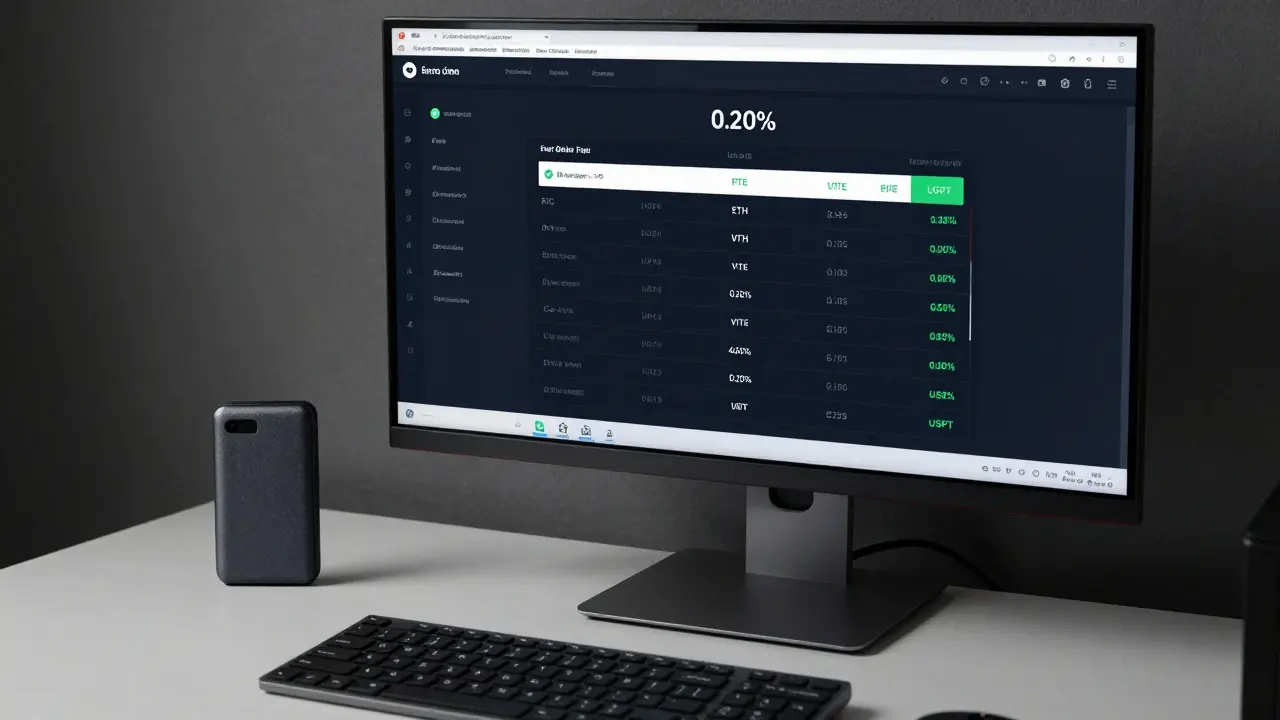
Let’s talk about the numbers, because that is what ultimately affects your bottom line. ViteX charges a flat trading fee of 0.20% for both makers (those who provide liquidity by placing limit orders) and takers (those who remove liquidity by executing existing orders). While some centralized exchanges offer maker rebates or lower tiers for high-volume whales, 0.20% is highly competitive for a decentralized platform. When you factor in the zero gas fees, the effective cost per trade on ViteX is often lower than on major centralized venues.
However, the platform currently supports only four primary trading pairs:
- VITE (the native token of the Vite blockchain)
- BTC (Bitcoin)
- ETH (Ethereum)
- USDT (Tether)
This limited selection is a significant constraint. If you are looking to trade altcoins, stablecoin pairs beyond USDT, or emerging DeFi tokens, ViteX will not serve your needs right now. Furthermore, the exchange currently supports limit orders exclusively. You cannot place market orders to buy instantly at the best available price, nor can you set stop-loss orders to automatically exit a position if the market moves against you. The team has indicated that market orders and stop-loss functionality are planned for future updates, but as of mid-2026, these features remain absent.
| Feature | ViteX (DEX) | Typical Centralized Exchange |
|---|---|---|
| Custody | Non-custodial (You hold keys) | Custodial (Exchange holds keys) |
| Gas Fees | Zero | N/A (Internal ledger) |
| Trading Fee | 0.20% (Flat) | 0.10% - 0.50% (Tiered) |
| Order Types | Limit Only | Limit, Market, Stop-Loss, OCO |
| Transaction Speed | < 1 Second | Instant (Internal) |
| Regulatory Oversight | Limited / None | Varies by Jurisdiction |
The VX Token Ecosystem: More Than Just Currency
Every decentralized ecosystem needs a native token to incentivize participation, and ViteX uses the VX token for this purpose. Unlike tokens that are merely speculative assets, VX serves functional roles within the ViteX environment. It is used for staking, governance, and receiving dividends.
One of the most attractive aspects of holding VX is the dividend distribution mechanism. Smart contracts automatically distribute rewards to users who stake their tokens. To qualify for these dividends, you must stake a minimum of 10 VX tokens in your exchange account. This model aligns the interests of long-term holders with the health of the platform. As trading volume increases, the value proposition of holding VX strengthens.
You can acquire VX through five distinct methods, collectively referred to as "mining" in the ViteX context:
- Trading as Mining: Earn VX by actively trading on the platform.
- Staking as Mining: Lock up VX tokens to earn passive rewards.
- Market-making as Mining: Provide liquidity to the order books.
- Referring as Mining: Invite new users to the ecosystem.
- Listing as Mining: Participate in the listing process for new coins.
This multi-faceted approach encourages diverse participation. Whether you are an active trader, a passive investor, or a community builder, there is a pathway to earn VX. However, remember that staking involves locking your assets, which reduces liquidity. Ensure you understand the unstaking periods and potential price volatility before committing significant capital.
Security and User Control
In the world of crypto, security is paramount. ViteX adopts a non-custodial model, meaning you retain control over your private keys at all times. The platform utilizes locally stored key storage, ensuring that your credentials never leave your device unless you explicitly authorize a transaction. This eliminates the risk of exchange hacks resulting in total loss of funds, a common fear with centralized platforms.
Smart contracts handle critical functions such as dividend distribution and order matching. These contracts are publicly accessible, allowing developers and auditors to inspect the code for vulnerabilities. Transparency is a core tenet of the ViteX philosophy. Additionally, the platform offers fiat gateway integration and credit card purchase options, bridging the gap between traditional finance and decentralized trading. Over-the-counter (OTC) trading services are also available for larger transactions, providing flexibility for institutional or high-net-worth individuals.
Despite these robust measures, the lack of specific regulatory oversight presents a double-edged sword. On one hand, it ensures privacy and accessibility for users globally. On the other hand, it means there is no external body to appeal to in case of disputes, smart contract bugs, or operational failures. Users must exercise due diligence and assume full responsibility for their assets.
User Experience and Community Feedback
Technology means little if the interface is unusable. ViteX has received generally positive feedback regarding its user experience. The platform maintains a clean, intuitive design that accommodates both beginners and experienced traders. Navigation is straightforward, and the dashboard provides clear visibility into open orders, trade history, and asset balances.
Users particularly praise the absence of gas fees and the competitive 0.20% trading rate. Cost-conscious traders appreciate that their profits are not eroded by network congestion. The sub-second confirmation times also contribute to a smooth trading experience, eliminating the anxiety of pending transactions.
However, complaints do exist. The most frequent criticism relates to customer support. ViteX primarily relies on website documentation and community channels for assistance. There is no dedicated phone line or instant email support team. For complex issues, users may find themselves waiting for responses in Discord or Telegram groups. This can be frustrating when urgent problems arise. Additionally, the limited number of trading pairs frustrates users who want to diversify their portfolios without moving funds to other platforms.
Is ViteX Right for You in 2026?
ViteX occupies a specific sweet spot in the crypto market. It is ideal for traders who prioritize speed, low costs, and self-custody, and who are comfortable with a limited selection of major assets. If you frequently trade BTC, ETH, or VITE against USDT, and you dislike paying gas fees, ViteX offers a compelling alternative to both centralized exchanges and Ethereum-based DEXs.
Conversely, if you require advanced order types like stop-losses, want to trade hundreds of altcoins, or prefer the safety net of regulated customer support, ViteX may not meet your needs yet. The platform is still evolving, with plans to expand order types and potentially increase liquidity. Keep an eye on their roadmap for updates on market orders and additional trading pairs.
Ultimately, ViteX demonstrates that decentralized exchanges can compete with centralized ones in terms of performance and cost. By leveraging DAG technology and a thoughtful tokenomics model, it provides a viable option for the modern crypto trader. Just remember to start small, familiarize yourself with the staking mechanisms, and always verify the latest feature set before committing large amounts of capital.
What is the minimum amount required to stake VX tokens for dividends?
To receive dividend rewards on ViteX, you must stake a minimum of 10 VX tokens in your exchange account. This requirement ensures meaningful participation while remaining accessible to average users.
Does ViteX charge gas fees for transactions?
No, ViteX completely eliminates gas fees for trading activities. This is one of its key advantages over Ethereum-based decentralized exchanges, making it cost-effective for high-frequency traders.
Can I use market orders on ViteX?
Currently, ViteX only supports limit orders. Market orders and stop-loss orders are planned for future implementation but are not available as of mid-2026. Users must manually set price limits for all trades.
Which cryptocurrencies can I trade on ViteX?
ViteX currently supports four primary trading pairs involving VITE, BTC, ETH, and USDT. This limited selection focuses on major assets rather than offering a wide variety of altcoins.
Is ViteX available for users in the United States?
ViteX restricts access for investors in the United States due to regulatory considerations. This limitation reduces its global reach but allows the platform to operate freely in other jurisdictions.
How secure is ViteX compared to centralized exchanges?
ViteX is non-custodial, meaning you control your private keys locally. This eliminates the risk of exchange hacks stealing your funds. However, it also means there is no customer support to recover lost keys, placing the burden of security entirely on the user.