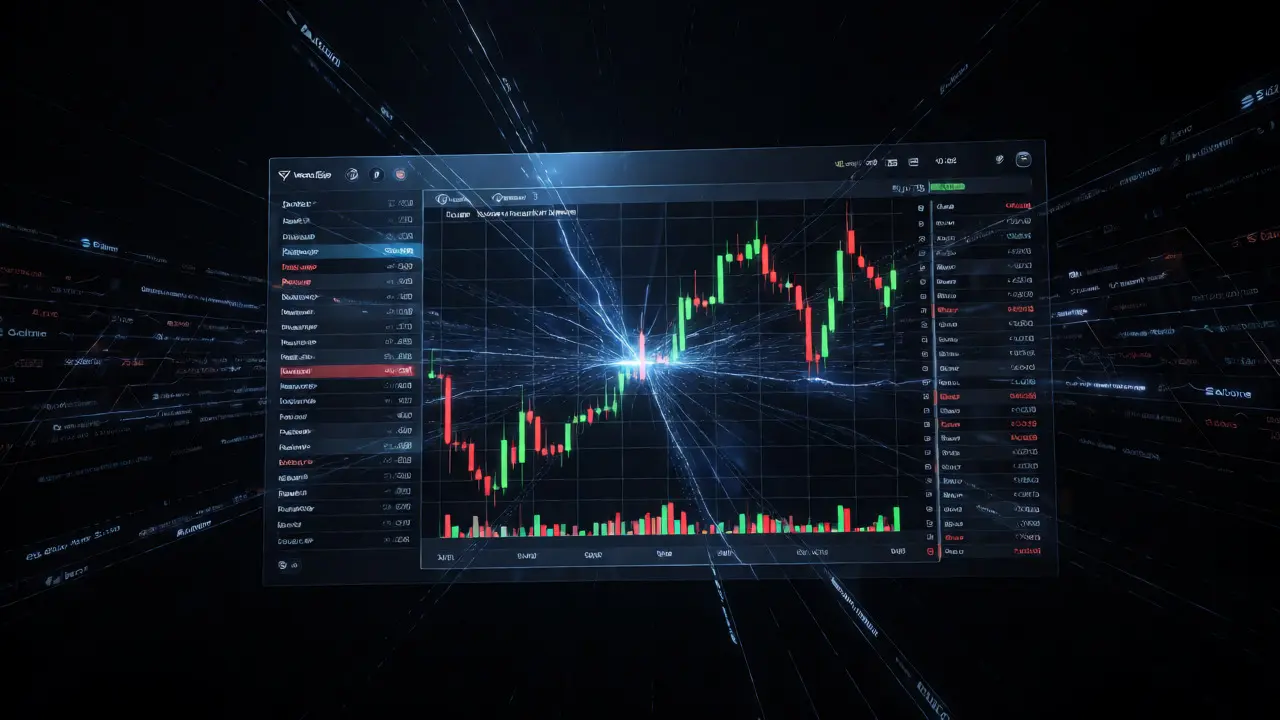
Imagine trading on a decentralized exchange that feels exactly like Binance or Coinbase but keeps your keys in your own wallet. That’s the promise of Vertex Protocol, a hybrid platform that recently shot up to become the second-largest perpetual DEX by average daily volume. It launched roughly 11 months ago and has already processed over $67 billion in derivatives volume. But is it actually better than the incumbents like dYdX or Hyperliquid? Or is it just another hype cycle?
This review breaks down exactly how Vertex works, why its cross-chain tech matters for your portfolio, and where it might fall short compared to traditional centralized exchanges.
What Exactly Is Vertex Protocol?
Vertex Protocol is an all-in-one decentralized finance (DeFi) platform that combines spot trading, perpetual futures contracts, and money market functionality into a single interface. Unlike most DEXs that force you to jump between different apps for lending, swapping, and leverage trading, Vertex puts everything under one roof. It operates primarily on Arbitrum, leveraging that network’s low fees and high speed, but its real magic lies in how it handles liquidity across other chains.
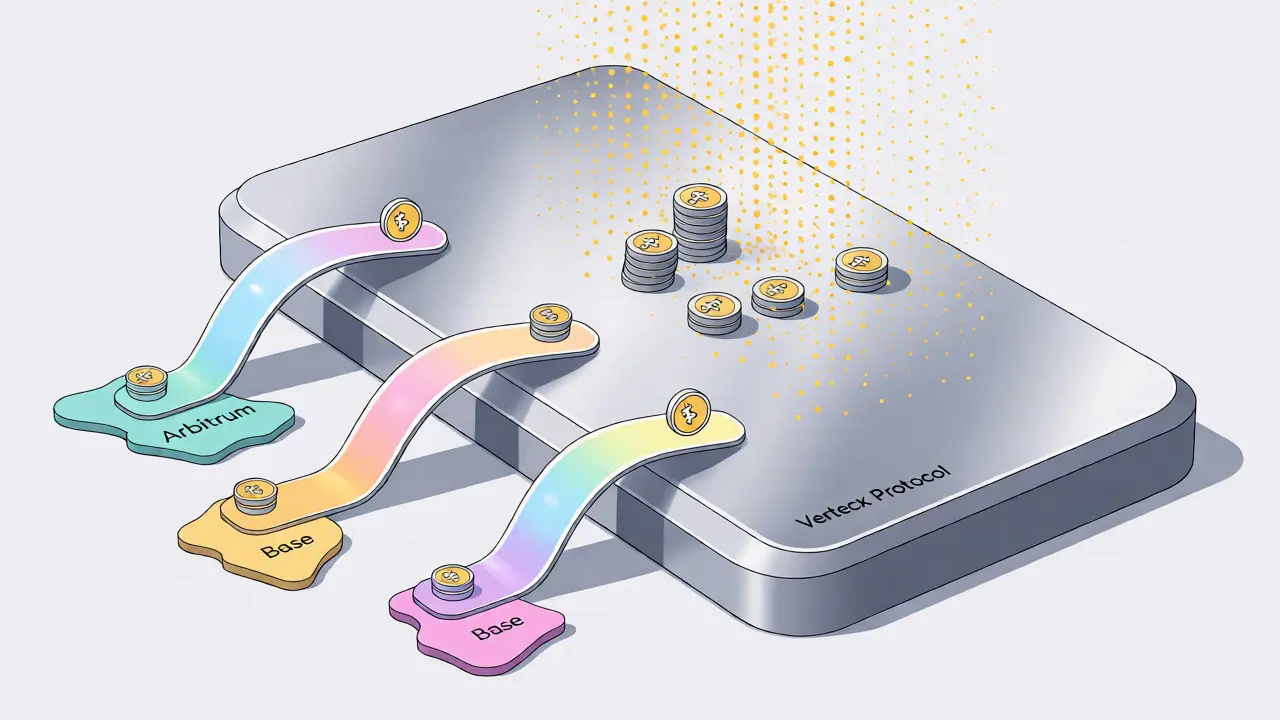
The core innovation here is Vertex Edge. Think of it as a universal adapter for blockchain liquidity. Normally, if you want to trade ETH on Arbitrum and SOL on Solana, you have to bridge assets manually, wait for confirmations, and deal with fragmented order books. Vertex Edge aggregates liquidity from multiple blockchains-including Arbitrum, Base, Sei, Blast, Mantle, and Sonic-into one unified order book. You see one price, one depth chart, and one execution path, regardless of which chain the underlying asset lives on.
How the Technology Works Under the Hood
You might wonder how a decentralized platform achieves the speed of a centralized one. The answer lies in a hybrid architecture. Vertex uses an off-chain order book for matching orders, which allows for latency as low as 5-15 milliseconds. This is crucial because when you’re using 20x leverage, a two-second delay can mean the difference between profit and liquidation.
Once an order is matched off-chain, settlement happens on-chain. This ensures transparency and security-you can verify every trade on the blockchain-but without the sluggishness of pure on-chain matching. A sequencer manages this process, hedging trader positions and rebalancing liquidity between chains automatically. If you’re used to the instant clicks of a CEX, this feels surprisingly similar, but you retain custody of your funds throughout the process.
| Feature | Vertex Protocol | dYdX | Hyperliquid | GMX |
|---|---|---|---|---|
| Maker Fee | 0% | ~0.02% | 0.045% | ~0.3% |
| Taker Fee | 0.02% | ~0.05% | 0.045% | ~0.3% |
| Max Leverage | 20x | 20x | 20x | 50x |
| Cross-Chain Support | Yes (Unified Orderbook) | Limited | No (Own L1) | Limited |
| Integrated Money Market | Yes | No | No | Partial |
Fees and Trading Costs: Can You Beat the Market?
If you trade frequently, fees are your biggest enemy. This is where Vertex really shines. The protocol offers zero percent maker fees and just 0.02 percent taker fees. To put that in perspective, many centralized exchanges charge around 0.1% per side, meaning you pay 0.2% round-trip. On Vertex, you pay significantly less, especially if you use limit orders (maker fees).
These rates apply to both spot trading and perpetual futures. For active traders, this cost structure alone can justify switching platforms. Plus, since there are no gas fees for placing orders (thanks to the off-chain matching), you aren’t bleeding money on every click. The only time you pay significant gas is when you deposit or withdraw funds, and even then, being on Arbitrum keeps those costs negligible compared to Ethereum mainnet.

The Integrated Money Market Advantage
Most DEXs are silos. You swap tokens on one app, lend them on another, and maybe stake on a third. Vertex integrates a money market directly into the trading interface. This means you can earn yield on idle balances while you wait for your next trade setup. If you hold USDC on Vertex, you can start earning interest immediately without moving funds to Aave or Compound.
The long-term vision involves unified interest rates across chains. Eventually, whether your USDC comes from Arbitrum, Base, or Blast, it should earn the same rate within the Vertex ecosystem. This improves capital efficiency dramatically. Instead of letting cash sit dead in your wallet, it works for you between trades. For sophisticated traders running delta-neutral strategies, this integration saves hours of manual management.
VRTX Tokenomics and Incentives
The native governance and utility token is VRTX. As of early 2026, there are approximately 528 million tokens in circulation out of a total supply of 1 billion. Holding VRTX isn’t just about speculation; it unlocks tangible benefits.
- Fee Discounts: Staking VRTX reduces your trading fees further.
- Governance: Token holders vote on protocol upgrades and treasury allocations.
- Rewards: Active traders and liquidity providers earn VRTX through periodic competitions and staking programs.
The incentive structure is designed to align community interests with protocol growth. By locking VRTX for extended periods, users receive boosted rewards, encouraging long-term holding rather than quick flips. However, keep an eye on the circulating market cap, which hovered around $2 million during our review period. This suggests significant room for growth if adoption continues, but also implies higher volatility compared to established giants.
User Experience and Accessibility
Does it feel good to use? Generally, yes. The interface is clean and professional, catering to both retail users and institutional desks. You get detailed charting tools, granular order management, and support for market, limit, and stop orders. There’s no dedicated mobile app yet, so you’ll need to access it via a web browser on your phone. While not ideal for some, modern mobile browsers handle the WebGL-heavy charts reasonably well.
Onboarding is straightforward if you’re already comfortable with Web3 wallets like MetaMask or Rabby. You connect your wallet, deposit assets directly to Arbitrum, and start trading. No KYC headaches, no bank transfers. Just pure crypto-native interaction. The risk engine runs in the background, monitoring positions and executing liquidations automatically if collateral drops below maintenance margins.
Who Should Use Vertex Protocol?
Vertex isn’t for everyone. Here’s a quick breakdown:
- Active Traders: If you scalp or swing trade with leverage, the low fees and fast execution make Vertex a top contender.
- Multi-Chain Users: If you hold assets on Sei, Base, or Blast and hate bridging, Vertex Edge solves that pain point.
- DeFi Purists: If you want CEX-like performance without giving up custody, this is one of the best options available right now.
Conversely, if you prefer fiat on-ramps or need a fully regulated environment with customer support phone lines, a centralized exchange might still be safer for you. Vertex requires basic self-custody knowledge and comfort with smart contract risks.
Is Vertex Protocol safe to use?
Vertex Protocol uses audited smart contracts and on-chain settlement, which provides transparency and security. However, like all DeFi protocols, it carries smart contract risk. Users should always interact with the official website and verify contract addresses before depositing large amounts.
Do I need a specific wallet to trade on Vertex?
You need a Web3 wallet compatible with the Arbitrum network, such as MetaMask, Rabby, or WalletConnect-supported wallets. Ensure you have some ARB or ETH for gas fees when withdrawing funds.
What is the maximum leverage available on Vertex?
The maximum leverage for perpetual futures contracts on Vertex Protocol is 20x. This applies to major pairs like BTC/USD and ETH/USD. Lower leverage is recommended for volatile altcoins to avoid premature liquidation.
Can I earn passive income on Vertex?
Yes. Vertex features an integrated money market where you can deposit stablecoins or other assets to earn yield. Additionally, staking VRTX tokens provides fee discounts and governance rights, while liquidity providers can earn rewards from trading fees.
How does Vertex compare to Hyperliquid?
Both offer low fees and fast execution. Hyperliquid runs on its own Layer-1 blockchain, while Vertex operates on Arbitrum with cross-chain aggregation. Vertex’s advantage is its unified liquidity across multiple chains (Base, Sei, etc.), whereas Hyperliquid is more isolated to its own ecosystem.