You’ve probably seen the hype. Social media feeds are flooded with promises of free SHIBSC tokens, claiming to be the next big thing in the Shiba Inu ecosystem on the Binance Smart Chain. It sounds too good to be true, right? Well, it is. If you are looking for details on how to claim this specific airdrop, the most important detail you need to know is that SHIBSC is not a legitimate token associated with the official Shiba Inu project. Engaging with these claims puts your wallet and private keys at serious risk.
The cryptocurrency space is littered with copycat projects that borrow the names of successful tokens like Shiba Inu or Dogecoin to trick inexperienced investors. This article breaks down why the SHIBSC airdrop is likely a scam, explains how these fraudulent schemes work, and teaches you how to verify legitimate opportunities so you can keep your digital assets safe.
Why SHIBSC Is Not a Legitimate Shiba Inu Token
To understand why you should avoid the SHIBSC airdrop, we first need to look at what makes a Shiba Inu ecosystem project legitimate. The original SHIB token was created by an anonymous developer known as "Ryan" or "The Shiboy" in August 2020. Since then, the community has grown, and the team has launched several verified sub-projects and tokens. However, none of them are called SHIBSC.
Legitimate expansions of the Shiba Inu ecosystem include Shibarium, a Layer-2 blockchain network designed to reduce transaction fees and increase speed for SHIB transactions. Other official tokens include BONE, used for governance within the ShibaSwap decentralized exchange, and LEASH, which serves as a rebase token. Recently, the team also introduced TREAT, a reward token for users engaging with the ecosystem.
There is no record of a token named SHIBSC or "Shiba BSC" being announced by the official Shiba Inu team. The name itself is a red flag. "BSC" stands for Binance Smart Chain (now called BNB Chain). While SHIB exists primarily on the Ethereum network and its Layer-2 solution Shibarium, scammers often create fake versions of popular tokens on cheaper networks like BSC because it costs very little to deploy a malicious smart contract there. They use the name "Shiba BSC" to confuse people into thinking it is an official bridge or version of SHIB on that network.
| Feature | Official Shiba Ecosystem | Fake Projects (e.g., SHIBSC) |
|---|---|---|
| Announcement Source | Official X (Twitter) account (@Shibtoken), shibatoken.com | TikTok ads, Telegram groups, unsolicited DMs |
| Token Contract | Verified on Etherscan/Shibarium Explorer | Often unverified or mimics real contracts closely |
| Network | Ethereum, Shibarium | Binance Smart Chain (BSC), Polygon (often fake bridges) |
| Team Identity | Known developers (e.g., Lucie, Ryan) | Anonymous, using stolen photos or AI-generated avatars |
| Requirement | Holding SHIB in non-custodial wallets | Connecting wallet to approve unlimited spending |
How These Airdrop Scams Work
Understanding the mechanics behind these scams helps you recognize them before you lose money. Scammers don’t just give away tokens; they are harvesting value from your wallet. Here is the typical lifecycle of a fake airdrop like SHIBSC:
- The Hook: You see an ad on social media or receive a direct message claiming you are eligible for a massive airdrop. The visuals usually look professional, mimicking the branding of the real Shiba Inu project.
- The Landing Page: You click a link that takes you to a website that looks almost identical to the official Shiba Inu site. Small details might be off, like a slightly different URL (e.g., shib-bonus.com instead of shibatoken.com).
- The Wallet Connection: To "claim" your tokens, you are asked to connect your crypto wallet, such as MetaMask, Trust Wallet, or Ledger.
- The Approval Trap: This is the critical moment. The site asks you to sign a transaction. It might say "Claim Airdrop," but in the background, the code requests permission to spend up to 10,000 ETH or all your SHIB tokens. If you approve this, the scammer gains control over your assets.
- The Drain: Once approved, the scammer’s bot instantly transfers all compatible tokens from your wallet to their address. By the time you realize something is wrong, your funds are gone.
In some cases, the scam is simpler. They send you actual worthless tokens labeled "SHIBSC" to your wallet. When you try to sell them, you have to interact with a malicious smart contract to swap them back to USDT or ETH, which triggers the approval trap mentioned above.
Red Flags to Watch For
You don’t need to be a blockchain expert to spot a scam. There are clear warning signs that indicate an airdrop is fraudulent. If you encounter any of these, walk away immediately.
- Unsolicited Contact: The official Shiba Inu team will never DM you on Twitter, Telegram, or Discord offering free tokens. Legitimate airdrops are public announcements, not personal invites.
- Urgency: Scammers create false urgency with phrases like "Only 24 hours left!" or "First 1,000 users only!" This pressure is designed to make you act without thinking.
- Spelling and Grammar Errors: Professional projects have marketing teams. If the website or announcement has poor grammar, awkward phrasing, or broken links, it is likely a scam.
- Unfamiliar Networks: As mentioned, SHIB is native to Ethereum. While bridges exist, a new token suddenly appearing on BSC with no prior announcement from the core team is suspicious.
- Requests for Private Keys: No legitimate service will ever ask for your private key or seed phrase. If a site asks for this, it is 100% a scam.
How to Verify Legitimate Shiba Inu Airdrops
Not all airdrops are scams. The Shiba Inu ecosystem has conducted several legitimate distributions in the past. Knowing how to verify them protects you while allowing you to participate in genuine opportunities.
For example, in early 2025, the official team announced the TREAT token airdrop. This was a legitimate event because it followed strict verification protocols. Users had to submit their exchange user IDs through the official Shiba Inu platform. The announcement came directly from Lucie, a recognized member of the Shiba Inu marketing team, on the official X account. Furthermore, major news outlets covered the event, and the token was listed on reputable exchanges like KuCoin and Gate.io.
Another verified event involved PHIL tokens for SHIB holders. This airdrop targeted users who held SHIB in non-custodial wallets like MetaMask or Ledger at a specific block height. It excluded centralized exchange holders, ensuring only active community members benefited. The rules were transparent, published on official channels, and did not require connecting wallets to unknown dApps.
To verify any future airdrop, follow these steps:
- Check the Source: Go directly to the official Shiba Inu website (shibatoken.com) or their verified X account (@Shibtoken). Do not trust links from third-party sites or social media ads.
- Read the Whitepaper or Blog Post: Legitimate projects publish detailed technical documents explaining the purpose of the token, the distribution mechanism, and the eligibility criteria.
- Verify the Contract Address: Always cross-reference the token contract address with official announcements. You can check if a contract is verified on Etherscan or BscScan. If the contract is not verified, do not interact with it.
- Use Reputable News Outlets: Check if established crypto news platforms like CoinDesk, Cointelegraph, or Decrypt have reported on the airdrop. Scams rarely get coverage from major media.
Protecting Your Crypto Assets
Prevention is better than cure. Adopting good security habits ensures that even if you accidentally click a bad link, your main assets remain safe.
First, use a separate wallet for risky interactions. Keep your long-term holdings in a hardware wallet like a Ledger or Trezor. Use a secondary software wallet with minimal funds for interacting with new decentralized applications (dApps) or claiming airdrops. If this secondary wallet gets compromised, your main savings are untouched.
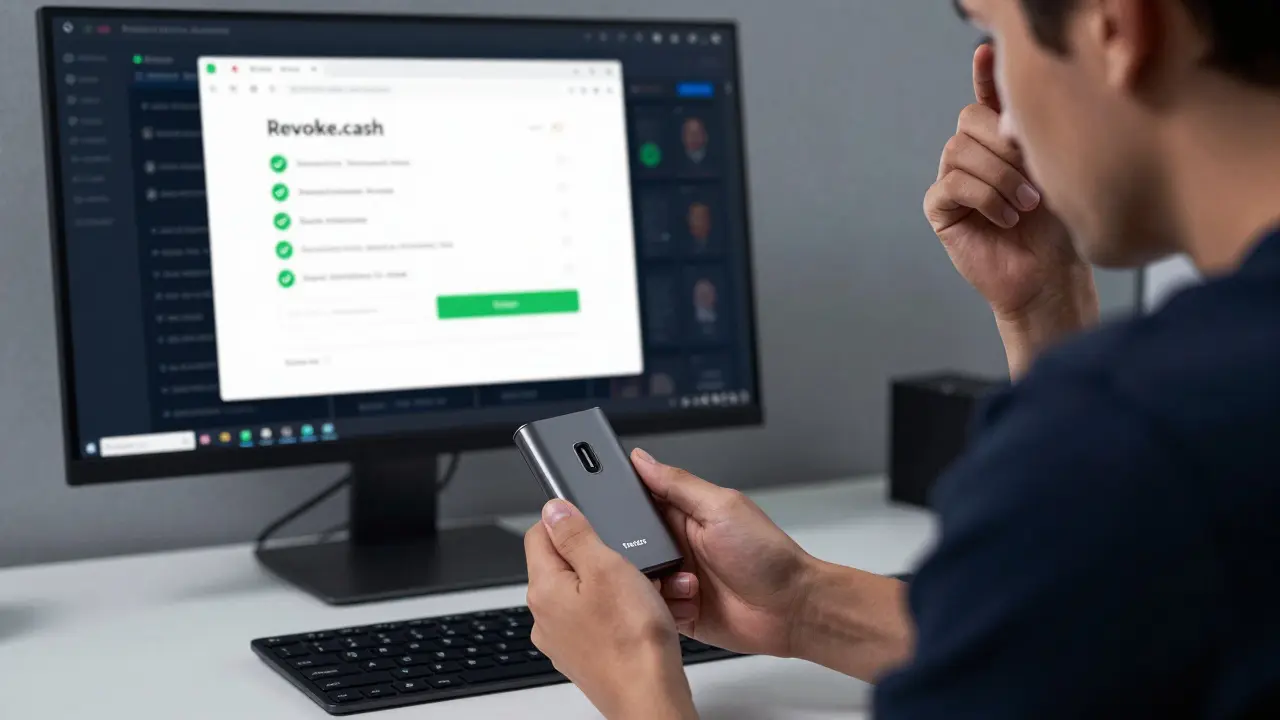
Second, revoke permissions regularly. If you have connected your wallet to various dApps in the past, some may still have approval to spend your tokens. Use tools like Revoke.cash to audit and remove unnecessary approvals. This prevents old connections from being exploited by new scams.
Third, enable two-factor authentication (2FA) on all your accounts, especially email and exchange accounts. Use an authenticator app rather than SMS, as SIM-swapping attacks are common targets for high-value crypto holders.
What to Do If You’ve Already Interacted with SHIBSC
If you suspect you have fallen victim to the SHIBSC scam or similar fraud, act quickly. First, move any remaining funds from the compromised wallet to a new, secure wallet immediately. Generate a new seed phrase for this new wallet; do not reuse the old one.
Next, check your transaction history on a block explorer like Etherscan or BscScan. Look for outgoing transactions to unknown addresses. If you see unauthorized transfers, document them with screenshots. While recovering stolen crypto is difficult, reporting the incident to local authorities and the platform where the scam originated (like Twitter or TikTok) can help shut down the scammer’s operations.
Finally, warn others. Share your experience on community forums like Reddit’s r/cryptocurrency or the official Shiba Inu Discord. Helping others avoid the same mistake is valuable contribution to the community’s safety.
Is SHIBSC a real token?
No, SHIBSC is not a real or official token within the Shiba Inu ecosystem. It is a fraudulent project designed to mimic legitimate Shiba Inu tokens and steal funds from unsuspecting users.
How can I tell if a Shiba Inu airdrop is legitimate?
Legitimate airdrops are announced exclusively through official channels like the @Shibtoken X account and shibatoken.com. They provide clear technical details, verified contract addresses, and do not require you to connect your wallet to unknown sites or share private keys.
What happened to the TREAT token airdrop?
The TREAT token airdrop was a legitimate event in January 2025. It rewarded users who engaged with the Shiba Inu ecosystem. Participation required submitting verified exchange IDs through the official platform, and the token was listed on major exchanges like KuCoin and Bitget.
Can I recover funds lost to a fake airdrop?
Recovering funds from crypto scams is extremely difficult due to the irreversible nature of blockchain transactions. However, you should report the scam to relevant authorities and platforms to prevent further victims. Always move remaining funds to a new wallet immediately.
Why do scammers use the name "Shiba BSC"?
Scammers use names like "Shiba BSC" to confuse users. Since Shiba Inu is popular, adding "BSC" (Binance Smart Chain) makes it sound like an official version of the token on a different network. This exploits the lack of technical knowledge among some investors to gain trust.