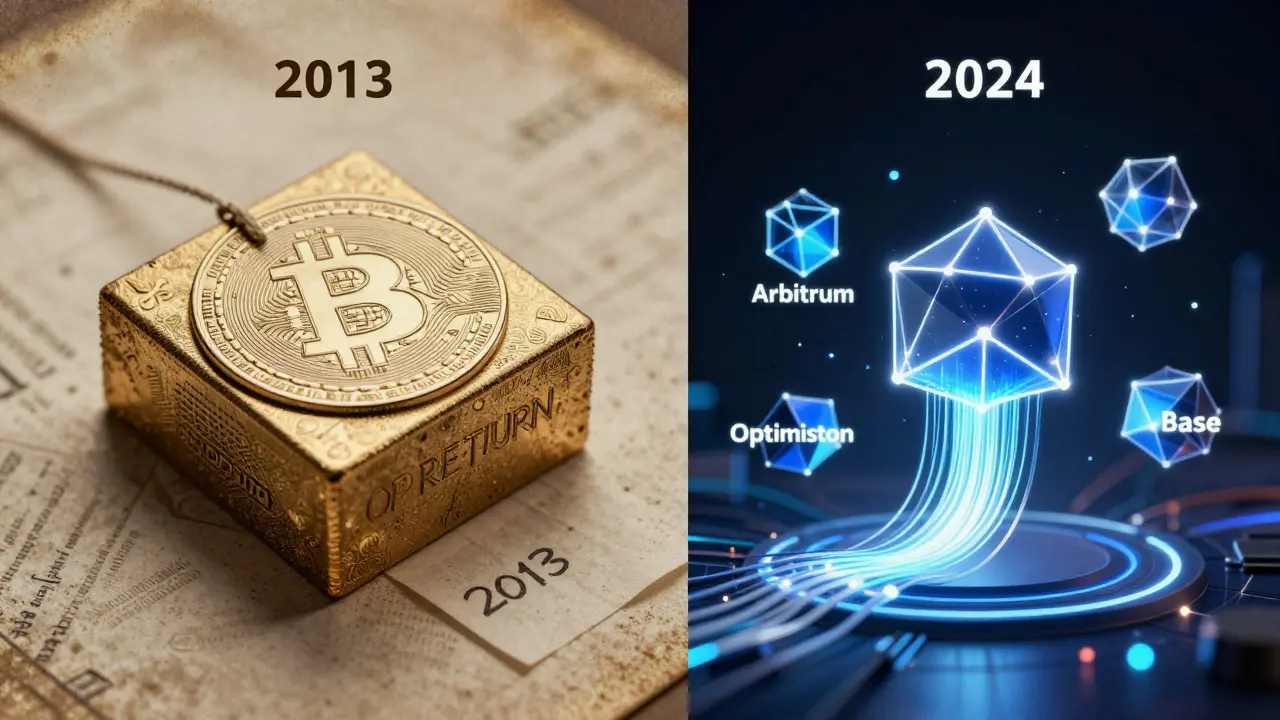
Have you ever searched for a crypto coin only to find two completely different projects with the exact same name and ticker symbol? If you typed "OMNI" into your wallet or exchange recently, you probably hit that wall of confusion. It’s a frustrating situation, but it’s also one of the most common traps in the cryptocurrency world. You aren’t looking at a glitch; you are looking at a historical collision.
When people ask What is Omni (OMNI) crypto coin, they are usually asking about one of two very different things. There is the original Omni Layer, which is a pioneering protocol built on top of the Bitcoin blockchain launched in 2013. Then there is the new kid on the block, Omni Network, which is a modern Layer 1 blockchain focused on connecting Ethereum rollups, launched in 2024. They share the symbol OMNI, but they operate in entirely different universes. Mixing them up could cost you money or lead you down a rabbit hole of outdated technology. Let’s clear this up so you know exactly what you are dealing with.
The Original: Omni Layer on Bitcoin
To understand where we are going, we have to look back. Omni Layer was created by J.R. Willett and launched on July 31, 2013. Back then, Bitcoin was just a digital currency. People wanted more-they wanted tokens, contracts, and decentralized applications. But Bitcoin didn’t have the tools for that yet. Enter Omni Layer. It was the first major attempt to add smart contract functionality to Bitcoin without changing Bitcoin itself.
How did it work? It used a clever trick called OP_RETURN. This allowed developers to attach small pieces of data-metadata-to Bitcoin transactions. Think of it like writing a note on the envelope of a letter sent through the postal service. The letter (the Bitcoin transaction) still goes from A to B, but the note (the Omni data) tells the system something extra happened, like "User A sent 10 Tokens to User B."
- Launch Date: July 31, 2013
- Total Supply: Fixed at 2,000,000 OMNI tokens
- Technology: Built on Bitcoin’s UTXO model using OP_RETURN
- Security: Inherits Bitcoin’s Proof-of-Work security
This approach made Omni Layer historically significant. It predated Ethereum by two years. It proved you could build financial instruments on top of a blockchain. However, time has not been kind to it. Because it relies on Bitcoin’s slow block times (about 10 minutes per block) and limited throughput (7 transactions per second), it feels sluggish compared to modern standards. Plus, paying Bitcoin network fees to move Omni tokens can get expensive fast. One user on Reddit noted paying $150 in BTC fees just to issue 10,000 tokens back in 2015. Today, daily trading volume for the original OMNI token is often less than $10,000 across all exchanges. It’s a relic, respected for its history but rarely used for active trading.
The Newcomer: Omni Network on Ethereum
Now let’s jump forward to 2024. A new project emerged with the same ticker: Omni Network. Don’t let the name fool you into thinking it’s an upgrade of the old Bitcoin protocol. It is not. This is a fresh project built for the Ethereum ecosystem. Its goal is to solve a massive problem facing Ethereum today: fragmentation.
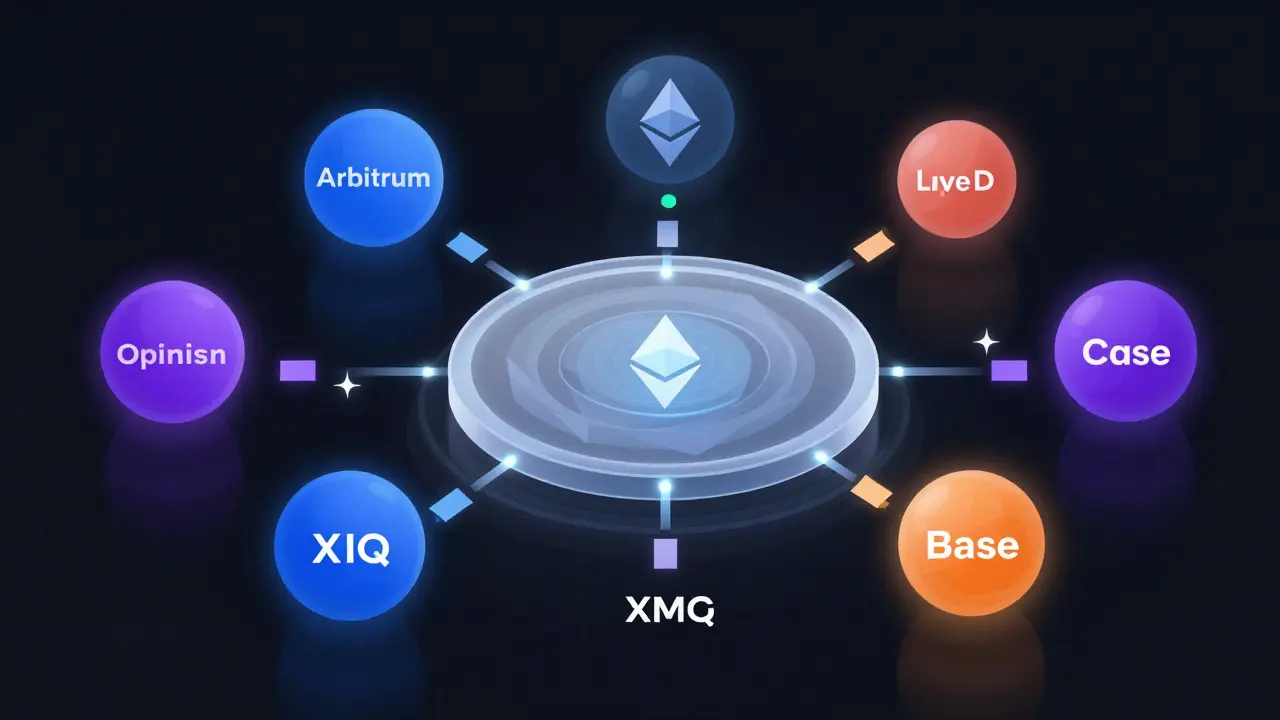
Ethereum is scaling up using "rollups"-layer-2 solutions like Arbitrum, Optimism, and Base that handle transactions faster and cheaper than the main Ethereum chain. But these rollups don’t talk to each other well. Moving assets between them is clunky, risky, and confusing. Omni Network aims to fix this by creating a unified messaging layer. It allows these isolated rollups to communicate seamlessly.
Here is how it works under the hood:
- XMsg Protocol: Omni introduces a standardized message format called XMsg. This ensures that when Rollup A wants to send data to Rollup B, they both speak the same language.
- Portal Contracts: These are smart contracts deployed on every connected rollup. They verify incoming messages and ensure the data is authentic before executing actions.
- Dual Staking: Security comes from two sources. First, it uses EigenLayer to restake ETH, borrowing Ethereum’s existing security. Second, users stake OMNI tokens. The more OMNI staked, the higher the security budget for the network.
The technical team behind Omni Network includes Douglas Leonard, Michael Chary, and Kevin Ho. They launched their mainnet in Q2 2024. Unlike the static nature of Omni Layer, this network is evolving rapidly. It targets high performance, claiming throughput capabilities exceeding 10,000 TPS across its connected rollups. For developers, this means building an app once and having it work across multiple Ethereum layers without rewriting code for each specific chain.

Head-to-Head: Why the Confusion Matters
If you are holding OMNI tokens, you need to know which one you have. They are not interchangeable. Sending funds to the wrong address type or trying to use the wrong wallet interface will result in lost assets or failed transactions. Let’s break down the key differences side-by-side.
| Feature | Omni Layer (Old) | Omni Network (New) |
|---|---|---|
| Base Chain | Bitcoin | Ethereum Ecosystem |
| Primary Use Case | Tokenization on Bitcoin | Cross-rollup Interoperability |
| Consensus | Bitcoin Proof-of-Work | Restaked ETH + Staked OMNI |
| Transaction Speed | ~7 TPS (Bitcoin limit) | >10,000 TPS (Aggregate) |
| Total Supply | 2,000,000 | 100,000,000 |
| Market Status (2024) | Niche/Historical | Growing/Active Development |
The market reaction highlights this divide. When Omni Network launched its mainnet in May 2024, it saw daily trading volumes spike to $150 million. In contrast, the original Omni Layer sits with a market cap of around $1.2 million, representing less than 0.01% of the total crypto market. Experts like Dr. Garrick Hileman from Cambridge Centre for Alternative Finance have described Omni Layer as "historically significant but technologically obsolete." Meanwhile, Vitalik Buterin, Ethereum’s co-founder, has acknowledged the potential value of projects like Omni Network in solving Ethereum’s fragmentation issues, though he warns about the complexity of cross-chain communication.
Which One Should You Care About?
Your answer depends entirely on your goals. Are you a historian or a builder?
If you are interested in the origins of smart contracts and want to see how early innovators hacked Bitcoin to do more than just send money, Omni Layer is fascinating. It’s a museum piece. You might hold it as a collectible, similar to owning a first-edition book. But don’t expect it to power your next DeFi strategy. The developer activity is minimal-only a handful of GitHub commits in recent quarters-and support is virtually non-existent.
If you are a developer, investor, or user looking to participate in the current wave of Ethereum scaling, Omni Network is where the action is. It addresses a real pain point: the hassle of moving assets between Arbitrum, Optimism, Base, and other L2s. By standardizing communication via XMsg, it reduces integration time for developers from weeks to days. For users, it promises smoother, safer cross-chain experiences. However, be aware that this technology is complex. Early feedback suggests a steep learning curve for those unfamiliar with EigenLayer and restaking mechanics.
Risks and Realities
No crypto investment is without risk, and the dual identity of OMNI adds an extra layer of caution.
For Omni Layer holders: The primary risk is liquidity and obsolescence. With such low trading volume, selling large amounts can crash the price. Furthermore, regulatory scrutiny on older ICO-era projects remains a concern. The SEC’s framework for analyzing digital assets could potentially classify some legacy tokens as securities, depending on jurisdiction.
For Omni Network participants: The risks are technological and competitive. Cross-chain bridges and interoperability protocols have historically been prime targets for hackers. While Omni Network uses robust security models like EigenLayer, any bug in the Portal Contracts or XMsg protocol could lead to exploits. Additionally, it faces fierce competition from established players like LayerZero and Hyperlane. As Ethereum core developer Danny Ryan noted, adding complexity to the stack always introduces new attack vectors. You are betting on Omni Network’s ability to execute its roadmap, including the upcoming "Apex" upgrade scheduled for Q1 2025, better than its rivals.
Final Thoughts
The story of OMNI is a reminder of how fast crypto moves. A protocol that pioneered tokenization in 2013 shares a name with a cutting-edge interoperability solution in 2026. They are cousins at best, strangers in practice. Always check the contract address, the underlying blockchain, and the project’s whitepaper before you buy or bridge. Never assume the ticker symbol tells the whole story. In crypto, context is everything.
Is Omni Layer the same as Omni Network?
No, they are completely separate projects. Omni Layer is a 2013 protocol built on Bitcoin for tokenization. Omni Network is a 2024 project built on Ethereum for connecting different rollups. They share the ticker OMNI but have different technologies, teams, and purposes.
Which OMNI token should I buy?
It depends on your goals. If you want exposure to modern Ethereum infrastructure and interoperability, look into Omni Network (the newer project). If you are collecting historical crypto artifacts, you might consider Omni Layer. However, Omni Network currently has significantly higher activity, development, and market interest.
How does Omni Network secure its transactions?
Omni Network uses a dual staking model. It leverages EigenLayer to restake ETH, inheriting Ethereum's security, and also requires users to stake OMNI tokens. This combination creates a layered security budget that grows as more participants join the network.
Can I convert Omni Layer tokens to Omni Network tokens?
No, there is no official conversion mechanism. They are distinct assets on different blockchains. You would need to sell one on an exchange and buy the other separately, ensuring you select the correct pair and network during the transaction.
What is the maximum supply of OMNI tokens?
The supplies differ greatly. Omni Layer has a fixed supply of 2,000,000 tokens. Omni Network has a maximum supply of 100,000,000 tokens, with roughly 10% circulating at genesis.
Is Omni Layer still being developed?
Development on Omni Layer has largely stalled. It receives very few updates and has minimal developer activity compared to modern platforms. It is considered a legacy protocol with niche historical usage rather than an actively evolving platform.
What is XMsg in Omni Network?
XMsg is a standardized message format introduced by Omni Network. It allows different Ethereum rollups (like Arbitrum or Optimism) to communicate with each other securely and efficiently, solving the problem of fragmented ecosystems.