
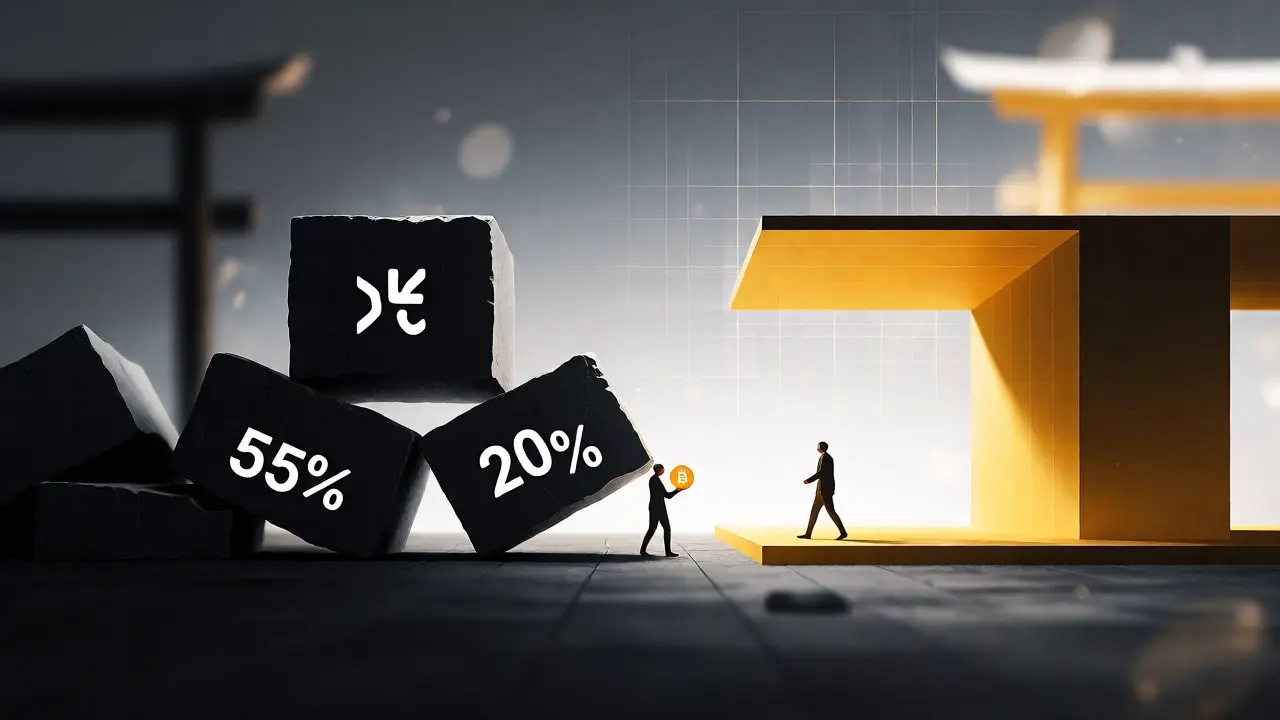
If you’ve been trading Bitcoin in Tokyo or holding Ethereum in Osaka, you know the pain. For years, Japan held the dubious title of having one of the harshest cryptocurrency tax regimes on the planet. We’re talking about effective rates hitting 55%. Yes, fifty-five percent. That’s more than what you’d pay on your salary if you were earning top-tier wages, and way more than the flat 20% charged on stock profits. It felt like the government was punishing you for being early to digital assets.
But here is the good news: the tide is turning. As of late 2024 and moving into 2026, Japan is actively dismantling this punitive system. The ruling party has pushed for a shift to a flat 20% tax rate, aligning crypto with traditional equities. This isn’t just a minor tweak; it’s a strategic move to stop the brain drain of talent and capital to Singapore and Dubai. If you are a Japanese resident or an expat looking at the Asian market, understanding this transition is critical for your portfolio’s survival.
The Old Regime: Why 55% Was a Killer
To understand why everyone was complaining, you have to look at how the old system worked. Under the Payment Services Act, Japan's National Tax Agency (NTA) classified crypto not as currency, but as "miscellaneous income." This sounds bureaucratic, but it had massive financial implications.
In Japan, miscellaneous income is taxed progressively alongside your regular salary. There were five tax brackets ranging from 5% to 45%. On top of that national tax, you paid a 10% inhabitant tax (split between prefectural and municipal levels). So, if you made a significant profit selling Bitcoin, you could easily hit that 45% + 10% ceiling. Unlike stocks, where long-term holdings might get preferential treatment or lower rates, crypto got no such break. Whether you held your coins for one day or ten years, the taxman took his cut based purely on your total annual income bracket.
This created a bizarre disincentive. Traders reported on forums like r/CryptoJapan that their net profits vanished after taxes. A trader making 30 million JPY in gains might see nearly half of it disappear. This lack of distinction between short-term speculation and long-term investing made Japan uncompetitive compared to neighbors like South Korea or global hubs like Switzerland.
The Shift to a Flat 20%
The Liberal Democratic Party (LDP) recognized that this structure was stifling innovation. By December 2023, they announced plans to replace the progressive system with a flat 20% rate. This proposal aims to treat crypto assets similarly to securities. The goal? To make Japan attractive again for Web3 developers and investors.
The Financial Services Agency (FSA) published a discussion paper in April 2025 outlining this regulatory review. Minister of Finance Katsunobu Kato indicated that final decisions would be summarized by mid-2025, with implementation targeted for fiscal year 2026. This reform package includes more than just the rate change. It introduces loss carry-forward provisions. Previously, if you lost money in crypto, you couldn't easily offset those losses against future gains across different years. The new rules allow you to carry forward losses for three years. This is huge for managing risk in volatile markets.
| Feature | Old System (Pre-2026) | New Proposed System (2026+) |
|---|---|---|
| Tax Rate | Progressive: 15% to 55% | Flat: 20% |
| Classification | Miscellaneous Income | Separate Self-Assessment (similar to stocks) |
| Loss Carry Forward | Limited/None | 3 Years |
| Holding Period Benefit | None | Aligned with equity standards |
What Counts as a Taxable Event?
Even with the rate dropping, you still need to know when you actually owe money. The NTA has clear rules on what triggers a taxable event. Many beginners get tripped up here, thinking only selling for Yen counts. It doesn’t.
- Selling for Fiat: Obviously, if you sell BTC for JPY, you realize a gain or loss.
- Crypto-to-Crypto Trades: This is the big one. Swapping Bitcoin for Ethereum is treated as selling Bitcoin and buying Ethereum. You must calculate the gain/loss on the Bitcoin side at the moment of the swap.
- Spending Crypto: Buying a coffee or a car with crypto counts as a disposal. You pay tax on the appreciation since you bought the coins.
- Staking Rewards: These are generally taxed as miscellaneous income upon receipt, based on the fair market value at that time.
Conversely, buying crypto with fiat, holding it in your wallet, or transferring it between wallets you own are non-taxable events. However, keep detailed records. The burden of proof is on you.
Who Needs to File?
You don’t need to file every single transaction if your gains are small. The threshold is 200,000 JPY per year. If your total miscellaneous income from crypto (plus other side incomes) exceeds this amount, you must file a tax return. This applies to residents, including permanent residents.
There is a nuance for non-permanent residents. If you’ve lived in Japan for less than five years in the last decade, you might qualify for a simplified flat 20% tax on domestic-source income. This makes Japan surprisingly competitive for short-term expats who earn crypto gains while working remotely in Tokyo.
Compliance and Reporting Burdens
Japan takes compliance seriously. All exchanges operating in the country must register as Crypto-Asset Exchange Service Providers (CAESP). They follow strict KYC (Know Your Customer) rules and share data with tax authorities. This means the NTA likely knows about your trades before you even report them.
Software helps, but it’s not magic. Tools like Koinly saw a 210% spike in Japanese users recently because manual calculation is a nightmare. With multiple exchanges, DeFi interactions, and NFT sales, tracking cost basis accurately is tough. Remember, exchanges must keep records for seven years. If you lose your private keys or forget which exchange held which asset, you might face penalties during an audit.

Why Japan Is Making This Change
It’s not just about fairness; it’s about economics. Japan’s crypto market stagnated around $12.3 billion in 2024, capturing only 3.7% of the global market. Compare that to 8.2% in 2021. Capital fled to jurisdictions with friendlier rules. Singapore and the UAE became magnets for Japanese traders and blockchain startups.
The government wants to reverse this trend. Analysts predict the tax reform could boost the domestic market by 45-60% within three years. Imagine 1.2 to 1.8 million new retail investors entering the space because they aren’t terrified of losing half their profits to the state. This positions Japan to potentially reclaim its spot as Asia’s third-largest crypto market, behind only Singapore and South Korea.
Practical Tips for Investors
If you are navigating this transition, here is some concrete advice:
- Start Tracking Now: Don’t wait until 2026. Use software to log every trade from 2024 onwards. When the new rules kick in, you’ll need clean historical data to establish cost bases.
- Watch the Legislation: The exact date of implementation matters. Keep an eye on official announcements from the Financial Services Agency regarding the final passage of the bill.
- Consider Loss Harvesting: Once the 3-year carry-forward rule is active, strategically realizing losses can help offset future gains. Plan your exits accordingly.
- Consult a Specialist: General accountants often miss the nuances of DeFi and staking. Find a tax professional who specializes in Japanese crypto law.
The era of the 55% penalty is ending. Japan is trying to rebuild trust with the crypto community. For investors, this means better returns, simpler planning, and a reason to stay local rather than hopping flights to Southeast Asia.
Is the 20% flat tax already in effect?
Not yet. As of late 2024 and early 2025, the progressive system (up to 55%) is still largely in place. The reform is scheduled for implementation in fiscal year 2026, pending final parliamentary approval.
Do I pay tax if I just hold Bitcoin?
No. Holding cryptocurrency does not trigger a tax event in Japan. You only pay tax when you dispose of the asset-by selling it for fiat, trading it for another crypto, or using it to buy goods and services.
How does Japan's new tax rate compare to the US?
The proposed 20% flat rate in Japan is lower than the top US short-term capital gains rate (which matches ordinary income up to 37%). However, the US offers a lower long-term capital gains rate (0-20%) for assets held over a year. Japan's current proposal does not differentiate by holding period, so long-term holders might still find the US system slightly more advantageous depending on their bracket.
What happens if I don't report my crypto gains?
Japan has strict enforcement. Exchanges share data with the National Tax Agency. Failure to report can result in back taxes plus penalties and interest. In severe cases of evasion, criminal charges are possible, though rare for simple negligence.
Are staking rewards taxed differently?
Staking rewards are currently taxed as miscellaneous income at the time of receipt, based on the yen value of the reward. Future reforms may adjust how these are categorized, but for now, they add to your total taxable income for the year.