Imagine holding the keys to a billion-dollar vault in your pocket. Now imagine someone stealing that phone. In the world of cryptocurrency is a digital asset designed to work as a medium of exchange using cryptography to secure transactions, this scenario isn't just scary-it's catastrophic. For years, exchanges and institutional investors relied on software-based wallets, assuming firewalls were enough. Then came the hacks. Massive ones. The lesson learned was simple but expensive: if private keys touch an internet-connected server, they are vulnerable.
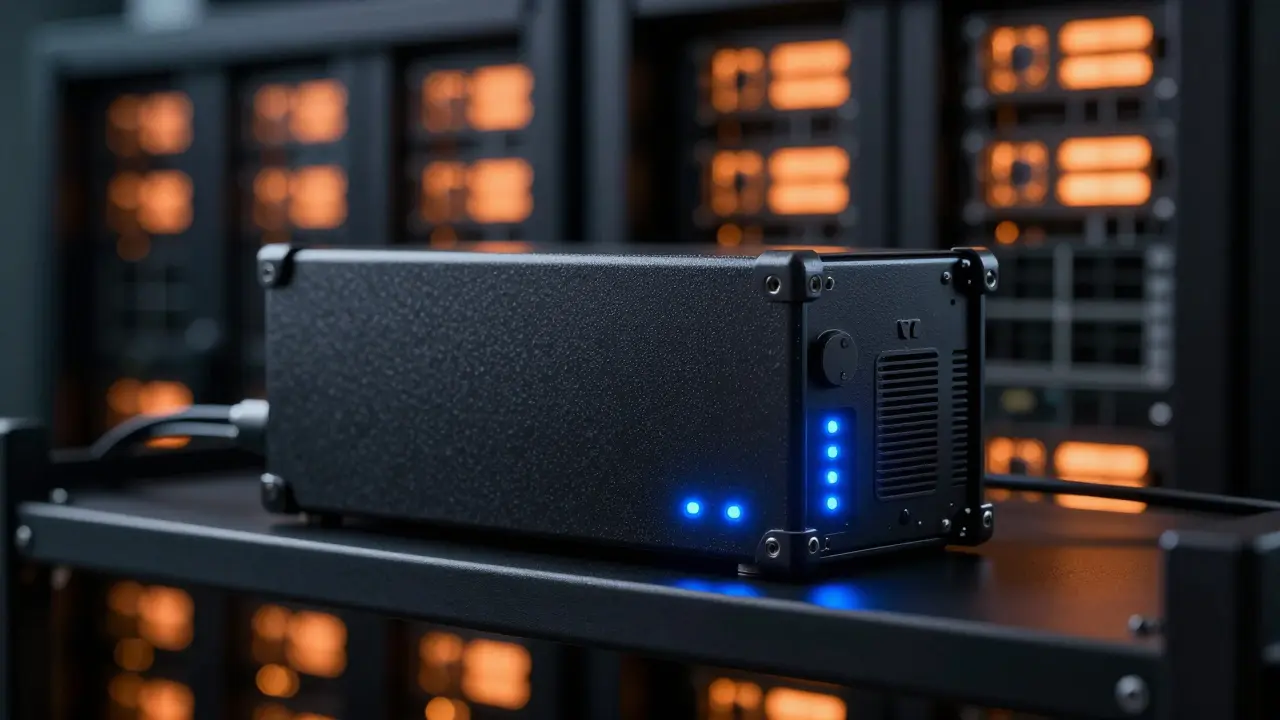
This is where the Hardware Security Module (HSM) steps in. Think of an HSM not as a piece of software you install, but as a physical fortress-a dedicated computer built solely to protect cryptographic keys. It doesn't browse the web, it doesn't run email clients, and it certainly doesn't let anyone peek at what’s inside. For any serious player in the blockchain space, understanding the benefits of an HSM is no longer optional; it’s the difference between staying in business and going bankrupt overnight.
The Physical Fortress: Tamper-Resistant Design
The core benefit of an HSM lies in its physical construction. Unlike a standard server rack sitting in a data center, an HSM is engineered to be a "trust anchor." These devices are hardened against physical intrusion. We’re talking about sensors that detect voltage drops, temperature spikes, or even the sound of a drill bit. If someone tries to open the casing, the module detects the breach instantly. What happens next? It wipes the memory. Poof. The keys are gone forever.
This physical separation is critical. In a traditional software setup, a hacker needs only one vulnerability in your code to steal your keys. With an HSM, the keys never leave the device. They don’t travel over the network. They don’t sit in plain text on a hard drive. All cryptographic operations-like signing a transaction-happen inside the sealed box. The outside world only sees the result: a digital signature. This isolation makes remote hacking virtually impossible because there is nothing to hack remotely. The attacker would need to physically break into the facility, bypass the guards, and defeat the tamper-evident seals, all while the device is monitoring every move.
True Randomness: The Entropy Advantage
You might think generating a random number is easy. Computers do it all the time, right? Wrong. Standard software uses pseudo-random number generators (PRNGs). These rely on algorithms that, given enough time and computing power, can be predicted. If an attacker can predict how your wallet generated its private key, they can derive the key themselves. It’s like having a combination lock that always uses multiples of three.
HSMs solve this with hardware-based entropy. They capture true randomness from physical processes-things like electronic noise or thermal fluctuations within the chip itself. This creates keys that are mathematically unpredictable. For cryptocurrency, where the security of your entire portfolio hinges on the uniqueness of your private key, this distinction is vital. An HSM ensures that every key generated is truly unique, eliminating the risk of key collision or prediction attacks that have plagued weaker software implementations.
Performance Under Pressure
Cryptographic operations are heavy. Signing thousands of Bitcoin transactions per second requires significant computational power. If you try to do this on a general-purpose server, you’ll bog down the system, slowing down user experiences and increasing latency. HSMs are specialized processors designed exclusively for cryptography. They offload these intense tasks from your main servers, freeing up resources for other applications.
Consider a high-frequency trading firm or a major exchange during market volatility. The volume of transactions spikes dramatically. An HSM can handle this load efficiently, ensuring that signatures are generated quickly and consistently. Some advanced models support clustering, allowing multiple HSMs to work together seamlessly. This scalability means your security infrastructure grows with your business without becoming a bottleneck. You get speed without sacrificing safety, which is a rare combination in cybersecurity.
| Feature | Software-Based Wallet | Hardware Security Module (HSM) |
|---|---|---|
| Key Storage | On server disk or RAM (vulnerable to malware) | Inside tamper-resistant hardware (isolated) |
| Randomness Source | Pseudo-random algorithms (predictable) | Physical entropy (true randomness) |
| Breach Response | Data may be copied before detection | Instant memory wipe upon tampering |
| Compliance | Difficult to meet strict standards | FIPS 140-2/3 validated out-of-the-box |
| Cost Model | Low upfront, high risk cost | High upfront, low long-term risk |

Compliance and Trust Anchors
In the regulated world of finance, trust is currency. Institutional investors, banks, and governments don’t just want security; they need proof of it. HSMs come pre-certified to rigorous standards like FIPS 140-2 and the newer FIPS 140-3. These certifications aren’t marketing fluff-they involve extensive testing by independent labs to verify that the hardware meets specific security requirements.
For a cryptocurrency custodian, using an HSM simplifies compliance audits. Instead of trying to prove that your custom-coded security measures are robust, you point to the certified hardware. Regulators recognize these standards. This reduces legal liability and builds confidence among your clients. When a pension fund asks how their Bitcoin is stored, showing them a FIPS-validated HSM is a much more convincing answer than explaining your firewall rules.
Implementation Challenges: It’s Not Just Plug-and-Play
Let’s keep it real. HSMs aren’t perfect, and they aren’t cheap. The biggest hurdle is cost. A single enterprise-grade HSM can cost tens of thousands of dollars, plus ongoing maintenance fees. For a small startup or an individual trader, this price tag is prohibitive. That’s why most retail users stick to hot wallets or cold storage devices like Ledger or Trezor, which are essentially simplified, consumer-grade HSMs.
Another challenge is complexity. Integrating an HSM into your existing infrastructure requires expertise. You need to manage keys, configure access controls, and ensure proper network segmentation. If you mess up the configuration, you could lock yourself out of your own funds. Additionally, while HSMs are secure, they aren’t immune to all threats. Side-channel attacks, which analyze power consumption or electromagnetic leaks, are a theoretical risk, though modern HSMs include countermeasures against these.
There’s also the issue of vendor lock-in. Once you build your security architecture around a specific HSM provider, switching later can be difficult and expensive. However, many modern HSMs support crypto-agility, allowing you to update algorithms and protocols as new threats emerge, extending the lifespan of your investment.

Who Really Needs an HSM?
Not everyone needs an HSM. If you’re holding $500 worth of Ethereum for personal use, a reputable non-custodial app or a hardware wallet is sufficient. But for entities managing millions or billions in assets, the stakes are too high for software-only solutions.
- Crypto Exchanges: They hold customer funds and are prime targets for hackers. HSMs protect the hot wallets used for daily withdrawals.
- Institutional Custodians: Banks and asset managers require the highest level of auditability and security to satisfy regulatory bodies.
- Blockchain Node Operators: Validators in Proof-of-Stake networks need to sign blocks securely. An HSM ensures that even if the node server is compromised, the validator key remains safe.
- NFT Marketplaces: High-value digital art platforms need to secure the minting process and prevent unauthorized token creation.
For these groups, the HSM acts as the final line of defense. It’s the nuclear option for security. While the initial investment is steep, the cost of a single breach far outweighs the price of the hardware. In an industry built on transparency yet plagued by opacity in security practices, adopting HSMs signals maturity and responsibility.
The Future of Crypto Security
As quantum computing advances, current encryption methods may become vulnerable. HSM manufacturers are already working on post-quantum cryptography integration. Because HSMs are hardware-based, they can be updated with new algorithms more securely than software patches distributed over a network. This adaptability ensures that your security infrastructure remains relevant even as technology evolves.
We are also seeing the rise of cloud-based HSMs offered by major providers like AWS and Azure. These allow smaller businesses to access enterprise-grade security without buying physical hardware. While purists argue that third-party cloud environments introduce new risks, the convenience and scalability make them a viable option for many growing crypto projects. The key is to choose a provider with strong isolation guarantees and compliance certifications.
Ultimately, the shift toward HSMs reflects a broader trend in cybersecurity: moving away from perimeter-based defenses to zero-trust architectures. By assuming that breaches will happen and ensuring that sensitive data remains inaccessible even then, organizations can operate with greater confidence. In the volatile world of cryptocurrency, where mistakes are irreversible, that confidence is priceless.
What is the main difference between an HSM and a hardware wallet?
A hardware wallet is a consumer-grade device designed for individuals to store personal crypto assets. An HSM is an enterprise-grade solution designed for institutions to manage large volumes of keys and transactions. HSMs offer higher throughput, better compliance features, and more sophisticated key management capabilities, but at a significantly higher cost and complexity.
Can an HSM be hacked remotely?
It is extremely difficult to hack an HSM remotely because the private keys never leave the device. Attackers would need to exploit a vulnerability in the HSM's firmware or the software interface connecting to it. However, the design principle is that even if the surrounding network is compromised, the keys remain protected inside the tamper-resistant hardware.
Do I need an HSM for my small crypto business?
If you are handling significant amounts of customer funds or operating as a custodian, yes. For very small operations, cloud-based HSM services or multi-signature software wallets with social recovery might be more cost-effective initially. However, as your asset under management grows, transitioning to a dedicated HSM becomes necessary for security and compliance.
What does FIPS 140-3 certification mean for an HSM?
FIPS 140-3 is a U.S. government standard that specifies security requirements for cryptographic modules. Certification means the HSM has undergone rigorous testing to ensure it meets specific levels of physical and logical security. For businesses, this provides assurance that the hardware is reliable and compliant with industry regulations.
How does an HSM improve transaction speed?
HSMs are specialized processors optimized for cryptographic calculations. By offloading these intensive tasks from general-purpose servers, they reduce latency and free up server resources for other operations. This results in faster transaction signing and processing, which is crucial for high-volume exchanges and blockchain validators.