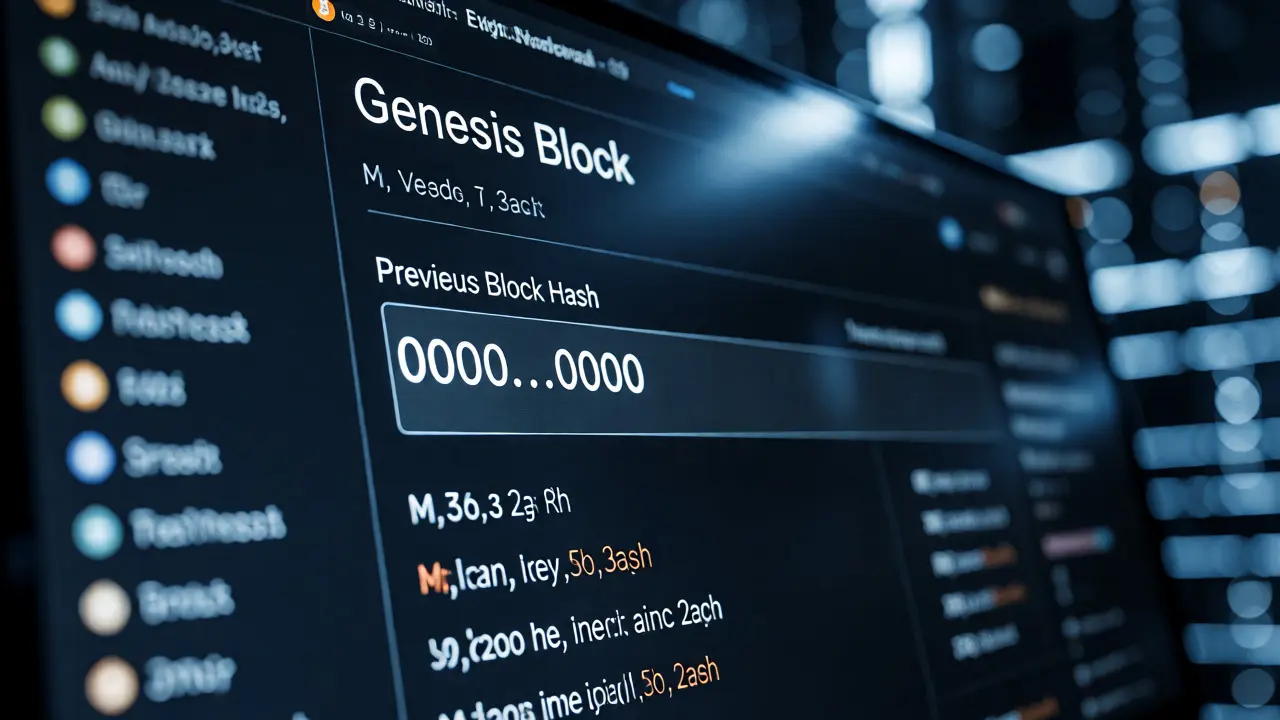
You just opened a block explorer. You type in "0" or paste that famous hash starting with zeros. And then? You see a wall of hexadecimal code, a timestamp from 2009, and a note saying the reward is unspendable. Most people skim this, shrug, and move on to checking their own transactions. But here’s the thing: that first block isn’t just history. It’s the cryptographic root of trust for the entire network. If you can’t read it, you’re trusting someone else’s word that the chain hasn’t been tampered with since day one.
Why does this matter to you? Because understanding how to analyze genesis block data turns you from a passive user into an active verifier. You don’t need a computer science degree. You just need to know what fields to look at and why they are weird compared to every other block. Let’s break down exactly how to do this on major explorers like Blockchain.com or Blockstream, and what those numbers actually mean.
What Makes the Genesis Block Different?
Every block in the Bitcoin network has a parent. Except the first one. The Genesis Block, also known as Block 0, is unique because it has no predecessor. This creates specific anomalies you’ll spot immediately when you open it on an explorer.
First, look at the "Previous Block Hash." In every normal block, this field points to the hash of the block before it. In the genesis block, this field is filled with 32 zero bytes (0000000000000000000000000000000000000000000000000000000000000000). That string of zeros is your first clue that you’ve hit the bottom of the stack. It’s hard-coded into every Bitcoin node’s software. If your node doesn’t agree with this specific hash, it won’t sync with the rest of the network.
Second, check the reward. When miners solve a block, they get paid in new coins. For the genesis block, Satoshi Nakamoto mined 50 BTC. But if you try to spend those coins today, you can’t. They are technically "unspendable." Why? Because Satoshi embedded a non-standard script in the output that makes them impossible to unlock without knowing a private key that likely doesn’t exist-or was destroyed intentionally. This wasn’t a bug; it was a design choice to ensure the initial supply distribution started cleanly without immediate market pressure.
Decoding the Coinbase Transaction
The most interesting part of any block is the coinbase transaction. In regular blocks, this is where the miner claims their reward. In the genesis block, it’s a time capsule. If you dig into the raw hex data on a block explorer, you’ll find a text message encoded in the input script:
"The Times 03/Jan/2009 Chancellor on brink of second bailout for banks"
This isn’t just trivia. It serves two purposes. First, it proves the block was created after January 3, 2009, because the newspaper headline didn’t exist before then. Second, it signals the ideological intent behind Bitcoin: a response to traditional banking instability. Some experts argue this acts as a timestamped proof of concept. Others, like Bitcoin Core developer Pieter Wuille, point out that while it’s data, it’s not cryptographic proof of creation date in the strictest sense-but for practical verification, it’s good enough for us.
When you analyze this on an explorer, you might have to toggle a view to see the raw script or hex. Don’t be afraid to click around. Seeing this text confirms you’re looking at the authentic mainnet genesis block, not a testnet version or a fork.

Step-by-Step Analysis Guide
Ready to try it yourself? Here’s how to perform a basic audit of the genesis block using a standard block explorer.
- Navigate to the Explorer: Go to a reputable site like Blockchain.com, Blockchair, or Blockstream.info.
- Search for Block 0: Type "0" in the search bar. Alternatively, paste the full hash:
000000000019d6689c085ae165831e934ff763ae46a2a6c172b3f1b60a8ce26f. Using the hash is safer because some explorers might show testnet blocks if you just type "0" without specifying the network. - Verify the Header Data: Look for these key fields:
- Height: Should say 0.
- Timestamp: Should read Jan 3, 2009, 18:15:05 UTC.
- Nonce: A large integer used to mine the block. For Bitcoin, it’s 2083236893.
- Merkle Root: A hash representing all transactions in the block. Since there’s only one transaction (the coinbase), the merkle root matches the transaction ID.
- Inspect the Reward: Click on the single transaction listed. Check the output value. It will show 50 BTC. Note any warnings about it being "unspendable" or "non-standard."
- Check Confirmations: Unlike recent blocks which might have low confirmations, the genesis block has over 1 million confirmations by late 2026. This high number signifies deep network consensus.
Comparing Major Block Explorers
Not all explorers treat the genesis block the same way. Some hide the complexity; others highlight it. Here’s how the big players differ when you pull up Block 0.
| Explorer | Block Height Label | Reward Status | Embedded Message Visibility | Best For |
|---|---|---|---|---|
| Blockchain.com | Shows "0" | Explicitly marks 50 BTC as unredeemable | Hidden in raw JSON/hex view | Beginners wanting clear warnings |
| Blockstream.info | Shows "0" | Standard display, links to docs | Visible in transaction details | Developers and purists |
| Blockchair | Allows multi-chain comparison | Contextual notes on forks | Searchable text feature | Cross-chain analysis |
Blockchain.com is great if you want hand-holding. It explicitly tells you the money is stuck. Blockstream is cleaner and closer to how Bitcoin Core sees the data, which is useful if you’re learning protocol rules. Blockchair shines if you’re curious about how other chains, like Ethereum or Litecoin, handled their own genesis blocks-though remember, each network has its own unique origin story.
Common Pitfalls and How to Avoid Them
Newcomers often trip up on three things when analyzing genesis data.
Testnet vs. Mainnet: There is a separate genesis block for Bitcoin Testnet. Its hash starts differently. If you see a timestamp from 2011 or 2016 instead of 2009, you’re on the wrong network. Always check the header banner on the explorer to ensure you’re viewing "Mainnet" or "Bitcoin," not "Testnet" or "Regtest."
Fork Confusion: Bitcoin Cash, Bitcoin SV, and other forks split off later. Their genesis blocks are identical to Bitcoin’s up until the fork height. However, their explorers might label the block differently or show different subsequent hashes. If you’re comparing chains, make sure you’re looking at the canonical Bitcoin hash mentioned earlier.
Overlooking the Version Number: The block version in the genesis block is 1. Modern blocks have higher version numbers (like 0x20000000) due to upgrades like SegWit. Seeing version 1 is another quick sanity check that you’re at the very beginning of the chain.
Why Verify This Yourself?
You might ask, "Tamara, I’m not running a node. Do I really care?" Yes, you do. Trustless systems rely on verifiable truth. When you verify the genesis block, you’re confirming the chain’s integrity from the ground up. If a malicious actor tried to rewrite history, they’d have to change the genesis block. But because it’s hard-coded into clients worldwide, changing it would require a universal software update that essentially kills the current network.
Furthermore, understanding the genesis block helps you grasp concepts like consensus mechanisms and immutable ledgers. It’s the simplest dataset to study because there’s only one transaction. Once you understand why that transaction exists and why it can’t be spent, you’ve grasped the core tension between monetary policy and technical execution in crypto.
Can I spend the 50 BTC from the Genesis Block?
No. The output script for the genesis block reward is non-standard and effectively unspendable. Satoshi Nakamoto designed it this way to prevent the initial coins from entering circulation immediately, ensuring a stable start for the network.
What is the exact hash of the Bitcoin Genesis Block?
The official hash is 000000000019d6689c085ae165831e934ff763ae46a2a6c172b3f1b60a8ce26f. Always use this full string when searching to avoid confusion with testnet blocks.
Why does the previous block hash contain zeros?
Because the Genesis Block has no parent. By convention, the field is filled with 32 zero bytes to signify the start of the chain. This distinguishes it from all other blocks, which reference a valid previous hash.
Is the newspaper headline in the block cryptographically secure?
It is data included in the block, so it is protected by the block's hash. However, it doesn't mathematically prove the block was mined on that exact second. It primarily serves as historical context and a proof that the block was created after the newspaper was published.
Do other cryptocurrencies have similar genesis blocks?
Most do, but the details vary. Some embed mission statements, others set different initial rewards. Ethereum's genesis block, for example, pre-mined a large supply for early investors, unlike Bitcoin's clean slate approach.