
When Hong Kong rolled out its new virtual asset rules in 2025, it didn’t just tweak existing laws - it rewrote the playbook for how crypto works in Asia. If you're trading, holding, or issuing cryptocurrency in or through Hong Kong, this isn’t just background noise. It’s the new rulebook, and ignoring it could cost you money, access, or even your business.
What the Virtual Assets Ordinance 2025 Actually Covers
There’s no single law called the "Virtual Assets Ordinance 2025." That’s a shorthand people use, but the real system is made of three moving parts: the Stablecoins Ordinance, the VA Dealing Licensing Regime, and the VA Custody Licensing Regime. All of them launched or took effect in 2025 and 2026.
The Stablecoins Ordinance, which started on August 1, 2025, targets one thing: fiat-referenced stablecoins. These are tokens like USDT or USDC that claim to be worth $1 because they’re backed by U.S. dollars or other government currencies. The law says any company issuing these in Hong Kong - or even just marketing them to Hong Kong users - must get a license. It doesn’t care if you’re based in Dubai or Delaware. If you’re targeting Hong Kong investors, you’re in.
But here’s the catch: not all crypto is covered. Tokens that represent shares, bonds, or other securities? That’s the SFC’s job under separate rules. Central bank digital currencies? Excluded. Tokens meant only for gaming or loyalty points? Also excluded. The law is narrow on purpose - to avoid stepping on other regulators’ toes.
Who Needs a License and Why
If you’re a company that lets people buy, sell, or trade crypto in Hong Kong, you need a VA Dealing license. If you hold crypto for clients - even just storing their private keys - you need a VA Custody license. These aren’t optional. The Securities and Futures Commission (SFC) is enforcing this like a traffic cop with a radar gun.
The minimum capital requirement? HK$129,730 (about $16,600 USD). That might sound low, but it’s not. For small startups, this is a wall. Combine that with the requirement that every firm must have at least one "responsible officer" with three years of real crypto portfolio experience, and you’re looking at a hiring challenge most early-stage teams can’t meet.
Then there’s the dual approval system. Every time a wallet gets whitelisted - meaning a user is approved to send or receive crypto - two different people inside the company must sign off. No automation. No exceptions. One person can’t do it alone. This was designed to prevent fraud, but it’s slowed down transaction times by 30-40% for many firms. One Hong Kong-based exchange told me they went from processing 1,000 wallet approvals a day to 600. That’s a real cost.
Where You Can Trade - And Where You Can’t
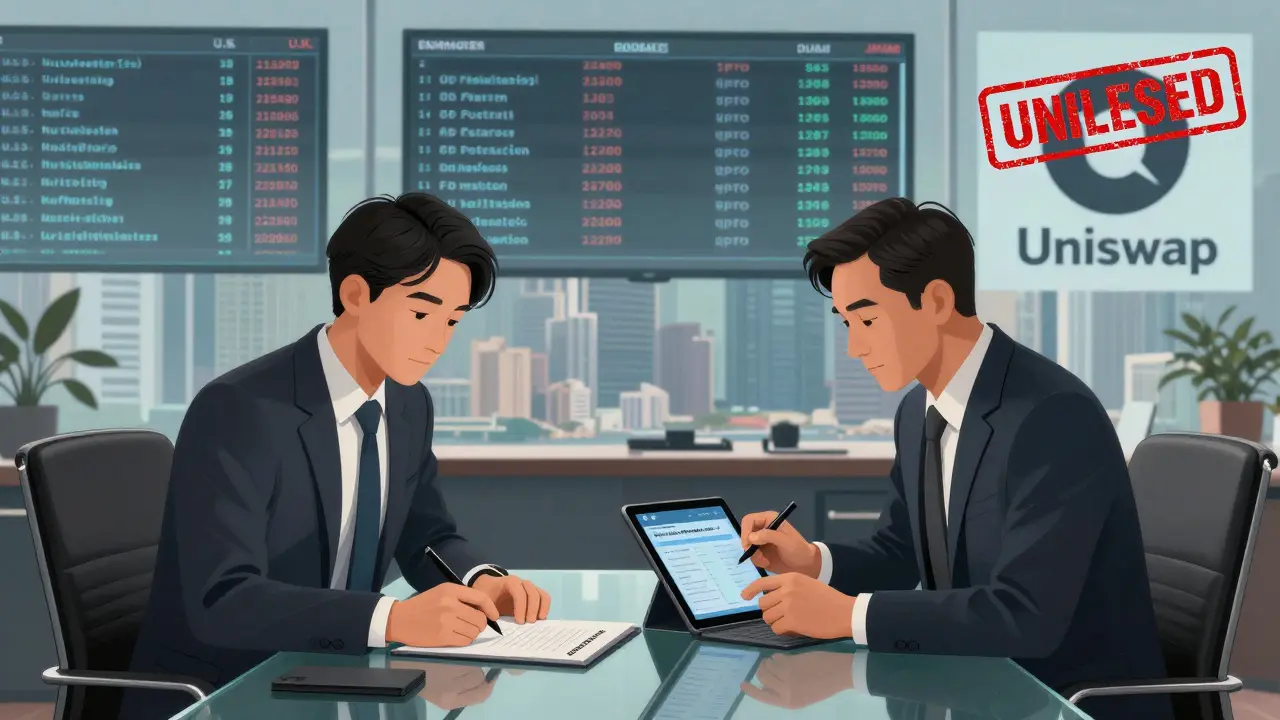
Here’s one of the most surprising restrictions: all crypto trades must go through exchanges licensed in Hong Kong, the U.S., the U.K., Dubai, or Japan. No exceptions. If you’re using a decentralized exchange (DEX) like Uniswap or a foreign platform not on that list, you’re technically violating the rules - even if you’re just buying Bitcoin.
Why? Because the SFC wants full oversight. They need to see every transaction, trace every dollar, and know who’s on the other side. That’s why 68% of compliant firms now use Chainalysis or similar blockchain analytics tools. It’s not optional anymore. If you can’t prove your counterparty is on an approved exchange, you’re at risk.
And if you’re a retail user? You’re not completely blocked, but you’re not free either. Before you can open an account with any licensed platform, you’ll be asked to prove you understand crypto risks. No more "I just heard about it on TikTok" sign-ups. You’ll need to pass a short quiz on how wallets work, what volatility means, and how scams operate. It’s not hard, but it’s a barrier. And it’s meant to be.
How This Compares to Other Places
Singapore’s Payment Services Act is broader - it treats stablecoins as payment tools. Hong Kong treats them as financial products. That’s a big difference. Singapore’s rules apply only to companies physically based there. Hong Kong’s rules apply to anyone targeting its 7.5 million residents - even if they’re based in Miami.
The U.S. is a mess. The SEC goes after one token, the CFTC goes after another, and state regulators add their own layers. Hong Kong’s system is cleaner: SFC handles trading and asset management, HKMA handles banks and payment providers. Clear lines. Clear accountability.
Switzerland lets you operate with almost no rules. But Hong Kong isn’t trying to be Switzerland. It’s trying to be the Singapore of institutional crypto - safe, regulated, and trusted by pension funds and asset managers.
Who’s Winning - And Who’s Getting Left Behind
Large firms are adapting fast. Morgan Stanley, HSBC, and Standard Chartered are all building teams to handle crypto custody under the new rules. 42 asset managers are now SFC-licensed to manage crypto funds - up from 27 in late 2024. Tokenized real-world assets - like bonds or real estate represented as digital tokens - have exploded. Eleven new funds launched in Q3 2025, totaling $2.3 billion.
But small operators? They’re struggling. 12 crypto firms canceled their Hong Kong expansion plans after seeing the compliance costs. One founder told me: "We spent $80,000 on legal fees just to understand if we qualified. We didn’t even get to the license application yet."
And then there’s the 24-hour supervision rule. If you manage crypto portfolios, you need someone awake and monitoring the market at all times. That means shifts. That means overtime. That means hiring staff in different time zones. For a team of five, it’s a nightmare. For a hedge fund with 50 people? Manageable.
What’s Next - And What to Watch
The SFC will publish detailed rules on stablecoin reserves by December 15, 2025. Right now, issuers just need to "hold assets" - but what counts as an asset? Cash? T-bills? Corporate bonds? That’s still unclear. This next guidance will decide whether stablecoins are truly safe or just legally dressed-up gambling.
By Q2 2026, the HKMA will launch a regulatory sandbox for cross-border stablecoin payments. Big banks will test sending Hong Kong dollars to Dubai or Tokyo using crypto as the bridge. If it works, it could change how Asia moves money.
And by 2027? NFTs. The government has said it will review how non-fungible tokens are treated. Right now, they’re ignored. But if they start being used for property deeds or music royalties, expect rules to follow.
What This Means for You
If you’re a retail investor in Hong Kong: you can still buy crypto. But you’ll have fewer platforms to choose from. And you’ll need to prove you understand what you’re doing. That’s not bad - it stops people from losing life savings on meme coins.
If you’re a business: you have two choices. Pay the cost to comply - and get access to Asia’s most liquid crypto market - or stay outside and lose access to millions of potential users. There’s no middle ground.
The message is clear: Hong Kong isn’t trying to ban crypto. It’s trying to tame it. Make it professional. Make it traceable. Make it safe for institutions. And if you can’t meet those standards? You’re not welcome here.
Is the Virtual Assets Ordinance 2025 a ban on cryptocurrency?
No, it’s not a ban. It’s a licensing system. You can still trade, hold, and issue crypto in Hong Kong - but only if you’re licensed and follow the rules. Unlicensed platforms and activities are blocked, but the market itself is open - just more regulated.
Do I need a license if I just hold Bitcoin for personal use?
No. The rules only apply to businesses that trade, custody, or issue crypto. If you’re buying Bitcoin for yourself on a licensed exchange like HashKey or OSL, you don’t need a license. The regulations target firms, not individuals.
Can I use Coinbase or Binance in Hong Kong after 2025?
Only if they’re licensed in Hong Kong or one of the approved jurisdictions (U.S., U.K., Dubai, Japan). As of early 2026, Binance is not licensed in Hong Kong and is blocked from marketing to local users. Coinbase has applied for a license but hasn’t been approved yet. You can still access them from abroad, but you won’t be able to use their Hong Kong services.
Why does Hong Kong require dual approval for wallet whitelisting?
It’s an anti-fraud measure. By requiring two people to approve each new wallet, the system reduces the risk of internal theft or unauthorized transfers. It’s modeled after bank security protocols. While it slows down operations, it’s meant to protect both the firm and its clients.
What happens if I don’t comply with the Virtual Assets Ordinance 2025?
Penalties are severe. Fines can reach HK$5 million (about $640,000 USD), and individuals can face up to seven years in prison. The SFC can also freeze assets, shut down operations, and ban executives from working in Hong Kong’s financial sector. Ignorance is not a defense.
Are decentralized finance (DeFi) platforms allowed under the new rules?
Not as they currently operate. DeFi protocols that interact with Hong Kong users - even indirectly - are considered unlicensed VA services. If you’re using a DeFi app that lets Hong Kong residents lend, borrow, or trade crypto without going through a licensed exchange, you’re violating the law. The SFC has made it clear: no middleman doesn’t mean no regulation.
Final Take
Hong Kong isn’t trying to kill crypto. It’s trying to make it institutional. That means higher costs, more paperwork, and fewer free-for-alls. But it also means more trust, more stability, and more money flowing in from global investors. If you’re a small operator or retail user, it’s harder now. If you’re a serious player with resources? This is the most promising crypto market in Asia - if you’re willing to play by the new rules.