You hold Bitcoin. You’ve held it for a year. You sell it. And then… you pay zero tax on the profit? If you’re living in Germany, that isn’t a dream-it’s the law. While most countries treat cryptocurrency gains like regular income or capital assets with heavy tax burdens, Germany offers a unique loophole that rewards patience. This is known as the Germany 12-month crypto tax exemption, and it is currently one of the most investor-friendly policies in the European Union.
But here is the catch: the system is strict. It relies on precise timing, specific accounting methods, and clear definitions of what counts as a "disposal." Get the dates wrong by even an hour, and you could owe thousands in back taxes. With new EU regulations looming and reporting requirements tightening in 2026, understanding exactly how this rule works is no longer optional for serious investors. Let’s break down how to use this exemption legally, where the traps are, and what changes might be coming.
How the 12-Month Rule Actually Works
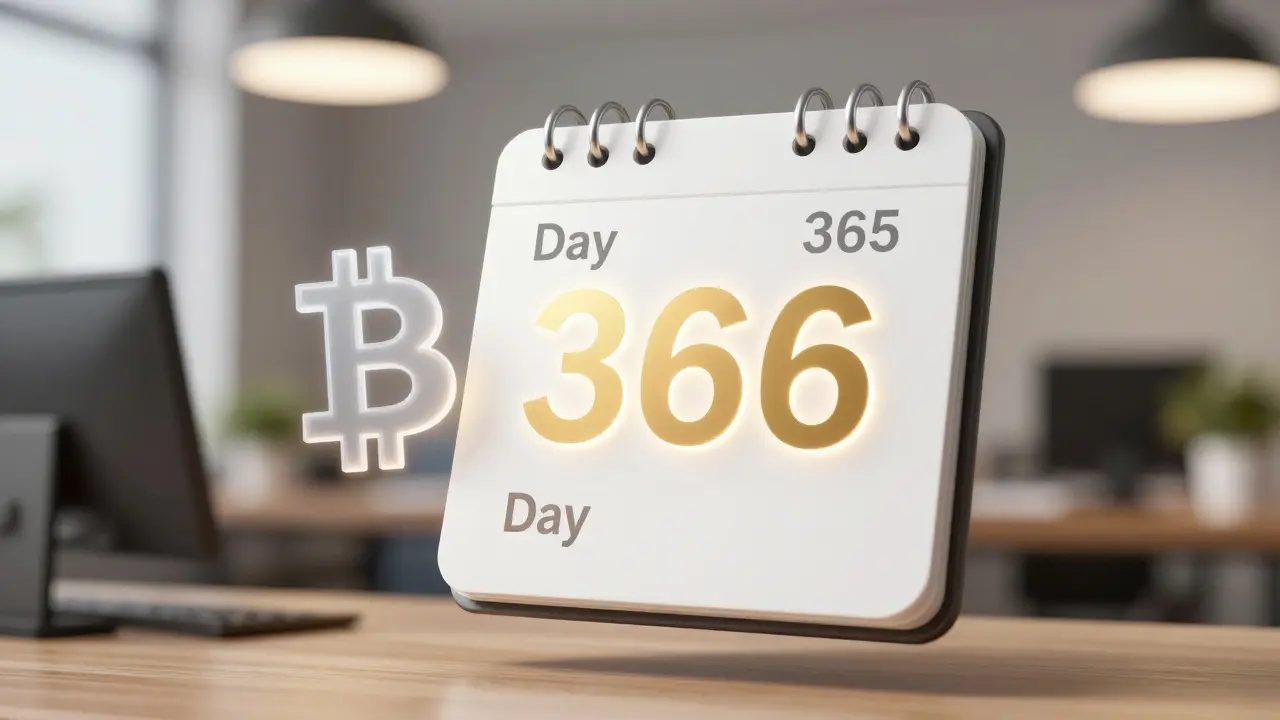
To qualify for tax-free gains, your cryptocurrency must be held for more than 365 calendar days. That is the core metric. Under Section 23 of the German Income Tax Act (Einkommensteuergesetz or EStG), private sales transactions are exempt from income tax if the holding period exceeds one year. The Federal Ministry of Finance (Bundesministerium der Finanzen) clarified in its March 2025 guidance that this applies to Bitcoin, Ethereum, and other recognized digital assets alike.
The calculation is brutal in its simplicity: Day 1 is the day you acquire the asset. Day 366 is the first day you can sell it tax-free. If you sell on Day 365, you are taxed. If you sell on Day 366, you are not. The clock starts ticking the moment the transaction confirms on the blockchain, not when you see it in your exchange app. This means you need exact timestamps for every buy order.
Why does this matter? Because short-term gains (holdings under 12 months) are added to your regular income and taxed at your progressive income tax rate. Depending on your salary, this could mean paying between 14% and 45% in income tax, plus a 5.5% Solidarity Surcharge. For a high earner, that effective rate hits nearly 47%. Waiting just one extra day wipes out that entire liability.
The €1,000 Short-Term Loophole
What if you don’t want to wait a year? Germany offers a secondary safety net, though it has shrunk significantly. If your total net profits from all short-term crypto trades in a single calendar year are €1,000 or less, you do not have to report them or pay any tax. This threshold was raised from €600 to €1,000 effective January 1, 2024, but inflation has eroded its value quickly.
Here is the critical detail: this is an "all-or-nothing" rule. If your short-term gains hit €1,001, you must report all of them, and you will be taxed on the full amount, not just the euro over the limit. There is no partial exemption. For casual traders who occasionally swap small amounts of altcoins, this keeps them off the radar. For active traders, it provides almost no relief.
This rule also applies to other crypto-related income streams. Mining rewards, staking yields, and payments received in crypto for freelance work are treated as taxable income if they exceed €256 annually. However, once those mined or staked coins are held in your wallet for 12 months, any subsequent sale of those specific coins becomes tax-exempt. So, if you stake ETH today, you pay income tax on the reward now, but if you hold that reward for a year before selling, the capital gain on the sale is free.
FIFO Accounting: The Silent Profit Killer
This is where most people lose money. Germany mandates the First-In, First-Out (FIFO) method for calculating costs. You cannot choose which specific Bitcoin you are selling. The tax authority assumes you are always selling the oldest coins in your wallet first.
Imagine this scenario:
- January 1, 2024: You buy 1 BTC for €20,000.
- January 1, 2025: You buy another 1 BTC for €60,000.
- March 1, 2026: You sell 1 BTC for €80,000.
Intuitively, you might think you sold the newer coin, making a €20,000 profit that has been held for only 14 months-taxable. But under FIFO, the tax office says you sold the first coin you bought. That coin was held for over two years. Therefore, the €60,000 profit is completely tax-free. In this case, FIFO helps you.
Now flip it:
- January 1, 2024: You buy 1 BTC for €20,000.
- December 1, 2025: You buy 1 BTC for €90,000.
- January 15, 2026: You sell 1 BTC for €95,000.
You intended to take a quick €5,000 profit on the recent purchase. But FIFO forces you to match the sale against the old €20,000 purchase. Your gain is €75,000. Since the old coin was held for more than 12 months, it is still tax-free. Wait-what if the prices were different?
If you bought low early on and high recently, FIFO often favors you because the older, cheaper basis creates larger gains that are likely exempt. However, if you bought high early and low recently, FIFO can create taxable losses or smaller taxable gains depending on the mix. The real danger arises when you mix long-term holdings with short-term trading in the same wallet without tracking batches. If you accidentally trigger a sale of a "short-term" lot because your records are messy, you face immediate taxation. Many users report spending hours reconciling these mismatches during tax season.
| Country | Holding Period for Exemption | Tax Rate on Gains | Loss Harvesting Allowed? |
|---|---|---|---|
| Germany | 12 Months (365 Days) | Progressive Income Tax (14-45%) + 5.5% Surchage | No (for private sales) |
| France | None (Flat Tax Applies) | 30% Flat Rate (Income Tax + Social Contributions) | Yes (Limited) |
| United Kingdom | None (Annual Allowance Only) | 10% or 20% Capital Gains Tax | Yes |
| Portugal | 6 Months (Previously 1 Year) | 28% Capital Gains Tax | Yes |
DeFi, Staking, and NFTs: What Counts as a Disposal?
The March 2025 guidance from the Federal Ministry of Finance expanded clarity on decentralized finance (DeFi). Previously, gray areas existed around liquidity pools and yield farming. Now, the rules are explicit:
- Liquidity Pool Deposits: Providing liquidity is generally considered a disposal event if you receive LP tokens. The cost basis is established at that moment. When you withdraw, it is another disposal. If you hold the LP tokens for 12 months, the exit may be tax-free.
- Yield Farming Rewards: These are treated as taxable income upon receipt, similar to mining. They start their own 12-month clock from the date you receive them.
- NFTs: Non-Fungible Tokens follow the same 12-month rule. If you buy an NFT and hold it for over a year before selling, the profit is tax-exempt.
- Stablecoin Redemptions: Swapping USDT for EUR is a disposal. If you bought the USDT less than 12 months ago, any difference in value is taxable.
This means DeFi strategies that involve frequent swapping or rebalancing are highly inefficient in Germany. Every swap resets the clock or triggers a taxable event. Passive holding remains the only truly tax-efficient strategy.
Filing Your Taxes: Elster and Record Keeping
You cannot ignore crypto activity. Even if your gains are tax-free due to the 12-month rule, you may still need to declare them depending on your overall financial situation and whether you have short-term losses to offset. All filings go through Elster, the official online tax portal of the German Federal Central Tax Office (Bundeszentralamt für Steuern or BZSt). Paper forms are technically allowed but strongly discouraged due to higher error rates.
The deadline for filing your annual tax return is typically July 31st of the following year. However, if you use a tax advisor, the deadline extends to February 28th of the second year after the tax year. For example, for crypto activity in 2025, you must file by July 31, 2026, or February 28, 2027, if using a professional.
Record-keeping is non-negotiable. You must store:
- Date and time of acquisition (to the minute).
- Purchase price in EUR.
- Date and time of disposal.
- Sale price in EUR.
- Transaction IDs for blockchain verification.
In 2026, the BZSt began integrating directly with major exchanges like Bison, Coinbase, and Kraken to automatically collect transaction data. This reduces the burden of manual entry but increases scrutiny. If your self-reported numbers don’t match the exchange data, expect an audit. Using specialized software like Koinly or BitcoinSteuer is recommended by 73% of German crypto holders to generate compliant reports.

Future Risks: The EU Harmonization Threat
Germany’s advantage won’t last forever. The European Commission proposed the DAC8 directive, aiming to harmonize crypto taxation across member states. The draft suggests replacing national exemptions with a standardized 15% capital gains tax after a 365-day holding period. If passed by 2027, Germany’s current 0% rate for long-term holders would disappear.
Industry analysts at Deloitte Germany estimate a 60% chance that some form of this proposal will pass within the next two years. However, grandfathering clauses may protect existing holdings. Until then, the current law stands. Investors should maximize the exemption while it exists, especially since the political pressure to change it is growing as other EU nations complain about "tax competition."
Strategic Tips for Maximizing the Exemption
To make the most of this framework, consider these practical steps:
- Separate Wallets: Keep long-term HODLs in one wallet and trading funds in another. This prevents FIFO confusion and makes record-keeping easier.
- Screenshot Everything: Exchange interfaces change. Save PDF receipts or screenshots of every transaction immediately after execution.
- Avoid Early Selling: If you are close to the 12-month mark, wait. The marginal benefit of waiting a few days is enormous compared to the tax risk.
- Consult a Pro: If your portfolio exceeds €50,000 or involves complex DeFi interactions, hire a tax advisor specializing in crypto. The average fee of €285 is cheap insurance against a €5,000 audit penalty.
Germany’s crypto tax regime is a rare gem in Europe, but it requires discipline. It rewards patience and punishes impulsivity. By understanding the 12-month clock, respecting FIFO accounting, and keeping meticulous records, you can keep more of your hard-earned gains.
Is Bitcoin tax-free in Germany if held for 12 months?
Yes. If you hold Bitcoin (or any other cryptocurrency) for more than 365 days before selling, swapping, or spending it, the capital gains are completely exempt from income tax under Section 23 of the German Income Tax Act.
What happens if I sell crypto before 12 months?
Short-term gains are added to your annual income and taxed at your progressive income tax rate (14% to 45%), plus a 5.5% solidarity surcharge. However, if your total short-term gains for the year are €1,000 or less, you do not need to report or pay tax on them.
Does the 12-month rule apply to staking rewards?
Staking rewards are taxed as income when you receive them. However, if you hold those specific rewarded coins in your wallet for more than 12 months before selling them, the subsequent capital gain from the sale is tax-exempt.
Can I offset crypto losses against gains in Germany?
No. Unlike the US or UK, Germany does not allow tax-loss harvesting for private sales transactions. You cannot deduct short-term losses from short-term gains. Each transaction is evaluated independently based on the FIFO method.
When is the deadline for filing crypto taxes in Germany?
The standard deadline is July 31st of the year following the tax year. If you use a tax advisor, the deadline extends to February 28th of the second year after the tax year. Filings are submitted via the Elster online portal.
Will Germany's crypto tax laws change soon?
There is significant pressure from the EU to harmonize crypto taxes via the DAC8 directive, which could introduce a flat 15% capital gains tax. However, as of 2026, the current 12-month exemption remains in effect. Analysts predict potential changes by 2027, but grandfathering provisions may protect existing holdings.