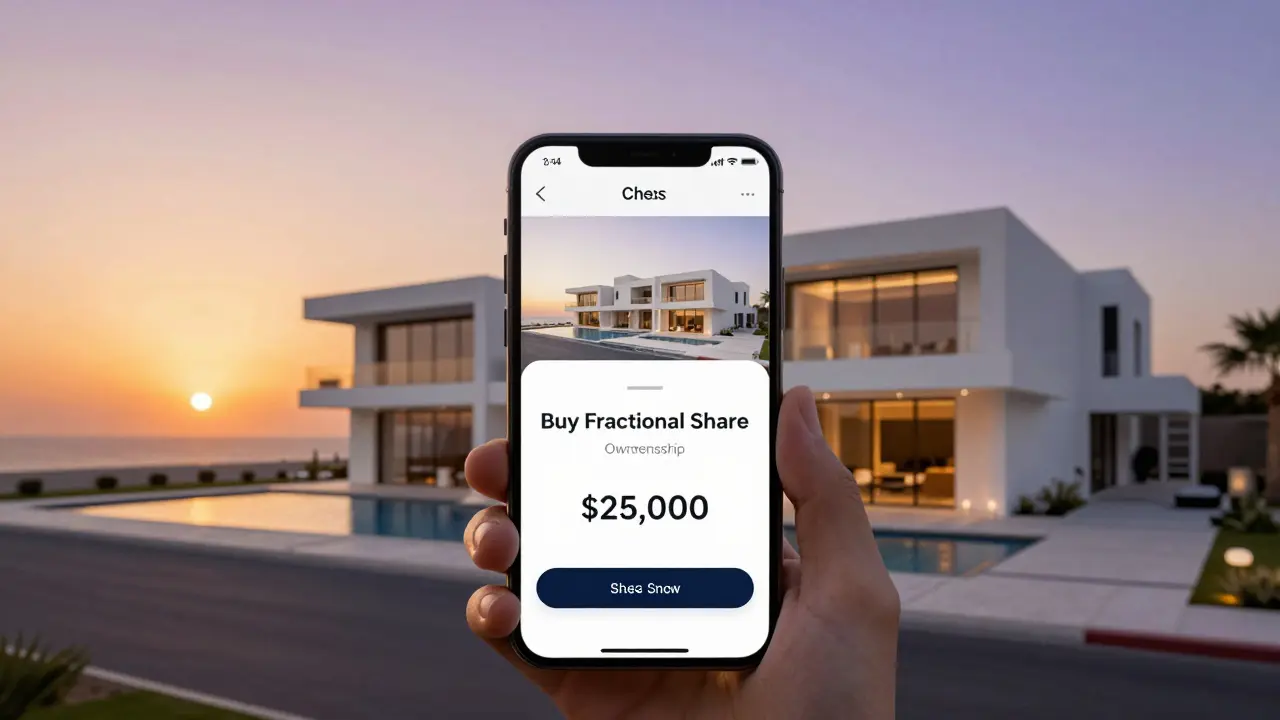
Imagine buying a slice of a luxury villa in Dubai for $25,000 instead of dropping millions on the whole thing. Or closing a $1.2 million condo purchase in Miami in just 18 hours, saving nearly $30,000 in fees. This isn't science fiction anymore. By mid-2026, blockchain technology has moved from experimental hype to a practical engine driving change in how we buy, sell, and invest in property.
The landscape shifted dramatically between 2024 and 2025. What was once a niche experiment is now a multi-trillion-dollar ecosystem. According to Fibree’s 2025 market research, there are now 844 active products using distributed ledger technology in real estate, marking five consecutive years of double-digit growth. While some startups folded-134 products ceased operations that year-innovation outpaced consolidation with 184 new platforms emerging. The core promise? Faster settlements, lower costs, and access to high-value assets through fractional ownership.
How Blockchain Is Changing Property Transactions
Traditional real estate deals are slow and expensive. You’re looking at 30 to 45 days to close a deal, with transaction costs ranging from 5% to 10% of the property value. Lawyers, title companies, escrow agents, and banks all take their cut and their time. Blockchain flips this model on its head.
By leveraging smart contracts-self-executing agreements with terms directly written into code-transactions can settle in seconds or minutes rather than weeks. In pilot programs like those in Illinois, smart contracts have reduced title insurance costs by 37%. Dubai’s blockchain-powered registry processes 97% of transactions within 24 hours. For investors, this means liquidity. Instead of being locked into an illiquid asset for years, you can trade tokenized shares on secondary markets almost instantly.
Security is another major win. Traditional paper records are prone to fraud, loss, or alteration. Blockchain creates an immutable, transparent ledger. Multi-signature wallets and zero-knowledge proofs protect privacy while ensuring data integrity. In fact, AI-driven anomaly detection systems integrated with these ledgers have reduced property fraud incidents by 42% in early adopter markets.
The Rise of Fractional Ownership and Tokenization
One of the most exciting developments is property tokenization. This process converts rights to a physical asset into digital tokens on a blockchain. It breaks down high-value properties into smaller, affordable units. You don’t need to be a millionaire to own a piece of commercial real estate or a luxury home anymore.
In 2024 alone, this model created $412 billion in new market value through fractional ownership, according to Dr. Elena Rodriguez of the MIT Real Estate Innovation Lab. Platforms like RealT and BrickMark allow users to buy, hold, and sell these tokens easily. A user recently shared how they acquired a $25,000 share of a $2.5 million Dubai villa, gaining exposure to a premium asset without the massive upfront capital.
This democratization of investment is reshaping who gets to participate in the housing market. Non-domestic buyers have increased by 45% in tokenized markets, bringing global liquidity to local properties. However, it’s not without risks. One Reddit user reported a $75,000 dispute delay when a smart contract failed to recognize a zoning change in Texas. These edge cases highlight that while the tech is powerful, legal nuances still matter.
Regulatory Landscape and Compliance in 2026
If there’s one thing slowing down universal adoption, it’s regulation. The world is fragmented. As of Q2 2025, 32 countries had established specific guidelines for real estate tokenization, but cross-border transactions remain complex. David S. Seltzer, a partner at Jones Day, warned that regulatory fragmentation creates an $180 billion compliance burden for international tokenized properties.
However, progress is accelerating. The EU implemented its MiCA 2.0 framework in January 2026, standardizing rules across 27 member states. In the US, the Commercial Tokenization Act is expected to pass Congress in late 2025, providing clearer federal guidance. These moves give institutional investors the confidence they need to enter the space.
For individual buyers, getting started involves KYC (Know Your Customer) verification, which averages about 2.3 hours. Wallet setup takes roughly 37 minutes. While 87% of platforms offer guided interfaces, 12.8% of new users still report temporary access issues with wallet management. The learning curve has dropped significantly-from over 40 hours of training in 2022 to just 11.7 hours today-but it’s not entirely frictionless yet.
Market Growth and Regional Trends
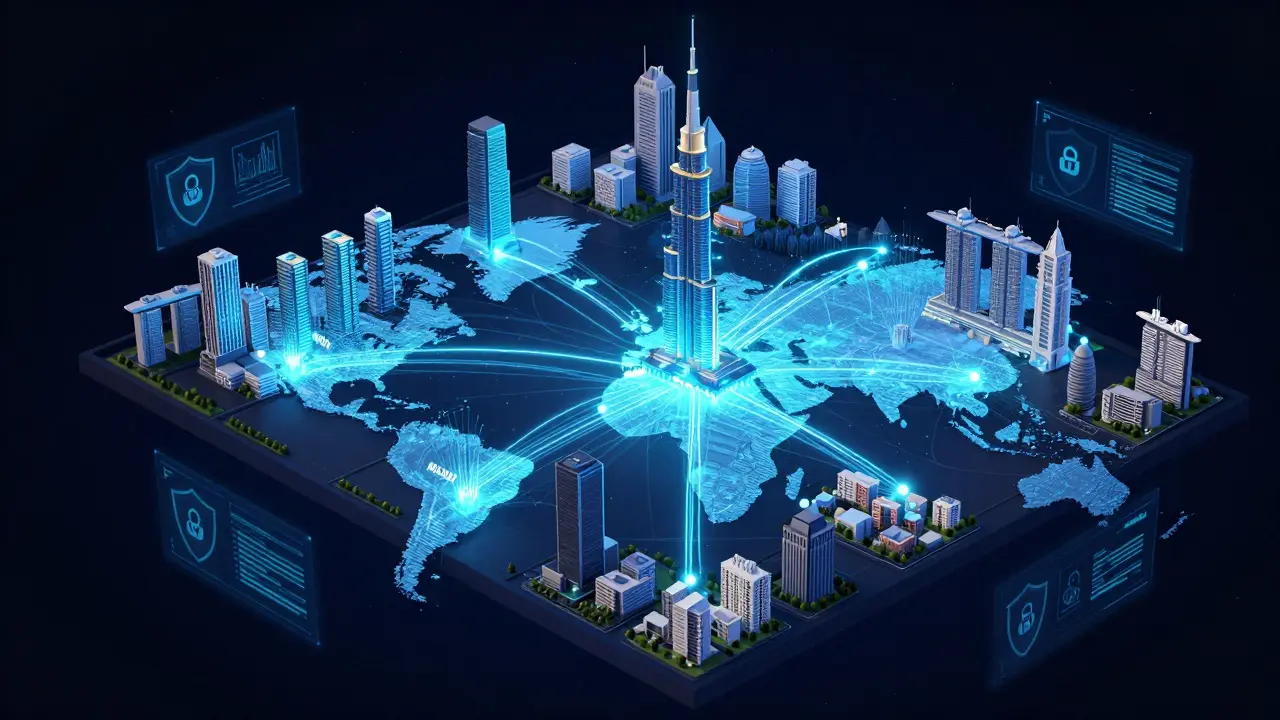
Where is the action happening? North America leads with 38% of global blockchain real estate activity, followed by Europe at 29%. But the fastest growth is in Asia-Pacific, expanding at 57% year-over-year. India’s national land registry blockchain and Singapore’s tokenized investment platforms are key drivers here.
Miami has become a hotspot in the US, seeing 22% year-over-year growth in crypto real estate transactions. A notable example was a $22.5 million penthouse purchased entirely with Bitcoin in January 2025. Europe sees strong adoption in Spain’s coastal properties (34% growth) and Germany’s commercial sector. Meanwhile, Dubai has emerged as a global hub, with 47% of luxury developers accepting cryptocurrency payments due to progressive regulations.
| Feature | Traditional Model | Blockchain Model |
|---|---|---|
| Settlement Time | 30-45 days | Seconds to 72 hours |
| Transaction Costs | 5-10% of value | 1.5-3% of value |
| Liquidity | Low (illiquid) | High (tokenized trading) |
| Fraud Risk | Moderate to High | Low (immutable records) |
| Accessibility | High capital required | Fractional ownership available |
Challenges and Risks to Watch
Despite the optimism, hurdles remain. Regulatory uncertainty is the biggest one. If you’re buying property across borders, expect manual compliance adjustments for 68% of transactions. Then there’s the technical side. Smart contracts are only as good as their code. Bugs or logic errors can lead to frozen funds or disputes, as seen in that Texas case.
Also, rural areas with legacy title systems aren’t ready yet. Blockchain works best where data is already digitized. And let’s not forget volatility. The crypto market dipped 12% in February 2025, reminding us that token values can fluctuate. Gartner warns of a potential “consolidation shock,” predicting that 40-60% of current blockchain real estate startups may fail by 2027 due to unsustainable business models.
User experience is improving but isn’t perfect. Dubai’s Land Department survey found 92% satisfaction with transparency, but 34% frustration with wallet complexity. Support quality varies wildly too. Enterprise solutions like Propy offer 24/7 specialist support with a 98% resolution rate within 4 hours, while smaller startups might leave you waiting 28 hours for help.
What’s Next: AI Integration and Future Trajectories
We’re just scratching the surface. The next phase, from 2026 to 2028, will focus on integrating AI with blockchain. Imagine AI-powered risk analytics evaluating tokenized properties automatically, or automated global regulatory compliance systems handling cross-border paperwork. ScienceSoft projects that hybrid models-combining public chain liquidity with private network security-will dominate, with 92% of new platforms adopting this architecture by 2027.
Debt tokenization is also set to explode, forecasted to dominate the market by 2029. This means mortgages and loans issued as tokens, enabling faster funding and broader investor pools. By 2030, the sector is expected to reach $3 trillion, representing about 15% of global real estate assets under management.
Deloitte’s June 2025 report suggests blockchain could become the backbone of the industry within 5-7 years, handling over 50% of commercial transactions by 2032. The convergence of AI, DeFi, and blockchain isn’t just promising-it’s inevitable for those willing to adapt.
Getting Started: Practical Steps for Investors
Ready to dip your toes in? Here’s how to navigate the space safely:
- Choose a reputable platform: Look for established names like RealT, BrickMark, or Propy. Check their track record and user reviews.
- Complete KYC verification: Expect to spend about 2.3 hours providing ID and proof of address. This is mandatory for compliance.
- Set up a secure wallet: Use hardware wallets for large holdings. Spend time learning how to manage private keys securely.
- Start small: Try fractional ownership first. Buy a tokenized share of a property to understand the mechanics before committing large sums.
- Understand the jurisdiction: Research local laws. Regulations vary widely, especially for cross-border investments.
- Watch for red flags: Be wary of platforms promising guaranteed returns or lacking clear documentation. Do your due diligence.
The future of property markets is decentralized, transparent, and accessible. While challenges exist, the trajectory is clear. Blockchain isn’t replacing real estate; it’s upgrading it.
Is blockchain real estate safe?
Blockchain offers enhanced security through immutable records and encryption, reducing fraud by 42% in pilot markets. However, risks include smart contract bugs, regulatory changes, and wallet security issues. Always use reputable platforms and secure your private keys.
How much does it cost to transact on blockchain?
Transaction fees on blockchain platforms typically range from 1.5% to 3%, compared to 5-10% in traditional real estate. This includes lower commissions and reduced administrative costs.
Can I buy property with cryptocurrency?
Yes, many developers in hubs like Dubai and Miami accept cryptocurrency. Additionally, you can buy tokenized shares of properties using crypto, offering a more flexible entry point.
What is property tokenization?
Property tokenization converts ownership rights in a physical asset into digital tokens on a blockchain. This allows for fractional ownership, making high-value properties accessible to smaller investors.
How long does a blockchain property transaction take?
While traditional closings take 30-45 days, blockchain transactions can settle in seconds to 72 hours. Dubai’s registry processes 97% of transactions within 24 hours.
Are there tax implications for tokenized real estate?
Yes, tax laws vary by jurisdiction. Token sales may be subject to capital gains taxes. Consult a tax professional familiar with digital assets and real estate in your region.
Which countries are leading in blockchain real estate?
North America leads with 38% of activity, followed by Europe (29%). However, Asia-Pacific is growing fastest at 57% YoY. Key hubs include Dubai, Miami, Singapore, and parts of Western Europe.
What happens if a smart contract fails?
Smart contract failures can lead to frozen funds or disputes, as seen in some Texas cases. Reputable platforms include auditing and dispute resolution mechanisms, but legal recourse may still be necessary.