
Imagine you have a gold bar locked in a bank vault in London. You want to use that value to buy something in New York, but shipping the physical gold takes weeks and costs a fortune. So, the bank gives you a paper certificate representing that gold. You take the paper to New York, trade it, and when you're done, you send the paper back to get your gold.
This is exactly how wrapped tokens are blockchain assets that have been locked on their native chain and minted as equivalent tokens on a different blockchain, enabling cross-chain interoperability and DeFi participation work. But unlike paper certificates, these digital representations live on decentralized ledgers, and if the "bank" (the bridge) gets hacked, your certificate becomes worthless scrap paper.
As of 2026, billions of dollars flow through cross-chain bridges daily. The promise of seamless interoperability between networks like Ethereum, Bitcoin, and Solana is real. But the security mechanisms protecting this flow are under constant attack. Understanding bridge security isn't just for developers; it's essential for anyone holding wrapped assets.
How Wrapped Tokens Actually Work
To understand the risk, you first need to understand the mechanism. A wrapped token, such as WBTC (Wrapped Bitcoin) or wETH (Wrapped Ether), is not the original asset. It is an ERC-20 token on Ethereum that represents a 1:1 backing of the original asset held elsewhere.
The process follows a strict sequence:
- Locking: You send your native Bitcoin to a secure digital vault or a trusted custodian on the Bitcoin network.
- Minting: Once the transaction confirms, the custodian mints an equivalent amount of WBTC on the Ethereum network and sends it to your wallet.
- Usage: You can now use WBTC in decentralized finance (DeFi) protocols, lend it out, or trade it on decentralized exchanges.
- Burning: When you want your Bitcoin back, you send the WBTC to the bridge contract. The contract burns (destroys) the WBTC, and the custodian releases the original Bitcoin from the vault to your address.
This model relies entirely on trust. You are trusting that the entity holding your Bitcoin won't steal it, lose the keys, or go bankrupt. This is known as the trusted custodian model. While efficient, it introduces a single point of failure that hackers love to target.
The Two Main Attack Vectors
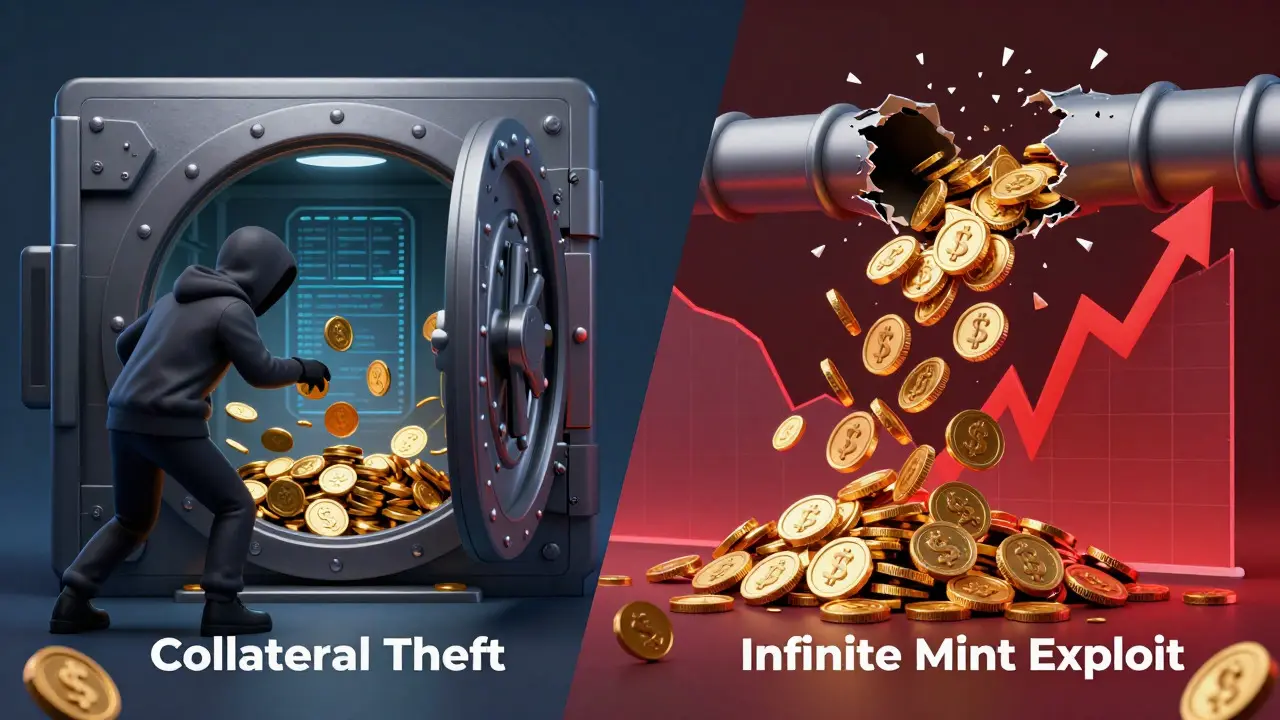
Most major bridge hacks fall into two categories. Knowing these helps you spot red flags before they become headlines.
| Attack Type | Mechanism | Impact on User |
|---|---|---|
| Collateral Theft | Hackers drain the source chain vault (e.g., steal the BTC). | Your wrapped token remains in your wallet, but it is no longer backed by real assets. Its value drops to near zero. |
| Infinite Mint Exploit | A bug allows attackers to mint millions of wrapped tokens without depositing collateral. | The market floods with fake tokens. Prices crash due to oversupply, devaluing legitimate holders' assets. |
In the collateral theft scenario, the wrapped asset loses its peg because the underlying reserve is gone. In the infinite mint scenario, the supply expands artificially, causing hyperinflation of the token. Both scenarios render the wrapped token useless, but the second one often happens faster and more violently.
Why Smart Contracts Are Critical
The code that manages the locking and minting process lives in smart contracts. If there is a bug in this code, the entire system fails. Unlike traditional software, blockchain code is immutable once deployed, making pre-deployment audits non-negotiable.
Smart contract audits are reviews conducted by third-party security firms to identify bugs, vulnerabilities, and logic errors in the code governing wrapped token bridges. Reputable bridges undergo multiple rounds of auditing by firms like Trail of Bits, OpenZeppelin, or CertiK. These auditors look for reentrancy attacks, integer overflows, and access control failures.
However, an audit is not a guarantee. It is a snapshot in time. New vulnerabilities can emerge, or implementation errors can occur during deployment. Always check if the audit reports are public. If a bridge hides its audit results, assume the worst.
Modern Security Architectures: Beyond Simple Vaults
Older bridge designs stored all assets in hot wallets connected to the internet, making them easy targets. Modern architectures, such as those used by platforms like ChainPort, employ multi-layered security to mitigate these risks.
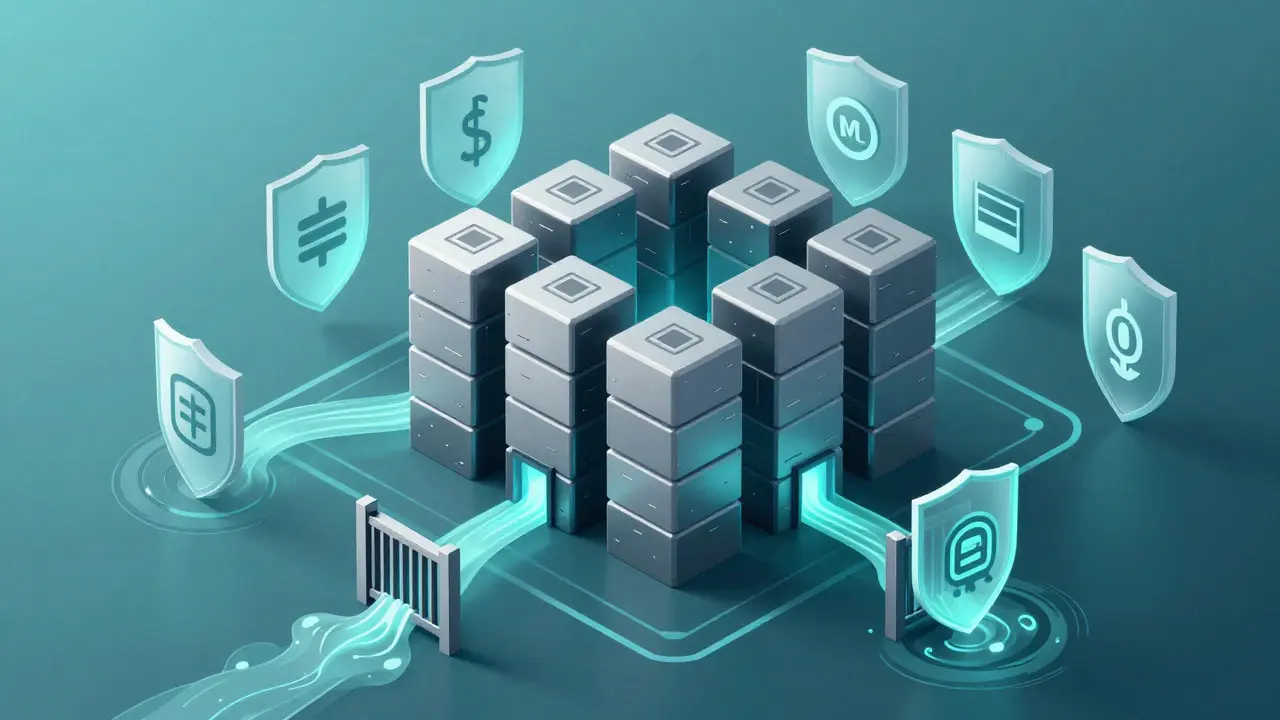
Key features of robust bridge security include:
- Cold Storage: The majority of native assets are kept in offline cold storage vaults, inaccessible to online hackers.
- Multi-Signature Wallets: Transactions require approval from multiple independent parties (e.g., 3 out of 5 signers). This prevents a single compromised key from draining funds.
- MPC (Multi-Party Computation): Instead of a single private key, the key is split among several nodes. No single node knows the full key, reducing insider threat risks.
- Segregated Vaults: Assets are separated by user or protocol, limiting the blast radius of any single exploit.
Platforms like Fireblocks and Gnosis Safe provide the infrastructure for these multi-signature and MPC solutions. By storing only a small percentage of assets in hot contracts for immediate liquidity, bridges reduce the amount at risk during an attack.
The Ripple Effect: Ecosystem Risk
You might think, "I don't use bridges directly, so I'm safe." That’s a dangerous assumption. Wrapped tokens are deeply integrated into the broader DeFi ecosystem.
If you lend USDC on Aave, and someone uses WBTC as collateral for a loan against your pool, you are exposed to WBTC's bridge security. If the WBTC bridge is hacked and the collateral becomes worthless, the lending protocol may face insolvency. Your lent funds could be lost, even though you never interacted with the bridge yourself.
This interconnectedness means that a failure in one bridge can trigger a cascade of liquidations across multiple protocols. The 2022 Wormhole hack, which resulted in a $320 million loss, demonstrated how quickly systemic risk can materialize. Protocols that accepted the stolen tokens faced immediate pressure to freeze assets, disrupting normal operations.
How to Protect Yourself
Since you cannot fix the code yourself, your defense lies in due diligence and risk management. Here is a practical checklist for handling wrapped tokens safely:
- Check the Custodian: Who holds the keys? Is it a centralized company or a decentralized network? Centralized custodians carry higher counterparty risk.
- Verify Audits: Look for recent, public audit reports from reputable firms. Ignore bridges that claim "security guaranteed" without proof.
- Diversify Exposure: Don't keep all your assets in one wrapped format. If possible, use native assets on their respective chains to avoid bridge dependency.
- Use Insurance: Some DeFi protocols offer insurance coverage for specific wrapped tokens. Consider paying premiums for high-value holdings.
- Monitor News: Follow security researchers and bridge operators on social media. Early warnings about exploits can save you from being last in line for redemption.
Remember, convenience comes at a cost. Wrapped tokens offer incredible utility, allowing you to use Bitcoin in Ethereum DeFi or stake ETH on other chains. But every step away from the native chain adds a layer of complexity and potential failure. Treat wrapped tokens as a tool, not a safe haven.
The Future of Trustless Bridging
The industry is moving toward trustless models where no central custodian holds the assets. Solutions like atomic swaps and light client verification aim to eliminate the need for wrapping altogether. However, these technologies are still maturing and often come with higher gas fees or slower confirmation times.
Until fully trustless bridges become the standard, wrapped tokens will remain the backbone of cross-chain activity. For now, vigilance is your best security feature. Understand what you are bridging, who is holding your assets, and what happens if things go wrong.
What is the biggest risk of using wrapped tokens?
The biggest risk is the compromise of the bridge's custodial vault. If hackers steal the underlying assets (like BTC) from the vault, the wrapped tokens (like WBTC) lose their backing and become worthless. Another significant risk is smart contract bugs that allow infinite minting, crashing the token's price.
Are wrapped tokens safe if the bridge is audited?
Audits significantly reduce risk but do not eliminate it. An audit checks the code for known vulnerabilities at a specific point in time. However, new bugs can be introduced during updates, and operational risks (like key theft) exist outside the code. Always choose bridges with multiple, recent audits from reputable firms.
Can I lose my money if I just hold wrapped tokens and don't use DeFi?
Yes. Even if you just hold WBTC in your wallet, its value depends on the integrity of the bridge. If the bridge is hacked and the underlying Bitcoin is stolen, your WBTC will likely drop in value or become unredeemable, regardless of whether you used it in a lending protocol.
What is the difference between a hot wallet and cold storage in bridges?
Hot wallets are connected to the internet and used for frequent transactions, making them easier targets for hackers. Cold storage is offline and used for long-term holding. Secure bridges keep the majority of assets in cold storage and only move small amounts to hot wallets for immediate liquidity needs.
How does multi-signature security protect wrapped tokens?
Multi-signature (multi-sig) requires multiple private keys to authorize a transaction. For example, a 3-of-5 setup means three out of five designated signers must approve a transfer. This prevents a single compromised key or malicious insider from draining the bridge's funds.