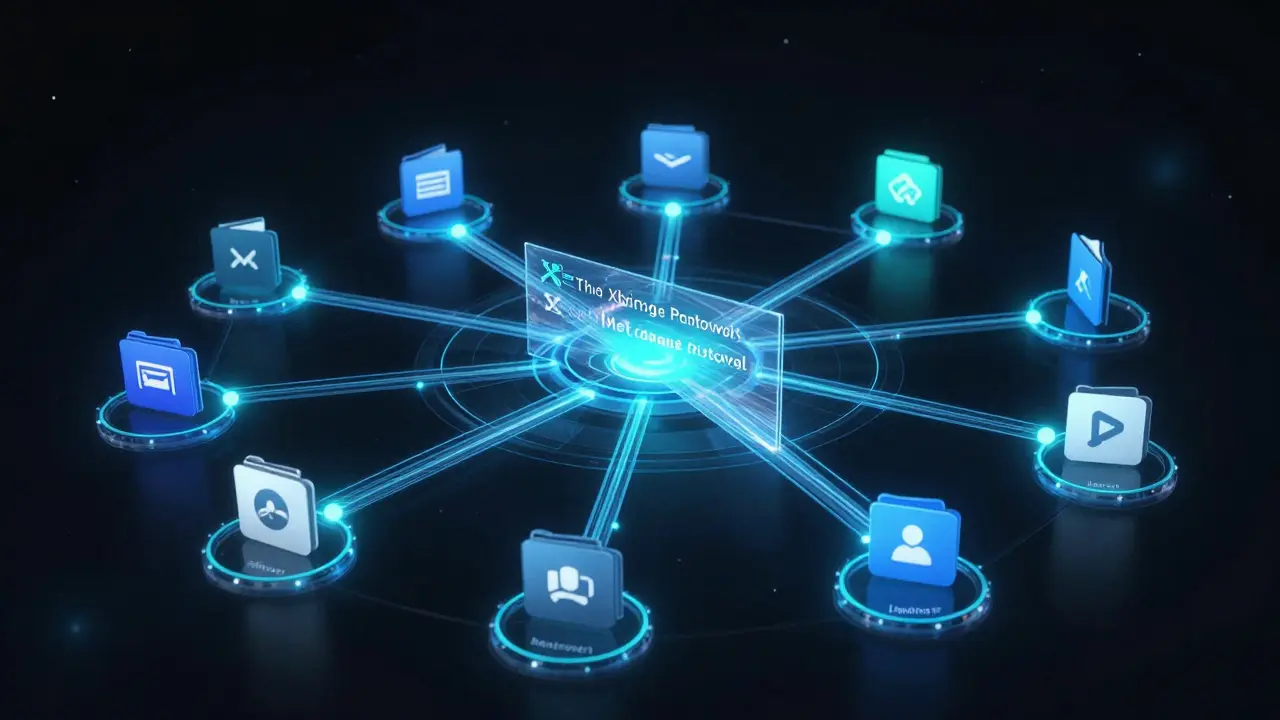
Most crypto exchanges claim to be decentralized-but how many actually are? Block DX says it’s different. It doesn’t just hide behind the word "decentralized." It claims to have rebuilt every part of an exchange from the ground up so that no single entity controls your money, your orders, or your trades. If you’re tired of centralized platforms freezing accounts, demanding KYC, or getting hacked, Block DX might sound like the answer. But is it really as secure, fast, and reliable as they say? Let’s break it down.
What Makes Block DX Actually Decentralized?
Most so-called decentralized exchanges (DEXs) still rely on centralized components. They might let you hold your own keys, but the order book? Centralized. Matching? Centralized. Settlement? Often centralized too. Block DX says it fixes all four: funds storage, order books, order matching, and settlement. All of it runs on the XBridge Protocol a custom-built, open-source blockchain protocol designed to enable fully decentralized trading without intermediaries.That means your crypto never leaves your wallet. You sign trades directly from your MetaMask, Ledger, or any compatible wallet. No deposits. No withdrawal delays. No exchange holding your funds. If you lose your private key, there’s no customer service to help you. That’s the trade-off. But if you value control, this is the point.
Block DX is open-source. Anyone can audit the code. That’s rare. Most DEXs hide behind complex smart contracts and don’t let outsiders verify what’s really happening. Block DX doesn’t just say it’s transparent-it shows it.
The BLOCK Token: More Than Just a Coin
Block DX doesn’t just use its native token, BLOCK the utility token powering all services on the Block DX ecosystem, required for fees and staking rewards, for trading. It’s the engine. Every fee on the platform-whether it’s swapping tokens or placing an order-is paid in BLOCK. That creates real demand for the token. It’s not just speculation; it’s utility.Here’s where it gets interesting: if you hold BLOCK, you can earn more. The network rewards users who help validate new blocks. For every block you successfully solve, you get 1 BLOCK token. The chance you’ll solve a block? It’s proportional to how many BLOCK tokens you hold. So if you own 1% of the circulating supply, you have roughly a 1% chance of earning the next reward.
But there’s a catch. To run a service node-something that helps keep the network running and earns you extra fees-you need at least 5,000 BLOCK tokens. That’s not small change. At current prices, that’s several thousand dollars. This isn’t for casual traders. It’s for serious participants who want to help secure the network and get rewarded for it. It’s a tiered system: hold more, do more, earn more.
How Block DX Compares to Other DEXs in 2026
The DEX space is crowded. In 2026, you’ve got SushiSwap a multi-chain decentralized exchange processing around $100 million in daily volume and supporting ERC-20 tokens across Ethereum, Arbitrum, Fantom, Avalanche, and Polygon, dYdX a leading decentralized derivatives exchange known for high leverage trading and deep liquidity on Ethereum and StarkNet, Apex Omni a next-generation DEX offering cross-chain spot and perpetual trading with low fees and high speed, and IDEX a fast, real-time DEX supporting thousands of tokens across Ethereum, Binance Smart Chain, and Polkadot.Block DX doesn’t have the trading volume of any of these. There’s no public data showing daily volume or active users. That’s a red flag for some. You can’t judge a DEX by marketing alone. If no one’s trading on it, even the most secure protocol is useless.
But here’s what Block DX does better: it doesn’t compromise on decentralization for speed. Most DEXs use layer-2 solutions or off-chain order books to get faster trades. Block DX insists on on-chain everything. That means slower trades during network congestion and higher gas fees. But it also means no one can manipulate your order or freeze your account.
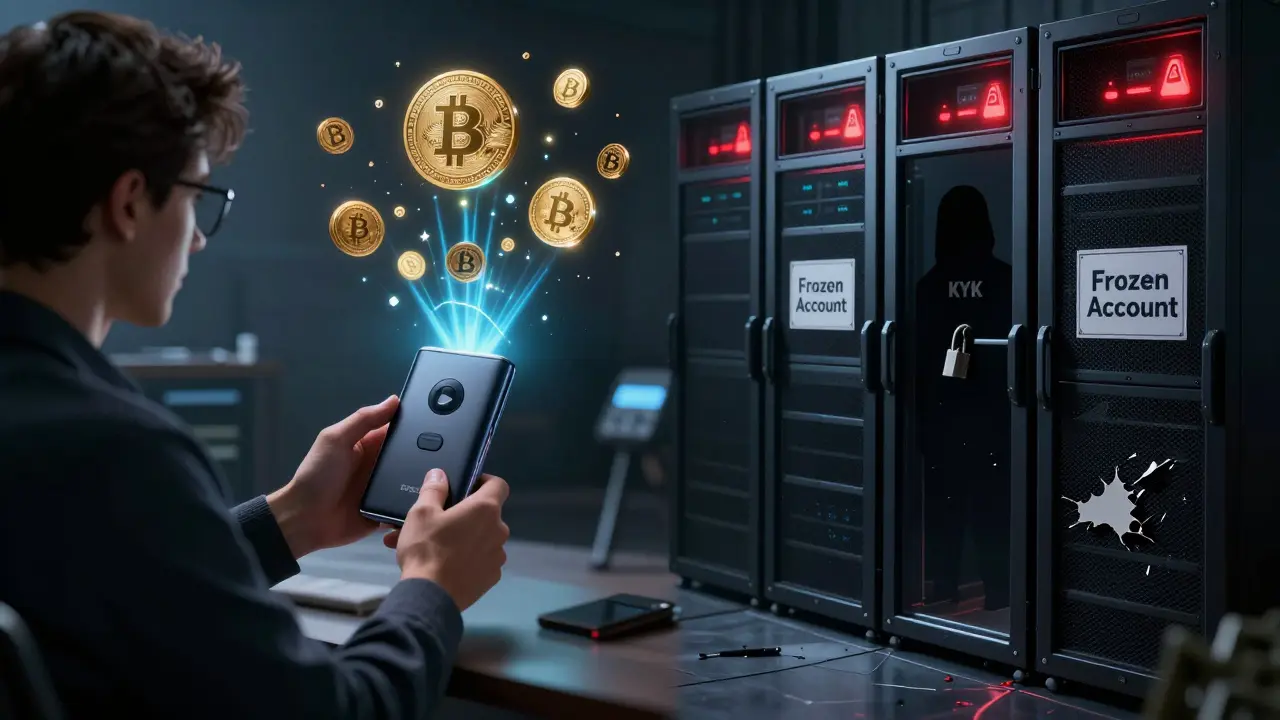
Pros of Using Block DX
- No KYC - Trade anonymously. No ID, no proof of address, no paperwork.
- Self-custody - Your keys, your coins. No exchange holds your assets.
- No central point of failure - Even if the Block DX team vanishes, the protocol keeps running.
- Access to obscure tokens - No gatekeepers. If a token is on the blockchain, you can trade it.
- Staking rewards - Earn BLOCK tokens just by holding and participating in block validation.
- Open-source - Code is public. Auditable. Verifiable.
Cons of Using Block DX
- Low liquidity - Fewer traders mean wider spreads and slippage. Large trades will move the market.
- High barrier to entry - 5,000 BLOCK tokens to run a service node? That’s out of reach for most.
- No fiat on-ramps - You can’t buy crypto with a credit card. You need ETH, BTC, or other crypto first.
- Steep learning curve - You need to understand wallets, gas fees, and blockchain basics. No hand-holding.
- No customer support - If you mess up a transaction, there’s no refund. No chatbot. No email.
- Unverified claims - "Fastest, most secure, most reliable"-where’s the proof? Independent reviews are scarce.
Who Is Block DX Really For?
Block DX isn’t for beginners. It’s not for people who want to buy Bitcoin with PayPal and forget about it. It’s for crypto natives who care about control above all else. If you’re someone who:- Has lost money on centralized exchanges due to freezes or hacks,
- Owns a hardware wallet and knows how to use it,
- Is comfortable paying gas fees and waiting for on-chain confirmations,
- And holds enough BLOCK tokens to participate in staking or service nodes,
then Block DX could be your ideal platform. It’s a tool for autonomy, not convenience.
But if you’re looking for low fees, fast trades, fiat on-ramps, or a simple interface-you’re better off with something like Apex Omni a next-generation DEX offering cross-chain spot and perpetual trading with low fees and high speed or SushiSwap a multi-chain decentralized exchange processing around $100 million in daily volume and supporting ERC-20 tokens across Ethereum, Arbitrum, Fantom, Avalanche, and Polygon.
The Bigger Picture: Why Decentralized Exchanges Are Growing
In 2026, regulators are cracking down on centralized exchanges. European users lost margin trading on Bybit. Some countries outright block access to Coinbase and Binance. Users are fleeing to platforms that can’t be shut down. That’s the real story behind Block DX’s rise-not because it’s perfect, but because alternatives are becoming riskier.Decentralized exchanges aren’t just a tech trend. They’re a political statement. They say: "I don’t trust institutions. I want to control my own money." Block DX is one of the few platforms that takes that idea to its logical extreme.
Final Verdict: Trust, But Verify
Block DX makes bold claims. It’s fast. It’s secure. It’s fully decentralized. But without public trading volume, user numbers, or third-party audits, those claims are hard to confirm. The technology looks solid. The tokenomics make sense. The open-source model is a plus.But crypto isn’t about what’s possible-it’s about what’s proven. If you’re willing to accept the risks, test it with a small amount. See how the interface feels. Try swapping a few tokens. Check the slippage. See if the network stays responsive.
Don’t invest based on hype. Invest based on experience. Block DX might be the future of crypto trading. Or it might be a niche tool for a small group of purists. Only time-and your own hands-on testing-will tell.
Is Block DX really decentralized?
Yes, according to its design. Block DX claims to decentralize all four core exchange functions: funds storage, order books, order matching, and settlement-all on-chain via the XBridge Protocol. Unlike many DEXs that use centralized order books or off-chain matching, Block DX processes everything on the blockchain. There’s no central server holding your funds or controlling trades. However, independent verification of these claims is limited, and no public audit reports are widely available.
Do I need KYC to use Block DX?
No. Block DX requires no identity verification. You trade directly from your wallet. No email, no government ID, no address proof. This makes it ideal for privacy-focused users but also means there’s no recovery option if you lose your private key.
How do I earn rewards on Block DX?
You earn BLOCK tokens by participating in block validation. The more BLOCK tokens you hold, the higher your chance of being selected to solve a block and earn 1 BLOCK as a reward. To operate a service node and earn additional fees, you need at least 5,000 BLOCK tokens. This creates a financial incentive for long-term holders to support the network.
Can I trade fiat for crypto on Block DX?
No. Block DX is a crypto-to-crypto exchange only. You need to already own cryptocurrency-like ETH, BTC, or USDT-to trade on it. You can’t deposit dollars, euros, or any fiat currency directly.
Is Block DX safe to use?
It’s as safe as your own wallet. Since Block DX doesn’t hold your funds, the platform itself can’t be hacked. But if you send crypto to the wrong address, lose your seed phrase, or interact with a malicious smart contract, you lose your money-with no recourse. Always verify contract addresses and test with small amounts first.
How does Block DX compare to Uniswap or SushiSwap?
Uniswap and SushiSwap have far higher liquidity, more trading pairs, and better user interfaces. But they often rely on layer-2 solutions or centralized order matching for speed. Block DX prioritizes full decentralization over speed and ease of use. It’s slower and less user-friendly, but more aligned with the original DeFi ideal of complete self-custody and censorship resistance.