
Imagine having your entire life savings frozen overnight. Now imagine being told that the only way to send money to your family or buy food is to use a digital currency that your government has declared forbidden by religious law. This isn't a dystopian novel plot; it is the daily reality for millions of people in Afghanistan. Since the Taliban took power in August 2021, the country has swung from a surge in crypto adoption to one of the strictest prohibitions on Earth.
In August 2022, the Taliban government officially banned all cryptocurrency activities. They called it haram (forbidden) under Sharia law, arguing that digital assets like Bitcoin are speculative and lack real-world backing. But while the official stance is total prohibition, the ground reality tells a different story. With international sanctions freezing foreign reserves and the traditional banking system collapsing, crypto didn't disappear. It went underground.
From Rapid Adoption to Total Prohibition
To understand why the ban was so drastic, you have to look at what happened just before it. In 2021, right after the political upheaval, Afghanistan saw a meteoric rise in crypto usage. The country jumped to rank 20th out of 154 nations in global crypto adoption. Why? Because people needed a way out. Traditional banks were paralyzed by sanctions, and cash was becoming worthless due to hyperinflation and aid cuts. Citizens turned to cryptocurrency as a lifeline.
Then came the reversal. By August 2022, the Taliban authorities issued a comprehensive ban. They suspended all exchanges and declared any trading illegal. The reasoning was twofold: religious interpretation that labeled crypto as gambling-like speculation, and a desire to control capital flight in a crumbling economy. The result was immediate. Monthly transaction values plummeted from millions to just $80,000 by November 2022. On paper, the market died. In practice, it just hid.
The Mechanics of the Underground Market
You might think a total ban stops everything. It doesn't. It just makes things harder and more expensive. Today, in 2026, crypto activity in Afghanistan survives through peer-to-peer (P2P) networks. These are informal markets where individuals trade directly with each other, often using social media apps or encrypted messaging services to arrange deals.
USDT (Tether) and Bitcoin are the most common tools here. USDT is preferred for its stability-it’s pegged to the US dollar, which is crucial when the local Afghan Afghani is volatile. Bitcoin is used for larger stores of value because it’s harder for authorities to trace than stablecoins in some contexts.
The enforcement is sporadic but severe. Taliban officials conduct crackdowns, arresting traders and confiscating devices. However, the decentralized nature of blockchain technology makes complete eradication nearly impossible. You can’t shut down a network that lives on thousands of individual phones and laptops. The government lacks the technical resources and manpower to monitor every P2P transaction, especially in a country where internet access is limited but growing.
| Aspect | Official Government Stance | Ground Reality (Underground) |
|---|---|---|
| Legal Status | Banned / Haram | Illegal but widely used |
| Primary Assets | N/A | USDT, Bitcoin |
| Trading Method | Exchanges Suspended | Peer-to-Peer (P2P), Social Media |
| Enforcement | Arrests, Confiscation | Sporadic, resource-limited |
| Purpose | Prevent Capital Flight | Remittances, Savings, Survival |
Why Women Rely on Crypto for Survival
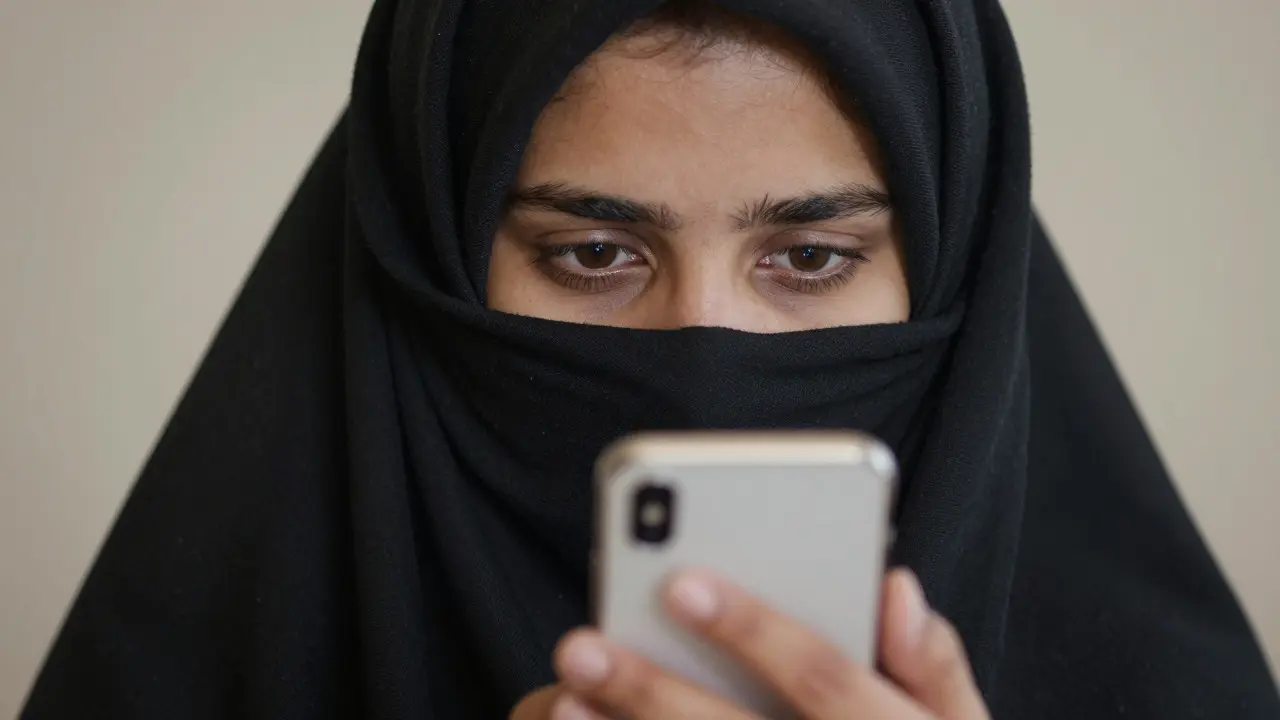
One of the most profound impacts of this prohibition is on women. Under Taliban rule, women face severe restrictions on employment, education, and even leaving their homes without a male guardian. Traditional banking requires identification documents and physical presence, both of which are barriers for many Afghan women who have been stripped of rights and documentation.
Roya Mahboob, founder of the Digital Citizen Fund, highlights this stark contrast. Her organization works to provide digital literacy and financial access to Afghan women, often through underground channels. For these women, Bitcoin isn’t an investment; it’s a tool for autonomy. It allows them to receive remittances from abroad without going through a bank that might freeze their accounts or demand impossible paperwork. As Mahboob notes, crypto offers a "hope of financial freedom" in an environment designed to restrict it.
This creates a unique dynamic: the very technology the government bans is the one empowering its most marginalized citizens. The Human Rights Foundation and similar groups leverage this decentralization to bypass state control, turning a financial tool into a human rights instrument.
The Global Context: Afghanistan’s Isolation
Afghanistan’s stance is increasingly isolated on the world stage. As of 2026, only about nine countries maintain outright bans on Bitcoin, including Iraq, China, and Egypt. Most of these nations are slowly reconsidering their positions. Morocco, for example, lifted its ban in 2024. The global trend is moving toward regulation and integration, not prohibition.
Afghanistan remains an outlier. The Taliban’s ban is driven less by economic strategy and more by ideological rigidity and a lack of diplomatic recognition. Without access to the SWIFT banking system or international aid flows, the government feels threatened by any parallel financial system they can’t control. Yet, this isolation hurts the population more than the regime. Experts suggest that long-term sustainability of such a ban is questionable, given the practical impossibility of stopping decentralized networks in a desperate economy.

Risks and Realities for Users
If you are interacting with contacts in Afghanistan or studying this market, understanding the risks is crucial. Here is what users face:
- Legal Persecution: Being caught trading crypto can lead to arrest, fines, or confiscation of assets. There is no legal recourse if your funds are seized.
- Fraud and Scams: Without regulated exchanges, P2P markets are rife with fraud. Buyers and sellers rely on trust, which is hard to establish in high-stakes, high-risk environments.
- Infrastructure Challenges: Unreliable electricity and internet connectivity make transactions difficult. A power outage during a transfer can complicate matters, though blockchain itself remains secure.
- Volatility: While USDT is stable, Bitcoin’s price swings can wipe out savings if not managed carefully. For someone living paycheck to paycheck, a 10% drop can mean missing rent or medicine.
Despite these dangers, the alternative-having no access to money-is worse. This desperation drives the resilience of the underground market.
What Comes Next?
The future of crypto in Afghanistan depends on two factors: the durability of the Taliban regime and the evolution of global financial pressure. If sanctions ease or the government gains international recognition, we might see a shift toward regulated frameworks, similar to how other restrictive countries have adapted. However, as long as the current leadership holds power, the ban will likely remain in place, forcing innovation into the shadows.
For now, crypto in Afghanistan is not about getting rich. It’s about survival. It’s a testament to human ingenuity in the face of extreme restriction. The blockchain doesn’t care about borders or decrees; it only cares about consensus. And in Afghanistan, the consensus among those who need it is clear: digital assets are essential.
Is cryptocurrency completely banned in Afghanistan?
Yes, officially. The Taliban government declared all cryptocurrency activities illegal in August 2022, citing religious grounds. However, underground peer-to-peer trading continues extensively due to economic necessity.
Why did the Taliban ban Bitcoin?
The Taliban cited Sharia law, labeling crypto as 'haram' (forbidden) because they view it as speculative gambling lacking real-world asset backing. They also aim to prevent capital flight and maintain control over the financial system.
How do people trade crypto in Afghanistan despite the ban?
People use peer-to-peer (P2P) networks, often facilitated through social media and encrypted messaging apps. They trade directly with each other, avoiding formal exchanges which have been suspended by the government.
Which cryptocurrencies are most popular in Afghanistan?
USDT (Tether) is the most popular for daily transactions and remittances due to its stability against the US dollar. Bitcoin is also widely used for storing value and larger transfers.
Does the crypto ban affect women differently?
Yes. Women face stricter movement and employment restrictions. Crypto provides them with a way to access financial services and receive remittances without needing traditional bank accounts or male guardians, offering a rare form of financial independence.
Will the ban be lifted in the future?
It is uncertain. While global trends are moving toward crypto regulation, the Taliban's ideological stance and lack of international recognition make a near-term lift unlikely. However, economic pressure may force pragmatic changes over time.