Iran Power Grid Calculator
Electricity in Iran: Who Gets Power?
The IRGC's unlicensed mining operations consume energy equivalent to millions of homes while citizens face blackouts.
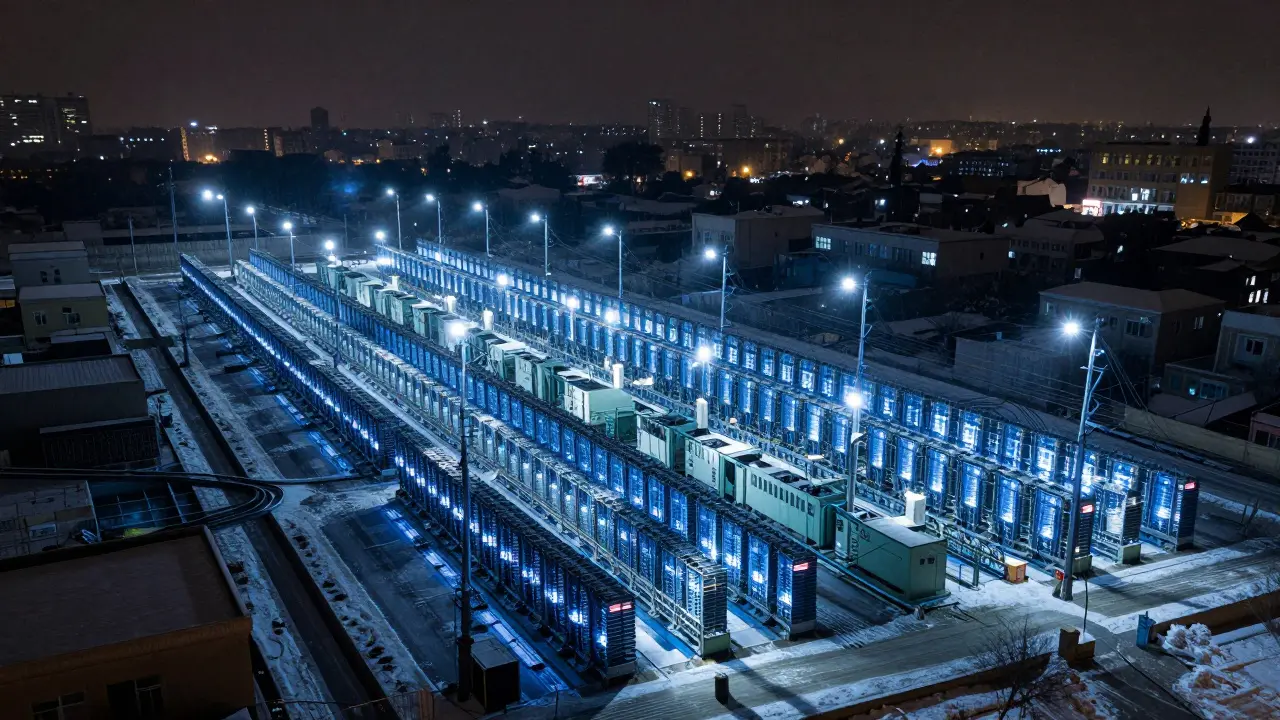
IRGC POWER THEFT This mining operation drains the grid while ordinary citizens suffer blackouts.
Based on data from the article: IRGC mining uses 1,800 MW (60% of total), enough to power 150,000 Iranian homes per farm
On a winter night in Tehran in 2025, millions of households went dark. The power grid collapsed again-this time for 14 hours. Factories shut down. Hospitals ran on backup generators. Meanwhile, just outside the city, in a military compound in Rafsanjan, thousands of Bitcoin mining rigs hummed nonstop, drawing electricity so cheaply it might as well have been free.
This isn’t coincidence. It’s policy.
Iran’s unlicensed cryptocurrency mining isn’t some underground fringe activity. It’s a state-run operation, controlled by the Islamic Revolutionary Guard Corps (IRGC), and it’s draining the country’s power grid to fund sanctions evasion. While ordinary Iranians struggle to keep their lights on, the IRGC is mining Bitcoin at scale-using public electricity, dodging taxes, and bypassing international financial restrictions-all with full political protection.
How the IRGC Took Over Crypto Mining
When Iran was cut off from the global banking system in the late 2010s, the regime needed a new way to move money. Traditional wire transfers were blocked. Foreign currency reserves were frozen. Bitcoin became the workaround.
By 2020, the IRGC had moved from watching crypto mining to owning it. They didn’t just set up a few rigs in a basement. They built industrial-scale farms-175-megawatt facilities in Kerman Province, hidden inside military zones, connected directly to state power lines. These weren’t licensed operations. They weren’t even registered. They were just… there.
The IRGC partnered with Chinese hardware suppliers to import thousands of ASIC miners-specialized machines built only for Bitcoin mining. These machines run 24/7, consuming as much power as a small city. One farm in Rafsanjan alone uses enough electricity to power 150,000 Iranian homes. Yet, the IRGC doesn’t pay for it. Not a dime.
The Two-Tiered System: Who Pays, Who Doesn’t
Iran’s government pretends to regulate crypto mining. In 2019, they created a licensing system under the Ministry of Industry, Mines, and Trade. But the rules were rigged from the start.
Private miners? They pay sky-high electricity rates-up to 10 times what the IRGC pays. They’re forced to sell their Bitcoin to the Central Bank of Iran at fixed, below-market prices. Many went out of business within a year.
The IRGC? They don’t need a license. They don’t pay bills. They don’t report profits. They don’t answer to anyone.
Even worse, in 2022, Iran’s parliament quietly passed a law allowing the military to build its own power plants and transmission lines. That meant the IRGC could now siphon electricity directly from the national grid-cutting off neighborhoods, factories, and schools-to feed their mining rigs.
It’s a two-tiered system: citizens get blackouts. The IRGC gets Bitcoin.
Who’s Really Running This?
The IRGC isn’t acting alone. They’re backed by powerful religious foundations tied directly to Supreme Leader Ali Khamenei.
Astan Quds Razavi, a massive charitable trust controlling billions in assets-including holy sites, real estate, and businesses-is one of the biggest players. It’s not a charity in the traditional sense. It’s a state-owned conglomerate with direct access to military-grade infrastructure and political immunity.
These organizations don’t just mine Bitcoin. They launder it. They convert it into cash through shell companies in Turkey, the UAE, and Russia. Blockchain analysts have traced millions in Bitcoin transactions from Iranian mining farms to wallets linked to Hezbollah, the Houthis, and other Iranian-backed militias.
The U.S. Treasury Department and Israeli intelligence have both identified these wallets. In 2023, they froze over $400 million in crypto assets tied to IRGC-linked mining operations. But the mining didn’t stop. It just moved to new addresses.

Why Crypto Works for Sanctions Evasion
Why not just use cash or gold? Because crypto is faster, harder to trace, and doesn’t need banks.
Traditional banking requires identity verification, SWIFT codes, and correspondent banks-all of which are blocked for Iran. Crypto? You send Bitcoin from one digital wallet to another. No middleman. No paper trail. No oversight.
Even better: Bitcoin transactions are pseudonymous. You don’t need a name, ID, or passport. Just a private key. That’s why Iran’s regime loves it. They can move money out of the country without triggering sanctions flags.
And it’s working. In 2024, Iran was ranked among the top 10 global Bitcoin producers by energy consumption. Not because of innovation. Not because of tech talent. Because they stole the power to do it.
The Human Cost
Iran’s energy minister, Ali Abadi, once called unlicensed mining “an ugly and unpleasant theft.”
That’s ironic. Abadi used to be a high-ranking IRGC commander. He led military logistics before becoming CEO of a state university. Now he’s in charge of energy. He’s not just a bystander-he’s part of the system.
Meanwhile, in cities like Mashhad and Shiraz, families bundle up in winter because the heat is off. Children do homework by phone flashlight. Hospitals delay surgeries because generators can’t keep up. Farmers can’t pump water. Factories lay off workers.
And all the while, the IRGC’s mining farms keep running.
One study estimated that 60% of Iran’s total mining hardware-around 100,000 machines-is operated by state-linked entities. That’s more than the entire U.S. state of Texas. And all of it runs on stolen electricity.

What the Government Really Wants
Iran’s government doesn’t want to stop crypto mining. It wants to control it.
In December 2024, the Central Bank blocked all domestic crypto-to-rial exchanges. It looked like a crackdown. But by January 2025, they reopened the system-only for approved traders using a government-controlled API. That API gives them full access to every transaction: who sent what, when, and where.
This isn’t regulation. It’s surveillance. It’s extraction.
The state doesn’t want Iranians mining Bitcoin for themselves. They want Iranians to buy Bitcoin from state-approved exchanges, where the government takes a cut. And they want the IRGC to keep mining in the shadows, using public power, and keeping all the profits.
The Future: More Power, More Control
There’s no sign the IRGC is slowing down. In fact, they’re expanding.
New mining farms are being built in remote provinces-near nuclear sites, military bases, and energy hubs. They’re using solar panels and hydroelectric dams that were meant for civilian use. They’re even negotiating with Russian and North Korean partners to import more mining hardware, bypassing Western sanctions through third-country intermediaries.
Iran’s energy crisis won’t be solved by shutting down a few illegal rigs. It’s too big. Too entrenched. Too politically protected.
Until the international community targets the power infrastructure behind these mines-not just the wallets-the IRGC will keep running. And Iranians will keep living in the dark.
Is cryptocurrency mining legal in Iran?
Technically, yes-but only for state-approved miners. The government issues licenses, but the rules are stacked against private operators. Licensed miners must pay high electricity rates and sell their Bitcoin to the Central Bank at fixed prices. Meanwhile, IRGC-linked operations operate without licenses, pay nothing, and are protected by military force. So while mining isn’t banned, the system is designed to funnel profits to regime-aligned entities.
How much electricity does Iran’s crypto mining use?
Estimates suggest Iran’s total crypto mining consumes between 2,500 and 3,000 megawatts of electricity at peak times. That’s equivalent to the entire power output of a medium-sized country. Roughly 60% of that-around 1,800 megawatts-is used by IRGC-affiliated operations. For comparison, Tehran’s entire residential sector uses about 2,200 megawatts. So mining alone is consuming nearly the same amount of power as all homes in the capital.
Why doesn’t Iran just shut down these illegal mines?
Because they’re not illegal to the people in charge. The IRGC, religious foundations like Astan Quds Razavi, and top officials are the ones running them. Shutting them down would mean cutting off a major source of untraceable revenue used to fund regional proxies, bypass sanctions, and maintain military budgets. The government’s crackdowns are performative-targeting small private miners while ignoring the big players. It’s not about enforcement. It’s about control.
Can Iranians still mine crypto legally?
It’s nearly impossible. The licensing process is slow, expensive, and requires approval from multiple state agencies. Even if you get a license, you’re forced to sell your Bitcoin to the Central Bank at a loss. Most private miners can’t cover their electricity bills, let alone make a profit. As a result, thousands of legal licenses sit unused. The real mining is happening outside the system-controlled by the IRGC.
How is the U.S. responding to Iran’s crypto mining?
The U.S. Treasury Department has targeted specific Bitcoin wallets tied to IRGC operations, freezing over $400 million in assets since 2022. They’ve also sanctioned Chinese companies that supplied mining hardware to Iran. But these actions haven’t stopped the mining-they’ve just pushed it underground. The U.S. hasn’t targeted Iran’s power infrastructure directly, which means the IRGC can keep running its farms. Without cutting off the electricity, sanctions on crypto wallets are like trying to stop a flood by blocking a single pipe.