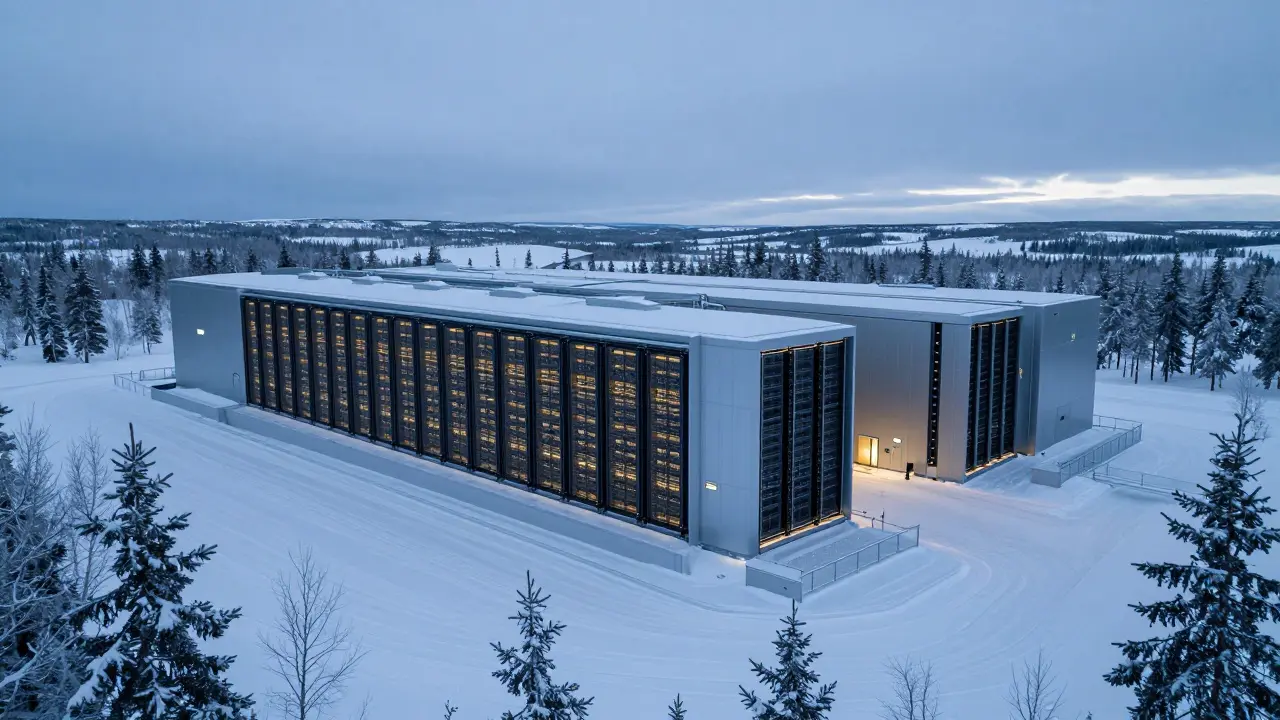
Imagine waking up to find your business costs have spiked by 6,000% overnight. For cryptocurrency miners in Sweden, this isn't a nightmare-it's the current legal reality. After years of being a welcoming hub for digital asset production, Sweden has pivoted from being a "mining haven" to one of the most hostile environments for crypto operations on the planet. The government didn't just remove the perks; they actively priced the industry out of existence.
The Great Reversal: From Incentives to Penalties
Back in 2017, Sweden had a different vision. They wanted to attract big tech and digital infrastructure, so they rolled out a massive 98% tax reduction for data centers. It worked. Huge names like Microsoft, Amazon, and Facebook set up shop, lured by the naturally cool Nordic air and cheap hydroelectric power. For a while, Bitcoin miners rode the wave, using that same cheap energy to power their rigs profitably.
But by 2023, the mood in Stockholm shifted. The government decided that Sweden crypto mining tax incentives were no longer a good deal for the public. They didn't just tweak the numbers; they wiped out the 98% discount entirely and slapped on a punitive energy tax. This move effectively ended Sweden's run as the last remaining stronghold for miners in Europe.
The Math of the Meltdown: A 6,000% Jump
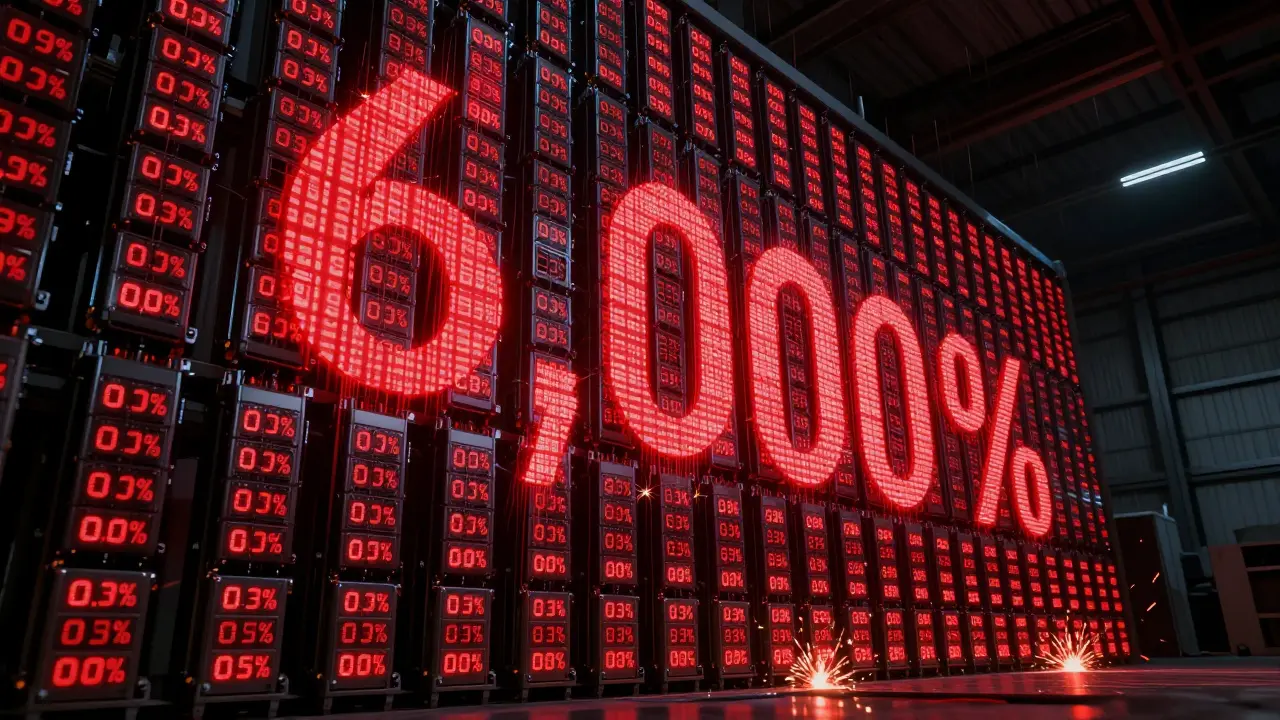
To understand why this was such a death blow, you have to look at the numbers. Before the change, the energy tax for data centers was a negligible SEK 0.006 (roughly $0.0006) per kilowatt hour. In July 2023, that number jumped to SEK 0.36 (about $0.035) per kilowatt hour. That is a staggering 6,000% increase.
For a typical mining operation using ASIC hardware (Application-Specific Integrated Circuits), energy is the primary overhead. When the tax on that energy increases by this magnitude, the profit margin doesn't just shrink-it vanishes. In many cases, the tax bill alone ended up being higher than the total value of the coins mined. Mathematically, it became impossible to stay in business unless the price of cryptocurrency surged by several hundred percent almost instantly.
| Attribute | Pre-July 2023 (Incentivized) | Post-July 2023 (Punitive) | % Change |
|---|---|---|---|
| Tax per kWh (SEK) | 0.006 | 0.36 | +6,000% |
| Tax Reduction | 98% | 0% | -100% |
| Economic Viability | High (Hydro-powered) | Negative/Unviable | N/A |
Why the Sudden Change of Heart?
You might wonder why a government would pivot so violently. Swedish policymakers argued that crypto mining provided "minimal contribution" to the actual economy. Unlike a traditional data center that creates local jobs and supports a broader tech ecosystem, a mining farm is basically a warehouse of humming machines that consume massive amounts of electricity while employing very few people.
There was also a bit of a grudge involved. During the 2018 market crash, several mining companies simply vanished, leaving behind unpaid energy bills and causing chaos for local power providers. This made the government view the industry as flaky and unreliable. They decided that the hydroelectric power-a precious national resource-was better spent on industries that actually created long-term stability and jobs.
A Global Contrast: Where are the Miners Going?
Sweden's approach is a complete 180 from other parts of the world. While Sweden is shutting the door, other places are rolling out the red carpet. For instance, El Salvador has actively embraced mining as a core part of its national strategy. In the U.S., states like Texas compete to attract miners by offering flexible energy policies and cheap power from wind and solar farms.
Even Sweden's neighbors are taking a different path. Norway shares similar concerns about energy use and environmental impact, but they haven't implemented these kinds of crushing tax penalties. This has turned Sweden into a regulatory outlier in the EU, creating a massive gap between the "pro-mining" and "anti-mining" jurisdictions.
The Aftermath: Stranded Assets and Mass Exodus
The fallout was immediate. Because the policy change happened so quickly, many operators found themselves with "stranded assets." If you spent millions building a purpose-built facility in northern Sweden, you can't exactly pack that building into a suitcase. Companies were forced to choose between liquidating their gear at a loss or paying astronomical costs to ship heavy hardware to other countries.
Most chose to flee. The community on platforms like Reddit and specialized mining forums describes the current environment as "devastating." The exodus has primarily headed toward Kazakhstan, Canada, and various U.S. states where the regulatory framework is more predictable and the energy costs are manageable.
What This Means for the Future of Crypto in Europe
Sweden has essentially proven that tax policy is the most effective weapon for eliminating an industry. By making it mathematically impossible to profit, they achieved their goal of clearing out commercial mining operations almost entirely by late 2023. Other European governments are now studying the "Swedish Model" as a case study in industrial regulation.
If you're looking at the broader landscape, this signals a trend toward stricter environmental standards. The European Union is increasingly focused on the carbon footprint and energy inefficiency of Proof of Work consensus mechanisms. While not every country will go as far as Sweden, the era of "cheap and easy" energy for miners in Europe seems to be closing.
Why did Sweden increase the crypto mining tax so drastically?
The Swedish government determined that crypto mining offered very little in terms of job creation and economic growth compared to the massive amount of energy it consumed. Additionally, bad experiences during the 2018 market crash, where some miners left behind unpaid energy bills, pushed the government toward a more punitive approach.
How much did the energy tax actually increase?
The energy tax for data centers rose from SEK 0.006 to SEK 0.36 per kilowatt hour. This represents a 6,000% increase, which made the cost of electricity far exceed the potential revenue from mining most cryptocurrencies.
Do these taxes affect all data centers or just crypto miners?
While the tax targets data centers generally, the elimination of the previous 98% tax reduction hit crypto miners hardest. Traditional cloud services and tech giants like Microsoft or Amazon have different business models and revenue streams that allow them to absorb these costs, whereas mining profit is tied directly to energy costs.
Where did the Swedish mining operations move to?
Most commercial operators relocated their hardware to jurisdictions with more favorable energy pricing and regulatory environments, specifically citing Kazakhstan, Canada, and several states in the U.S. as primary destinations.
Is cryptocurrency mining still legal in Sweden?
Yes, it is not illegal, but it is economically unviable for almost everyone. The government didn't ban the activity; they simply used taxation to make it a losing financial venture for commercial operators.
Next Steps for Affected Operators
If you're still holding hardware in a restrictive region, the priority is a cost-benefit analysis of relocation versus liquidation. Shipping ASIC rigs internationally is expensive, but paying a 6,000% tax hike is worse. Look for jurisdictions with "green" energy incentives, as these are currently the most stable alternatives to the failed Nordic model. For those looking to start a venture, avoid regions where energy subsidies are purely political, as they can be revoked overnight.