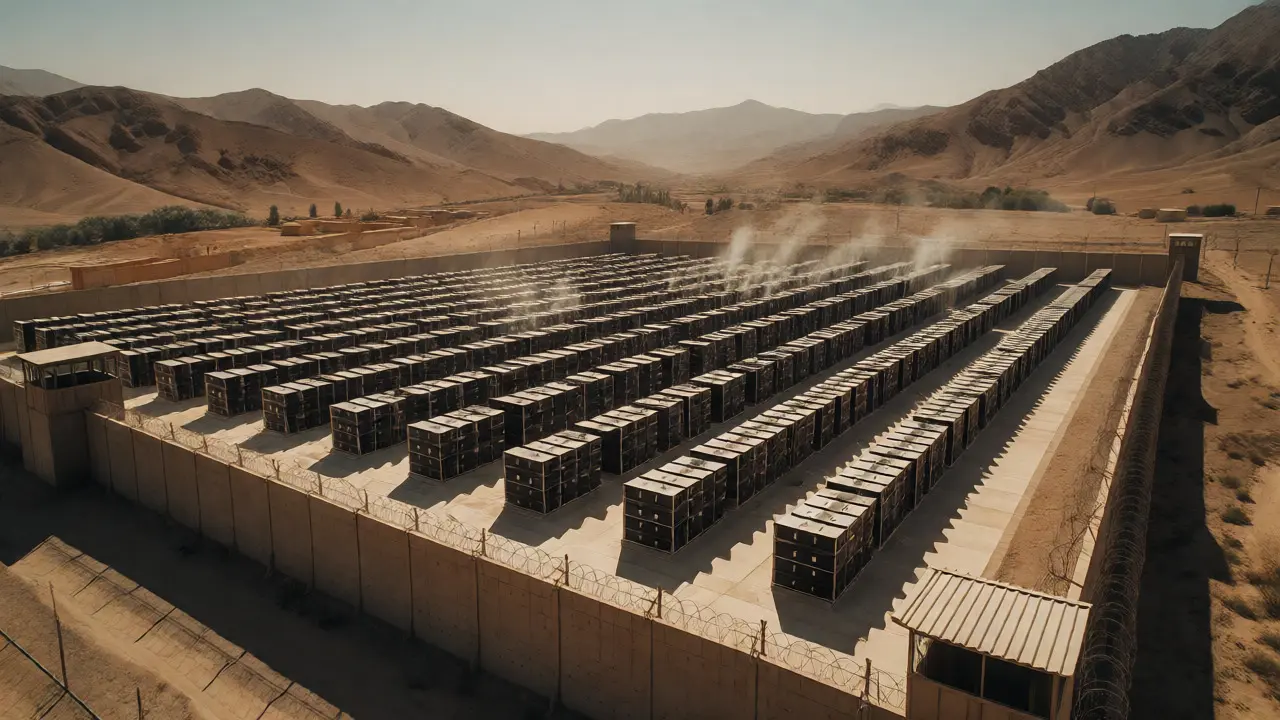
Imagine turning on your air conditioner during a 45°C heatwave in Tehran, only to have the lights flicker and die. You aren't alone. Across multiple provinces, Iranians face hours-long blackouts, often blaming their own habits or aging infrastructure. But there is a hidden culprit humming away in secure compounds and military bases: massive server farms mining Bitcoin. This isn't just a niche hobby for tech enthusiasts; it is a strategic economic lifeline for the Islamic Republic, deeply intertwined with the nation's most powerful security apparatus.
State-controlled crypto mining in Iran represents a unique intersection of geopolitics, energy policy, and digital finance. Unlike the decentralized ethos usually associated with cryptocurrency, Iran’s sector is heavily centralized, protected by the Islamic Revolutionary Guard Corps (IRGC), and used as a tool to bypass crippling international sanctions. Since officially legalizing mining in July 2018, the country has transformed from a gray-market playground into a global mining hub, ranking among the top three nations for Bitcoin hash rate at its peak. But this success comes at a steep price: a national energy crisis, opaque financial flows, and increasing friction with the global financial system.
The Strategic Pivot: Why the State Entered the Game
To understand why the Iranian government cares so much about Bitcoin, you have to look at the banking landscape. For years, U.S. sanctions have severed Iran from the SWIFT network, making it nearly impossible to move money internationally through traditional banks. Enter cryptocurrency. In 2018, under President Hassan Rouhani, Iran became one of the first countries to officially recognize crypto mining. The logic was simple: if you can’t send dollars abroad, mine digital assets that exist outside the traditional banking system.
This wasn't just about individual traders. By 2019-2020, major state entities, particularly those linked to Supreme Leader Ali Khamenei and the IRGC, began aggressively entering the sector. They partnered with Chinese firms-experts who fled China’s own mining crackdown-to build industrial-scale facilities. These weren't small setups in garages; we are talking about mega-farms like the 175-megawatt facility in Rafsanjan, Kerman province. Here, the synergy between cheap domestic electricity and high-value digital currency created a profit margin that private businesses could barely dream of matching.
The Energy Equation: Cheap Power and Political Protection
The engine driving this industry is electricity. Iran subsidizes energy heavily, offering rates as low as $0.004 per kWh for certain sectors. Compare that to the global commercial average, which often exceeds $0.10 per kWh, and you see the arbitrage opportunity. However, the true advantage for state-affiliated miners isn't just the tariff; it's the access.
Investigative reports describe a "crypto cartel" where operations run on dedicated power feeds within special economic zones or even on IRGC-controlled military bases. While ordinary citizens and factories face rationing during summer peaks, these protected mines often continue running uninterrupted. A striking example occurred in Ahvaz, where a large-scale mining operation was discovered operating undetected for two years inside the tunnels beneath the Shahid Ghorbani Sports Complex. When found, public outrage erupted, with social media users connecting the dots between their blackout struggles and the silent hum of ASIC miners in regime-protected compounds.
| Feature | Legal Private Miners | State-Affiliated / IRGC Entities |
|---|---|---|
| Electricity Tariff | ~$0.07/kWh (Regulated) | ~$0.004/kWh (Subsidized/Dedicated) |
| Regulatory Oversight | High (Ministry of Industry, Mine and Trade) | Low (Exempt or Self-Policed) |
| Hardware Source | Must be Government-Approved | Mixed (Often imported via informal channels) |
| Power Stability | Subject to Rationing | Prioritized Access |
| Primary Goal | Profit/Tax Compliance | Sanctions Evasion/Capital Flight |

Sanctions Evasion and the Tether Freeze
If mining generates the asset, how does the state use it? The primary function is converting local resources (electricity) into liquid foreign currency (USDT or BTC) without touching the Western banking system. This allows the regime to import goods and service debts despite embargoes. But the global financial watchdogs are catching up.
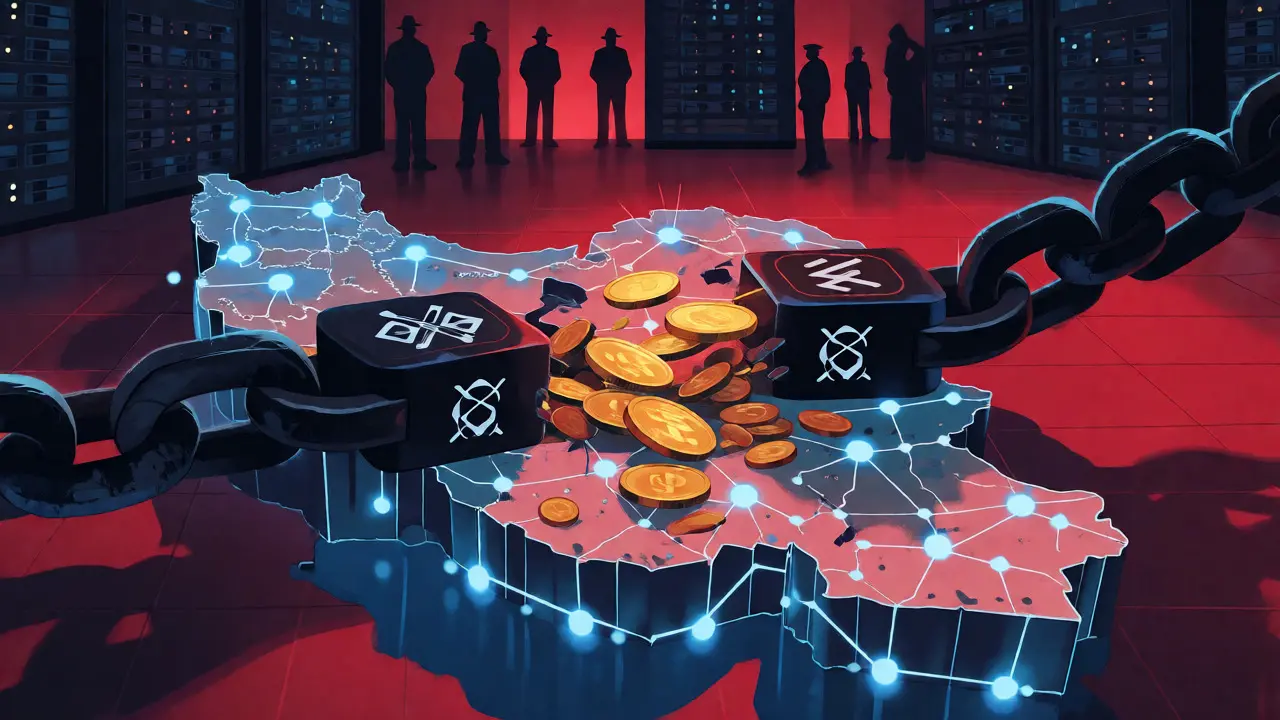
In July 2025, Tether, the issuer of the USDT stablecoin, executed its largest-ever freeze of Iranian-linked funds. They blocked 42 addresses tied to Nobitex, Iran’s largest exchange, and wallets flagged by Israeli counter-terrorism bureaus. This was a shock to the system. It disrupted entrenched transaction patterns and forced a rapid adaptation. The Central Bank of Iran subsequently urged users to offload USDT holdings in favor of DAI via the Polygon network, trying to stay ahead of further freezes. This cat-and-mouse game highlights the fragility of using crypto as a sanctions workaround when the issuers themselves are compliant with U.S. regulations.
Regulatory Whiplash: From Freedom to Surveillance
The regulatory environment in Iran has swung wildly over the past few years. What started as a relatively open market has tightened significantly. As of 2025, legal mining requires a license from the Ministry of Industry, Mine and Trade, which can take 6-8 weeks to process. Operators must use approved hardware, which reportedly reduces efficiency by 15-20% compared to the latest international models.
But the biggest shift happened in late 2024 and early 2025. The Central Bank ordered the closure of rial payment gateways for exchanges, citing a lack of transparency and unpaid taxes. When they partially reopened in January 2025, it came with strings attached: mandatory government API access that provided authorities with full user data. This effectively ended anonymity for domestic transactions. Furthermore, the August 2025 enactment of the "Law on Taxation of Speculation and Profiteering" imposed capital gains tax on crypto trading, formally categorizing it alongside gold and real estate. The message is clear: the state wants its cut, and it wants to know exactly who is holding what.
The Human Cost: Public Outrage and Infrastructure Strain
While the state benefits from the revenue, the general population bears the brunt of the infrastructure strain. Iran’s power grid was never designed to handle gigawatts of extra load from mining farms. During the summer heatwaves of 2024, verified reports documented outages lasting up to 14 hours in Tehran districts while temperatures hit 45°C. On platforms like X (formerly Twitter), hashtags like #IranEnergyCrisis trended as citizens pointed fingers at the "regime mines" consuming electricity meant for homes and hospitals.
This tension creates a paradox. The government promotes regulated mining as part of its economic strategy, yet unregulated, state-protected operations exacerbate the very energy crisis that makes daily life difficult for millions. It is a classic case of elite capture, where the political connections required to access subsidized energy and protection from enforcement actions create an uneven playing field. For the average Iranian trader, navigating this landscape means dealing with frequent advertising bans, sudden gateway closures, and a surveillance-heavy compliance regime.
Future Outlook: Isolation or Integration?
Where does this leave Iran’s crypto sector? SpecialEurasia analysts note persistent tensions between regulatory ambitions, economic necessity, and the physical limits of the power grid. The trajectory points toward increased state control and surveillance. The Central Bank’s development of a "Rial Currency," a digital version of the banknote, suggests a desire to centralize digital money rather than embrace decentralized alternatives.
For now, Iran remains a critical node in the global mining map, but it is increasingly isolated. With major players like Tether freezing assets and international scrutiny rising, the era of easy, anonymous profit is fading. The regime is doubling down on using crypto as a survival tool, balancing the need for foreign currency against the domestic anger caused by blackouts. Whether this strategy holds depends on whether the state can stabilize its energy grid and whether global financial systems will continue to close the loopholes Iran has exploited for the last five years.
Is cryptocurrency mining legal in Iran?
Yes, cryptocurrency mining is technically legal in Iran, but it is heavily regulated. Since July 2018, operators must obtain licenses from the Ministry of Industry, Mine and Trade, use government-approved hardware, and pay specific electricity tariffs. However, enforcement is inconsistent, and many state-affiliated operations operate with exemptions.
Why is crypto mining controversial in Iran?
The controversy stems from the strain on the national power grid. Mining consumes vast amounts of subsidized electricity, contributing to frequent blackouts across the country. Citizens often blame these outages on unregulated or state-protected mining farms, leading to public outrage, especially during hot summers when demand for cooling is highest.
What role does the IRGC play in Iranian crypto mining?
The Islamic Revolutionary Guard Corps (IRGC) is a dominant player in Iran's crypto sector. IRGC-linked entities manage large-scale mining farms, often located on military bases or in special economic zones. They benefit from privileged access to cheap electricity and minimal regulatory oversight, using the mined cryptocurrency to circumvent international sanctions and generate foreign currency.
How do international sanctions affect Iranian crypto users?
International sanctions lead to restrictions on accessing global exchanges and stablecoins. For instance, in July 2025, Tether froze 42 Iranian-linked addresses. This forces Iranian users and businesses to adapt by switching to other stablecoins like DAI or using different blockchain networks to maintain liquidity and avoid having their funds locked by international providers.
What are the current regulations for crypto trading in Iran?
As of 2025, regulations include a ban on real-life and online crypto advertising (enacted February 2025) and a new capital gains tax on crypto trading (August 2025). Exchanges must provide full user data to the government via API, ending previous levels of anonymity. Payment gateways for fiat-to-crypto transactions are subject to strict monitoring and occasional closures by the Central Bank.