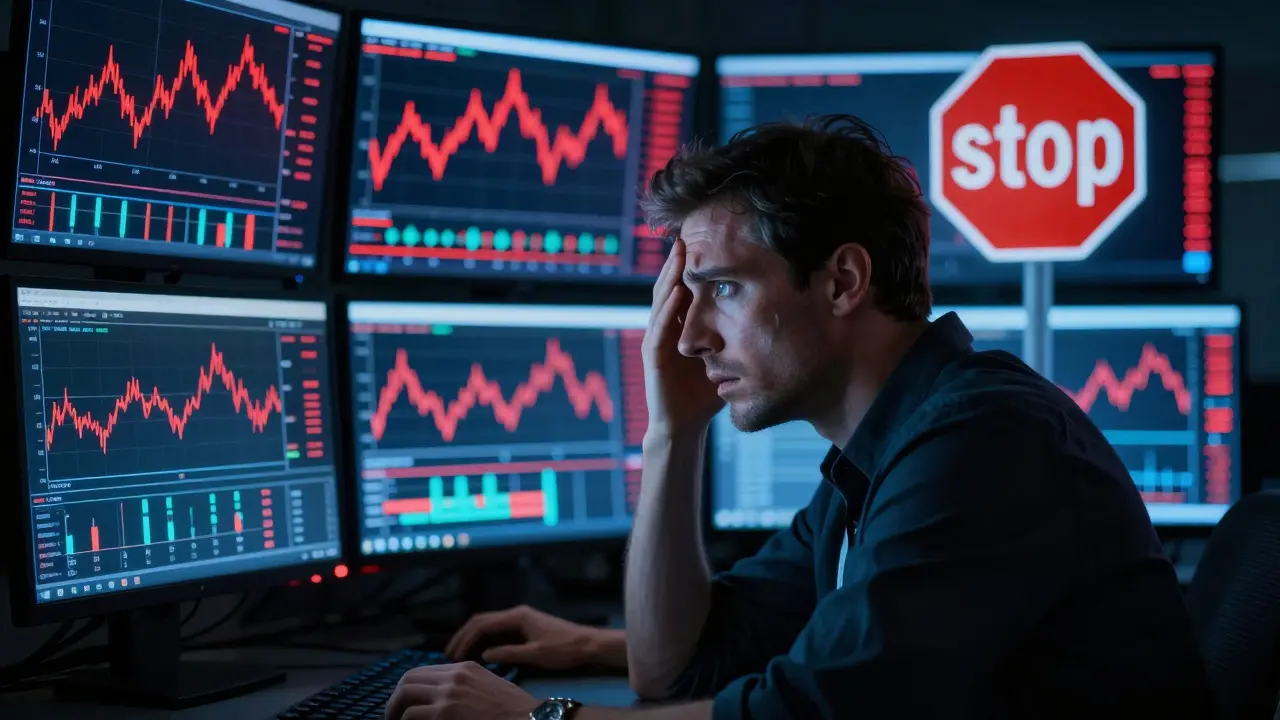
In the fast-paced world of stop-loss orders is a risk management tool used by traders to limit a potential loss by specifying a price at which an asset should be sold automatically, the difference between these two methods isn't just technical-it's psychological. One relies on your willpower, while the other relies on a server in a data center. For most people, especially in the volatile crypto market, that distinction is the difference between a manageable loss and a portfolio disaster.
The Discipline Trap: How Mental Stops Work
A mental stop-loss is exactly what it sounds like: a price point you keep in your head. You don't tell the exchange anything; you just monitor the charts and promise yourself that you'll hit the sell button once the price hits your limit. On paper, this gives you total control. You can look at the order book, check the 1-minute candles, and decide if the dip is a flash crash or a genuine trend reversal.
However, mental stops are where the "deer-in-headlights" phenomenon happens. When the market crashes, fear and greed take over. You might experience a psychological freeze, or worse, you might start negotiating with yourself. "Maybe it'll bounce back in five minutes," you think. This delay is where the most damage occurs. Because you are the sole point of failure in this system, any lapse in discipline leads to losses that far exceed your original plan.
The "Set and Forget" Power of Automated Orders
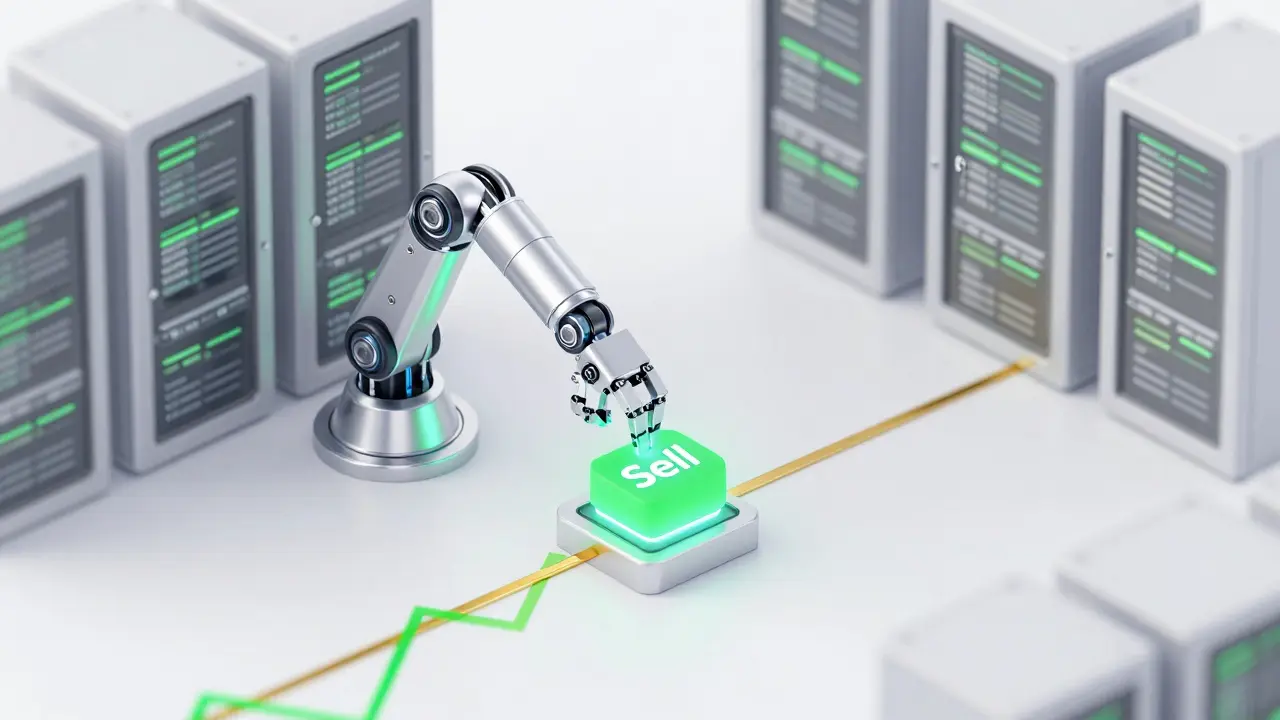
Automated stop-loss orders remove the human element entirely. You program a specific trigger price into your trading platform, and the moment the market hits that value, the exchange executes the trade. It doesn't matter if you're asleep, at work, or panicking-the trade happens.
This approach is essentially an insurance policy against your own emotions. By removing the need to make a decision during a crisis, you build "discipline muscles." You've already made the hard decision while you were calm and rational; the machine simply carries out the instruction. This is particularly vital for part-time traders who can't stare at a screen 24/7, as crypto markets never close.
| Feature | Mental Stop-Loss | Automated Stop-Loss |
|---|---|---|
| Execution | Manual (requires intervention) | Automatic (programmed) |
| Emotional Bias | High (susceptible to hope/fear) | None (binary execution) |
| Control | High flexibility in real-time | Rigid based on trigger price |
| Risk of Slippage | Lower (can time the exit) | Higher during extreme volatility |
| Effort | Constant monitoring required | One-time setup |
The Achilles Heel: Slippage and Volatility
If automated orders are so great, why do some pros still use mental stops? The answer is Slippage, which is the difference between the expected price of a trade and the price at which the trade is actually executed. In a massive crash, the price can "gap" down so quickly that your stop-loss at $100 might not get filled until $90. The automation works, but you didn't get the price you wanted.
Experienced traders sometimes prefer mental stops in high-liquidity environments because they can read the market's microstructure. They might see a massive "buy wall" just below their stop and decide to move their exit lower to avoid being shaken out by a temporary spike. However, for 95% of traders, the risk of slippage is far smaller than the risk of simply forgetting to sell or refusing to do so because of emotional attachment.
Advanced Automation: Beyond the Basic Stop
Standard stop-losses are just the beginning. To combat the downsides of rigid triggers, the industry has developed more sophisticated tools. For instance, Trailing Stop-Loss is an order that automatically adjusts the stop price as the asset's price increases, locking in profits while still limiting loss. If your coin goes from $10 to $20 and you have a 10% trailing stop, your exit point moves up automatically to $18.
Then there are Guaranteed Stop-Loss Orders (GSLOs). These are specialized instructions offered by some brokers that guarantee the exit price regardless of slippage. While these usually come with a fee or a wider spread, they provide the ultimate peace of mind during high-risk events like major news drops or regulatory announcements.

Which One Should You Use?
The choice depends entirely on your personality and your experience level. If you are a beginner or someone who struggles with the "just a bit longer" mindset, automated orders aren't just a suggestion-they are a necessity. The psychological toll of a 50% loss far outweighs the frustration of being stopped out of a trade that later recovered.
Mental stops are for the rare few who possess extreme emotional detachment and the ability to monitor markets in real-time. If you can honestly say you'll sell the moment your line is crossed, without a second of hesitation, a mental stop gives you more flexibility. But for the vast majority, automation is the only way to survive the volatility of blockchain assets over the long term.
Will a stop-loss order protect me from a flash crash?
Mostly, but not perfectly. In a flash crash, price movements are so violent that slippage occurs. Your order will trigger, but you might be filled at a price lower than your stop. Only a Guaranteed Stop-Loss Order (GSLO) can fully protect against this, though they are less common on standard crypto exchanges.
Why do professional traders sometimes prefer mental stops?
Pros often trade with higher liquidity and a deeper understanding of market dynamics. They use mental stops to avoid "stop hunting," where big players intentionally push prices to trigger automated stop-losses before the price reverses. This requires a level of discipline and real-time monitoring that most retail traders don't have.
Can I use both mental and automated stops at the same time?
Yes. Some traders set an automated stop as a "catastrophic floor" (a last-resort exit) and use a mental stop for their primary trade management. This gives them the flexibility to manage the trade manually while ensuring they don't lose their entire account if they lose internet connection or sleep through a crash.
Is there a fee for setting an automated stop-loss?
Usually, there is no fee to set the order. You only pay the standard trading commission when the order is actually triggered and executed. However, specific "guaranteed" versions of these orders may carry a premium fee.
How do I stop myself from moving my mental stop lower as the price drops?
The honest answer is: you can't. Human psychology is wired to hope for a recovery. This is exactly why automated orders exist. The only way to truly stop the "sliding stop" habit is to remove the decision from your hands and let the exchange handle the execution.
Next Steps for Your Trading Strategy
If you've been relying on mental stops and finding your losses are larger than they should be, try a transition period. Start by setting automated stops on 50% of your positions. Compare the results after a month. You'll likely find that while you might be "stopped out" of a few winning trades, your total account drawdown will be significantly lower.
For those moving into advanced automation, look into bracket orders. These allow you to set both a take-profit and a stop-loss simultaneously. Once one is hit, the other is canceled, ensuring you don't have "ghost orders" left open on the exchange after your trade is closed.