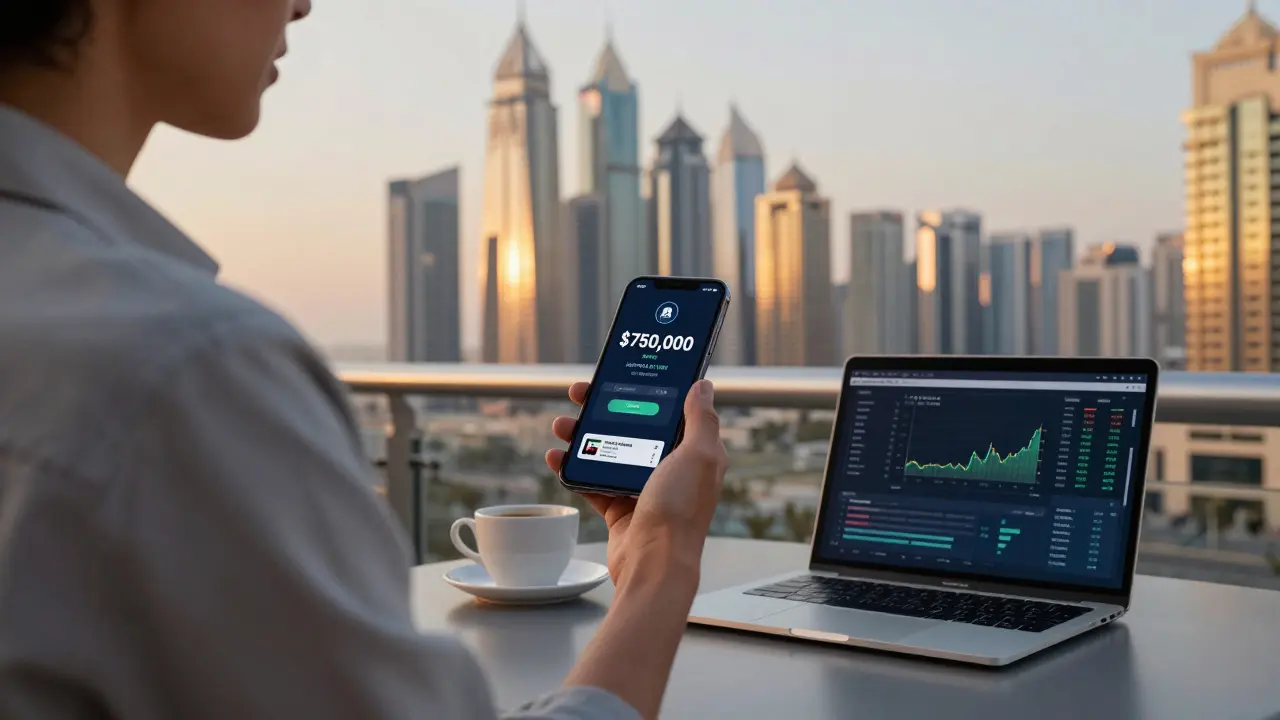
Imagine buying Bitcoin at $100,000 and selling it a year later for $1,000,000. In most countries, you’d owe tens of thousands in taxes. In the UAE? You keep every single dollar. That’s not a fantasy. It’s the reality for anyone who becomes a tax resident there.
How the UAE’s 0% Crypto Tax Works
The United Arab Emirates doesn’t tax personal income - not on salaries, not on rental income, and not on cryptocurrency gains. That includes profits from trading Bitcoin, Ethereum, or any other digital asset. If you buy, sell, stake, mine, or trade NFTs as an individual, you pay 0% tax on your gains. There’s no capital gains tax, no reporting requirement for personal crypto activity, and no hidden fees. This isn’t a loophole. It’s the law. The UAE has never had a personal income tax system. Even as other countries crack down on crypto, the UAE doubled down on its stance. In September 2025, the Ministry of Finance introduced the Crypto-Asset Reporting Framework (CARF), but it didn’t change the tax rate. It only added reporting rules for exchanges and wallet providers - not for individuals. For example, if you’re a trader who turned $50,000 into $800,000 through DeFi yield farming or spot trading, you walk away with the full $750,000 profit. No IRS. No HMRC. No tax forms. Just your wallet and your profits.Who Qualifies for the 0% Rate?
You don’t need to be born in the UAE. You don’t need to be rich. But you do need to be a tax resident. That means holding a valid UAE residency visa and spending at least 183 days per year in the country. This isn’t a tourist visa. It’s a long-term visa - often a 10-year Golden Visa for investors, professionals, or remote workers. The key is physical presence. You can’t just open a bank account and claim residency from Portland. You need to live there. That means renting an apartment, opening a local bank account, and showing consistent time in the country. The UAE government doesn’t ask for your crypto transaction history - but they do verify your residency status. If you’re a freelancer paid in crypto? Still 0%. If you mine Bitcoin from your home in Dubai? Still 0%. If you earn staking rewards from Ethereum or Solana? Still 0%. The tax exemption covers every type of crypto activity - as long as it’s personal, not business-related.What About Businesses?
Here’s where it gets tricky. While individuals pay nothing, businesses are taxed. If you run a crypto trading firm, a mining operation, or a DeFi platform, you’re subject to corporate tax. The standard rate is 9% on profits over AED 375,000 (about $102,000). But here’s the catch: if you set up your business in a designated free zone - like Dubai Multi Commodities Centre (DMCC) or Abu Dhabi Global Market (ADGM) - you can qualify for 0% corporate tax on qualifying income. To get that 0% rate, you need to meet strict rules: maintain real office space in the free zone, hire local staff, keep proper accounting records, and ensure less than 5% of your income comes from non-qualifying sources (like selling to local customers). It’s not easy, but it’s possible. Many crypto startups choose this route to avoid the 9% tax while still operating under UAE law.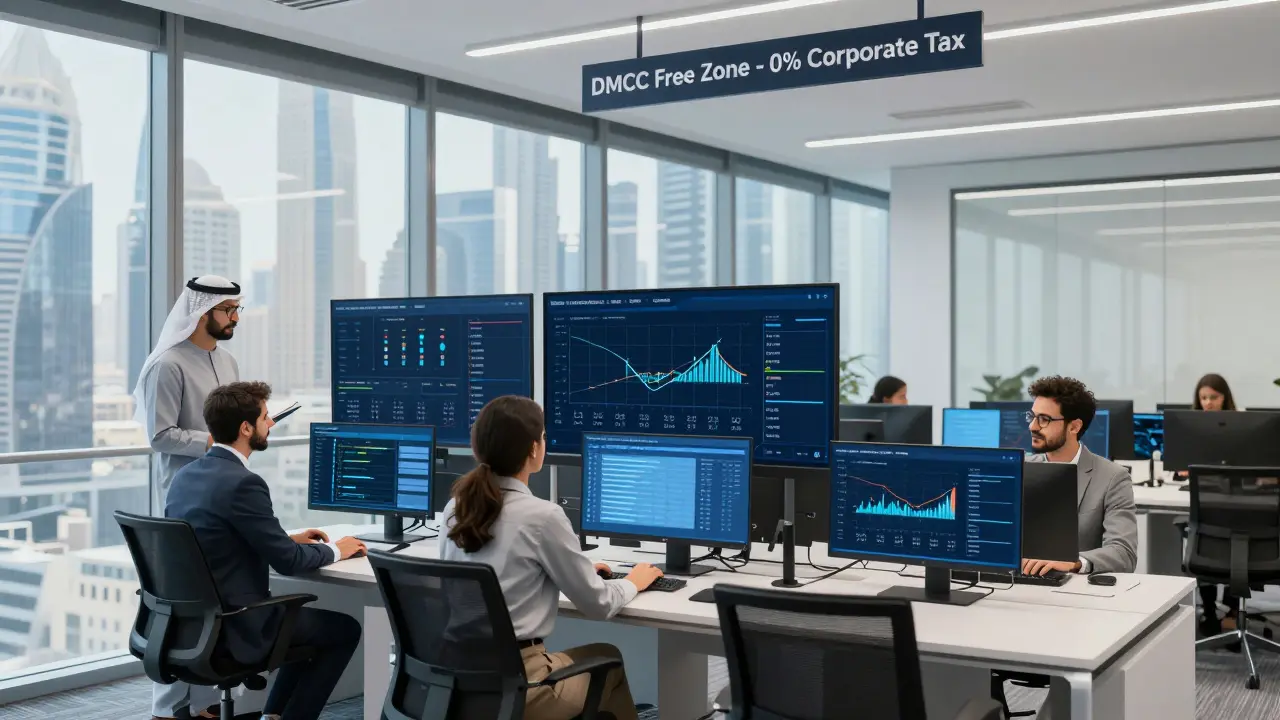
How This Compares to the Rest of the World
The UAE’s policy is an outlier. In the U.S., high earners pay up to 37% on crypto gains. In the UK, it’s up to 28%. In Germany, if you sell crypto within a year, you pay up to 42% as income tax. Canada, Australia, and Japan all tax crypto like property or income - with rates often hitting 30% or higher. The UAE isn’t just competitive - it’s unmatched. No other country offers both zero personal tax and strong regulatory clarity. That’s why thousands of crypto millionaires have moved there. Reddit threads from Dubai-based traders show people who moved entire portfolios worth $5M to $50M, eliminating their lifetime tax burden overnight. Even more compelling? The UAE has no inheritance tax, no wealth tax, and no estate tax. That means if you pass away, your crypto assets go to your heirs - fully intact. No government takes a cut. No probate delays. Just direct transfer.What You Can’t Ignore: Compliance and Risks
Just because you don’t pay tax doesn’t mean you can ignore rules. The UAE has strict anti-money laundering (AML) laws. If you buy a $2 million villa in Dubai using Bitcoin, you’ll need to prove where the crypto came from. Banks and real estate agents will ask for transaction history, wallet addresses, and proof of purchase. You also need to keep records. Even though the government doesn’t require you to file crypto taxes, you should still track:- Buy and sell dates
- Price per coin at time of trade
- Transaction fees
- Wallet addresses used
- Source of funds (especially if you’re using crypto for property or luxury purchases)
How to Make the Move: Practical Steps
Getting UAE residency isn’t instant. It takes planning. Here’s what it looks like in real terms:- Apply for a Golden Visa (investor, professional, or remote worker category)
- Open a local bank account - most banks require proof of income or investment
- Sign a lease for at least one year
- Obtain a UAE ID card and residency visa
- Start spending 183+ days per year in the country